The best blower vac for most Australian yards is one that blows leaves into a pile, then vacuums and mulches them into a bag, and a garden cart for hauling leaves and green waste carries off what is left. The corded Bosch Home and Garden model does it on constant mains power with a 50 litre bag, and the cordless Ryobi OBV18 does it on 18V ONE+ batteries sold separately.
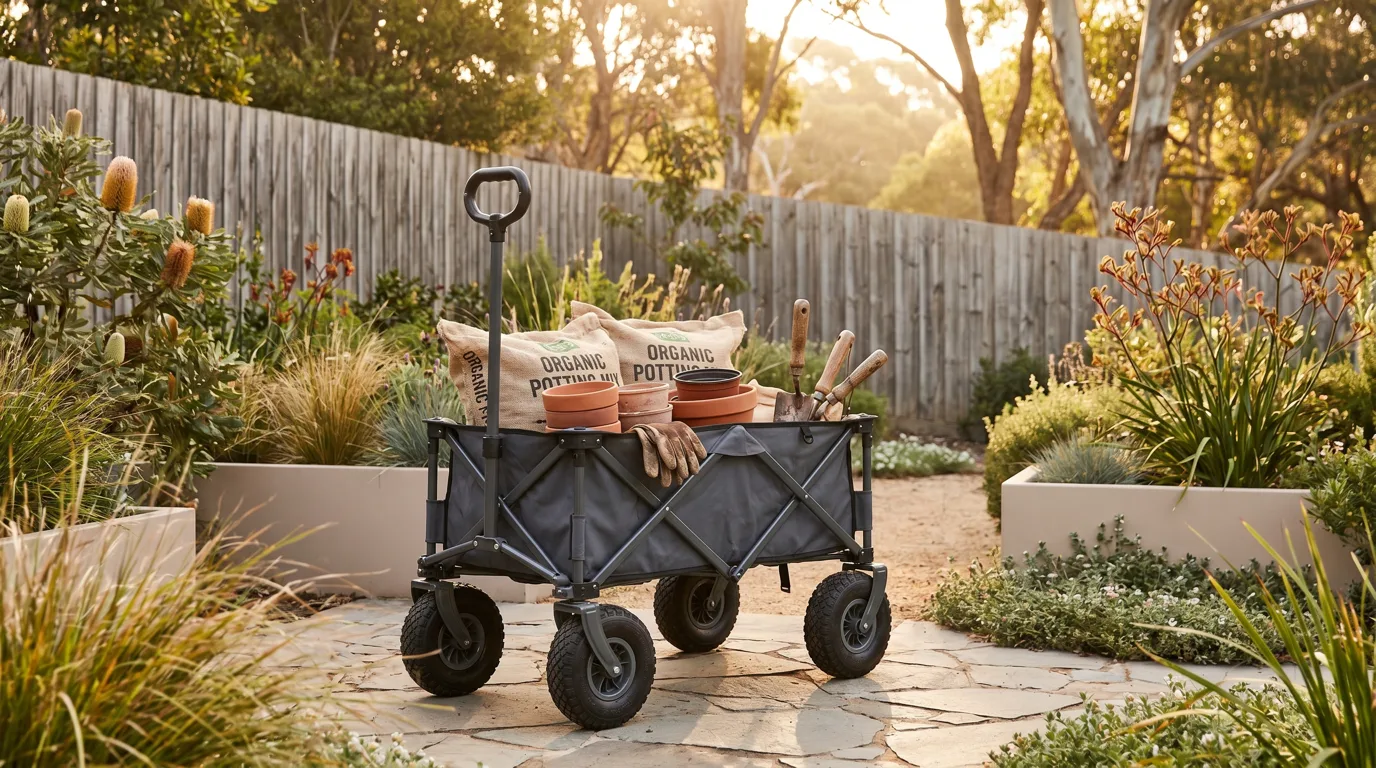
You've got a yard, a nature strip, a driveway and, once autumn arrives, a steady fall of leaves to deal with. A rake works, but a leaf blower makes the job quicker, and the better blower vacs will even suck the pile up and mulch it for you, while a wheelbarrow for carting leaf piles saves the trips to the green bin. The trouble is the choice: corded or cordless, blower only or blow and vac, and a wall of brands all claiming big "km/h" numbers on the box. We compare corded, cordless and blower vac models here, from a courtyard clean up to a bigger garden.
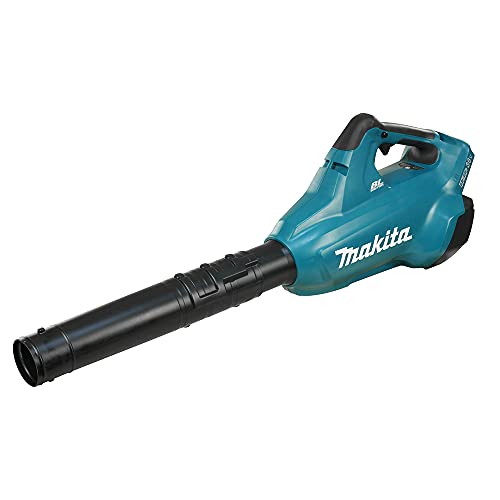
The best overall pick is the Makita DUB362Z Twin 18V (36V) LXT Brushless Blower, a cordless skin only unit that needs two 18V LXT batteries, described in its own section below. The DEWALT 18V XR Compact Blower DCV100 is also great. For a corded blower vac, the Bosch Home & Garden Corded Leaf Blower & Vacuum is a 3 in 1 that blows, vacuums and shreds leaves into a 50 litre bag on constant mains power with no battery to manage. The TOPEX 20V MAX Cordless Leaf Blower is the budget pick because its listing puts the 20V battery in the box, though it does not list a charger and it gives two air speeds, 200 km/h in the title and 120 km/h in its bullets, and the Ryobi OBV18 18V ONE+ Cordless Brushless Blower-Vac suits a bigger garden if you already own ONE+ batteries, because it is sold body only.
Quick comparison: best leaf blowers Australia 2026
| Model | Type | Air speed | Vacuum and mulch | Battery included | Best for |
|---|
| TOPEX 20V MAX Cordless Leaf Blower | Cordless handheld, 20V | 200 km/h in the title, 120 km/h in the bullets | No | Yes, battery in the box, no charger listed | Courtyards, townhouse yards, driveways |
| Bosch Home & Garden Corded Leaf Blower & Vacuum | Corded blower vac | Variable speed, 165 to 285 km/h | Yes, roughly 50 litre collection bag | Mains powered, no battery needed | The standard suburban block |
| Ryobi OBV18 18V ONE+ Cordless Brushless Blower-Vac | Cordless blower-vac, 18V ONE+ | Figure not stated | Yes | No, sold body only | Bigger gardens, and anyone already on ONE+ |
| DEWALT 18V XR Compact Blower DCV100 XJ/XE Tool Only | Cordless compact blower, 18V XR | 80 m/s | No bag or mulching stated | No, tool only | Light cordless clean ups, and anyone on DEWALT 18V |
| Makita DUB362Z Twin 18V (36V) LXT Brushless Blower | Cordless blower, twin 18V (36V) LXT | Not stated | Not stated | No, skin only | Anyone already on Makita LXT batteries |
| Makita DUB185Z 18V Blower | Cordless blower, 18V | Up to 98 m/s | Not stated | No, tool only | Single handed clean ups, and Makita 18V owners |
| Bosch UniversalLeafBlower 18V-130 | Cordless blower, 18V | 185 to 245 km/h | Not stated | No, sold without a battery | Bosch 18V battery owners, on an overseas Global Store listing at the 14 October 2026 check |
| Ryobi R18TB-0 18V ONE+ Toolshop Blower | Cordless blower, 18V ONE+ | Up to 200 km/h | Not stated | No, zero tool | Workshop dust, on an overseas Global Store listing at the 14 October 2026 check |
| WOKEGI 21V Cordless Leaf Blower | Cordless blower, 21V brushless | Claims 180MPH and 580CFM | Not stated | Yes, two 4.0Ah batteries and a quick charger | A complete kit for general yard clean ups |
Air speed in km/h is only half the story. Air volume, quoted as CFM or cubic metres an hour, is what clears a big area quickly, and a high km/h figure with low volume is a thin jet that will not move a pile. Prices sit on the cards, because they move.
Best overall: Makita DUB362Z Twin 18V (36V) LXT Brushless Blower
The Makita DUB362Z Twin 18V (36V) LXT Brushless Blower is the best overall pick for most Australian yards that do not need to vacuum. The Amazon AU listing shows 4.7 out of 5 from 3,331 ratings, and Endeavour Hills Tools Pty is the seller. It highlights a dual battery fuel gauge, constant speed control and a soft start.
It is sold as a bare unit, so you need an 18V battery and charger as well. The Amazon AU listing shows 4.6 out of 5 from 3,027 ratings, and AK TOOLS PTY LTD is the seller.
The four types of leaf blower, and who each suits
Before you look at any brand, work out which type of blower fits your block. There are four, and the right one depends almost entirely on the size of your yard and whether you're within reach of a power point.
Corded electric: powerful, but tethered
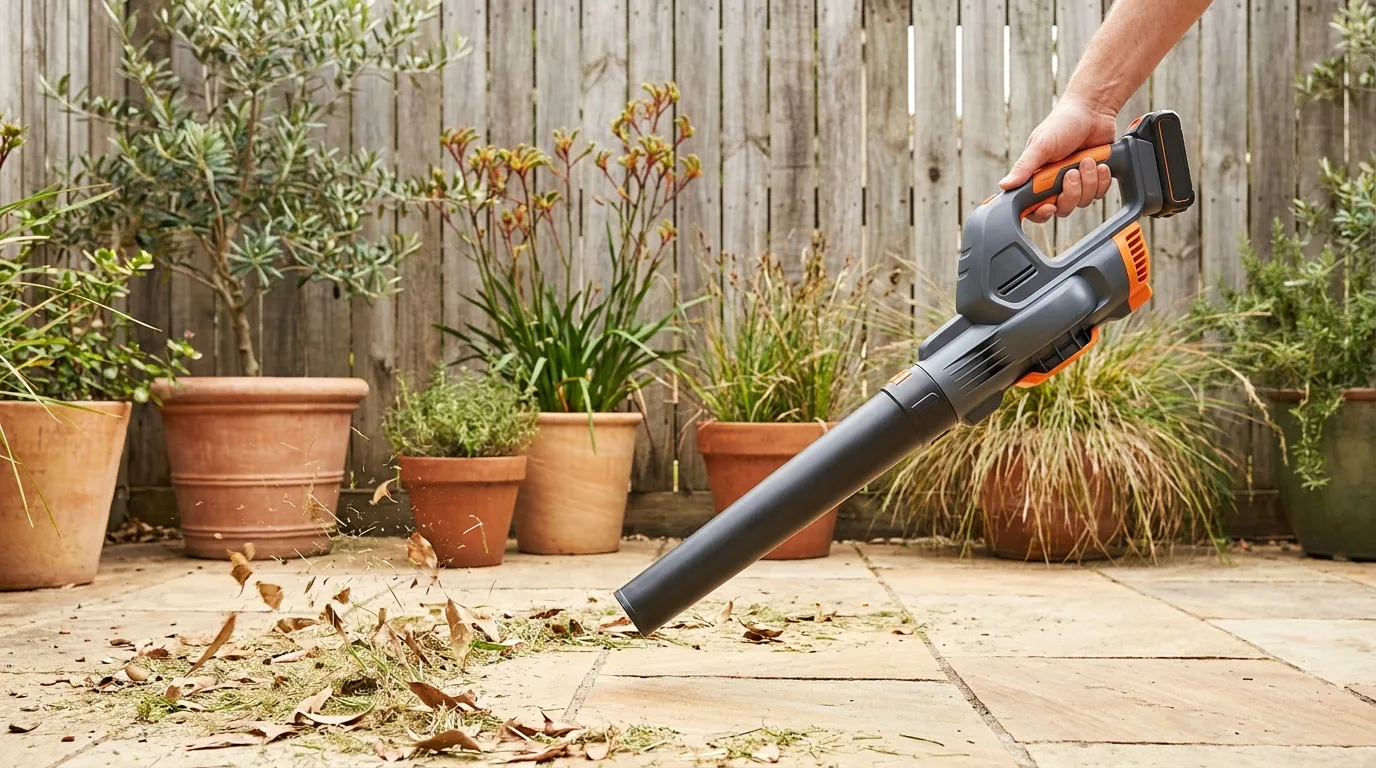
A corded blower plugs into a wall outlet and never runs out of charge. You get high, constant power with no battery to buy, charge or replace as it ages. The trade-off is the cord: you're limited to roughly the reach of your extension lead (around 20 metres of practical coverage), and the lead itself can snag on garden beds and corners. Best for a suburban yard, driveway and paths that you can reach from one or two outlets.
Cordless battery: convenient, great reach, runtime limits
Cordless blowers run on a rechargeable lithium battery, so you can walk the whole property, around the side of the house and down to the back fence without a cord. They're brilliant for convenience and reach. The limits are real, though: runtime is finite (a small battery might give you 10 to 15 minutes of steady blowing), the grunt tops out below a powerful corded or petrol unit, and on the recognised brands the battery often adds a chunk to the price. Best for small-to-medium yards, courtyards, and anyone already invested in a battery ecosystem.
Petrol: maximum power, but heavy, loud and high maintenance
Petrol blowers (handheld or backpack) are the high power option with no battery to run flat, which is why landscapers use them on big blocks and acreage. For a typical suburban home, though, petrol is overkill: they're heavy, very loud, need fuel mixing and servicing, and produce fumes. Unless you're clearing a large rural-residential block, you almost certainly don't need one.
Blower vacs: blow, then vacuum and mulch
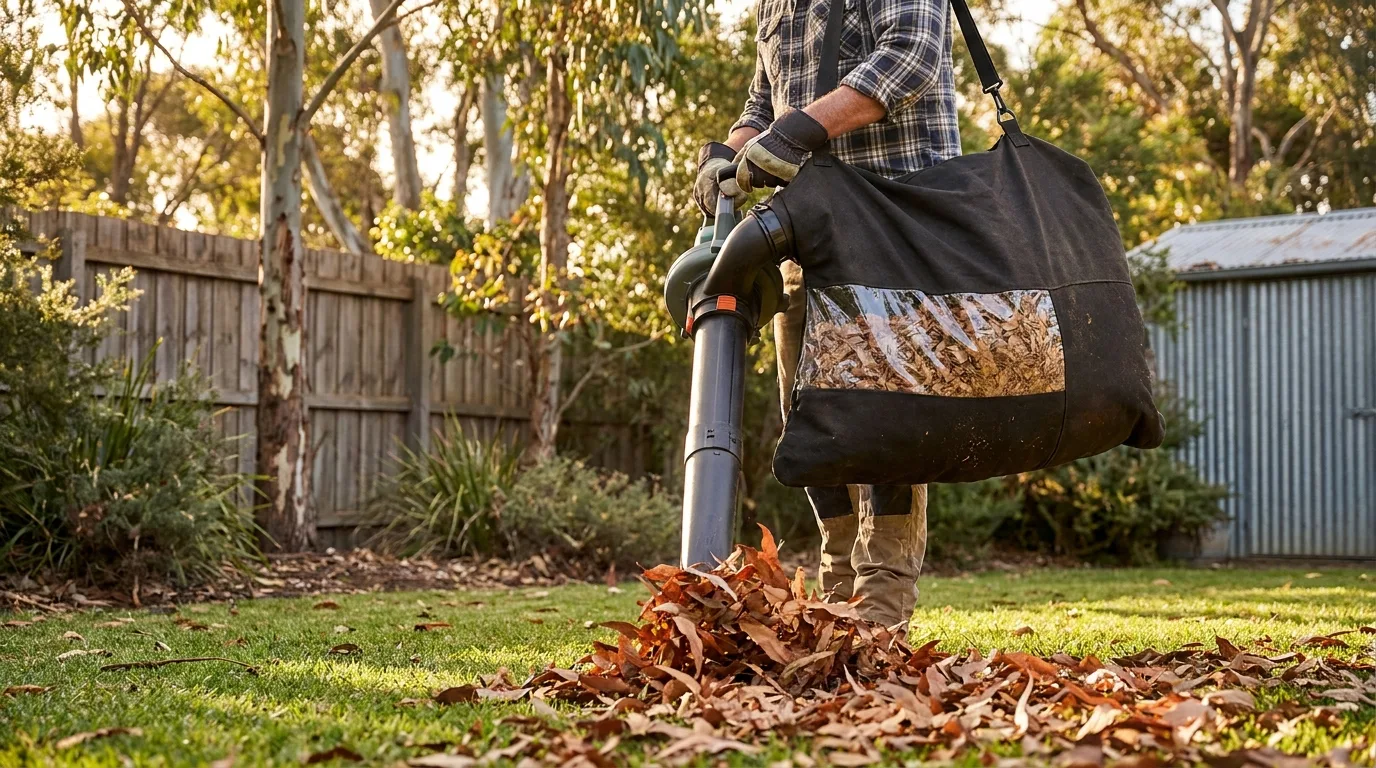
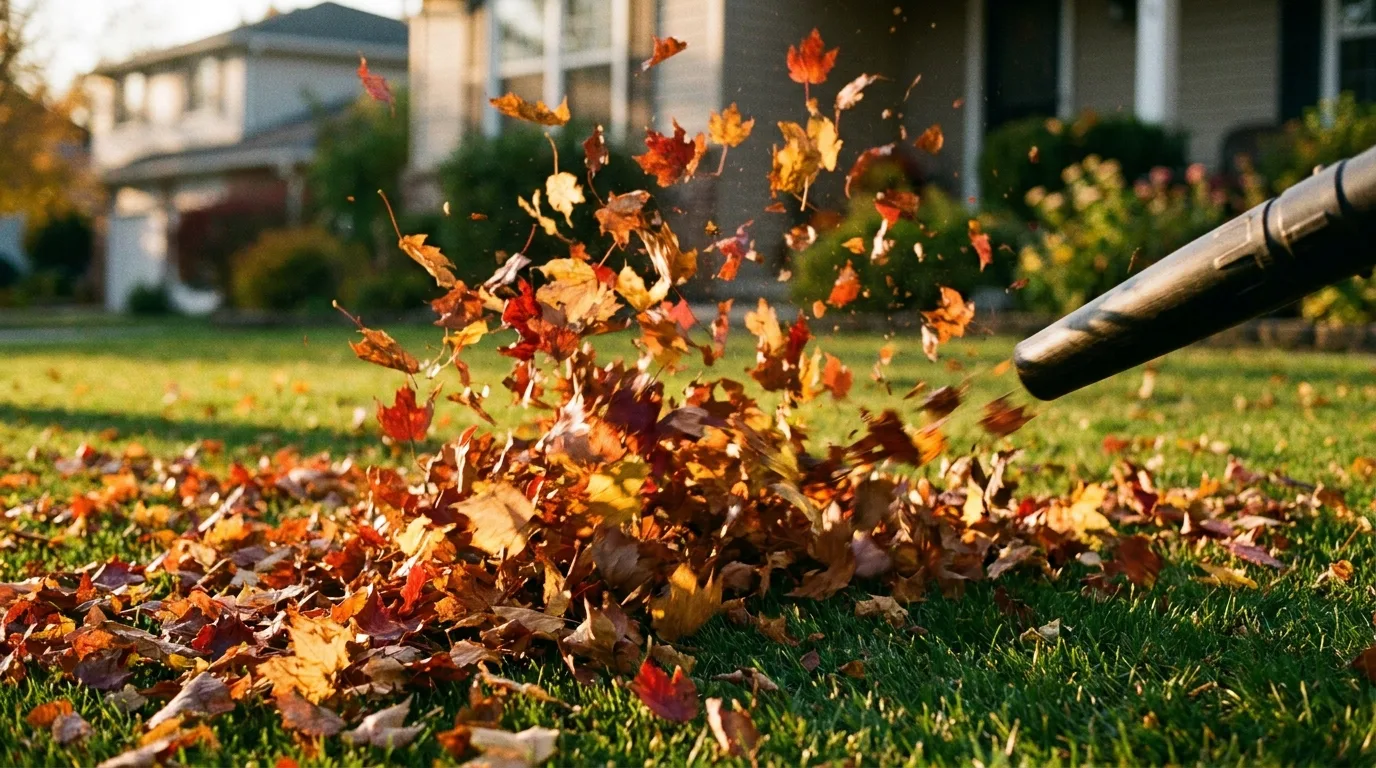
A blower-vac does two jobs in one body. You blow the leaves into a pile, flip it to vacuum mode, then suck them up and shred them into a collection bag, often mulching them down to a tenth of their volume so they fit in the green bin or go straight onto the garden as mulch. For autumn leaf cleanup this is the function that earns its keep. Both our Bosch and Ryobi picks below are blower-vacs.
Budget pick: TOPEX 20V MAX Cordless Leaf Blower
For a bigger garden, plenty of deciduous trees, and the freedom to roam without a cord, the Ryobi OBV18 is the do-everything pick. It's a cordless brushless blower-vac on Ryobi's 18V ONE+ platform: blow, vacuum and mulch in one body, with a brushless motor that runs more efficiently, squeezes more out of each charge and tends to last longer than a brushed equivalent. The big draw is the ecosystem: the listing says it is compatible with all batteries and chargers across the 18V ONE+ system, so if you already own a Ryobi drill, mower or trimmer on ONE+ batteries, the battery you have drops straight in.
Be clear on one thing before you buy: this is sold body only. The 18V ONE+ battery and charger are not included. They're sold separately. If you're already in the ONE+ ecosystem, that's exactly why it's priced this way and it's great value. If you're starting from scratch, budget for a battery and charger on top of the body price, or buy a kit version. The honest case for this pick is a larger autumn leaf cleanup where cordless reach matters and you want one tool that blows, vacuums and mulches. It slots in alongside other 18V ONE+ tools like a cordless drill.
What to Look For in a Leaf Blower (Australia)
Once you've settled on a type, these are the specs and features that actually matter, and the marketing traps to ignore.
- Air speed AND air volume: you want both. Air speed (km/h or MPH) is how hard the air hits, which is what shifts stubborn or wet debris. Air volume (CFM, or m³/h) is how much air moves, which is what clears a big area quickly. A huge km/h number with low volume is a thin, fast jet that struggles to move a pile; the best blowers balance the two. Don't buy on the speed number alone.
- Battery voltage and Ah (for cordless). Voltage relates to power; amp-hours (Ah) relates to how long it runs. A higher-Ah battery means fewer recharge stops. Check whether the battery is even included.
- Brushless vs brushed motor. Brushless motors are more efficient, deliver more usable runtime per charge, and generally last longer. On a cordless unit it's worth paying for.
- Weight and handheld vs backpack. A handheld around 1.5 to 4kg is fine for most blocks. Backpack blowers spread the weight for long sessions on acreage, but are overkill for a suburban yard.
- Noise and council restrictions. This is a real Australian consideration. Most councils limit the hours you can run powered garden equipment, often no early mornings, with tighter windows on Sundays and public holidays. A quieter (Pro Silence-style) blower keeps you onside with the neighbours and the by-laws. Check your local council's rules, and wear safety glasses while you use one, because a blower throws grit and small stones straight back at head height.
- Vacuum and mulch function. If autumn leaves are your main job, a blower-vac that shreds the pile into a bag saves a lot of bending and bin trips.
- Bare tool vs kit. The single biggest gotcha. Many recognised-brand cordless blowers (Ryobi, Bosch, Makita) are sold "skin" or "body only" with no battery, because buyers are assumed to already be in that battery ecosystem. Our TOPEX budget pick includes a battery but its listing does not list a charger; the Ryobi premium pick is body only. Always check before you buy.
Listed weights and noise levels differ a lot between the cards. The Makita DUB185Z lists 570 grams and 95 decibels, the DEWALT DCV100 lists 0.95 kilograms and 96 decibels, the Makita DUB362Z lists 3 kilograms and 96 decibels, and the corded Bosch blower vac lists 4.7 kilograms and 99 decibels. If a light, quiet blower matters most, compare those figures before you buy.
Independent testers measure output rather than trusting the box. TechGearLab's lab review of leaf blowers put the Husqvarna Leaf Blaster 350iB on top for its measured blowing power, long lasting battery and ergonomic balance, so look for tested airflow and hold the blower in your hand before you trust a km/h figure.
Weight and noise are worth reading on the listing too. The TOPEX listing states a weight under 1.65kg and a flexible rubber grip, and the Bosch listing states a noise level of 99 dB(A), a padded shoulder strap in the box and a Pro Silence design that reduces sound power by up to 75 percent.
On noise, the NSW Noise Control Regulation lets you use power tools at a home between 7am and 8pm on a weekday and between 8am and 8pm on a Saturday, Sunday or public holiday, as Woollahra Council summarises under its heading on leaf blowers and power tools. Other states and councils set their own hours, so check yours before you start.
What about Stihl, Makita, EGO and Husqvarna?
These are the names Google's shopping results and Choice's own list are built from. Stihl, Husqvarna, Milwaukee and EGO are not carded here because this guide compares only models whose Amazon AU listings we checked, while the two Makita blowers we carded are the exception. For the record, the models Australians are shown are the Stihl BGA 45, the Makita DUB185Z, the Milwaukee M18BBL-0, the Makita DUB184Z, the Husqvarna 125B and the EGO 56V LB7654E-2. If you already own Makita LXT, Ozito PXC or EGO batteries, buy the blower that matches them and ignore everything else, because the battery platform matters more than the blower.
Which leaf blower for your yard size?
A quick way to match the type to your place:
- Courtyard or small townhouse yard: a cheap cordless handheld (like the TOPEX) for quick clean-ups, or a small corded blower. You don't need power or runtime here.
- Standard suburban block near a power point: a corded blower-vac (like the Bosch) is the sweet spot: constant power, no battery to manage, and it vacuums leaves in autumn.
- Larger garden with deciduous trees, or where cords are a pain: a cordless brushless blower-vac (like the Ryobi), ideally if you already own compatible batteries.
- Big rural-residential block or acreage: a petrol handheld or backpack blower for the raw power and unlimited runtime. Overkill for everyone else.
An Australian note on timing
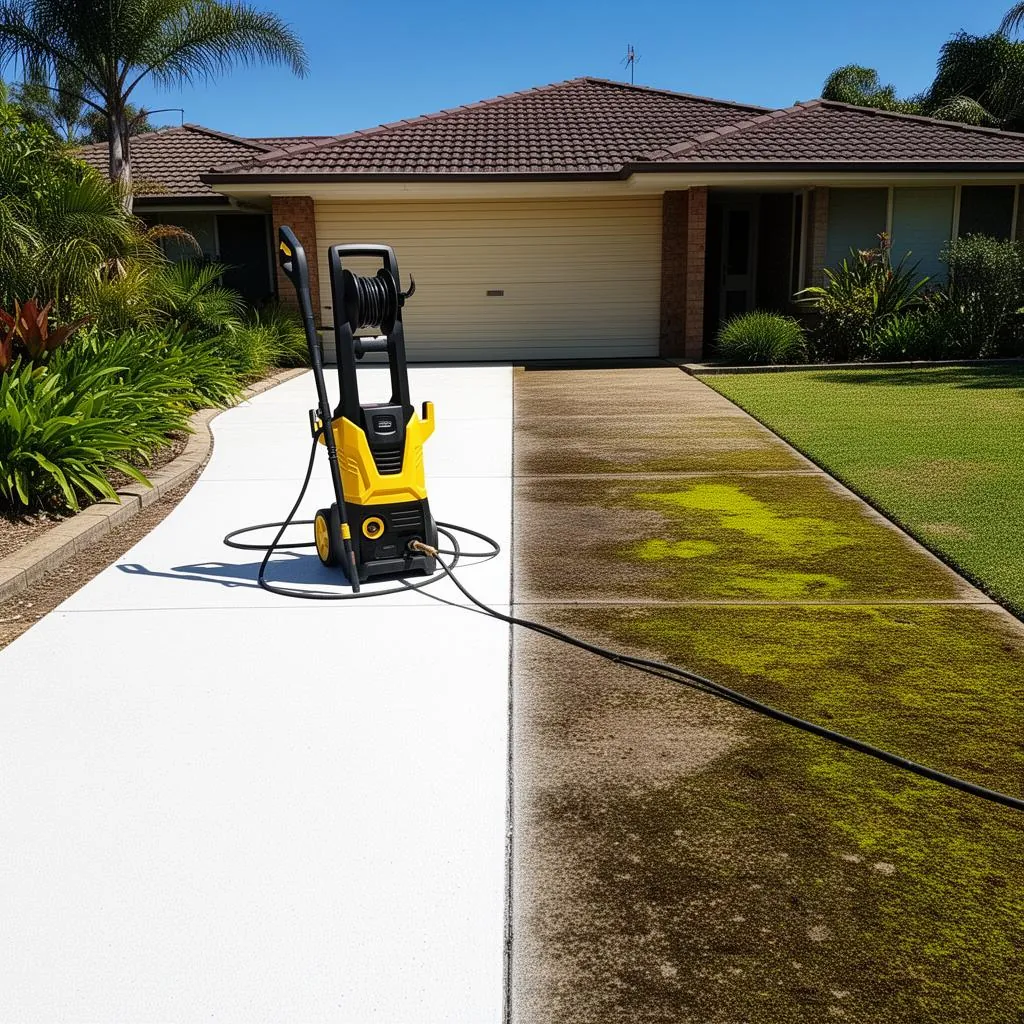
Autumn (roughly March to May) is peak leaf-drop season for deciduous trees, so a blower-vac earns its keep most in those months. Even outside autumn a blower pulls its weight year-round: clearing grass clippings after you mow, blowing out the gutters and the garage, and keeping the driveway and paths tidy. While you're sorting the outdoor kit, our garden hose guide and pressure washer guide round out the rest of the backyard setup.
How we picked
This guide is research, not a hands on test. We compared the blowers on type, battery included or not, air speed and vacuum function using each model's Amazon AU listing (rating, review count, stock and seller) and the specifications the maker states there. Cards sold through an overseas Global Store at the 14 October 2026 check say so on the card.
For noise hours we used Woollahra Council's summary of the NSW Noise Control Regulation, and for what to look for beyond the box we drew on TechGearLab's lab review of leaf blowers. Star ratings and counts come from the Amazon AU listings.
Last checked: 14 October 2026, covering the stock, seller and rating of every listing on Amazon Australia.
Frequently Asked Questions
What is the best leaf blower in Australia for 2026?
The Makita DUB362Z Twin 18V (36V) LXT Brushless Blower is the best overall leaf blower in this guide, rated 4.7 from 3,331 ratings on Amazon AU and sold as a skin only, so you add two 18V LXT batteries and a charger. The DEWALT 18V XR Compact Blower DCV100 is also great. For a corded blower vac that also vacuums and mulches, choose the Bosch Home & Garden corded model. For small yards and quick clean ups, the TOPEX 20V MAX Cordless is the budget pick and includes its battery, though its listing does not list a charger, while the Ryobi OBV18 18V ONE+ suits bigger gardens and anyone already in the Ryobi ONE+ ecosystem.
Are corded or cordless leaf blowers better?
It depends on your yard. Corded electric blowers deliver high constant power and never run out of charge, but you're tethered to roughly 20 metres from a power point. Cordless battery blowers give you freedom to roam the whole property with no cord, but runtime is limited and the recognised brands often sell them without a battery. For a standard block near an outlet, corded is usually the smarter buy; for reach and convenience on a larger or awkward block, cordless wins.
What air speed do I need in a leaf blower?
Air speed (km/h or MPH) determines how hard the air hits, which matters for shifting stubborn or wet debris, but you should also check air volume (CFM or m³/h), which is how much air moves and how fast you clear a big area. The best blowers balance both. Around 200 km/h handles dry leaves and clippings on hard surfaces; wet or matted leaves need more grunt than a budget cordless unit provides.
What is a leaf blower vacuum and is it worth it?
A blower-vac does two jobs in one body: it blows leaves into a pile, then vacuums and shreds them into a collection bag, often mulching them down to a fraction of their volume. It's well worth it if autumn leaves are your main job, because it saves the bending and bin trips of raking and bagging by hand. Both the Bosch and Ryobi picks in this guide are blower-vacs.
Is a petrol leaf blower worth it for a suburban yard?
For most suburban blocks, no. Petrol is overkill. Petrol blowers deliver maximum power and unlimited runtime, which is why landscapers use them on acreage, but they're heavy, very loud, need fuel and servicing, and produce fumes. A corded electric or cordless blower handles a typical suburban yard comfortably. Petrol only makes sense on a large rural-residential block.
Are there council restrictions on using a leaf blower in Australia?
Yes. Most Australian councils limit the hours you can run powered garden equipment like leaf blowers, typically banning early mornings and restricting use further on Sundays and public holidays. The exact hours vary by council, so check your local by-laws. A quieter, Pro Silence-style blower helps you stay within the rules and on good terms with the neighbours.
Does the Ryobi leaf blower come with a battery?
No. The Ryobi OBV18 18V ONE+ Brushless Blower-Vac is sold body only, so the 18V ONE+ battery and charger are not included and must be bought separately. The listing says it is compatible with all batteries and chargers across the 18V ONE+ system, so it suits buyers who already own ONE+ batteries. If you're starting from scratch, budget for a battery and charger on top, or buy a kit version. By contrast, our budget TOPEX pick includes its battery in the box, though its listing does not list a charger.
What is the best brand of leaf blower?
There is no single best brand, only the best brand for the batteries you already own. The Makita, DEWALT and Ryobi blowers in this guide are sold without batteries, while the TOPEX and WOKEGI come with theirs. The corded Bosch Home and Garden blower vac needs no battery, a good fit if you have a power point in reach.
What leaf blower do professionals use?
Landscapers use petrol backpack blowers, usually Stihl or Husqvarna, because they run all day on a tank and move far more air than any handheld. Increasingly the larger commercial crews are moving to high-voltage battery backpacks from EGO, Makita and Stihl, driven by council noise limits and by clients who do not want two-stroke fumes on a school or hospital site. None of it is the right buy for a suburban block: a professional blower is heavy, loud and needs servicing, and a corded blower-vac clears a normal yard faster because it also collects.
How do you start a Stihl leaf blower?
The sequence is the same across the handheld petrol range. Set the machine on flat ground, move the combination lever to the cold-start position, press the fuel purge bulb five or six times until it fills, then hold the housing down with one hand and pull the starter rope smartly until the engine fires. Move the lever off cold start straight away and pull again to run. Never wrap the rope around your hand and never let it snap back. If it will not fire after several pulls, the engine is likely flooded, so leave it a few minutes. Check the manual for your model.
How do you use a leaf blower properly?
Work with the wind, not against it, and start at the far edge of the area so you are always pushing the pile towards where you want it rather than chasing it back. Hold the nozzle about 15cm off the ground at a shallow angle, because pointing straight down scatters the pile. Use short sweeps rather than one long arc. Do wet or matted leaves in two passes, breaking the mat up first. Blow onto a tarp or into a corner, then switch a blower-vac into vacuum mode and shred the pile into the bag rather than bending down with a rake.
How long does a battery leaf blower run on one charge?
A small handheld cordless blower gives roughly 10 to 15 minutes of steady blowing on a compact battery, which is enough for a driveway and a set of paths but not a whole yard. Two things change that number: amp-hours, which is the size of the fuel tank, and whether the motor is brushless, which squeezes more work out of the same charge. Running on the highest speed setting roughly halves the figure. If you have a large block, either buy a second battery or buy corded, because charging mid-job is the thing owners give up on first.
What is the best blower vac on the market?
Of the blower vacs in this guide, the Bosch Home and Garden corded model suits most suburban yards, with constant mains power and a 50 litre bag that collects and mulches leaves. For a cordless blower vac, the Ryobi OBV18 on 18V ONE+ batteries is sold body only, so add a battery and charger.
What is the best electric leaf blower?
The Makita DUB362Z Twin 18V (36V) LXT Brushless Blower is the best overall electric leaf blower in this guide, a cordless skin only unit rated 4.7 from 3,331 ratings on Amazon AU that needs two 18V LXT batteries. The DEWALT 18V XR Compact Blower DCV100 is also great. If you would rather have mains power and no battery, the corded Bosch blower vac is the alternative.
What is CFM in a leaf blower?
CFM means cubic feet per minute and measures how much air a blower moves, while km/h or MPH measures how fast that air travels. High volume clears a big area quickly. The WOKEGI 21V cordless listing, for example, claims up to 580CFM and wind speeds of 180MPH.
What is better, a leaf blower or a leaf vacuum?
A blower vac is better if autumn leaves are your main job, because it blows leaves into a pile and then vacuums and shreds them into a bag, while a blower only suits quick clean ups on paths and driveways. The Bosch listing describes one machine that blows, vacuums and shreds, and the Ryobi OBV18 listing quotes a 10:1 mulching ratio and a collection bag given as 35L in its bullets and 45L in its description.
What petrol blower vacs are available in Australia?
This guide does not include a petrol blower vac, because every model carded here is electric, corded or cordless. For a typical suburban block, a corded or cordless electric blower vac is the lighter and quieter choice, and petrol only makes sense on a large rural residential block.