Best Whipper Snipper for Kikuyu, Buffalo and Couch Grass
Australian warm-season lawns behave very differently under a trimmer, and matching the tool to your grass saves a lot of swearing.
Kikuyu is the tough one. It grows fast, throws out thick runners, and by late summer the edges are a mat of stems rather than soft leaf. Thin line and an underpowered head will bog down or snap repeatedly. For kikuyu you want the widest cut and the most torque you can get, which of our three picks means the Stanley with its 33cm swath, gear-drive transmission and 1.6mm line. If the kikuyu has genuinely got away from you along a back fence, that is the one case where a petrol unit with a brushcutter blade earns its keep.
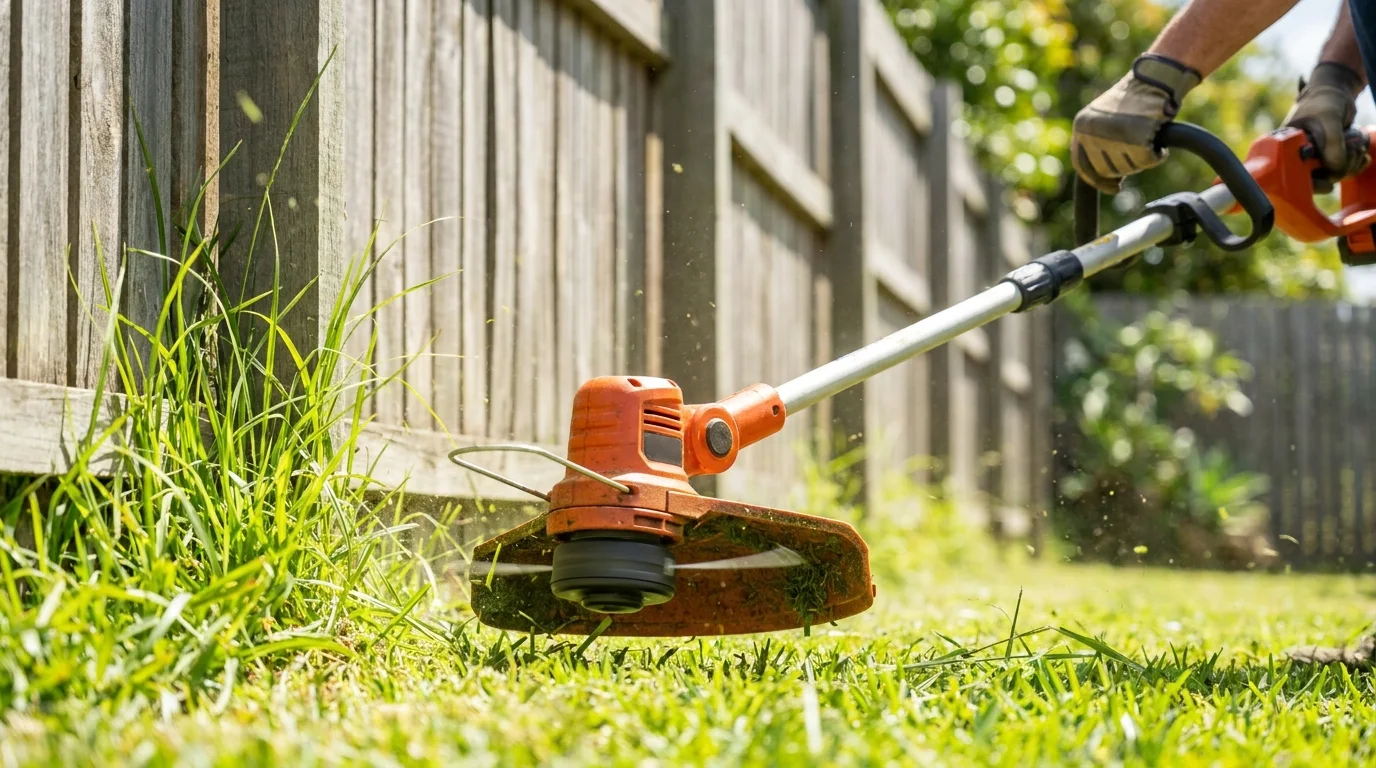
Buffalo (including the soft-leaf varieties most new lawns use) has broad leaves and thick horizontal runners that sit close to the ground. The mistake here is scalping: cutting too low exposes those runners, which browns off and takes weeks to recover. Trim buffalo higher than you think you need to, keep the head level rather than tilted down into the turf, and use the edging function for a clean vertical line instead of shaving the surface.
Couch is the most forgiving of the three. Fine leaf, dense growth, and it takes a close cut without complaint, so any of the picks here handles it comfortably.
Whatever the grass, the timing is the same: our warm-season lawns push hardest from September through March, which is when the trimmer works for its living.
Best Whipper Snipper for Acreage, Large Blocks and Commercial Use
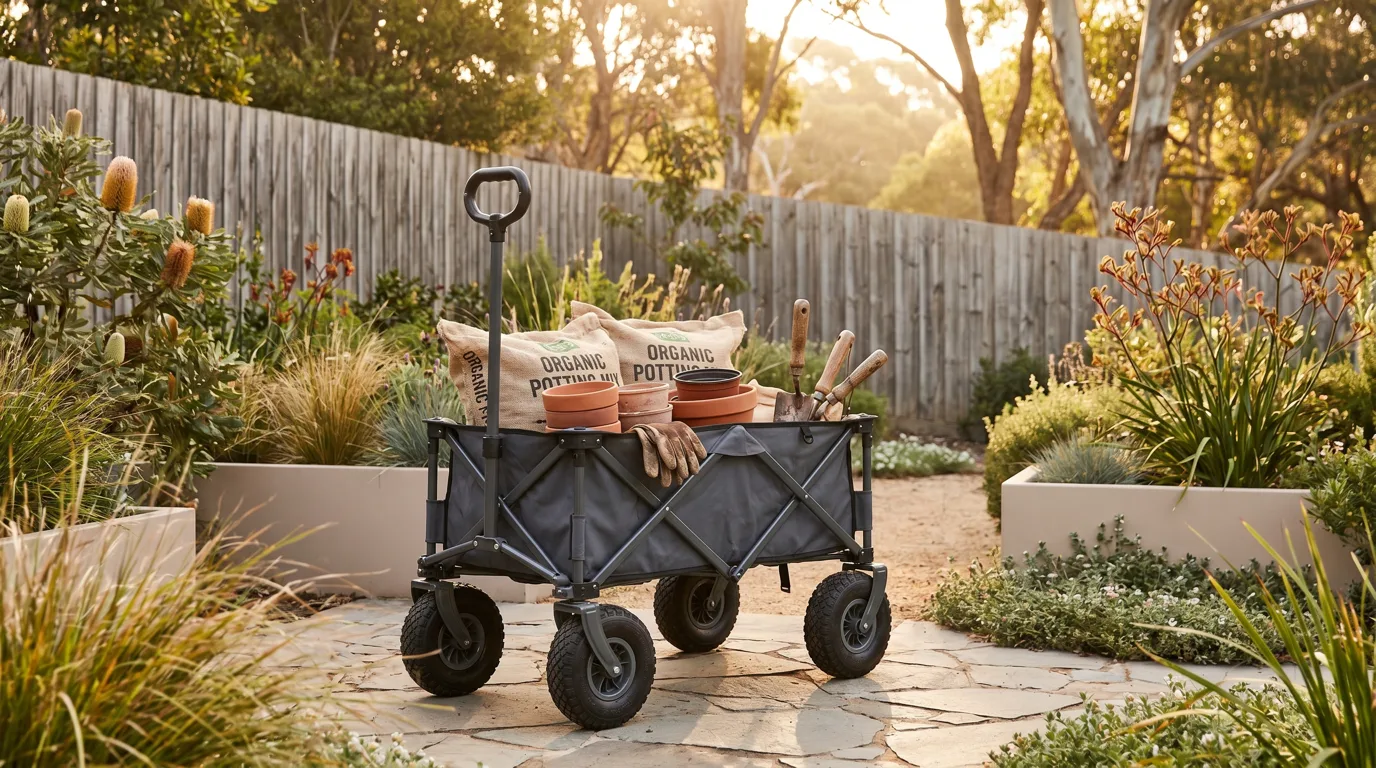
There is a point where a homeowner kit stops being the right tool, and it is worth being honest about where that line sits. The picks in this guide are built for suburban blocks: edges, nature strips, around the clothesline and the garden beds. They are not built for clearing a paddock, and for carrying cut growth around a bigger block a dump cart or wheelbarrow for a bigger block does the hauling.
The limit you hit first is almost never power, it is runtime. A 1.5Ah battery runs out well before a 4.0Ah pack, and how long either lasts depends on how thick the growth is. On a standard suburban block the bigger pack is usually enough. On a half-acre with long boundary fencing you will be swapping batteries mid-job, and on genuine acreage you will spend more time charging than cutting.
If that is your block, the shape of the answer changes: a straight-shaft machine that accepts a brushcutter blade rather than only nylon line, a shoulder harness so the weight sits on your body instead of your arms, and either petrol or a high-capacity brushless battery platform with several large packs in rotation. For daily commercial loads, dealer-backed servicing matters more than the purchase price, because downtime costs more than the tool.
We have deliberately not padded this guide with an acreage pick we cannot stand behind. The section below explains where that market actually lives in Australia.
Best Petrol Whipper Snipper in Australia: And When You Actually Need One
Petrol is the right answer for a specific job: a large rural-residential block, acreage, long kikuyu that has got away from you, or woody weeds that need a brushcutter blade rather than nylon line. Cutting knocks those back but they regrow from the root, which is where a systemic weed killer earns its place. Unlimited runtime is the real advantage. You refuel in thirty seconds and keep going, where a battery kit stops to charge.
An honest disclosure: there is no petrol pick in this guide, and that is deliberate. The petrol trimmer market in Australia runs through specialist outdoor-power dealers rather than Amazon AU. The brands worth buying are Stihl, Honda and Husqvarna, and they are sold with dealer setup, servicing and parts backing, which matters far more on a two-stroke engine than the sticker price does. You will find them at mower shops and outdoor-power specialists. We would rather point you there than pad this list with a no-name petrol unit we cannot stand behind.
What to look for if you do go petrol: a straight shaft, which reaches further under shrubs and will take a brushcutter blade; engine capacity around 25 to 30cc for home acreage; a shoulder harness for anything longer than a few minutes of work; and easy-start features that save your shoulder. Budget for fuel mixing on most two-stroke units, a service each season, and noticeably more weight than any battery tool here. If your block is a standard suburban lawn, petrol is overkill and the cordless kits above will do the job with none of the maintenance.
Best Electric Whipper Snipper: The Corded Option for Small Yards
Corded electric trimmers are the forgotten value pick. There is no battery to buy, charge, or replace in three years, they are usually the lightest tool in the category, and they never run flat halfway around the yard. For a courtyard, a townhouse strip of lawn or a unit with a small nature strip, corded does the job for the least money.
The limit is the lead. You get roughly twenty metres of practical reach from a power point before an extension cord becomes its own annoyance, and the cord snags on garden beds, corners and anything else it can find. It is also a real hassle on a block with no outdoor power point.
There is no corded model among our picks, because every pick in this guide is cordless, which is what most Australian buyers now want and what the Amazon AU range supports best. If corded genuinely suits your yard, look for a motor around 500W or more, a cutting width near 25 to 30cm, an adjustable telescopic shaft and an edging function. Ozito sells a corded model at Bunnings, which is the obvious budget starting point.
Best Lightweight Whipper Snipper: What to Buy if Weight Is the Problem
Weight matters more than most buyers expect. A trimmer that feels fine in the aisle feels very different forty minutes into a long boundary, and it is the most common reason a tool ends up unused in the shed. If you have wrist, shoulder or back trouble, or you trim a long fence line in one session, treat weight as a primary spec rather than an afterthought.
Among our picks, the Stanley is the one with a verified figure at around 2.4kg on its telescopic shaft, which is comfortable for a full lawn session. The Bosch EasyGrassCut is the most compact of our first three picks in the hand, which makes it the easiest to control one-handed in tight spots around beds and paths. Remember it arrives with no battery at all, and whichever Power for All pack you fit adds its own weight on top.
Three things genuinely reduce fatigue. A smaller-capacity battery of 1.5 to 2.0Ah rather than 4.0Ah, if your yard does not need the runtime, because every extra amp-hour is extra mass on your arms. A telescopic shaft set to your actual height, so you are not stooping for the whole job. And a shoulder harness for anything past about fifteen minutes. Avoid 36V and petrol units entirely if weight is your constraint, because the power you are paying for comes with mass you have to carry.
Whipper Snipper Brands in Australia: Ryobi vs Ozito vs Stihl vs Bosch
Brand matters less for the tool itself than for the battery platform you are joining and the service you can get in five years. Here is the honest lay of the land in Australia.
- Ryobi (18V ONE+): the Bunnings house platform, with one battery shared across its range. If you already own any ONE+ gear, staying on the platform is almost always the cheapest path, because every battery you own is more runtime. Home-grade rather than trade-grade, which is fine for a suburban lawn.
- Ozito (PXC 18V): Bunnings' budget line and the cheapest genuine entry into cordless. Lower build quality and a shorter warranty than Ryobi, but for a small yard and light use it does the job for the least money. Batteries are cross-compatible within PXC, not with Ryobi.
- Stihl, Honda and Husqvarna: the dealer brands. Petrol heritage, sold through outdoor-power specialists with setup, servicing and parts, and increasingly strong battery ranges too. This is where you go for acreage, commercial use, or a machine you expect to run for fifteen years. Priced accordingly.
- Bosch (18V Power for All): strong at the light-duty, well-engineered end, with a battery platform shared across Bosch garden and DIY tools. Our budget pick sits here, and it is a sensible choice if you are already in that ecosystem.
- Stanley FATMAX (V20): the platform behind our best-for-most kit. Good value in complete-kit form and a reasonable place to start if you are not committed to another system yet.
- Makita, DeWalt and Milwaukee: trade platforms. Makita and DeWalt are stocked at Bunnings as well as the tool specialists, while Milwaukee is specialist territory. Excellent machines priced for tradespeople, and only worth buying into if you already own their batteries.
The practical rule is simple: pick the platform before you pick the trimmer. The battery you buy today decides what your next four garden tools cost, because the same 18V pack usually runs a hedge trimmer and a blower as well.
What about Makita, Stihl, Honda and EGO?
Those are the models the Australian shopping results are built around, and we do not carry any of them. Makita's DUR192LZ 18V brushless and the DUR193Z are both sold as bare tools. Stihl runs from the FSA 45 to the petrol FS 131 R through its dealers. Honda has a 25cc four stroke, DeWalt an 18V XR split shaft kit, and EGO's Power+ 56V is the premium battery name people keep recommending. We hold no affiliate link for any of them, so they are context rather than picks.
Trimmer Line and Line Feed: Bump, Automatic or Semi-Auto?
The line is the part that actually does the cutting, and it is the part most buyers never think about until it runs out mid-job. Whichever feed you end up with, wear safety glasses when you trim and when you rewind the head, because the line throws grit and stones back at eye height.
Line thickness is measured in millimetres and has to be matched to the tool. Around 1.6mm suits most home cordless trimmers, which is what the Stanley runs; lighter units take 1.2 to 1.5mm; petrol and heavy-duty machines run 2.0mm and up. Going thicker than your tool is rated for strains the motor and can jam the head, so check the manual rather than guessing. Round line is the standard all-rounder, while twisted or square-profile line cuts more aggressively through thick growth and wears faster.
Line feed is how new line comes out as the old wears away, and there are three systems:
- Bump feed: tap the spinning head on the ground and a little more line pays out. Cheap, reliable and mechanically simple, but fiddly mid-job and easy to overfeed.
- Automatic feed: the head tops the line up as it wears with no input from you. The least hassle for a home lawn, and what both the Stanley and the Ryobi kits use.
- Semi-automatic: the line feeds each time you release the trigger, as Bosch describes the spool on its EasyGrassCut. Less fiddly than bump feed, less hands-off than fully automatic.
One tip most people learn the hard way: soak a new spool of nylon line in water overnight before you load it. Line dries out and turns brittle in a hot Australian shed, and brittle line snaps constantly against fences and concrete edging.
What to Look For in a Whipper Snipper (Australia)
Once you've settled on a type, these are the features that actually matter, and the one trap to avoid.
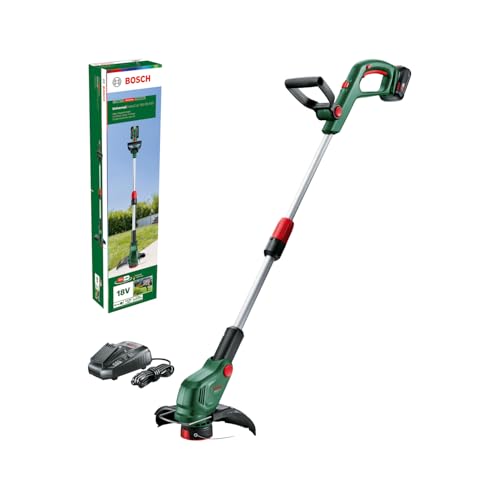
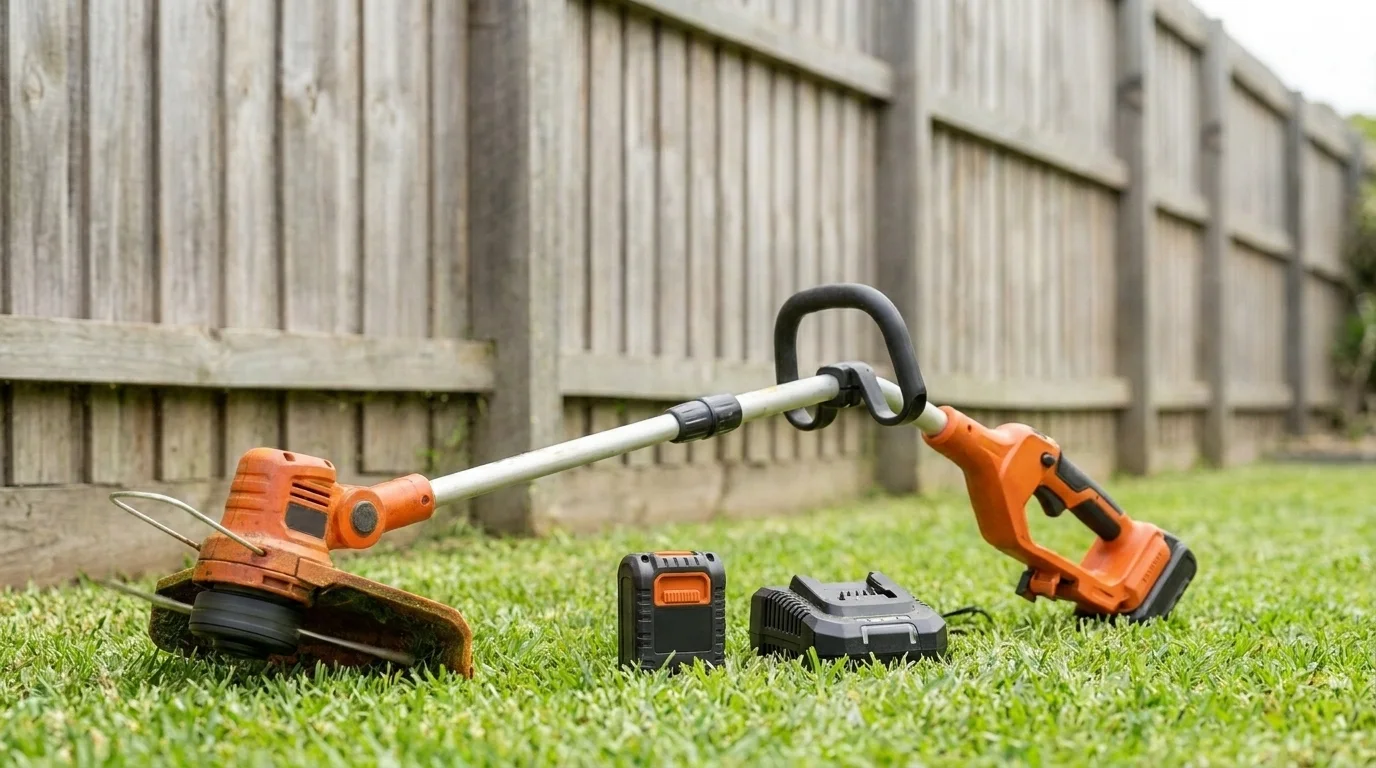
- The bare-tool-vs-kit gotcha: check this first. The single biggest catch. A "kit" includes a battery and charger and works out of the box; a "bare tool" or "skin" is the body only, with the battery sold separately because you're assumed to already own one. In this very guide our budget Bosch is a bare tool, while the Stanley and the Ryobi are kits. Read the title carefully (words like "without battery" or "tool only" are the tell) and budget for a battery and charger if it's a skin.
- Cutting width. A wider cutting path means fewer passes to clear the same area. Our picks run from 25cm (the Stanley 2Ah kit) to 33cm (the Stanley 4.0Ah kit), with the Ryobi adjustable around 25 to 30cm, the Black+Decker at 28cm and both Bosch trimmers at 26cm. For a big nature strip, wider is faster.
- Line feed: how the string is fed out. Bump, automatic or semi-automatic, and it makes a real difference to how annoying the tool is to live with day to day. Covered in full in the trimmer line section above.
- Straight vs curved shaft. A straight shaft reaches further under benches and shrubs, suits taller users, and can often take a brushcutter blade for heavy weeds. A curved shaft is lighter and more manoeuvrable for small jobs and tight edging. Match it to your body and your block.
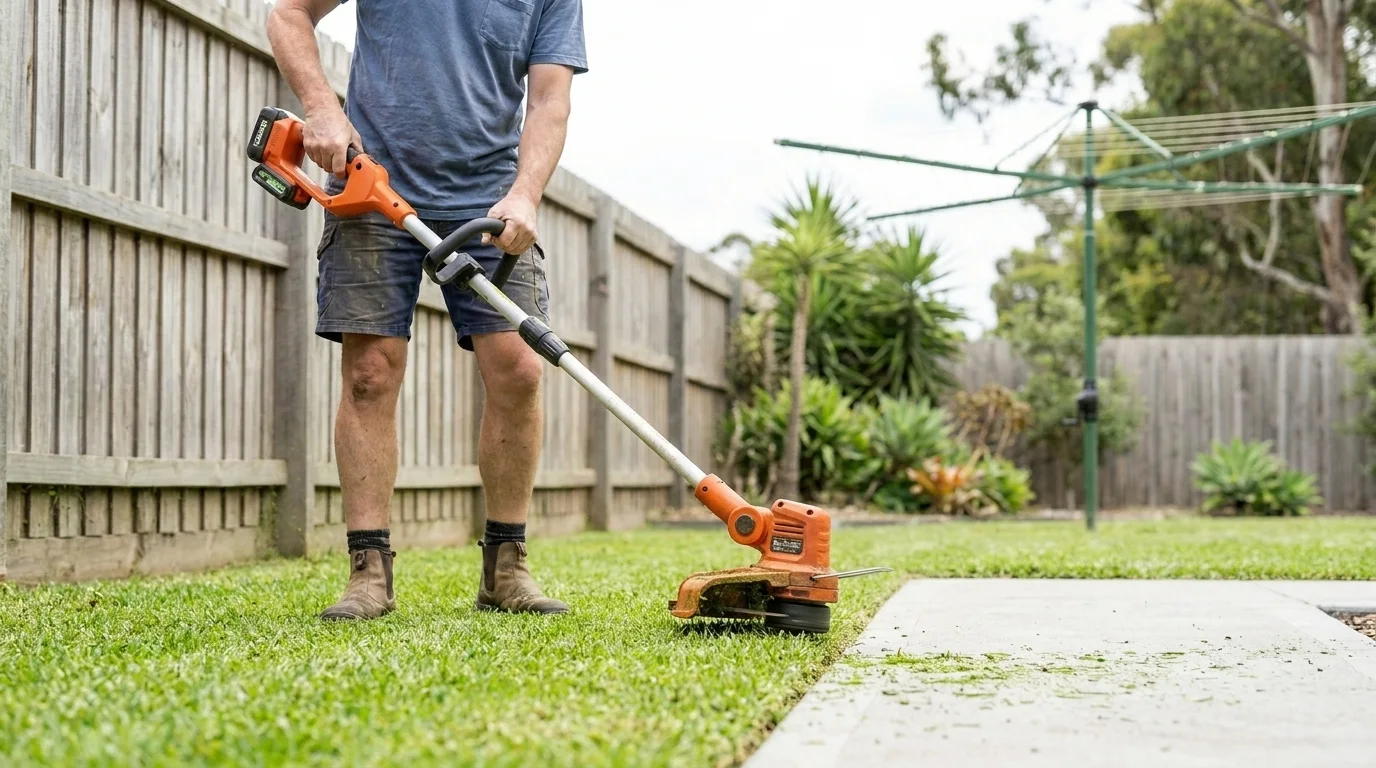
- 2-in-1 edging. An easy-edge function (a twist of the handle or head to vertical) lets you switch from trimming grass to edging a path or the nature strip without a second tool. Five of our six picks list an edging mode or an edging guide wheel, per their listings. For a permanent border rather than a trimmed line, see our garden edging picks.
- Battery voltage and Ah (for cordless). Voltage relates to power; amp-hours (Ah) relate to how long it runs. A higher-Ah battery means fewer recharge stops: the Stanley's 4.0Ah will outlast the Ryobi kit's 1.5Ah on a single charge.
- Brushless motor. A brushless motor is more efficient, squeezes more runtime out of each charge and tends to last longer than a brushed one. Worth paying for on a tool you'll use weekly through summer.
- Weight and harness. Most home trimmers sit around 2 to 3kg, which is fine handheld. If you're clearing a large block in one go, a shoulder harness spreads the load and saves your arms.
- The Ryobi/Bunnings ONE+ ecosystem. If you already own Ryobi 18V ONE+ tools, staying on that platform means every battery you have works across the lot, a real ongoing saving. The same logic applies to the Bosch Power for All system.
Which Whipper Snipper for Your Yard?
A quick way to match the tool to your place:
- Already own a Bosch 18V battery, small-to-medium yard: the bare-tool Bosch EasyGrassCut 18 (budget entry, and your existing battery drops straight in).
- Standard suburban block, no existing batteries, want it to just work: the Stanley FATMAX V20 kit (battery and charger included, 33cm cut, automatic feed). The easy "buy it and go" choice for most homeowners.
- Bigger yard, or you already own Ryobi ONE+ tools: the Ryobi 18V ONE+ Starter Kit (included battery and charger, and every spare ONE+ battery adds runtime).
- Big rural-residential block, long kikuyu, thick weeds: step up to a straight-shaft petrol unit that can take a brushcutter blade. Overkill for everyone else.
When to Buy a Whipper Snipper in Australia: A Seasonal Note
Our warm-season grasses (kikuyu, couch and buffalo) grow fastest through spring and summer, roughly September to March, which is when a whipper snipper earns its keep on the edges and the long bits the mower misses. Early spring is the time to get sorted, so you're ready before the growing season peaks. Year-round, the trimmer still pulls its weight keeping the edges, the nature strip and around the clothesline tidy. While you're sorting the outdoor kit, our garden hose guide and leaf blower guide round out the rest of the backyard setup, and remember most councils restrict the hours you can run powered garden gear, so check your local by-laws before an early-morning go.
Frequently Asked Questions
What is the best petrol whipper snipper in Australia?
Petrol suits big blocks, acreage and thick, woody growth where you need unlimited runtime and the most raw power. In Australia the trusted petrol names are Honda, Stihl and Husqvarna, sold through specialist outdoor-power dealers rather than as battery kits. Expect more weight, regular fuel mixing and starting maintenance. For an ordinary suburban yard a cordless kit is lighter and easier; reach for petrol only when battery runtime genuinely won't cover the area.
What is the best budget whipper snipper in Australia?
The cheapest sticker price is often a trap. A bare-tool trimmer like the Bosch EasyGrassCut 18 looks budget, but with no battery or charger in the box the real all-in cost climbs once you add a pack. If you're not already in a battery ecosystem, a complete kit usually works out better value because nothing extra is needed to start cutting. Always check whether 'budget' listings include a battery and charger before you compare prices.
What is the best lightweight whipper snipper in Australia?
Lightweight matters most if you're trimming for a while, working overhead on banks, or have wrist or shoulder strain. Cordless and corded electric trimmers are far lighter than petrol, which carries an engine and fuel. To keep weight down, choose a smaller-capacity battery, look for a balanced shaft and an adjustable telescopic handle, and avoid oversized 36V or petrol units unless you genuinely need the power for thick growth or a large block.
What is the best commercial whipper snipper in Australia?
For commercial use, acreage or heavy daily clearing you want more grunt and longer runtime than a homeowner kit delivers. That usually means petrol from Stihl, Honda or Husqvarna, or a high-capacity brushless battery line trimmer that takes a thicker line or a brushcutter blade for woody growth. Prioritise build durability, easy line or blade swaps and dealer-backed service. The compact homeowner kits we pick are built for suburban edging, not all-day commercial loads.
What is the best whipper snipper in Australia for 2026?
For most Australian homeowners, the Stanley FATMAX V20 18V String Trimmer Kit is the best buy because it's a complete kit: it includes an 18V 4.0Ah battery and a charger, so it works out of the box, with a 33cm cut and automatic line feed. If you already own a Bosch 18V battery, the bare-tool Bosch EasyGrassCut 18 (battery sold separately) is the budget entry. For a bigger yard or anyone already on the Ryobi platform, the Ryobi 18V ONE+ Grass Trimmer Starter Kit (battery and charger included) is the pick.
Do these whipper snippers come with a battery?
Not all of them: this is the most important thing to check. The Stanley FATMAX V20 kit and the Ryobi 18V ONE+ Starter Kit are both kits that include a battery and charger, so they run the moment they arrive, and so do the three kits we added in October 2026 (the Black+Decker 28cm, the Stanley FATMAX V20 2Ah and the Bosch UniversalGrassCut), whose listings include a battery and charger. The budget Bosch EasyGrassCut 18, however, is a bare tool (a "skin"). The battery and charger are sold separately, so you must already own a compatible Bosch 18V battery or buy one, which adds to the price.
What's the difference between a whipper snipper, a line trimmer and a string trimmer?
Nothing: they're four names for the same tool. "Whipper snipper" is the Australian word; "line trimmer", "grass trimmer" and "string trimmer" are what you'll see on the formal product listings and on overseas packaging. They all describe a tool that spins a nylon line (or sometimes a blade) to cut grass and weeds where a mower can't reach, along fences, paths, the nature strip and around obstacles.
How wide should the cutting width be?
A wider cutting width clears the same area in fewer passes, so it's faster on bigger jobs. The picks in this guide range from 25cm on the Stanley 2Ah kit to 33cm on the Stanley 4.0Ah kit, with the Ryobi adjustable around 25 to 30cm. For a small courtyard or just edging, a narrower 25 to 26cm head is plenty; for a long nature strip and lots of edges, the wider 33cm Stanley swath saves time.
Is a corded, cordless or petrol whipper snipper best?
It depends on your block. Corded electric is the cheapest and lightest but tethers you to roughly 20 metres from a power point. Cordless battery is the mainstream choice: convenient and cordless, though runtime is finite and cheap units bog down in long or wet grass. Petrol gives the most power and unlimited runtime for big blocks, long kikuyu and thick weeds, but it's heavy, loud and needs fuel mixing and servicing, making it overkill for a typical suburban lawn.
What is automatic line feed and is it better than bump-feed?
Line feed is how the trimmer releases more nylon string as it wears down. Bump-feed means tapping the head on the ground to feed out more line, which is reliable but fiddly mid-job. Automatic feed tops the line up for you as you work, and semi-automatic feeds the line each time you release the trigger, as Bosch describes its spool. For a home lawn, automatic feed (like the Stanley's) is the least hassle, though bump-feed heads are simpler and cheaper to live with.
Why pay more for the Stanley kit than the cheaper Bosch?
Because you're comparing a complete kit against a bare tool. The Bosch's lower price is for the body only. Add a battery and charger and the real all-in cost approaches the Stanley's. The Stanley FATMAX V20 kit already includes a 4.0Ah battery and a charger, plus a wider 33cm cut and automatic feed, so for anyone not already in a battery ecosystem it's the better value and works out of the box.
Is Stihl or Honda the better whipper snipper?
They win on different things. Honda builds four stroke engines, so you fuel it with straight petrol instead of mixing two stroke oil, it runs quieter and it is the easier machine to live with. Stihl covers a much wider range through its dealer network, from the battery FSA 45 to the professional FS 131 R, and dealer servicing is the real reason people buy it. For a suburban block, neither is necessary.
What is the best trimmer line in Australia?
Match the line to the grass, not the brand. Round 1.6mm line is the default for soft lawn edges and it is what the Stanley kit uses. Step up to 2.0mm for kikuyu, couch and buffalo runners, and to a twisted or square profile if you are cutting thick weeds, because the edges bite instead of tearing. Thicker line eats battery faster and not every head will take it, so check the maximum diameter printed on the spool cover first.
Which brand makes the best grass trimmer in Australia?
For a suburban lawn, pick the battery platform before the brand. Ryobi 18V ONE+ is the Bunnings default with one battery across its range, Ozito PXC is another cordless platform, and Bosch and Stanley FATMAX both make sensible home-grade tools. Makita and DeWalt are trade platforms worth buying into only if you already own their batteries, and Stihl, Honda and Husqvarna are the dealer brands for acreage and commercial work.
How do you start a whipper snipper?
On a cordless trimmer, slide the battery in until it clicks, release the safety lock-off with your thumb and squeeze the trigger. On petrol, set the choke to full, prime the bulb about 6 times until fuel shows, hold the machine down with the head clear of the ground and pull the cord in short sharp strokes rather than long slow ones. When it fires, move the choke to half, then to run once it settles.
How do you replace whipper snipper line?
Take the battery out first. Press the tabs on the head, lift the spool off and clear the old line and grass. Cut a length to the maximum the cover states, feed it through the eyelet, then wind it in the direction of the arrow moulded on the spool, keeping the two halves in their own channels so they do not cross. Leave about 15cm poking out each side, clip the cover back on and pull the ends until they lock.
What is the easiest whipper snipper to use?
The lightest one with a straight shaft and a loop handle you can slide to your height. Weight matters most, because you are holding it out in front of you: the Stanley FATMAX V20 sits at about 2.4kg with its 4.0Ah battery, and a bare tool without the battery is lighter again. Cordless is far easier than petrol, since there is no pull cord, no choke and no fuel mixing, and an automatic line feed saves the bump-and-hope routine.
What is the best whipper snipper available at Bunnings?
At Bunnings, pick by battery platform first: Ryobi 18V ONE+ is the Bunnings house platform, and if you already own any ONE+ gear it is usually the cheapest path, while Ozito PXC is the budget line and the cheapest genuine entry into cordless. The Ryobi RLT183215 kit compared here is listed as an Amazon exclusive, so match the model number before you buy.
What is the toughest trimmer line?
For tough growth, use the thickest line your machine is rated for in a twisted or square profile, which cuts more aggressively through thick growth than round line, though it wears faster. Petrol and heavy duty machines run 2.0mm line and up. Never go thicker than your tool is rated for, because that strains the motor and can jam the head.
What whipper snipper is best for a large block?
This guide has no large block pick. Its kits are built for suburban blocks, and on a half acre with long boundary fencing you will be swapping batteries partway through. For a large block, look for a straight shaft machine that accepts a brushcutter blade, a shoulder harness, and either petrol or a high capacity brushless battery platform with several large packs in rotation.