| Pick | Best for | Key spec | Rating |
|---|
| RENPHO Massage Gun Deep Tissue | Value pick | 5 speeds to 3,200 rpm, from 40dB | 4.4 |
| Bob and Brad C2 Pro Massage Gun | Heat and cold therapy | 10mm amplitude, 44 lbs of percussive force | 4.6 |
| Therabody Theragun Prime (6th Gen) | Premium, app guided | Up to 2 hours battery, LED pressure feedback | 5.0 |
Do you need a premium massage gun? The honest answer
No. And we will not pretend otherwise to sell you a more expensive gun.
The uncomfortable truth for premium brands is that percussion is a fairly mature technology. A well built unit like the RENPHO Deep Tissue spins a brushless motor up to 3200 rpm, drives five interchangeable heads into your muscles, runs quietly from around 40dB, and lasts about a week of workouts on a single USB-C charge. For the overwhelming majority of people (gym-goers, runners, desk workers, weekend sport players) that is genuinely enough. Spend the difference on the kit you actually train in: our guide to gym shorts compares seven pairs on inseam, liner and pocket security.
And for desk workers, a quiet under desk walking pad adds daily movement: our walking pad guide with manual incline picks compares the pads.
So what does the extra money buy? Not dramatically more raw power. It buys features and refinement:
- Heat and cold therapy plus a force readout: the step up to the Bob and Brad C2 Pro. The heat head helps loosen stiff, cold muscles and improve circulation; the cold head soothes acute soreness. The LED display also shows how hard you are pressing, which stops you bruising yourself.
- Premium ergonomics, durability, an app ecosystem and clinical validation: the leap to the Therabody Theragun Prime. You get the patented triangle grip that reaches your own back without yoga, a rugged body drop-tested to ten feet, Bluetooth app control with guided routines, and the reassurance of an FDA-registered, science-backed device.
Put plainly: buy the RENPHO if you want strong results without paying for extras, the C2 Pro if heat and cold therapy appeals, and the Theragun if the brand, ergonomics and app ecosystem matter to you and the budget is there. None of them is a bad choice. They are aimed at different buyers.
Do massage guns actually work?
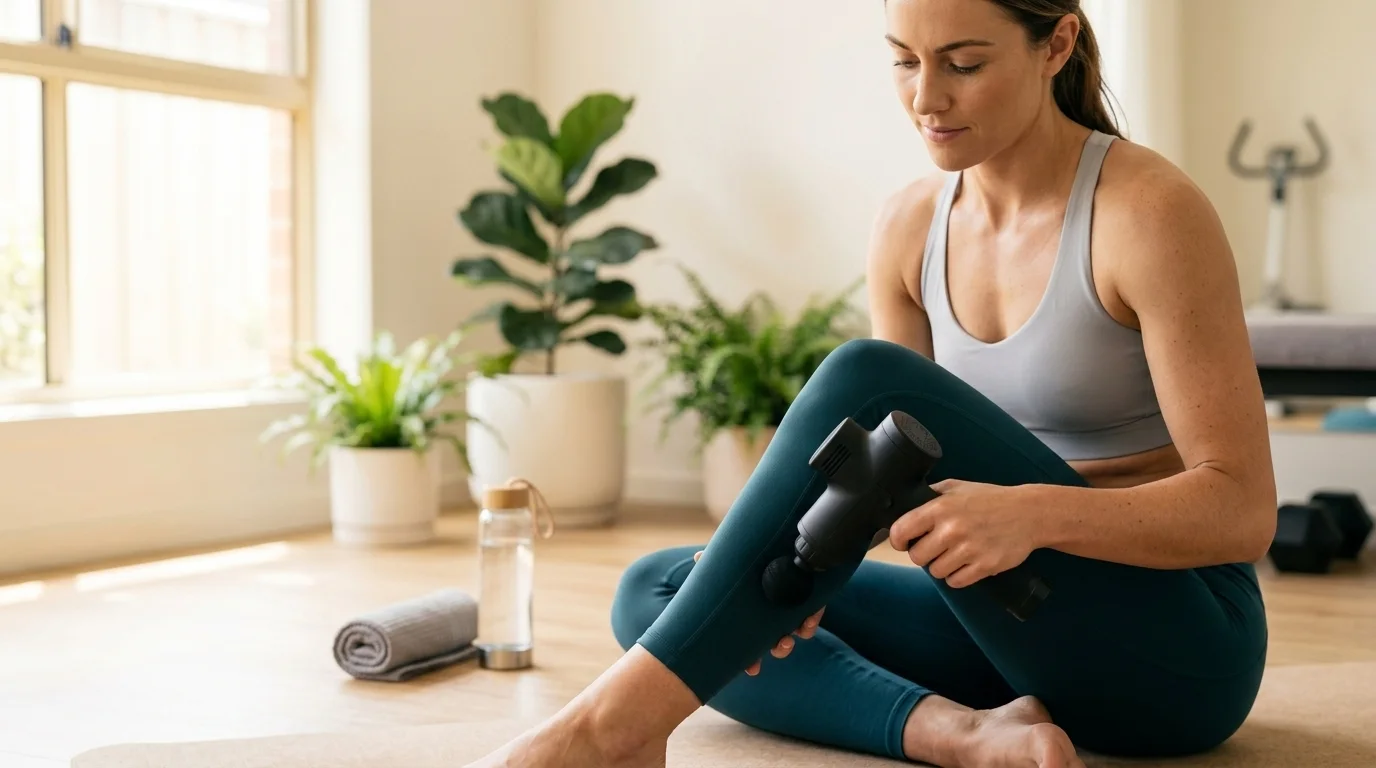
Yes, within limits. A percussion gun drives a head into the muscle at speed, and that repeated mechanical pulse raises local blood flow and helps tight tissue let go. The effect people notice is short term: muscles feel looser and delayed-onset muscle soreness feels duller for a while afterwards. What a massage gun does not do is repair an injury, lengthen a muscle for good, or stand in for sleep and strength work. Treat it as a few minutes of self-directed relief, the same job a foam roller does with body weight instead of a motor.
Stroke depth is what separates a gun from a vibrating wand, and it is the one number worth checking before you buy. The Bob and Brad C2 Pro states 10mm of amplitude and 44 lbs of percussive force, which is why it reaches into bulky muscle like glutes and quads that a surface buzz never touches. If your recovery routine already leans on cold, an ice bath works on the whole limb from the outside while the gun works one muscle directly.
Do physiotherapists recommend massage guns?
Many do, as one tool among several rather than a fix on its own. The Bob and Brad C2 Pro in this guide was designed by two practising physiotherapists, which tells you the profession is comfortable with the format. The advice they give matches ours: keep each session to one or two minutes per muscle, stay off bone, joints and the spine, and book a physiotherapist rather than reaching for the gun if pain is sharp, new, or refuses to settle. A massage gun manages tightness. It does not diagnose anything.
How to choose a massage gun
A handful of specs actually matter. Here is what each one means in plain English so you can match a gun to your needs rather than a marketing sheet.
Amplitude (stroke depth)
Amplitude is how far the head travels in and out with each stroke, usually measured in millimetres. A longer stroke (the C2 Pro is 10mm) reaches deeper into bulky muscle like glutes and quads. Budget guns tend to sit lower, which is gentler and perfectly fine for general tension and smaller muscle groups.
Stall force
Stall force is how hard you can push the gun into a muscle before the motor bogs down and stops. Higher is better for deep work on big muscles. This is where premium adaptive motors, like the Theragun's anti-stall design, justify part of their price: they hold speed under heavy pressure where cheaper units can stutter.
Speeds and RPM
More speeds give you finer control: low for sensitive areas and warm-ups, high for deep flushing. All three picks here top out around 3200 rpm with five speeds, which is plenty. Do not get hung up chasing the highest number: usable range matters more than a headline figure.
Noise level
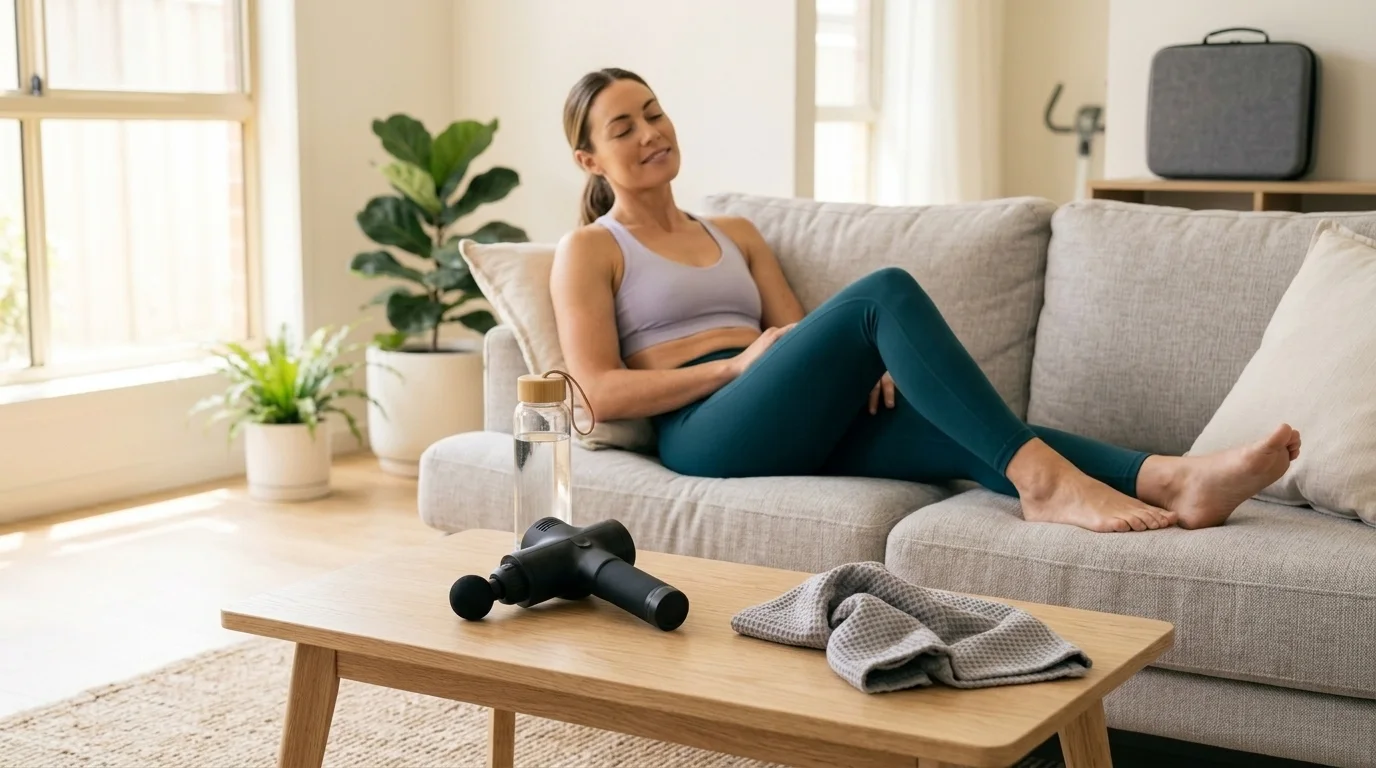
Early massage guns sounded like a power drill. Modern brushless motors are far quieter. Anything around 40dB (which all three of these claim) is quiet enough to use on the couch while watching TV without drowning out the dialogue.
Battery life and charging
USB-C is now the standard and a big convenience: the RENPHO can even top up from a power bank. Look at real-world runtime too. The RENPHO's 2500mAh cell handles roughly a week of workouts, while the Theragun Prime stretches to around two hours of continuous use, useful if several people in the house share it.
Weight and ergonomics
You hold this thing out at arm's length, so weight matters. Both the RENPHO and C2 Pro come in around 1.5lbs (0.7kg), which is easy on the wrist. Grip shape matters just as much: the Theragun's triangle handle is the standout for reaching your own upper back and shoulders without contorting.
Attachments and heads
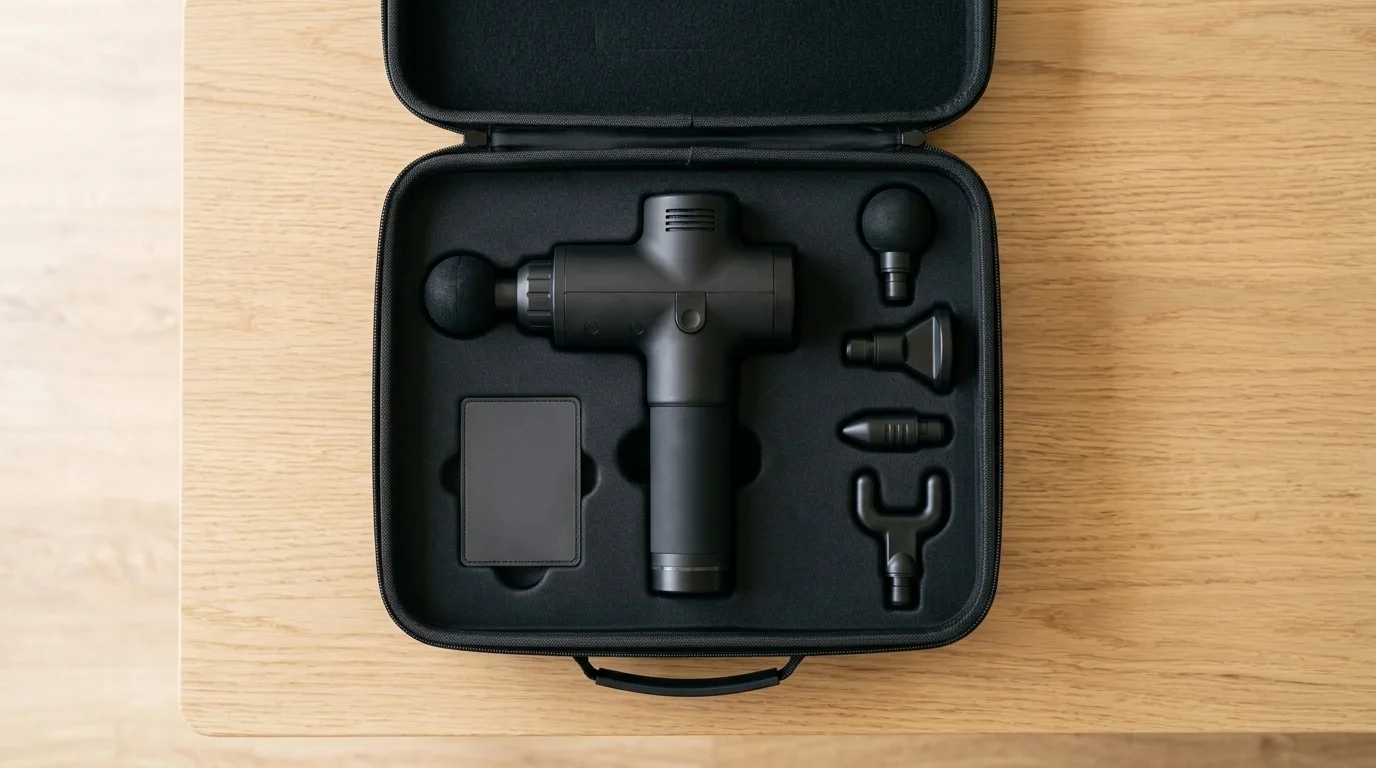
Different heads suit different jobs: a ball head for large muscle groups, a flatter head for general use, a bullet or cone for pinpoint trigger points, and a fork-style head for areas like the spine's edges or the Achilles. The RENPHO ships with five, the C2 Pro adds a hot/cold therapy head, and the Theragun keeps it deliberately simple with two well-chosen attachments.
Heat and cold therapy
This is the C2 Pro's party trick. Switching to the cold head helps calm freshly worked or sore muscles, while the heat head warms stiff tissue and encourages blood flow before activity. It effectively rolls a heat pack and an ice pack into the gun itself, a genuinely useful extra if recovery is a priority for you. If it is whole-body heat you are after rather than a spot treatment, that is a different tool again: an infrared sauna blanket wraps the warmth around you instead of driving it into one muscle. For a seated heat session, the infrared sauna guide covers another home setup to consider.
App connectivity: who actually needs it?
The Theragun Prime connects over Bluetooth to the Therabody app, which serves up guided routines, and the free Coach app builds personalised recovery plans. If you like structure and want to be told exactly which muscle to target for how long, it is great. If you just want to point the gun at a sore spot, you will likely never open it, and that is a fair reason to save money with one of the cheaper picks. If a sleep-and-recovery upgrade is what you are after, a good weighted blanket may do more for your overnight recovery than any app.
Percussion vs vibration massagers
Do not confuse a massage gun with a cheaper vibration massager. Vibration devices buzz on the surface of the skin and feel pleasant, but they do not move tissue. A percussion massage gun physically punches into the muscle with real stroke depth, which is what makes it effective for deep release and recovery. If a product cannot tell you its amplitude and looks more like a buzzing wand than a gun, it is probably vibration-only: fine for relaxation, not for the job these picks do. And if what you are managing is pain rather than muscle tightness, neither shape is the right tool: a TENS machine sends electrical pulses through sticky pads to interrupt pain signals rather than working the tissue.
Who needs a massage gun?
- Athletes and gym-goers: for warming up muscles before a session and flushing out DOMS afterwards.
- Runners and cyclists: for tight calves, quads and IT bands that nag between rides and runs.
- Desk workers: for the classic knotted neck, shoulders and upper back that build up over a working day.
- Anyone with general muscle tightness: a quick, on-demand alternative to booking a remedial massage every time you stiffen up.
How to use a massage gun safely
Massage guns are simple, but a few habits keep them safe and effective:
- Float, do not press. Let the gun's own percussion do the work: glide it slowly over the muscle rather than jamming it in hard.
- Keep it brief. Around one to two minutes per muscle group is plenty. Longer is not better.
- Stay on muscle. Never run the gun directly over bone, joints, the spine, the front of your neck, or any injury, bruise or area of broken skin.
- Skip the painful spots. Discomfort is normal; sharp pain is a signal to stop.
- Take care with certain conditions. If you are pregnant, taking blood thinners, or managing a medical condition such as a clotting disorder or recent injury, check with a health professional first.
How do you use a massage gun on your legs?
Work one muscle at a time, in this order. 1. Calves: sit down, rest the ankle on the opposite knee and float the gun along the belly of the calf for 60 seconds a side. 2. Quads: straighten the leg and sweep from just above the knee up towards the hip for 60 to 90 seconds. 3. Hamstrings: put the foot on a chair and run the gun along the back of the thigh. 4. Glutes: use the deepest head you have, because this is the bulkiest muscle in the routine. Stay off the shin bone, the back of the knee and the IT band itself.
This is general guidance, not medical advice. If you have an injury, a chronic condition or any doubt at all, see a doctor or physiotherapist before using a massage gun.
How we picked
Last checked: 9 October 2026, for Amazon Australia stock.
We selected these three guns by combining manufacturer specifications, aggregate owner sentiment from Australian and international buyers, and a stock check against Amazon Australia that we re-run regularly rather than treating a one-off snapshot as permanent. We have not run these units through a lab ourselves, and we will not pretend to have. What we have done is read the spec sheets carefully, cross-check the claims, weigh up real-world owner feedback, and confirm AU availability and pricing so you are not sent to a dead listing. Prices move, so treat the figures here as a guide and check the live price before you buy. If you want to pair recovery with better daily-health tracking, our guide to the best bathroom scales in Australia is a sensible companion read.
Where JB Hi-Fi, The Good Guys and Kmart fit
Massage guns sell through plenty of Australian shopfronts. JB Hi-Fi, The Good Guys, Myer and Kmart all carry them, and Hydragun sells its own gun direct as an Australian brand with local support. We do not link to those channels, because the picks above are the models we can check on Amazon Australia with a live price, a real star rating and a review count you can read for yourself. If you would rather buy in person, take the four specs that matter from this page, amplitude, stall force, speed range and noise, and hold the demo unit before you pay.
Frequently Asked Questions
Do you really not need a premium massage gun?
Correct. A well built gun like the RENPHO delivers most of the percussion performance of a Theragun. The extra money buys heat and cold therapy and a force readout, or premium ergonomics, a tougher build, an app ecosystem and clinical validation, not dramatically more raw power. For most people the budget pick is genuinely enough.
Are massage guns actually worth it?
For anyone with regular muscle tightness, yes. As a quick, self-directed way to ease DOMS, warm up muscles and relieve desk-bound neck and shoulder tension, a massage gun is one of the better-value recovery tools you can own. It does not replace proper rest, hydration or treatment for real injuries, but as an on-demand option it earns its place.
How often can I use a massage gun?
Daily use is fine for most healthy people, provided you keep each session short, roughly one to two minutes per muscle group. You can use it before exercise to warm up and after to ease soreness. If an area feels worse rather than better, give it a rest and avoid going back over it repeatedly.
What does heat and cold therapy add?
It is the standout feature of the Bob and Brad C2 Pro. The heat head warms stiff, cold muscles and encourages blood flow, which suits pre-activity loosening. The cold head soothes freshly worked or sore tissue. It effectively combines a heat pack and an ice pack into the gun, which is a useful extra if recovery is a priority for you.
Are massage guns noisy?
Older models were, but modern brushless ones are not. All three picks here run at around 40dB, which is quiet enough to use on the couch while watching TV. If you train at odd hours or share a wall with neighbours, any of these will keep the peace.
Do I need the app and Bluetooth features?
Only if you want structure. The Theragun Prime's app offers guided routines and personalised recovery plans, which some people love. If you just want to point the gun at a sore spot and switch it off, you will rarely open the app, and that is a perfectly good reason to choose one of the cheaper picks instead.
Where on the body should I avoid using a massage gun?
Keep the gun on muscle and off everything else. Avoid bone, joints, the spine, the front and sides of the neck, and any injury, bruise or area of broken skin. If you are pregnant, on blood thinners or managing a medical condition, check with a health professional before use. This is general guidance, not medical advice.
Can you use a massage gun while pregnant?
Ask your doctor or midwife first. Pregnancy sits on the same caution list as blood thinners, clotting disorders and recent injuries, which means it needs a professional sign-off rather than a guess. If you do get the go-ahead, the usual limits still apply: stay on muscle, keep well away from the abdomen, lower back and any swollen area, hold each spot for under a minute, and stop at the first sign of sharp pain. This is general guidance, not medical advice.
Can you use a massage gun on your neck?
Only on the muscle across the back and sides of the shoulders, never the front or sides of the throat, where the airway and the major blood vessels sit. Keep the gun moving, fit the softest head you have and give the area no more than a minute. If desk tension always lands in the same spot, a hands-free neck and shoulder massager is the easier daily fix, because it kneads the area while you sit instead of asking you to hold a gun above your own head.
Which brand of massage gun is considered the best?
This guide compares models rather than ranking brands. Therabody's Theragun Prime is the premium choice for ergonomics, durability and app routines, Bob and Brad's C2 Pro adds heat and cold therapy, and RENPHO's Deep Tissue gives the most for the least money. Hydragun is an Australian brand that sells its own gun direct, outside this comparison.
Is the Kmart massage gun any good?
A Kmart massage gun is worth buying if it states the four specs that matter, amplitude, stall force, speed range and noise, and the demo unit feels right in your hand before you pay. If it cannot state its amplitude, it is probably a vibration massager rather than a percussion gun. Our picks come from Amazon Australia, so the Kmart gun itself is not ranked here.
What is the best budget massage gun in Australia?
The RENPHO Deep Tissue is our budget pick and the most reviewed of the three guns here on Amazon Australia. It spins a brushless motor up to 3200 rpm, comes with five interchangeable heads, runs from around 40dB and lasts about a week of workouts on a USB-C charge. For most gym goers and desk workers, that is genuinely enough.
What are the downsides of using a massage gun?
The relief is short term: a massage gun loosens tight muscle for a while but does not repair an injury or replace sleep and strength work. It must stay off bone, joints, the spine and the front of the neck, and pregnancy or blood thinners need a health professional's advice first. You also hold it at arm's length, so weight matters.
What is the most recommended massage gun?
Our most recommended massage gun is the Bob and Brad C2 Pro, the best overall pick in this guide, rated 4.6 stars from 12,310 Amazon AU ratings. Designed by two practising physiotherapists, it states 10mm of amplitude and adds heat and cold therapy. For the least money, choose the RENPHO Deep Tissue; for premium ergonomics and app routines, the Therabody Theragun Prime.