Best Weighted Blanket Australia 2026: Do They Actually Work?
By Anish Puri·2 June 2026·Last updated 6 September 2026·9 min read
Weighted blankets promise calmer, deeper sleep through gentle even pressure. Here's the honest answer on whether they work, the weight to choose, and the three picks worth buying in Australia.
Prices checked 17 October 2026 on Amazon AU and subject to change.
Weighted blankets went from a niche therapy item to a mainstream bedroom product in just a few years, and the marketing around them has run well ahead of the evidence. The best weighted blanket in Australia for most adults is the YnM Weighted Blanket at about $62, bought in a weight near 10% of your body weight, which is 7kg for a 70kg adult; the LUXOR Microfibre at about $44 is the cheapest way to find out whether the idea suits you, and the YnM Cotton at about $119 is the pick for hot sleepers. You will see claims that a weighted blanket will cure your insomnia, eliminate your anxiety, and transform your sleep overnight. The reality is more modest, and more useful to know before you spend the money.
The honest version is this: many people genuinely find a weighted blanket calming and say it helps them settle and fall asleep more easily. The research is promising but modest, the effect is individual, and a weighted blanket is not a medical treatment. For the right person it is a small, pleasant upgrade to bedtime. For others it does little, or feels trapping. The trick is buying the right weight and the right fabric so you actually give it a fair go.
Here is how weighted blankets work, the honest answer on whether they help, the single most important buying decision (the weight), and the three blankets worth buying in Australia in 2026 across budget, best-for-most, and premium.
How the three weighted blankets compare
Blanket
Best for
Shell and fill
Price band
Rating
LUXOR Microfibre Weighted Blanket
Trying the idea, and cold sleepers
Microfibre shell, machine washable, Australian brand
from $44
4.5
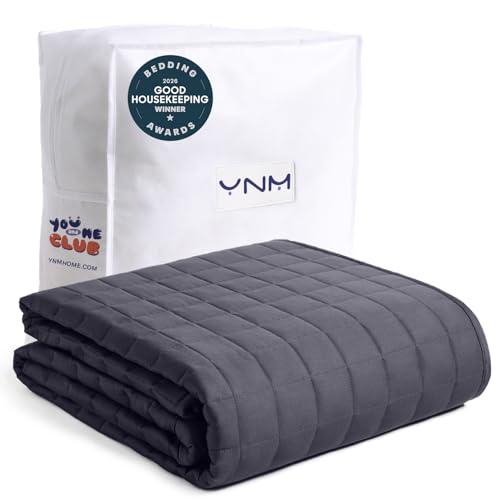
YnM Weighted Blanket
Most people
Breathable cotton shell, 7-layer glass-bead fill
from $62
4.6
YnM Cotton Weighted Blanket (listed as Oeko-Tex certified)
Hot sleepers and natural fibre
cotton shell the listing describes as Oeko-Tex certified, glass-bead fill
from $119
4.6
How Weighted Blankets Work
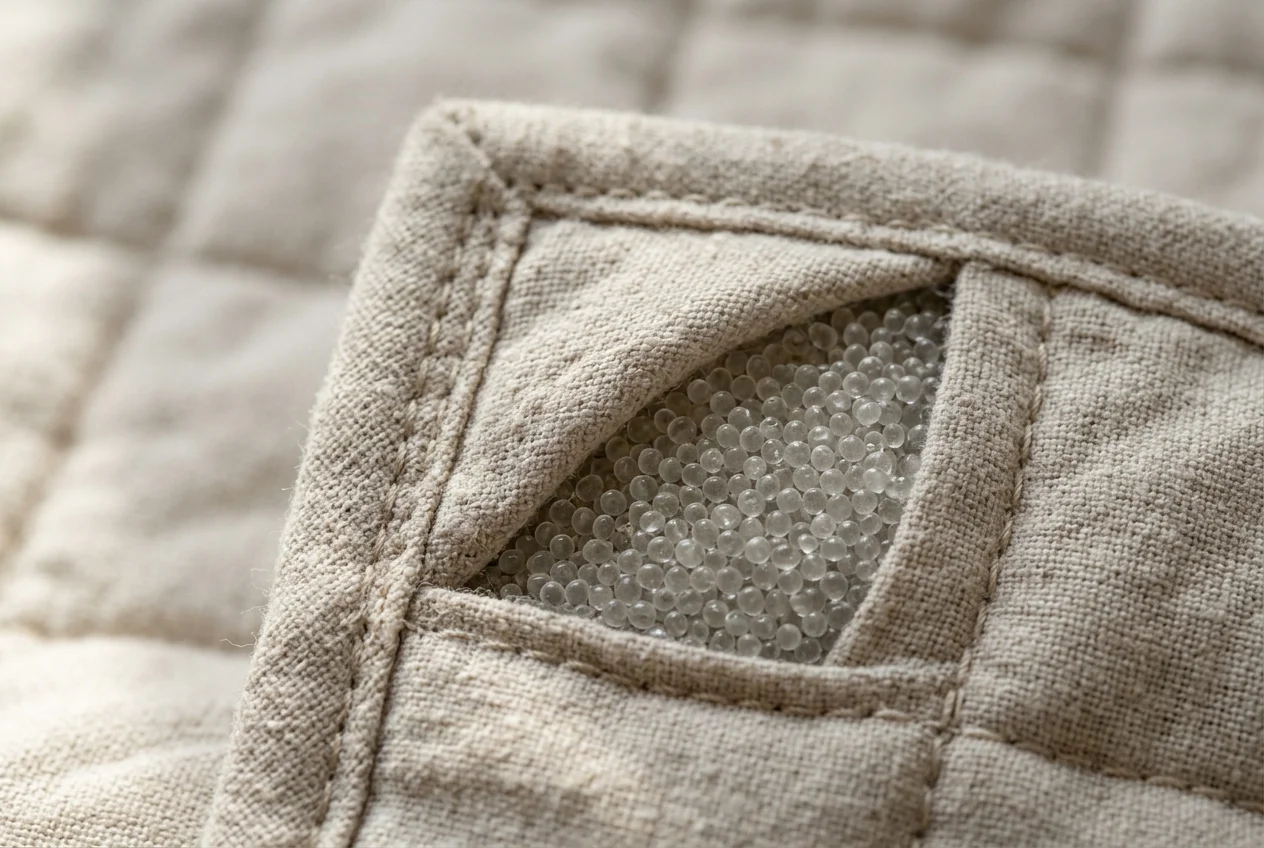
A weighted blanket is exactly what it sounds like: a blanket made heavier than normal by filling it with small glass beads or plastic pellets, usually weighing somewhere between 2kg and 11kg. The weight is spread evenly across the whole blanket so that lying under it feels like a firm, gentle, all-over press rather than a single heavy spot.
The idea behind them is a concept called deep pressure stimulation, sometimes called deep touch pressure. The basic principle is that gentle, evenly distributed pressure across the body has a calming, grounding effect, in the same way that a firm hug, a snug swaddle, or being tucked in tightly can feel reassuring. The even weight encourages your body to relax and settle, which for many people makes it easier to wind down at the end of the day.
That is the mechanism in plain terms: even weight, applied across the whole body, that many people find calming. It is not a drug, not a device with settings, and not doing anything to your body chemistry you can dial up or down. It is simply weight, and whether that weight feels soothing or trapping is genuinely individual.
Budget pick
LUXOR
LUXOR Microfibre Weighted Blanket
4.6(121)
$44.10
Amazon.com.au price as of 05:01 am AEDT, subject to change
As an Amazon Associate, NestPath earns from qualifying purchases.
Do Weighted Blankets Actually Work? (The Honest Answer)
This is the question everyone wants answered before spending the money, so here is the honest, evidence-cautious version rather than the marketing version.
Research into weighted blankets suggests they may help some people fall asleep more easily and feel calmer at bedtime, with the most encouraging signals around anxiety and difficulty sleeping. A lot of people who use one report that it helps them settle, feel less restless, and drift off more quickly. That is a real and common experience, and it is the reason the category has grown so fast.
But there are important honest caveats. The evidence is promising but modest. This is not a settled, proven, works-for-everyone result. The effect is strongly individual: some people feel an immediate difference, others feel nothing, and a few actively dislike the sensation of weight and find it claustrophobic. A weighted blanket is not a medical treatment and not a cure for insomnia, anxiety, or any condition. If you have a diagnosed sleep, anxiety, or health condition, a blanket is at best a comfort aid alongside proper care, not a replacement for it.
The fair summary: many people find weighted blankets genuinely helpful, the evidence is encouraging but limited, and they will not work for everyone. If you go in expecting a pleasant, calming addition to bedtime (rather than a guaranteed fix), you are setting a realistic expectation. And because the effect depends so much on getting the weight right, the budget pick exists precisely so you can find out whether it works for you without spending a lot.
What Weight Should You Choose?
This is the single most important decision when buying a weighted blanket, and it is the one people most often get wrong. Choose the wrong weight and the blanket will either feel like nothing or feel like a trap, and in both cases you will conclude weighted blankets "don't work" when really you just bought the wrong one.
The standard guidance is to choose a blanket that is roughly 10% of your body weight. A blanket around a tenth of your weight is heavy enough to deliver the deep-pressure feeling, but not so heavy that it feels oppressive or makes it hard to move and reposition during the night.
A worked example: if you weigh 70kg, 10% is 7kg, so you would look for a 7kg blanket, and since blankets come in fixed weights, round to the nearest available size (a 7kg or an 8kg). A 60kg adult lands around 6kg; a 90kg adult around 9kg. You do not need to be exact. Within a kilo or so of the 10% figure is fine. If you are between two sizes and like a firmer feel, size up; if you want it lighter, size down.
Your body weight
10% of body weight
Blanket weight to buy
40kg
4kg
4kg
50kg
5kg
5kg
60kg
6kg
6kg
70kg
7kg
7kg, or 8kg for a firmer feel
80kg
8kg
8kg
90kg
9kg
9kg
100kg
10kg
9kg, or 11kg for a firmer feel
110kg
11kg
11kg
120kg
12kg
11kg, which is the heaviest commonly sold
Two failure modes to avoid. Too heavy feels trapping and restrictive. You struggle to turn over, and instead of calming you it makes you tense. Too light does basically nothing. It is just a slightly heavier-than-normal blanket with none of the deep-pressure effect. The 10% rule keeps you in the useful middle.
One more thing couples should know: a single shared weighted blanket almost never works well for two people. The right weight for one partner is rarely the right weight for the other, a shared blanket tugs whenever one person moves, and the weight stops feeling evenly distributed. The standard advice is two separate single blankets (one matched to each person's body weight) rather than one large shared one.
Cooling vs Warm: Fabric and Temperature
The single most common complaint about weighted blankets is that they sleep hot. The extra layers and dense fill trap more heat than a normal blanket, and in an Australian climate that matters, because a blanket that is calming in July can be unbearable in summer. The good news is that fabric and fill choice make a real difference, so you can buy for the way you sleep. If the weight is not really what you are after and you simply run hot, a cooling blanket solves that directly, and a doona is the traditional way to sleep under weight without the beads.
For cooler sleep: look for a glass-bead fill inside a breathable natural shell, ideally cotton. Glass beads are finer and denser than plastic pellets, so the blanket can be thinner for the same weight, which traps less heat. A cotton shell breathes far better than synthetic fabrics and is the best choice if you run warm. This is exactly where the premium YnM Cotton earns its place. The Oeko-Tex-certified cotton shell is the most breathable of the three picks and the right answer for hot sleepers.
For warmer sleep: plastic poly-pellet fills and microfibre or sherpa-fleece shells hold more heat. Microfibre is cosy and warmer than cotton; sherpa-fleece is the warmest of all and genuinely lovely on a cold winter night, but it is the wrong choice if you already overheat. The budget LUXOR Microfibre sits here: warmer and snugger, better suited to cold sleepers and winter than to hot summer bedrooms.
The simple rule: natural cotton breathes best and sleeps coolest; sherpa-fleece is warmest. If you do not know how you sleep yet, cotton is the safer all-rounder in the Australian climate. You can always add a sheet for warmth, but you cannot easily cool down a fleece blanket.
Top pick
YnM
YnM Weighted Blanket
4.6(16,156)
$57.91
Amazon.com.au price as of 11:01 pm AEDT, subject to change
As an Amazon Associate, NestPath earns from qualifying purchases.
What Size Weighted Blanket Should You Get?
Sizing a weighted blanket is different from sizing a normal blanket or duvet, and getting it wrong is another common mistake. A weighted blanket should fit your body, not your bed. It is not a bedspread and it is not meant to drape over the sides of the mattress. The weight needs to sit on you, not hang off the edges where its calming effect is wasted and it can slide off during the night.
For a single sleeper, a single-size weighted blanket is usually the right call even on a larger bed. It covers your body from shoulders to feet and keeps the full rated weight on you. You typically use it on top of you or over your duvet, directly where you sleep, rather than tucked across the whole bed.
Only go larger than a single if you specifically want the blanket to cover more of the bed, for example, if two people genuinely want to share one (with the weight caveats above) or you simply prefer extra coverage. But remember that a larger blanket spreads the same weight over more fabric, which dilutes the pressure on your body. For most people, one body-sized blanket at the right weight beats a big one every time.
Care and Washing
Weighted blankets need a little more thought to keep clean than a normal blanket, mostly because of the weight and the fill. How easy a blanket is to wash should factor into your choice, because a blanket you can throw in the machine will actually get cleaned, while one that is a hassle tends to be neglected.
There are two broad approaches. Some weighted blankets (including the budget LUXOR) are designed to be machine-washable as a whole unit, which is the most convenient option for everyday use. Glass-bead fills generally handle washing better than some cheaper fills because the beads do not clump or break down. Always check the care label first: heavier blankets can exceed a standard domestic washing machine's capacity, and an overloaded machine is bad for both the blanket and the machine.
The other common approach is a removable, washable cover (a duvet-style cover that buttons or zips over the weighted insert). With this design you wash the cover regularly and rarely need to wash the heavy insert itself, much easier on your machine. If you go this route, a spare cover is a cheap way to keep things fresh. For any weighted blanket, follow the manufacturer's care instructions, avoid high heat where the label warns against it, and spot-clean small marks rather than washing the whole heavy blanket unnecessarily.
Safety: Read This Before Buying
Weighted blankets are safe for most adults, but there are real situations where they are not appropriate, and these matter enough to restate plainly.
Weighted blankets are not suitable for infants, toddlers, or young children. The weight that feels calming to an adult is a genuine suffocation and entrapment risk for a small child who cannot reliably push the blanket off themselves. Do not use an adult weighted blanket on a baby or young child, and keep weighted blankets away from cots entirely. If you are buying for an older child, choose a child-appropriate weight and supervise its use, and when in doubt, ask a health professional.
Check with a doctor first if you have certain health conditions. Anyone with a respiratory condition, a circulatory condition, low blood pressure, or a sleep-related breathing condition such as sleep apnoea should speak to a doctor before using a weighted blanket. The added weight on the chest can be a problem for some people with these conditions, and a quick conversation with a health professional is the responsible step.
You should always be able to push the blanket off easily. A weighted blanket should feel like a firm, comfortable press that you can move out from under whenever you want. If it feels trapping, if you cannot easily reposition or get out from under it, or if it makes you anxious rather than calm, it is too heavy or not right for you, and that is a sign to size down or stop using it.
Also great
YnM
YnM Cotton Weighted Blanket (Oeko-Tex certified)
4.5(3,149)
$149.99
Amazon.com.au price as of 05:01 am AEDT, subject to change
As an Amazon Associate, NestPath earns from qualifying purchases.
The Verdict: Which Weighted Blanket to Buy
For most people, the YnM Weighted Blanket at around $62 is the right buy. It is the most-reviewed, most-proven weighted blanket available, the breathable cotton shell and 7-layer glass-bead fill get the fundamentals right, and the wide range of weights means you can match roughly 10% of your body weight. It is the default recommendation for a reason.
If you sleep hot or want certified natural materials, step up to the YnM Cotton at about $119. The 100% Oeko-Tex-certified cotton shell is the most breathable of the three and is the direct fix for the overheating that puts so many people off weighted blankets. If your bedroom runs warm or you simply want certified natural fabric, the extra spend buys cooler sleep rather than a luxury logo.
If you just want to find out whether weighted-blanket sleep works for you, start with the LUXOR Microfibre at about $44. It is an affordable, Australian-brand, machine-washable way to try the concept in the right weight before committing more: warmer and cosier, so best for cold sleepers and winter. If it works for you and you later want cooler sleep, the cotton options are there to upgrade to.
And the honest bottom line: a weighted blanket is a pleasant, low-risk thing to try, not a guaranteed fix. Buy the right weight, choose the fabric for the way you sleep, follow the safety note above, and give it a couple of weeks, which is the fairest test of whether it is for you. If the bed underneath is the real problem, a mattress topper is the bigger upgrade. If your real goal is winter warmth rather than calm, an electric blanket heats the bed for cents per hour and is the better-value buy.
Frequently Asked Questions
Do weighted blankets actually work?
For many people, yes, but the honest answer is that it is individual and the evidence is promising rather than conclusive. Research suggests weighted blankets may help some people fall asleep more easily and feel calmer at bedtime, with the most encouraging signals around anxiety and difficulty sleeping. A lot of users report that the gentle, even pressure helps them settle and relax. But the effect varies from person to person, some people feel little or find the weight uncomfortable, and a weighted blanket is not a medical treatment or a cure for any condition. Go in expecting a calming comfort aid rather than a guaranteed fix, and choose the right weight so you give it a fair trial.
What weight weighted blanket should I get?
The standard guidance is to choose a blanket that is roughly 10% of your body weight, then round to the nearest available size. So a 70kg adult would look for around a 7kg blanket, a 60kg adult around 6kg, and a 90kg adult around 9kg. You do not need to be exact, and within about a kilo of the 10% figure is fine. If you are between two sizes and prefer a firmer, more grounding feel, size up; if you want it lighter, size down. Getting the weight right is the single most important factor in whether a weighted blanket feels calming or like nothing at all.
Can a weighted blanket be too heavy?
Yes. A blanket that is too heavy feels trapping and restrictive rather than calming: you struggle to turn over and reposition, and instead of relaxing you, the weight makes you tense or anxious. As a rule, a weighted blanket should feel like a firm, comfortable press that you can easily push off whenever you want. If you cannot move freely under it, if it makes getting out of bed a struggle, or if it makes you feel claustrophobic, it is too heavy, so size down to closer to 10% of your body weight, or a touch under.
Are weighted blankets hot to sleep under?
They can be, and overheating is the most common complaint about them, and it matters in the Australian climate. The dense fill and extra layers trap more heat than a normal blanket. The fix is fabric and fill: a glass-bead fill inside a breathable cotton shell sleeps coolest, while plastic-pellet fills and microfibre or sherpa-fleece shells run warmer. If you sleep hot, choose a cotton-shell, glass-bead blanket; if you sleep cold or want winter warmth, a microfibre or fleece blanket is cosier. Natural cotton breathes best and is the safest all-rounder for warm Australian bedrooms.
Can couples share a weighted blanket?
Usually not well. The right weight for one person is rarely the right weight for the other, a single shared blanket tugs every time one partner moves, and the weight stops feeling evenly distributed across each body. The standard advice is two separate single blankets, each matched to that person's body weight (roughly 10% each), rather than one large shared blanket. Two singles also let each person choose their own fabric, for example a cooler cotton shell for the partner who sleeps hot and a warmer one for the partner who sleeps cold.
Are weighted blankets safe for children?
Weighted blankets are not suitable for infants, toddlers, or young children. The weight that feels calming to an adult is a genuine suffocation and entrapment risk for a small child who cannot reliably push the blanket off, and weighted blankets should be kept away from cots entirely. For an older child, use only a child-appropriate weight, supervise its use, and ask a health professional if you are unsure. More generally, anyone with a respiratory, circulatory, or sleep-apnoea condition should check with a doctor before using a weighted blanket, and the blanket should always be easy to push off.
How do you wash a weighted blanket?
It depends on the design. Some weighted blankets are machine-washable as a whole unit, which is the most convenient option for everyday use, but always check the care label first, because a heavy blanket can exceed a standard domestic washing machine's capacity and overload it. Other blankets use a removable, washable cover over a weighted insert; with these you simply wash the cover regularly and rarely need to wash the heavy insert. Glass-bead fills generally handle washing well because the beads do not clump or break down. Whichever type you have, follow the manufacturer's care instructions, avoid high heat where the label warns against it, and spot-clean small marks rather than washing the whole heavy blanket unnecessarily.
Is the Kmart weighted blanket any good?
Kmart is not a pick here, because every blanket on this page is checked against Amazon Australia and we do not track shelf prices. On the general point, a cheap weighted blanket lives or dies on the stitching that holds the fill in even pockets, and on whether the weight you actually need is stocked. Check the pocket seams, buy as close as you can to 10% of your body weight, and be wary of any blanket sold in one weight only.
Do weighted blankets help with ADHD, autism or sensory processing?
Deep pressure is used widely in sensory and occupational therapy, and plenty of autistic and ADHD adults say a weighted blanket helps them settle at the end of the day. That is not the same as a treatment, and the research is modest rather than conclusive. For a child, ask an occupational therapist before buying, because weight, size and supervision all matter more with children, and the safety section above applies in full.
Where do you buy a weighted blanket in Australia?
The three picks here are priced from Amazon Australia. The category is also sold widely through department stores, homeware chains, chemists and direct from Australian brands, which is where most of the local names sit, and we do not quote those prices or link to them. Wherever you buy, the two things to get right are the same: a weight near 10% of your body weight, and a shell fabric that suits how hot you sleep.
DETAILED REVIEWS
Budget pick
LUXOR
LUXOR Microfibre Weighted Blanket
4.6(121)
$44.10
Amazon.com.au price as of 05:01 am AEDT, subject to change
Affiliate Disclosure: As an Amazon Associate, NestPath earns from qualifying purchases. This means if you click a product link and buy something, we may receive a small commission at no extra cost to you. We only recommend products we genuinely believe will help new homeowners. This does not influence our recommendations.
CERTAIN CONTENT THAT APPEARS ON THIS SITE COMES FROM AMAZON. THIS CONTENT IS PROVIDED ‘AS IS’ AND IS SUBJECT TO CHANGE OR REMOVAL AT ANY TIME.