Best Skipping Ropes in Australia for 2026: Speed to Weighted
By Anish Puri·9 June 2026·Last updated 6 September 2026·10 min read
A skipping rope is one of the cheapest, most effective cardio tools you can own, but the right one depends on your goal. Speed ropes whip a thin steel cable for double-unders and HIIT, weighted ropes build the shoulders and arms as well as your heart rate, durable PVC ropes are forgiving for learning rhythm and outdoor use, boxing ropes hold a steady weight through long rounds, and cordless ropes let you skip indoors with low ceilings and nothing to trip on. We weighed rope type, adjustable length, handle bearings and cable type. These six run from a Wastou speed rope up to the BOXROPE boxing rope.
Prices checked 27 October 2026 on Amazon AU and subject to change.
Last updated September 2026. Ten minutes of skipping burns roughly 145 calories for a 70kg adult and about 185 for a 90kg adult, which is close to running two kilometres. That is why the Wastou Speed Jump Rope does more for your cardio than most equipment ten times the price. For upper body work as well, the PROIRON weighted 1LB rope is the one to buy.
Rope
Type
Cable
Best for
Wastou Speed Jump Rope
Speed
Thin adjustable steel cable
Double-unders and HIIT
HONOR ATHLETICS
Speed
10ft steel cable
Taller skippers up to about 6 foot 3
PROIRON Weighted 1LB
Weighted
7mm weighted cable
Arms and shoulders with the cardio
FEECCO
PVC coated
5.5mm PVC rope
Learning rhythm and outdoor use
SaintCos Cordless Gravity
Cordless
Weighted ball on a short cord
Low ceilings and small rooms
BOXROPE Boxing Jump Rope
Boxing
About 15 percent heavier than standard PVC
Long rounds and footwork
How to choose a skipping rope in Australia
A skipping rope is one of the cheapest, most effective cardio tools you can own - but the right one depends entirely on your goal, because skipping ropes come in several distinct types. Speed ropes use a thin steel cable that turns very fast, ideal for double-unders, HIIT and CrossFit. Weighted ropes use a heavier cable or handles that build the shoulders and arms as well as your cardio. PVC or coated ropes are durable and a bit slower, which makes them great for learning rhythm and for outdoor use. Boxing ropes are durable and tangle-free with a steady weight for long rounds and footwork. And cordless ropes swap the rope for a weighted ball on a short cord, so you can skip indoors with low ceilings and nothing to trip on, often with a built-in counter. Once you have settled on the type for your goal, it comes down to adjustable length and how to size it, the handle bearings for a smooth spin, and the cable type. This guide covers six skipping ropes, each suited to a different kind of skipper.
Speed, weighted, PVC, boxing or cordless: pick your type first
These types are not really competing - they do different work. A speed rope like the Wastou or the HONOR ATHLETICS is thin and fast, built for double-unders and high-tempo intervals. A weighted rope like the PROIRON adds resistance so each turn trains the arms and shoulders on top of cardio. A PVC rope like the FEECCO is durable and forgiving, the best place to learn rhythm and the right pick for outdoor sessions. A boxing rope like the BOXROPE holds a steady weight for footwork through long rounds. And a cordless rope like the SaintCos lets you skip in a small space or under a low ceiling with nothing to clear. Before anything else, picture how and where you will skip - chasing double-unders, building muscle, learning the basics, training for the ring, or squeezing a session into an apartment - and that single decision narrows the field straight away. If it is the ring, the rope is only half the kit: our boxing gloves guide covers the 14oz and 16oz split between bag work and sparring.
Top pick
Wastou
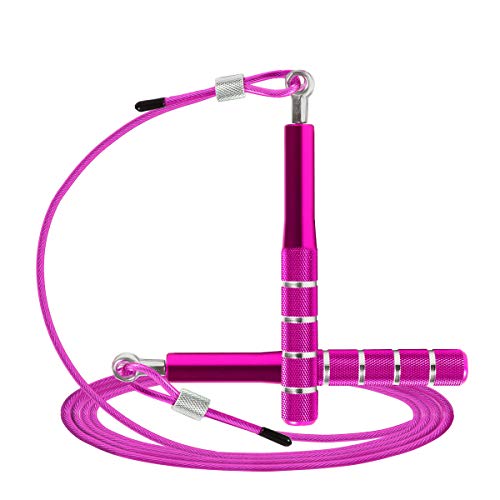
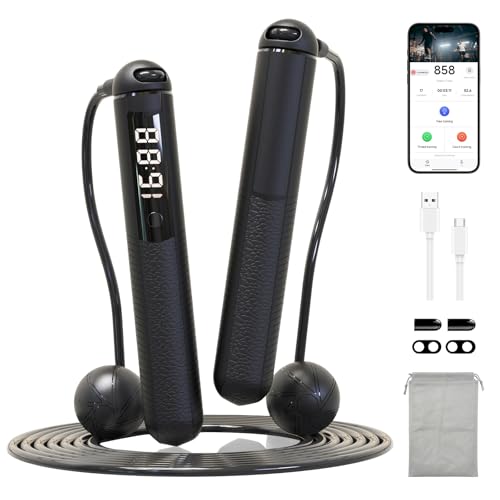
Wastou Speed Jump Rope
4.4(10,319)
Our pick - the best-selling speed rope (10,200+ ratings); an adjustable steel-cable rope with smooth handles for double-unders, HIIT and cardio.
$16.61
Amazon.com.au price as of 11:00 am AEDT, subject to change
As an Amazon Associate, NestPath earns from qualifying purchases.
How long should a skipping rope be?
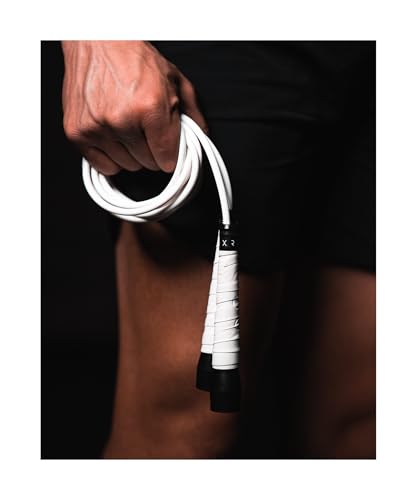
Length matters more than almost anything else, because a rope that is too long or too short will trip you up no matter how good it is. The simple way to check is to stand on the middle of the rope with one foot and pull the handles straight up - the handles should reach roughly to your armpits. If they go well past your shoulders the rope is too long, and if they fall short of your chest it is too short. Beginners can leave a touch extra length for a bigger margin of error, while experienced skippers chasing fast double-unders often run the rope shorter for a tighter, quicker turn. Every rope in this guide is adjustable, so you can trim it to your height - the HONOR ATHLETICS even ships with a 10ft cable that fits users up to about 6 foot 3, which is handy if you are tall and find most ropes too short. Size it first, then worry about everything else.
Honor Athletics
HONOR ATHLETICS Speed Rope
4.3(834)
Another fast speed rope for double-unders, boxing, MMA and cardio, with an adjustable 10ft cable that fits users up to about 6 foot 3.
As an Amazon Associate, NestPath earns from qualifying purchases.
Cable type and weight
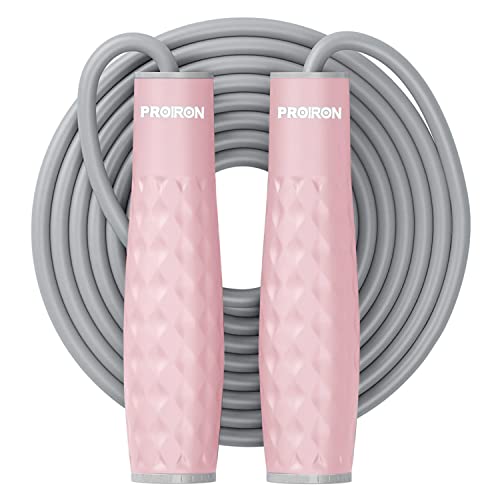
The cable is what determines how a rope feels and what it is good for. A thin steel speed cable, like the one on the Wastou, is light and fast - perfect for double-unders but unforgiving, because it whips and stings bare skin if you miss. A PVC-covered cable, like the FEECCO's 5.5mm rope, is a touch slower and far more forgiving, which is why it is the better choice for learning and for outdoor surfaces. A weighted cable, like the PROIRON's thick 7mm 1LB rope, deliberately adds resistance so each turn works the upper body, at the cost of being harder on the wrists. And a boxing rope like the BOXROPE sits a little heavier than a standard PVC rope for a steady, predictable rhythm through long rounds. So match the cable to the job - fast and thin for speed work, coated and heavier for durability and control - rather than assuming one cable suits everything.
Runner-up
PROIRON
PROIRON Weighted Jump Rope 1LB
4.3(943)
Best weighted - a 1LB tangle-free rope with an extra-thick 7mm cable; the weight builds shoulders and arms on top of cardio.
$25.99
Amazon.com.au price as of 11:00 am AEDT, subject to change
As an Amazon Associate, NestPath earns from qualifying purchases.
Handles and bearings
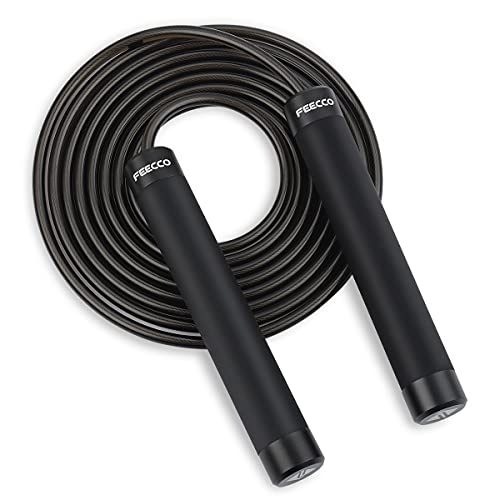
How a rope spins comes down to the handles and the bearings inside them. Smooth-spinning handles let the cable rotate freely so the rope keeps a consistent rhythm and does not stutter mid-set, which is what makes the Wastou's handles suit fast double-unders. The grip matters too, especially as your hands get sweaty - the BOXROPE's hand-wrapped, grip-taped handles are built to stay secure deep into a long boxing session, while the FEECCO's solid metal handles give a reassuringly firm hold. For most cardio skipping any decent handle will do, but if you are chasing speed you want free-spinning bearings, and if you skip for long stretches you want a grip that will not slip. It is a small detail that quietly separates a rope that flows from one that fights you.
Also great
FEECCO FITNESS
FEECCO Skipping Rope (5.5mm PVC)
4.5(1,527)
Best durable all-rounder - the highest-rated here (4.5); a tough 5.5mm PVC-covered steel rope with solid metal handles.
$28.99
Amazon.com.au price as of 11:00 am AEDT, subject to change
As an Amazon Associate, NestPath earns from qualifying purchases.
Skipping in a small space
Not everyone has the ceiling height or floor space for a full rope, and that is exactly the gap a cordless rope fills. Instead of a long rope, the SaintCos uses a weighted ball on a short cord, so you can mimic the skipping motion indoors with nothing overhead to catch and nothing on the floor to trip on - ideal for apartments, hotel rooms or skipping in front of the TV. A built-in counter tracks your turns and the companion app logs calories and data over time, which adds a bit of motivation. The honest trade-off is that a cordless rope does not build the same timing as a real rope, because there is no cable to actually clear - so if genuine double-under skill is the goal, treat it as a space-saving complement rather than a full replacement. For pure cardio in a tight space, though, it does the job a normal rope simply cannot.
Also great
SaintCos
SaintCos Cordless Gravity Smart Jump Rope
4.3(74)
Best cordless - a weighted ball on a short cord so you can skip indoors with low ceilings, nothing to trip on, with a counter and app.
$30.99
Amazon.com.au price as of 05:01 am AEDT, subject to change
As an Amazon Associate, NestPath earns from qualifying purchases.
Is a skipping rope good for weight loss?
It is one of the most calorie dense things you can do with a simple rope. Skipping at a steady moderate pace is rated at about 11.8 METs, which is the standard energy cost researchers assign to it. Run that through the usual formula, METs multiplied by 3.5, multiplied by body weight in kilograms, divided by 200, and you get calories per minute.
Body weight
Calories per 10 minutes
Roughly equal to
70 kg
About 145
Running about 2 km
90 kg
About 185
Running about 2 km
Two honest caveats. Those are steady-pace figures, and almost nobody skips for ten unbroken minutes in their first month, so treat them as a ceiling rather than a starting point. And you cannot target where the body takes fat from, so skipping will not specifically burn belly fat any more than any other cardio will. What it does do is put a genuinely hard cardio session into ten minutes and a square metre of floor, which is why it survives in boxing gyms and almost nowhere else in fitness has that record.
How do you start skipping?
Almost everyone starts too fast, trips, and decides they cannot skip. The fix is to break it into pieces.
Size the rope first, using the armpit test above. More failed first sessions come from a badly sized rope than from anything else.
Practise the turn with no jump. Hold both handles in one hand and swing the rope beside you until the rhythm is automatic. Your wrists do the work, not your shoulders.
Practise the jump with no rope. Small hops, two or three centimetres off the ground, landing on the balls of your feet with soft knees. Skipping is not a vertical jump.
Put them together for 20 seconds, then rest 40. Repeat ten times. That is a real session on day one and it is enough.
Build the work interval before you build the speed. When 60 seconds unbroken feels easy, then start chasing pace or double-unders.
Skip on timber, rubber or a mat rather than concrete or tile, because the surface is what your knees and the rope both pay for. An exercise mat solves the tiles problem and takes most of the noise out of it in an apartment.
Is skipping better than running?
For a fixed ten minutes, skipping burns slightly more and asks more of the upper body and the calves. For anything longer, running wins on sheer duration, because very few people can hold skipping form for 40 minutes. The real differences are practical. Skipping needs a square metre and works in the rain, indoors, at 5am, without leaving the house or waking the street. Running needs none of the coordination and is far easier to do badly and still benefit from.
The impact question is more even than people expect. Skipping loads the calves and Achilles hard, but the ground contact is short and shallow, which is why boxers with bad knees often skip and do not run. If your joints or your ceiling rule out both, a walking pad under a desk is the low-impact way to get the same weekly volume. Most people are better off doing both, using skipping for the days when there is no time and no daylight.
Will 500 skips a day do anything?
Yes, but less than the number suggests. At a beginner tempo of about 100 turns a minute, 500 skips is roughly five minutes of work, which is somewhere near 70 calories for a 70kg adult. As a daily habit that is a genuine cardio base, it will improve your coordination and calf endurance quickly, and it is far better than nothing. As a weight-loss plan on its own it is not much, because five minutes a day is about 350 minutes a year less than the guidelines ask for. Use 500 as a floor you never skip rather than a target you stop at.
What are the best skipping rope brands in Australia?
This category has no dominant brand, which is unusual and good for buyers. PROIRON and FEECCO carry the deepest Amazon AU review pools among the picks here. Off Amazon, Celsius is the rebel house brand and the cheapest credible rope on a shelf you can walk to, PTP sits at the premium end of the same aisle, and RENPHO and Yunmai sell smart ropes with counters through JB Hi-Fi. Rebel, JB Hi-Fi, Kmart, BIG W and Decathlon all stock ropes in person if you would rather hold one first. At this price the brand matters far less than picking the right type, so choose the type first and then the cheapest rope that nails it.
How much should you spend
You can get a genuinely good skipping rope for very little. The Wastou proves the cheapest option here is also the most popular, it is the best selling speed rope by a wide margin and is where most people should land. The HONOR ATHLETICS is an alternative speed rope, while the PROIRON adds weight for upper body work and the FEECCO buys the highest rating and the most durable all rounder. The SaintCos buys the small space cordless format with a counter and app, and the BOXROPE is the premium boxing specific rope. Decide which type you need first, then pick the cheapest model that nails it - for most people that is the Wastou, and only boxers and dedicated combat-sports athletes really need to spend up to the BOXROPE. If you are building a wider kit rather than buying one thing, our home gym setup guide covers what to buy in what order.
Also great
BOXROPE
BOXROPE Boxing Jump Rope
4.2(566)
Best for boxing - tangle-free and about 15 percent heavier than a normal PVC rope for a steady rhythm, with grip-taped handles.
$59.63
Amazon.com.au price as of 11:01 pm AEDT, subject to change
As an Amazon Associate, NestPath earns from qualifying purchases.
Our verdict
For most people the Wastou Speed Jump Rope is the smart buy, it is the best selling speed rope here by a wide margin, it is the cheapest option in the guide, and its adjustable steel cable and smooth spinning handles handle double unders, HIIT and everyday cardio for the whole household, which is why it is our pick. If you want a second speed rope option, the HONOR ATHLETICS suits double unders, boxing and MMA with a 10ft cable for taller users. To build the arms and shoulders too, the PROIRON Weighted 1LB rope adds resistance. The FEECCO is the highest rated and most durable all rounder for learning and outdoor use, and the SaintCos cordless rope is the answer for low ceilings and small spaces. And if you box, the premium BOXROPE is built for steady footwork through long rounds.
Frequently asked questions
What length skipping rope do I need?
Stand on the middle of the rope with one foot and pull the handles straight up - they should reach roughly to your armpits. If the handles go well past your shoulders the rope is too long, and if they fall short of your chest it is too short. Beginners can leave a little extra length for a bigger margin of error, while experienced skippers chasing fast double-unders often run the rope shorter for a tighter, quicker turn. Every rope in this guide is adjustable, so you can trim it to your height, the HONOR ATHLETICS even fits users up to about 6 foot 3.
What is the difference between a speed rope and a weighted rope?
A speed rope uses a thin steel cable that turns very fast, which makes it ideal for double unders, HIIT and CrossFit, the Wastou is a good example. A weighted rope uses a heavier cable or handles to add resistance, so each turn builds the shoulders and arms as well as your cardio, the PROIRON 1LB is built for that. Speed ropes are lighter and faster but unforgiving on a missed turn, while weighted ropes are harder on the wrists. Pick the one that matches your goal.
Which skipping rope is best for beginners?
A durable PVC or coated rope is the easiest place to start, because the slightly slower, more forgiving cable helps you learn the rhythm without the sting of a thin speed cable. The FEECCO is the highest rated rope here at 4.5 stars and a smooth, dependable all rounder for learning. If you mainly want cheap, simple cardio and do not mind building the timing, the Wastou speed rope is also a fine first rope, just expect a thin cable to sting if you clip your shins early on.
Can you skip with a rope in a small apartment with low ceilings?
Yes, with a cordless rope. Instead of a long rope, the SaintCos Cordless Gravity rope uses a weighted ball on a short cord, so you can mimic the skipping motion indoors with nothing overhead to catch and nothing on the floor to trip on, ideal for apartments, hotel rooms or skipping in front of the TV. It has a built-in counter and an app for calories and data. The trade-off is that a cordless rope does not build the same timing as a real rope, so treat it as a space-saving option rather than a full replacement for double-under practice.
What kind of skipping rope do boxers use?
Boxers favour a durable, tangle-free rope with a steady weight, because they skip for long rounds and want a predictable rhythm for footwork rather than the frantic whip of a featherweight speed rope. The BOXROPE Boxing Jump Rope is built for exactly this, it runs about 15 percent heavier than a normal PVC rope, is tangle free, and has hand wrapped, grip taped handles that stay secure as your hands get sweaty. It is overkill for general cardio, but for boxing and combat-sports footwork it is the rope to get.
Is a skipping rope good cardio for weight loss?
Skipping is one of the most efficient cardio workouts there is - it raises your heart rate quickly, works the whole body and burns a lot of energy in a short session, which makes it a strong tool for fitness and weight management when paired with a sensible diet. A simple speed rope like the Wastou is all you need to get started. If you want to add upper body conditioning to the cardio, a weighted rope like the PROIRON 1LB loads the shoulders and arms on top of the heart rate work.
Will a thin speed rope hurt if I miss a turn?
Yes - a thin speed rope whips and stings bare skin if you clip your shins or forearms on a missed turn, so it pays to learn the rhythm before going full speed, and you may want to skip over leggings or long socks at first. The Wastou and HONOR ATHLETICS are both thin speed ropes, so this applies to them. If you would rather not risk the sting while learning, a more forgiving PVC rope like the FEECCO is gentler on a miss.
DETAILED REVIEWS
Top pick
Wastou
Wastou Speed Jump Rope
4.4(10,319)
Our pick - the best-selling speed rope (10,200+ ratings); an adjustable steel-cable rope with smooth handles for double-unders, HIIT and cardio.
$16.61
Amazon.com.au price as of 11:00 am AEDT, subject to change
Affiliate Disclosure: As an Amazon Associate, NestPath earns from qualifying purchases. This means if you click a product link and buy something, we may receive a small commission at no extra cost to you. We only recommend products we genuinely believe will help new homeowners. This does not influence our recommendations.
CERTAIN CONTENT THAT APPEARS ON THIS SITE COMES FROM AMAZON. THIS CONTENT IS PROVIDED ‘AS IS’ AND IS SUBJECT TO CHANGE OR REMOVAL AT ANY TIME.