The cheapest car kit that pays for itself
A portable tyre inflator is one of the smartest small buys a driver can make. The best tyre inflator in Australia for most drivers is the AstroAI 12V corded unit on Amazon AU, the Xiaomi Portable Electric Air Compressor 2 is the best cordless pick, and the Bosch EasyPump is the premium cordless choice. It turns a soft or flat tyre in the driveway from a problem into a three to five minute fix, saves you the detour to a servo with a queue and a coin slot, and lets you keep every tyre at its correct pressure, which means safer handling, shorter stopping distances and better fuel economy. The seven picks below run from the corded AstroAI up to the cordless Bosch EasyPump, and almost every one reaches well past what any car or SUV tyre will ever need.
The single decision that shapes everything is corded versus cordless. Corded units plug into your car's 12V cigarette-lighter socket; they are the cheapest, they run for as long as your engine does, but you have to be at the car to use one. Cordless units carry a rechargeable battery, so they work anywhere (a bike in the shed, a ball at the park, a friend stranded down the road), but they cost more and a charge is finite. Get that choice right and the rest is detail.
Best tyre inflators in Australia 2026: quick comparison
Every figure is from the picks own listings; stock status is from the Amazon AU cards.
| Model | Power | Max PSI | Time from flat | Per charge | Stock | Role |
|---|
| AstroAI Car Tyre Inflator (12V) | Corded 12V | 100 PSI | about 5 minutes | unlimited with the engine running | in stock | Best overall |
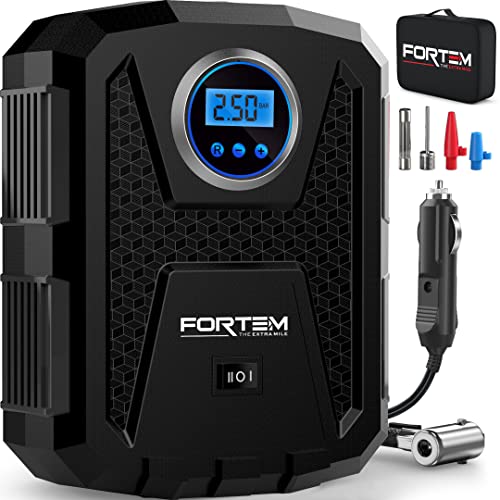
| FORTEM Tyre Inflator 150 PSI | Corded 12V | 150 PSI | about 5 minutes | unlimited | at our 7 October 2026 check its link opened a different FORTEM listing | Corded alternative with a carry case |
| Lamicall Car Tyre Inflator | Corded 12V | 150 PSI | fast, aluminium cylinder | unlimited | in stock | Best compact corded |
| UGREEN 150PSI | Cordless, two 2500mAh batteries | 150 PSI | similar to corded | about 12 small car tyres | in stock | Best entry cordless |
| Xiaomi Portable Electric Air Compressor 2 | Cordless | 150 PSI | similar to corded | about 10 tyre top-ups | in stock | Best smart cordless |
| Bosch EasyPump | Cordless 3.6V, USB-C | 150 PSI | similar to corded | not stated | in stock | Best premium |
| MICHELIN 12266 Programmable (12V) | Corded 12V | not stated on the listing | 0 to 30 PSI in about 3 minutes | unlimited | in stock, sold by Amazon AU (7 October 2026) | Corded alternative sold by Amazon AU |
How we picked these tyre inflators
We compared the inflators on power type (corded 12V or cordless), maximum pressure, how they stop at a set pressure, gauge accuracy and runtime per charge. Specifications come from each Amazon AU listing and, where the brand publishes one, the maker's own product page (Bosch and Xiaomi), and we checked stock, sellers and ratings on the Amazon AU listings on 7 October 2026. We did not test these pumps ourselves, so every specification is attributed to the listing or maker that states it.
Best overall: AstroAI Car Tyre Inflator Portable Air Compressor
The AstroAI is the inflator most drivers should buy. It is a corded 12V unit that plugs into the cigarette-lighter socket, reaches up to 100 PSI, far beyond what any car or SUV tyre needs, and inflates a typical car tyre in about five minutes. Its programmable mode is the headline: dial in your target pressure, flip it on, and it shuts off automatically when it gets there, so you set it and walk away.
The digital gauge is calibrated for an accurate reading and switches between four units, and a built-in light helps for roadside jobs after dark. Its Amazon AU listing showed 68,799 ratings, the most of any pick here, at 4.4 stars. It is the benchmark the rest of this list is measured against.
If there is already a Ryobi, Makita, DeWalt or Milwaukee battery in the shed, the inflator that shares it is often the better buy than any glovebox unit, and it is the answer every Australian owner group gives when the question comes up. The Ryobi 18V ONE+ cordless compressor (4.6 stars from about 280 ratings), the Makita DMP180Z 18V inflator (4.8 from about 3,300), the DeWalt DCC018N-XJ 18V XR (4.8 from about 1,200; it also runs from a 12V socket or 240V mains and reaches 160 PSI) and the Milwaukee M18 inflator (4.9 from about 150) are the main options. These are skin only options, so they only make sense if you own the battery. They move more air than the compact pumps here, which matters for a caravan or 4WD tyre, and they are the units that inflate an air mattress without complaint. If you would rather have one box that jumps the car and inflates the tyre, some jump starters carry a built-in 150 PSI compressor, and the rest of the boot kit worth keeping is a car vacuum and a tyre gauge. Our torque wrench guide covers the tool that sets wheel nuts to their exact figure after a tyre change.
Tyre deflators: the other half of a beach or 4WD kit
An inflator gets air in; on sand, gravel or a corrugated track you also need to let it out quickly, and that is a separate tool. Screw-on deflator caps release a tyre to a preset pressure (commonly 15 to 20 PSI for sand) while you walk to the next wheel, and a valve-core rapid deflator with a gauge unscrews the core to dump air in a minute or two rather than the ten it takes pressing a valve with a key. None of the picks in this guide needs a deflator for road use, because the chuck on each pump bleeds a little air if you overshoot, but if you tow, camp or drive the beach, budget for a deflator alongside a compressor with real airflow. Road-bike tyres at 80 to 130 PSI are a bike pump job, not a deflator one.
For carrying gear across the sand once the car is parked, our beach trolley guide compares which carts cope with soft sand.
Corded 12V or cordless: the choice that matters most
Almost everything else is detail next to this one decision, so settle it first.
- Corded 12V units (the AstroAI, FORTEM and Lamicall) plug into the cigarette-lighter socket. They are the cheapest, they run for as long as your engine idles so runtime is effectively unlimited, and they never need charging. The catch is that you must be at the car; they are no help for a bike in the shed or a ball at the park.
- Cordless units (the UGREEN, Xiaomi and Bosch) carry a rechargeable battery and go anywhere. That freedom is the whole appeal: top up a tyre at the kerb, inflate a bike mid-ride, or help someone stranded down the road. The cost is exactly that: they cost more, and a charge is finite, so a flat battery means no pump until you plug it back in.
If the inflator lives in your boot purely for car tyres, corded is the smarter, cheaper buy. If you also pump bikes, balls and inflatables away from the car, the cordless premium is worth it. There is no wrong answer; just match it to where you will actually use it.
How much PSI you really need (less than you think)
This is where the numbers on the box can mislead. A passenger-car tyre runs at roughly 30 to 36 PSI, and even a heavy 4WD or van rarely needs more than about 50 PSI. Every pick in this guide except the Michelin, whose listing does not state a maximum, reaches at least 100 PSI, and most climb to 150 PSI, so those six have far more headroom than any car, SUV or light-truck tyre will ever ask for. A higher PSI rating is not a reason to spend more; it only matters if you are filling something genuinely high-pressure like a road-bike tyre.
What actually matters day to day is the auto-shutoff and an accurate gauge, because the job is almost always topping a tyre up by a few PSI, not filling it from flat. Set the target, let the pump stop itself, and you are done: no overinflating, no guesswork.
The honest truth about cheap inflators and review counts
Do cheap tyre inflators actually work? For topping up and re-inflating car tyres, yes, genuinely. The AstroAI inflates a flat car tyre in about five minutes, holds an accurate pressure reading and shuts off on its own, which is everything most drivers need. A basic corded inflator is enough to get a tyre back to its correct pressure; cordless freedom or a premium build like the Bosch adds convenience, not a better result on the tyre itself.
One important point of honesty about the big numbers you will see on these listings. The AstroAI shows tens of thousands of ratings, the FORTEM and Bosch many thousands more, but those are Amazon's global rating totals, pooled across every market, not Australian reviews. They are a fair signal that a product is proven and widely owned worldwide, and we treat them exactly that way. We never present them as local Australian feedback, and you should read them as one of Amazon's most-reviewed inflators rather than as anything specific to drivers here.
Two more honest notes. If you search for a tire inflator with the American spelling you land on US reviews of the same units: the AstroAI, Xiaomi and Bosch pumps sold on Amazon AU are the models Car and Driver and GearJunkie test, with a plug that suits an Australian 12V socket. And are portable tyre inflators accurate? Every pick here carries a digital gauge with auto-stop, and the AstroAI gauge is calibrated to read within a tight margin, which is what a 32 PSI passenger tyre needs; a cheap gauge can still drift, so check it once against a service-station gauge, set the target a PSI above the placard figure if it reads low, and let the auto-stop do the rest.
Frequently Asked Questions
Do you need a tyre inflator or is a petrol-station pump enough?
A servo pump is fine in a pinch, but a 40 dollar inflator pays for itself fast. Station pumps often cost a few dollars, run on a timer that can cut out mid-fill, and mean a special trip, useless at night in the driveway when a tyre looks soft. Your own inflator lets you check and top up pressures at home in a few minutes, which keeps handling safe and fuel economy up. For the price, almost every driver is better off owning one.
Corded vs cordless tyre inflator: which is better?
It depends on where you will use it. Corded 12V units like the AstroAI, FORTEM and Lamicall plug into the cigarette-lighter socket, cost the least and run as long as your engine does, but tie you to the car. Cordless units like the UGREEN, Xiaomi and Bosch carry a battery and go anywhere (bikes, balls, a friend stranded down the road) but cost more and have a finite charge. If it lives in the boot for car tyres, choose corded. If you pump gear away from the car too, choose cordless.
What PSI does a car tyre inflator need to reach?
Far less than these pumps offer. A passenger-car tyre runs at about 30 to 36 PSI and even a heavy 4WD rarely needs more than around 50 PSI. Every pick here except the Michelin (its listing states no maximum) reaches at least 100 PSI and most hit 150 PSI, so those six have plenty of headroom for any car, SUV or light-truck tyre. A higher PSI rating is not a reason to spend more; it only matters if you are filling something genuinely high-pressure like a road-bike tyre.
How long does it take to inflate a car tyre?
From flat, expect roughly three to five minutes for a typical car tyre; the AstroAI is rated at about five minutes, for example. In real life you are almost always topping a tyre up by a few PSI rather than filling it from empty, which takes under a minute. Cordless units like the UGREEN and Xiaomi inflate at a similar pace to the corded picks; the main difference is freedom of movement, not speed.
Can these inflate bike tyres, balls and air mattresses?
Yes, apart from the Michelin, whose listing does not mention adapters: every other pick here ships with or supports adapters for bike valves, sports balls and inflatables. The FORTEM includes three nozzles for balls, air mattresses and pool toys, the UGREEN and Bosch handle balls and small water-sports gear, and the Xiaomi and Lamicall carry preset modes for bikes and balls. Cordless units are the more convenient choice here, since you can take them to the bike or the park rather than running an extension from the car.
Do cheap tyre inflators actually work?
For car tyres, genuinely yes. A unit like the AstroAI inflates a flat car tyre in about five minutes, holds an accurate pressure reading and shuts off automatically when it reaches your target, which is all most drivers need. You do not have to buy a premium inflator to get a tyre back to the right pressure. You pay more only for cordless freedom or a premium build like the Bosch EasyPump, not for a better result on the tyre itself.
What is auto-shutoff and why does it matter?
Auto-shutoff, sometimes called auto-stop, lets you set your target pressure so the pump turns itself off the moment it is reached. It matters because it removes the guesswork and the risk of overinflating: you set the number, walk away, and come back to a perfectly filled tyre. Every pick in this guide has it, and combined with an accurate digital gauge it is the feature that makes these pumps genuinely set-and-forget rather than something you have to babysit.
Which brand is best for tyre inflators?
For a glovebox unit, AstroAI (the most reviewed 12V inflator on Amazon), Xiaomi (joint highest rated cordless pick here) and Bosch (the premium cordless) are the brands to buy, with Lamicall and UGREEN the value alternatives. For a unit that runs on a tool battery you already own, DeWalt, Makita, Milwaukee and Ryobi all sell an 18V inflator. Fanttik, whose X8 APEX and X9 Pro cordless units were sold at Harvey Norman, is the other name Australian owner groups keep recommending.
Are portable tyre inflators accurate?
Accurate enough for car tyres. Every pick here has a digital gauge and auto-stop, and the AstroAI gauge is calibrated to read within a tight margin, which is what matters for a tyre that runs at 30 to 36 PSI. A cheap gauge can still drift over time, so check yours once against a service-station gauge or a stick gauge, set the target a PSI above the placard figure if it reads low, and glance at the car tyre-pressure monitor after a top-up. Workshop grade accuracy is not something a budget pump needs.
What is the highest rated portable tyre inflator?
The Xiaomi Portable Electric Air Compressor 2 and the Lamicall shared the highest rating of our picks on Amazon AU at 4.6 stars, the Xiaomi from 8,544 ratings and the Lamicall from 239, and the AstroAI 12V was the most-reviewed at 68,799 ratings and 4.4 stars. Off Amazon, the Fanttik X8 APEX at Harvey Norman was 4.9 stars from about 790 ratings and the Makita 18V DMP180Z 4.8 from about 3,300.
Do I need a tyre deflator too?
Only if you drive on sand or rough tracks. Beach and 4WD driving means dropping to about 15 to 20 PSI and airing back up afterwards; a screw-on deflator set or a valve-core rapid deflator drops a tyre in a minute or two where pressing the valve with a key takes ten, and then a compressor with real airflow does the airing up. For a road car that only ever tops up by a few PSI, none of the picks here needs a deflator: the chuck on the pump lets a little air out if you overshoot.
Does a 12V tyre inflator drain the car battery?
Not in normal use. A corded 12V inflator draws its power from the cigarette-lighter socket, so run it with the engine idling, as the makers advise, and the alternator covers the draw; a five-minute fill from flat on the AstroAI is trivial for a healthy battery. Running a pump for 20 minutes with the engine off on an old battery is the only way to get into trouble, and the cordless picks (UGREEN, Xiaomi, Bosch) sidestep the question because they carry their own charge.
How do you use a tyre inflator?
Find the correct pressure on the placard inside the driver door (usually 30 to 36 PSI for a car), unscrew the valve cap, and screw or clip the pump chuck onto the valve until the gauge shows the current pressure. Set the target pressure (the Lamicall and Xiaomi have preset modes for car, bike and ball), plug a corded unit into the 12V socket with the engine running, switch on, and let the auto-stop cut the pump when it reaches the target. Check all four tyres cold, once a month and before a long trip.
Which portable tyre inflator is best?
For most drivers, this guide's best overall pick is the AstroAI Car Tyre Inflator, a corded 12V unit that reaches up to 100 PSI and shuts off automatically at the pressure you set. The Xiaomi Portable Electric Air Compressor 2 is the best smart cordless pick, and the Bosch EasyPump is the premium cordless choice.
How do you choose a portable tyre inflator?
Settle corded versus cordless first: corded 12V units are the cheapest and run as long as the engine does but tie you to the car, while cordless units go anywhere on a finite charge. Then look for auto shutoff and an accurate digital gauge. Maximum PSI matters less, because a passenger car tyre runs at roughly 30 to 36 PSI.