For most Australian homes the drill to buy is an 18V complete kit with the battery and charger in the box, and 18V and 20V are the same battery labelled two different ways, so ignore that number in the marketing. If you own or rent a home in Australia and buy just one power tool, make it a cordless drill. It is the tool you reach for again and again, assembling the flat-pack wardrobe, hanging shelves and picture frames into a stud, putting up a curtain rail, building a raised garden bed, fixing the loose hinge on the back gate, or driving the screws on a small deck. A corded drill chains you to a power point; a cordless one goes wherever the job is, including up a ladder or out in the yard.
But here is the thing almost nobody tells first-time buyers, and it is the single most important decision you will make: buy a complete kit, not a bare skin. A kit includes the drill, a battery and a charger: everything you need to start drilling the moment the box arrives. A skin is the tool only, with no battery and no charger, and it is useless on its own. Skins are aimed at tradies who already own a stack of batteries on a particular brand's platform. If you do not yet own any batteries, a skin is a trap.
This guide keeps things simple and honest. Every pick below is a complete kit sold on Amazon Australia with the battery and charger in the box, and the picks are re-checked against Amazon AU stock regularly, so the card carries the current price. We name the best all-rounder for most homes, the cheapest sensible starter, and a brushless upgrade for people who will use it hard. No invented lab tests, no fake star ratings, just clear advice on what to buy and why.
At a glance: our top 3 cordless drills
| Pick | Best for | Torque | In the box | Price band |
|---|
| Bosch EasyDrill 18V-40 Drill Driver Kit | The cheapest sensible starter | 40Nm, 13mm chuck | Drill, 2.0Ah battery, charger, case | from $84 |
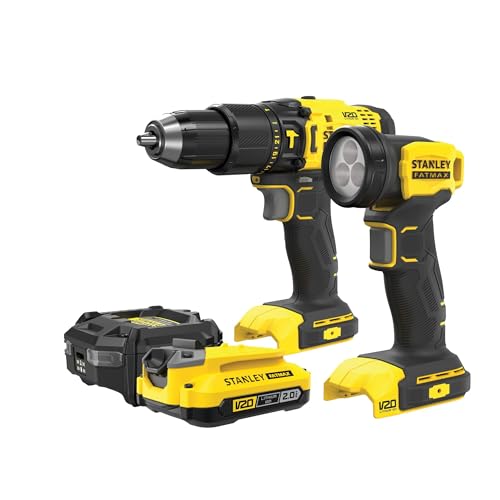
| Stanley FATMAX V20 18V Hammer Drill Kit | Masonry and brick walls | 50Nm, hammer action | Hammer drill, 2.0Ah battery, charger, flashlight | from $94 |
| Bosch UniversalImpact 18V-60 Brushless Kit | Hard or frequent use | 60Nm, brushless | Drill, 2.5Ah battery, charger | from $126 |
All three are 18V complete kits, so none of them needs a battery bought separately. The price band is the starting point; each card carries the current Amazon Australia price.
Kit vs skin: the mistake that catches first-time buyers
Walk through the cordless tools on Amazon Australia and you will see two very different prices for what looks like the same drill. One might be $80, another the same model $150. The cheap one is almost always a skin (the bare tool, no battery, no charger). The more expensive one is the kit (tool plus at least one battery and a charger). People get caught out all the time: they grab the cheapest 'Makita drill' they can find, then discover it arrives as a naked tool that does nothing until they spend another $80 to $150 on a battery and charger.
This matters even more in Australia because of how the brands are sold here. The premium trade brands (Makita and DeWalt especially) are very often listed on Amazon AU as bare skins, because their core buyers are professionals already invested in those battery platforms. Complete, ready-to-use starter kits at honest prices tend to come from the consumer-focused lines: Bosch's green Home & Garden range and Stanley FATMAX. That is exactly why all three of our picks are Bosch or Stanley kits. For your first drill, a kit from one of these is the practical buy.
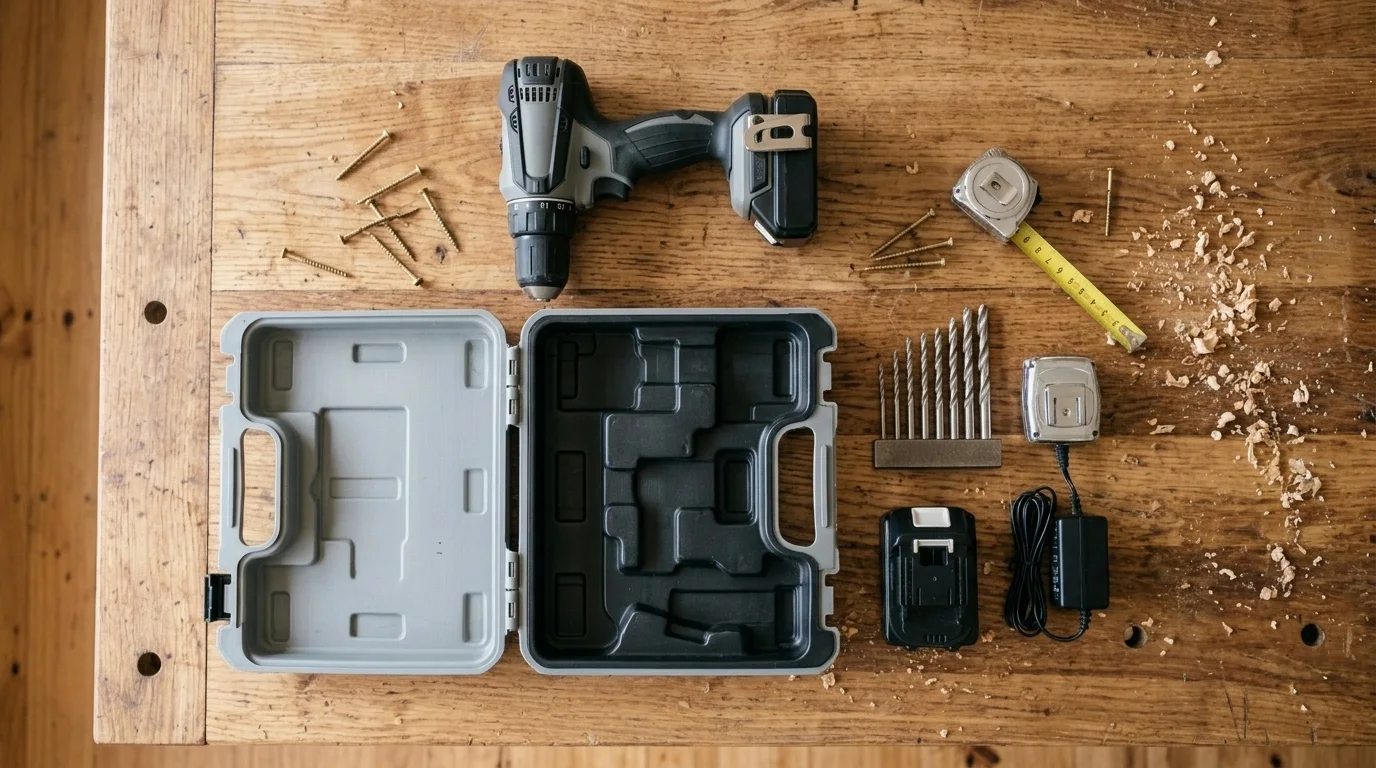
One more reason the kit-versus-skin choice matters: every battery is locked to its own brand's ecosystem. A Bosch 18V battery only fits Bosch tools; a Stanley V20 battery only fits Stanley V20 tools. When you buy your first kit you are not just buying a drill; you are choosing the platform you will likely add an impact driver, a sander or a leaf-blower to later. Both Bosch Home & Garden 18V and Stanley FATMAX V20 are sensible, widely available platforms to start on. If a deal looks suspiciously cheap, check the listing title and the box contents for the words 'battery included' before you buy.
Drill driver vs hammer drill vs impact driver
The second thing buyers get wrong is the tool type. There are three you will see, and they are not interchangeable. Here is the plain-English version.
Drill driver
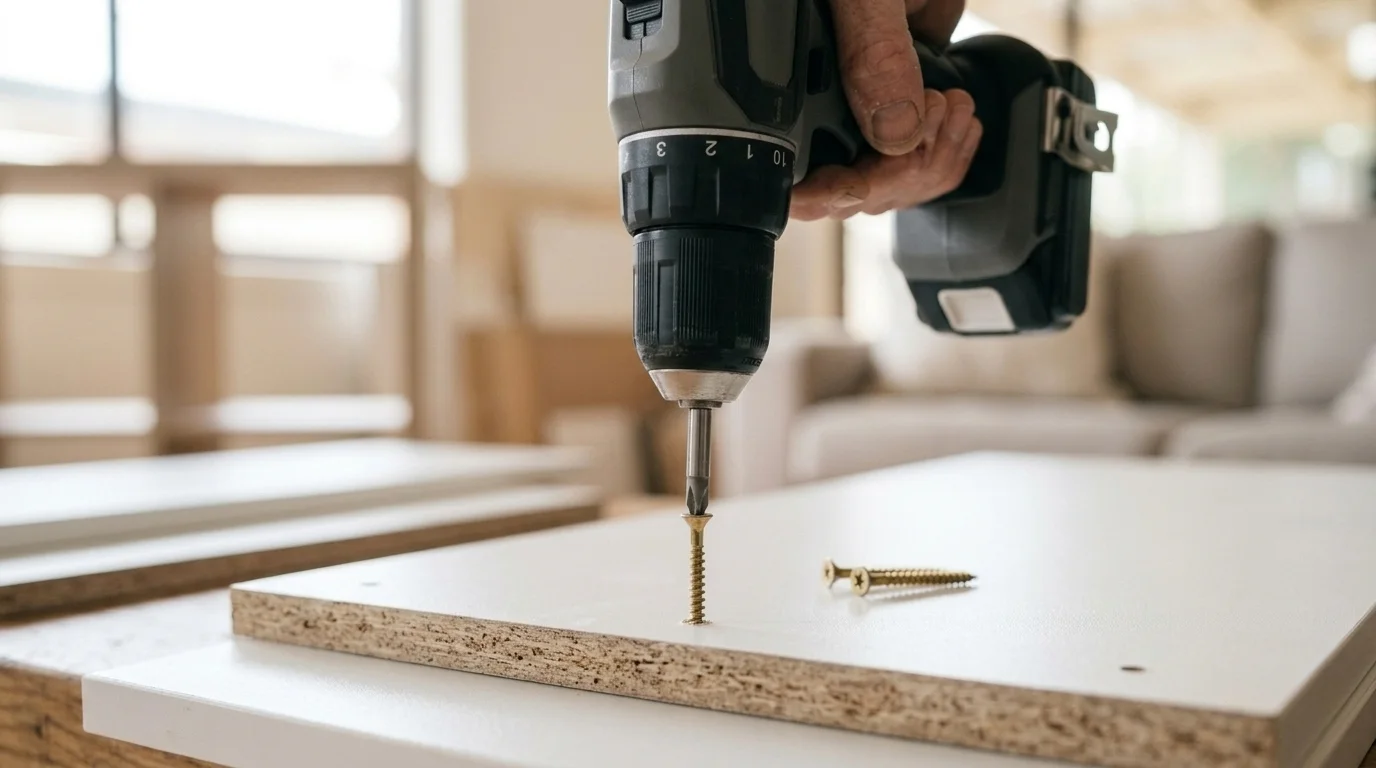
The all-rounder. It drills holes and drives screws in wood, metal and plastic, and a clutch (the numbered collar behind the chuck) lets you set how hard it drives so you do not strip the screw. This is our budget pick, the Bosch EasyDrill 18V-40. If you never touch brick or concrete, a drill driver is all you need.
Hammer drill
A drill driver that adds a rapid hammering action, punching the bit forward thousands of times a minute so it can bore into masonry, brick and concrete as well as the usual wood and metal. You switch the hammer mode on only when you need it. Both the Stanley FATMAX V20 and the premium Bosch UniversalImpact are hammer drills, which is why they handle the occasional masonry-anchor job that the budget Bosch cannot.
Impact driver
A different tool entirely, optimised for driving long screws, coach screws and bolts with very high rotational bursts of torque. It is brilliant for decking and framing, but it takes hex-shank bits rather than a standard chuck and is not ideal for precise, clean drilling. Worth knowing it exists, but none of our three picks is an impact-driver-only tool, so you are not missing out by starting with a drill driver or hammer drill. If you are weighing one up as a second tool, our guide to the best impact drivers in Australia covers when it is worth the money.
How to choose a cordless drill
Once you have settled on a complete kit and the right tool type, a handful of specs decide which one suits you.
Voltage: 12V vs 18V
Voltage is a rough proxy for power. 12V drills are lighter and fine for furniture assembly and light jobs, but 18V is the sweet spot for a do-everything home drill, enough grunt for decking, masonry anchors and tougher timber without being heavy or unwieldy. All three of our picks are 18V, which is the most common and most useful home voltage in Australia.
Is there a difference between 18V and 20V drills?
No. They are the same battery described two different ways. A pack built from five lithium cells sits at 18 volts under load and touches 20 volts fully charged with no load on it, so a brand can print either number and be telling the truth. American brands generally advertise the peak figure and European brands the working figure, which is why a DeWalt 20V MAX and a Bosch 18V are the same class of tool. Compare torque in newton metres and battery capacity in amp-hours instead, because those two numbers actually differ between drills.
Torque and clutch settings
Torque, measured in newton-metres (Nm), is turning force, how hard the drill can push a screw or a large bit. Our picks climb from 40Nm on the budget Bosch to 50Nm on the Stanley and 60Nm on the premium Bosch. More torque means more comfortable driving of long screws and large hole-saws. The numbered clutch collar lets you cap that torque so the drill slips before it over-drives and strips the screw or splits the timber. The Bosch picks offer 20 torque presettings for exactly this.
Brushed vs brushless motor
A brushless motor has no carbon brushes rubbing inside it, so it runs cooler and more efficiently, squeezes more power and runtime from the same battery, and lasts longer with less maintenance. The premium Bosch UniversalImpact is brushless; the budget Bosch and the Stanley are conventional brushed motors. For occasional home use a brushed motor is perfectly fine, but brushless earns its keep if you will use the drill often or hard.
Chuck size: 10mm vs 13mm
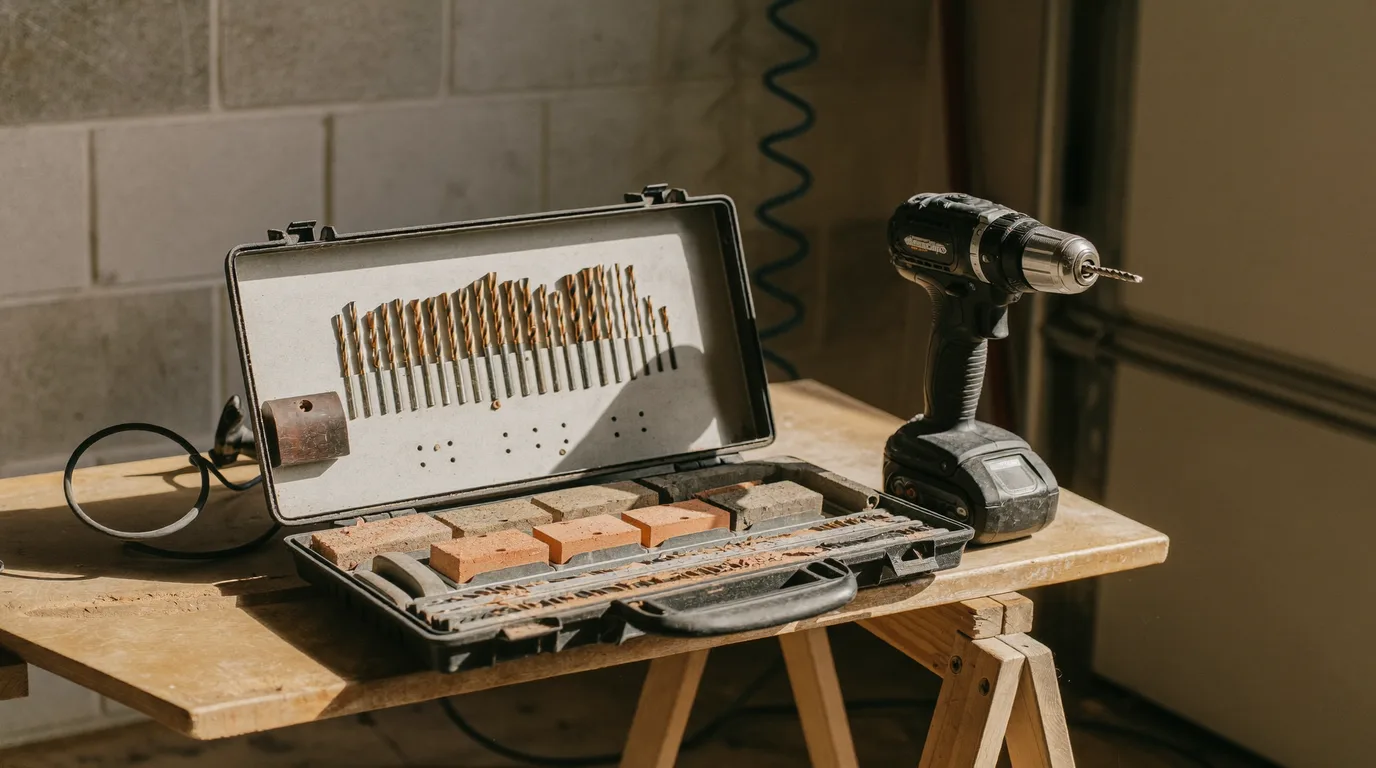
The chuck is the jaws that grip the bit. A 10mm chuck takes bits up to 10mm shank; a 13mm chuck takes larger bits and bigger hole-saws, giving you more headroom for chunky jobs. Whichever you buy, the chuck is only as useful as the drill bit set you put in it. Both Bosch picks have a 13mm chuck, and the premium one is a metal chuck, which is more durable than plastic.
Battery capacity and the ecosystem lock-in
Battery capacity is measured in amp-hours (Ah): a higher number means more charge stored and longer between top-ups. The budget Bosch and the Stanley ship with a 2.0Ah battery; the premium Bosch comes with a larger 2.5Ah pack. Just as important is the platform that battery belongs to. Because batteries only fit their own brand, your first kit quietly commits you to an ecosystem, so it is worth starting on a widely sold, well-supported platform like Bosch Home & Garden 18V or Stanley FATMAX V20, both of which let you add more 18V or V20 tools down the track on the same batteries.
Which cordless drill brands do Australians actually buy?
The three picks above are the complete kits we recommend on Amazon Australia. They are not the only brands worth knowing, and the ones below are not affiliate links, so here is the honest map of the Australian market.
- Ryobi is the Bunnings house platform and the most common first drill in an Australian shed. The tools are middling and the ecosystem is the point: the ONE+ battery fits a very large range of Ryobi tools, all sold in one shop you can drive to on a Sunday.
- Makita and DeWalt are the trade standards, sold through Bunnings, Total Tools and Sydney Tools. Better motors, better chucks, and a price that only makes sense if you use the drill weekly or already own the batteries.
- Milwaukee sits above both on price and is a tradie platform rather than a home one. Buying into it for a flat-pack wardrobe is money spent on capability you will not use.
- Bosch splits into two lines, and this matters: the green Home and Garden range is the DIY one, the blue Professional range is the trade one, and the batteries are not interchangeable between them.
Whichever way you go, the ecosystem decision outlasts the drill. Pick the platform whose other tools you can actually buy where you shop, because that battery is what you will still be using in five years.
What you can actually build and fix with one
A single 18V drill covers an enormous amount of home life. Indoors: assembling flat-pack furniture in a fraction of the time a hand screwdriver takes, hanging shelves, mirrors and artwork into studs or with wall plugs, fitting curtain rails and blinds, mounting a TV bracket, and re-securing loose cupboard hinges and door handles. Outdoors with a hammer-capable pick like the Stanley or premium Bosch: drilling into brick to mount a hose reel, a clothesline or a sensor light, building planter boxes and raised garden beds, and the screws on a small deck or pergola. Once the bits, the driver and a spare battery outgrow the moulded case, a soft tool bag is what carries the lot to the far end of the house. A heat gun complements the drill for stripping old paint and freeing stuck fittings.
Once the drill is sorted, it tends to be the first tool in a growing outdoor kit. Plenty of readers pair it with our pressure washer guide for cleaning the paths and the house, and a leaf blower for clearing the yard. The three together cover most weekend maintenance jobs around a typical Australian block.
Basic drilling and driving tips
A few habits make the difference between clean work and a stripped screw or a split board. Before you drill into a wall at all, run a stud finder over it: a screw into a stud holds; a screw into plasterboard without an anchor does not.
Why does a cordless drill keep stopping?
Three causes, in order of likelihood. The clutch is set too low, so the collar slips as soon as the screw meets resistance: turn the numbered ring up, or to the drill symbol for drilling. The battery protection has cut in, which happens when the pack is nearly flat or has got hot, and the fix is to let it cool and recharge rather than to keep squeezing the trigger. Or a brushless motor has sensed a stall and shut itself off to avoid burning out, which means the bit is jammed or the material is beyond the tool. A drill that stops with a full battery, the clutch on the drill symbol and a free-spinning bit is the only one of the three that needs a service.
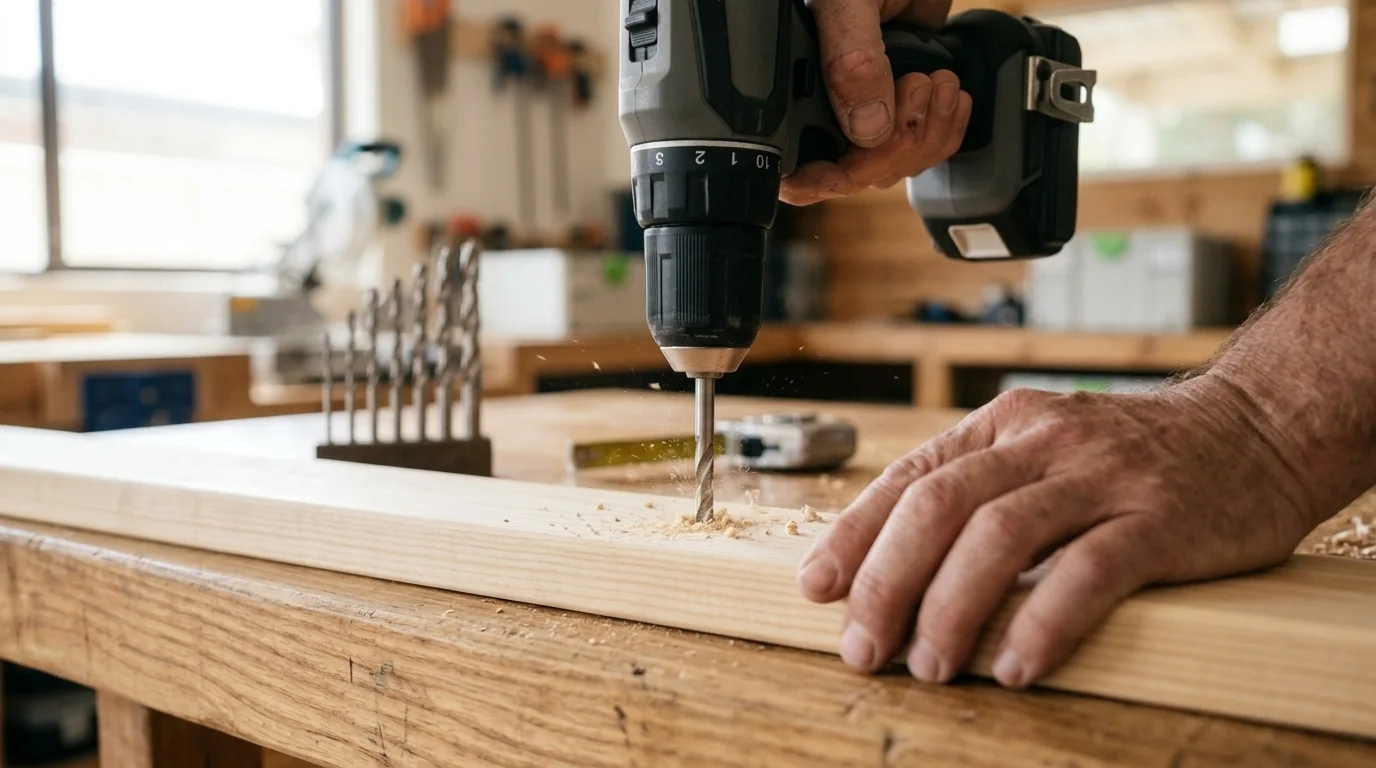
- Drill pilot holes. For anything but the softest timber, drill a small pilot hole first, a hole slightly narrower than the screw. It guides the screw straight and stops hardwood and the ends of boards from splitting.
- Match the bit to the material. Twist bits for wood and metal, masonry bits (with a wider tip) for brick and concrete, and a spade or hole-saw for large holes. The right bit drills faster and lasts longer than forcing the wrong one.
- Let the clutch do its job. Set the numbered clutch collar so the drill slips and clicks once the screw is seated. This is how you avoid over-driving, stripping the screw head or sinking the fixing too deep. Turn it down for soft timber, up for harder material.
- Start slow, then build speed. Use the lower of the two gears and a gentle trigger to start a hole accurately, then speed up once the bit has bitten. Keep the drill square to the surface so the hole goes in straight. If a job needs dead-straight, repeatable holes rather than a steady hand, that is what a benchtop drill press is for.
- Switch hammer mode on only for masonry. On the hammer-capable picks, leave hammer mode off for wood and metal and only engage it for brick or concrete, or you will chew up softer materials.
How we picked
This is an editorial shortlist, not a lab review, and we will be straight about that. We did not bench-test drill speeds or invent star ratings. Instead we read the Amazon Australia listing for every pick, re-check them against Amazon AU stock regularly, and, most importantly, confirmed that each one is a complete kit, with a battery and charger in the box, so you can use it the day it arrives. We deliberately favoured the consumer-focused Bosch Home & Garden and Stanley FATMAX kits over bare trade-brand skins precisely because a first drill should not arrive needing another $100 of battery before it works.
From there we picked one drill per budget and need: the cheapest sensible complete starter (Bosch EasyDrill), the best all-rounder that adds hammer action and a useful bonus for very little extra (Stanley FATMAX V20), and a brushless upgrade with the most torque and the biggest battery for frequent or heavier use (Bosch UniversalImpact). Prices are indicative and move around. Check the live Amazon listing before you buy. If you are kitting out the rest of the yard, our whipper snipper and hedge trimmer guides round out the outdoor tool shed.
Frequently Asked Questions
What is the best cordless drill in Australia for 2026?
For most homes the best buy is the Stanley FATMAX V20 18V Hammer Drill Kit at around $94. It comes as a complete kit with battery and charger, has 50Nm of torque and hammer action so it drills masonry as well as wood and metal, and includes a handy bonus flashlight. For the cheapest sensible starter the Bosch EasyDrill 18V-40 (about $84) is a complete drill-driver kit, and the brushless Bosch UniversalImpact 18V-60 (around $126) is the premium upgrade with the most torque and a bigger 2.5Ah battery.
Should I buy a cordless drill kit or just the bare tool?
For your first drill, always buy a complete kit. A kit includes the drill, a battery and a charger, so it works straight out of the box. A bare tool, often called a skin, has no battery and no charger and is useless on its own until you buy a matching battery from that exact brand. Skins are aimed at tradies who already own batteries on that platform. If you do not yet own any, a kit from Bosch or Stanley is the practical choice.
What is the difference between a drill driver and a hammer drill?
A drill driver drills holes and drives screws in wood, metal and plastic, which covers most furniture, shelving and repair jobs. A hammer drill does all of that and adds a rapid hammering action so it can also bore into masonry, brick and concrete when you switch hammer mode on. The budget Bosch EasyDrill is a drill driver, while the Stanley FATMAX V20 and the premium Bosch UniversalImpact are hammer drills.
Do I need an impact driver as well as a drill?
Not for most home jobs. An impact driver is a separate tool optimised for driving long screws and bolts with high-torque bursts, and it is great for decking and framing, but it takes hex-shank bits and is not ideal for precise, clean drilling. A drill driver or hammer drill handles the everyday mix of drilling and screwdriving on its own. You can always add an impact driver to the same battery platform later if you take on bigger building projects.
Is 12V or 18V better for a home cordless drill?
For an all-round home drill, 18V is the better choice. 12V drills are lighter and fine for flat-pack assembly and light jobs, but 18V has enough power for decking, masonry anchors and tougher timber without being heavy. All three picks in this guide are 18V, which is the most common and most versatile voltage for Australian homes.
What does brushless mean and is it worth paying for?
A brushless motor has no carbon brushes wearing inside it, so it runs more efficiently, draws more power and runtime from the same battery, and lasts longer with less maintenance. The premium Bosch UniversalImpact is brushless, while the budget Bosch and the Stanley use conventional brushed motors. For occasional home use a brushed motor is perfectly fine. Brushless is worth the extra if you will use the drill frequently or for heavier jobs.
Will a battery from one brand fit a drill from another?
No. Batteries are locked to their own brand and platform, so a Bosch 18V battery only fits Bosch Home & Garden 18V tools and a Stanley V20 battery only fits Stanley FATMAX V20 tools. That is why your first kit quietly commits you to an ecosystem. It pays to start on a widely sold platform like Bosch Home & Garden 18V or Stanley FATMAX V20, so you can add more tools later on the same batteries.