The most expensive truth in this category
Here is the thing nobody selling you a microphone wants to lead with: a $200 mic in a hard-walled, echoey bedroom still sounds like a $200 mic in a bad room. The single biggest factor in how you sound is not the brand on the box - it is your room and your mic technique. Get the capsule 10-15 cm from your mouth, talk slightly across it rather than straight into it, soften a hard room with a rug or some curtains, and a well-used $45 mic will embarrass a $200 one used badly.
We have priced every pick on this page in live Australian dollars with the real Amazon AU star ratings and review counts, and we have ranked them by the use case each one actually wins - not by spec-sheet bragging rights. The picks run from a sub-$20 calls-and-dictation mic to a $220 dynamic that fixes bad-room audio. Before you spend, read the one decision that genuinely changes your result: condenser versus dynamic.
USB or XLR - which do you actually need?
For podcasting, streaming, calls and working from home, a USB mic is the right call for almost everyone. It plugs straight into your computer with no audio interface, no phantom power and no mixer - you are recording within seconds of opening the box. XLR only earns its place once you are running multiple mics at once or chasing a specific studio signal chain, and even then it adds cost and complexity most buyers never recoup. Every pick on this page is USB, so you can ignore the XLR rabbit hole entirely.
If you are simply trying to be understood clearly on Zoom, Teams or Discord and do not plan to publish anything, the cheapest pick here is all you need.
Condenser vs dynamic: the decision that changes how you sound
This is the choice that actually matters, and it comes down to your room. A condenser (the Blue Yeti, the RODE NT-USB Mini) is highly sensitive and captures lovely detail - but it also captures your mechanical keyboard, your ducted air-con and the echo bouncing off your walls. A dynamic (the Shure MV6) only hears what is close and directly in front of it, so in an untreated room it sounds dramatically cleaner.
The rule of thumb is simple. Treated, quiet room: buy a condenser and enjoy the detail. Bare, echoey bedroom or office: buy a dynamic and let it ignore the mess. Most people overestimate how good their room is, which is exactly why the dynamic pick further down this page is our recommendation for the majority of buyers.
Cardioid, supercardioid and why patterns matter
Cardioid is the pickup pattern you want for one person talking. It listens to the front of the mic and rejects the back and sides, which keeps your voice forward and room noise down. Supercardioid (the Razer Seiren V3 Mini) tightens that even further, rejecting more of the room than standard cardioid - genuinely useful if your space is untreated. If a mic only offers one pattern and it is cardioid, that is a feature for solo use, not a limitation.
If you want a real recording mic on a tight budget, the value pick of the whole list is a cardioid condenser that points at your voice instead of the room.
And if your desk is small and you want the tightest pattern in a tiny footprint, the supercardioid compact pick keeps your keyboard and mouse out of the recording better than most mics its size.
Your room and your technique outrank the price tag
It bears repeating because it is the cheapest upgrade you can make. Get the capsule 10-15 cm from your mouth, speak slightly across it rather than straight into it, and throw a blanket or some soft furnishings into a hard room. Do that and a $45 FIFINE will beat a $220 mic used badly in an echoey one. Spend the money on a quiet space first, then on the mic - not the other way round.
Plosives - the harsh bursts of air on 'p' and 'b' sounds - and desk thumps are the two most common things that make home recordings sound amateur. Both have cheap fixes, which we cover next.
The accessories that matter: pop filter and boom arm
A pop filter and a boom arm are almost always sold separately, and they both matter more than another $50 of mic. The boom arm lifts the mic off your desk - so it stops hearing every keystroke and bump - and positions it up near your mouth. The pop filter softens those plosive 'p' and 'b' pops. Budget roughly $30-60 for both unless your mic handles plosives in software, as the Shure MV6 does with its digital popper stopper, in which case you may only need the arm.
One more feature worth hunting for: a built-in headphone jack for zero-latency monitoring. Hearing yourself through the mic itself, rather than through software which adds a distracting echo-delay, is the single most useful feature for recording and live calls. The Yeti, NT-USB Mini, MV6 and QuadCast all offer a real headphone output with volume control.
Best for podcasting and vocals: studio sound from an Aussie brand
If your room is reasonably quiet and you want a genuine leap in sound quality for podcasting, streaming or vocals, this is the sweet spot. It is built by RODE, an Australian company, with a famously tank-like build, a real headphone-monitoring output and a built-in pop filter. Its tight cardioid pattern stays focused on your voice rather than the room, and the free RODE Connect software layers on a noise gate and compressor with no audio experience required.
Just remember it is a sensitive condenser - it still rewards a quiet space and close mic technique - and it has no hardware mute button, which is a common gripe. If your room is not quiet, scroll down to the dynamic pick instead.
Is multi-pattern worth paying for?
Mostly, no - not for solo creators. Mics like the Blue Yeti and the HyperX QuadCast advertise four patterns (cardioid, omni, bidirectional and stereo), but if you are one person talking to a camera or a call, you will set it to cardioid on day one and never change it. Omni and stereo only earn their keep for in-room interviews or ASMR. Buy a multi-pattern mic for its capsule quality and onboard controls, not for dials you will not touch.
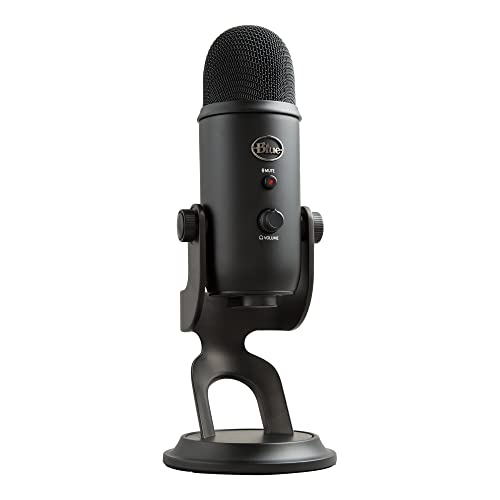
That said, the most recognised multi-pattern all-rounder genuinely has the best onboard controls of any pick here - gain, mute, pattern and headphone volume all on the body.
It is a deserved icon, but be honest with yourself about whether you will ever use those extra patterns. As a sensitive condenser it shines on a treated desk, not a bare echoey one.
Best for untreated rooms: the dynamic that ignores your room
If your recording space is a normal, untreated bedroom or home office - which is most of us - this is the pick that fixes the problem money cannot otherwise solve. As a dynamic mic it only hears what is close and in front, so the echo, air-con and keyboard a sensitive condenser would capture simply disappear. It is the heritage Shure SM7/MV7 trick in a plug-and-play USB body, with Auto Level and a built-in denoiser doing the heavy lifting.
Two caveats worth knowing before you buy: it connects via USB-C only, so check your ports or grab a cheap adapter, and like all dynamics it wants you fairly close, which is where a boom arm helps. It is the dearest pick on this page and the one most worth the money if your room is the problem.
How we chose, and how to read the prices
Every microphone here was verified in stock on Amazon AU at the time of writing, with the star ratings and review counts shown taken from live AU listings (we have flagged where a review count is a pooled global figure rather than AU-only, so you can weigh it honestly). Prices move - the Razer in particular sells for around $69, and the Yeti frequently carries a voucher - so treat every dollar figure as a guide and confirm on the listing before you buy.
We did not include XLR mics, studio interfaces or anything that needs extra hardware to work, because the entire point of this list is plug-in-and-talk simplicity. If you outgrow that, you will know, and an XLR chain will be a deliberate next step rather than your first one.
Frequently asked questions
Do I need a USB or an XLR microphone?
For podcasting, streaming, calls and working from home, USB is the right call for almost everyone. A USB mic plugs straight into your computer and works in seconds - no audio interface, no phantom power, no mixer. XLR only starts to make sense once you are running several mics at once or building a specific studio signal chain, and it costs more for results most people will not hear. Every pick on this list is USB.
Condenser or dynamic - which should I buy?
It comes down to your room. A condenser (like the Blue Yeti or RODE NT-USB Mini) is very sensitive and captures beautiful detail, but it also captures your keyboard, your fan and the echo off bare walls. A dynamic (like the Shure MV6) only hears what is close and directly in front of it, so in an untreated bedroom or office it sounds dramatically cleaner. Rule of thumb: treated, quiet room - condenser; normal echoey room - dynamic.
Will a more expensive microphone fix how I sound?
Only partly. The single biggest factor is your room and your mic technique, not the price tag. Get the mic 10-15 cm from your mouth, speak slightly across it rather than straight into it, and soften a hard room with a rug, curtains or even a doona nearby. A well-used $45 FIFINE in a quiet room will beat a $220 mic used badly in an echoey one. Spend on a quiet space first, then on the mic.
What does cardioid mean, and is it what I want?
Cardioid is a pickup pattern that listens to the front of the mic and rejects the sides and rear - which is exactly what you want for one person talking. It keeps your voice forward and room noise down. Supercardioid (the Razer Seiren V3 Mini) is even tighter. If a mic only offers cardioid, that is a feature for solo use, not a limitation.
Are the four patterns on a Yeti or QuadCast worth paying for?
For most solo creators, no. Multi-pattern mics advertise cardioid, omni, bidirectional and stereo - but if you are one person on a call, stream or to-camera recording, you will set it to cardioid on day one and never change it. Omni and stereo only earn their keep for in-room interviews or ASMR. Buy a multi-pattern mic for its capsule quality and onboard controls, not for dials you will not touch.
Do I need a pop filter and a boom arm as well?
Usually yes, and they are often sold separately. A boom arm lifts the mic off your desk - so it stops hearing every keystroke and bump - and positions it near your mouth. A pop filter softens the harsh 'p' and 'b' plosive pops. Budget roughly $30-60 for both. The exception is the Shure MV6, whose digital popper stopper handles plosives in software, so you may only need an arm.
Can I plug these into my phone, or do I need a particular cable?
Check the connector first. Older budget mics like the FIFINE K669B are USB-A and are designed for a computer, not a phone. The Shure MV6 and HyperX QuadCast 2 S are USB-C, which is handy for modern laptops and many phones but caught at least one buyer out expecting USB-A - confirm your ports or grab a cheap adapter. For real-time monitoring without an echoey delay, also look for a built-in 3.5mm headphone jack, which the Yeti, NT-USB Mini, MV6 and QuadCast all include.
Found this helpful?
Check out more guides for new homeowners.