The best waffle maker for most Australian homes is the Sunbeam Vertical Waffle Maker: batter goes into a funnel at the top so it fills evenly and does not overflow, and a 5 setting shade selector with an automatic start timer takes the guesswork out. The Cuisinart 4-Slice Belgian Waffle Maker is the one for a family that eats together, and the Bestron Mini is the budget way in.
A waffle maker is one of those treat appliances that earns its keep on weekends, school holidays and lazy Sunday brunches rather than every single morning. It will not get the daily workout your toaster or kettle gets, but on the mornings it does come out, a good waffle maker turns a basic batter into cafe-style waffles the whole family asks for. The difference between a frustrating cheap machine and a genuinely good one comes down to three things: the type of waffle it makes, how much control you have over browning, and how it handles the inevitable mess.
The range in Australia spans from compact mini makers through to smart machines that sense and time the cook for you. Understanding which features matter (and which you can skip) is what this guide is about. We cover the types of waffle maker, why browning control is the single feature worth weighing most, how to size capacity to your household, and how the best machines stop batter overflowing all over the bench.
How the six waffle makers compare
Style, capacity and how much control you get over browning are what separate these six.
| Pick | Best for | Key spec | Rating |
|---|
| Bestron Mini Waffle Maker | Budget way in | One mini waffle at a time | 4.4 |
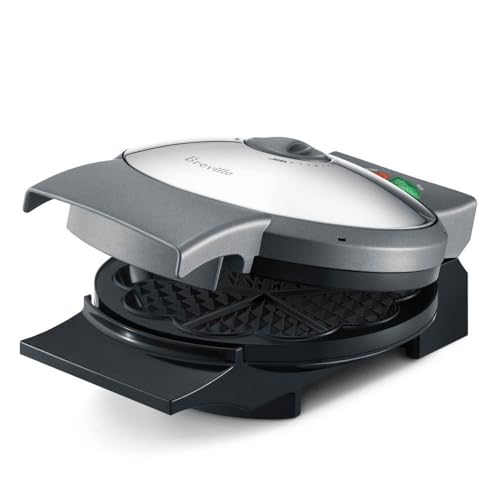
| Breville Crisp Control Waffle Maker | Novelty shapes with real control | Heart shaped plates, browning control | 4.5 |
| Cuisinart 4-Slice Belgian Waffle Maker | Best for families | Four deep pocket waffles at once, 5 browning settings | 4.6 |
| Sunbeam Vertical Waffle Maker | Best all rounder | Vertical pour, 5 shade settings, automatic start timer | 4.6 |
| Breville the No-Mess Waffle Iron (BWM520) | Best for overflow control | Built around the No-Mess Moat | 4.4 |
| Breville the Smart Waffle (BWM640) | Best premium | Waffle IQ sets time and shade automatically | 4.7 |
The Types of Waffle Maker
Not all waffle makers produce the same waffle. Before comparing brands, it helps to know which style suits the waffles you actually want to eat, because the machine type, more than the price, decides the result.
Belgian / Deep-Pocket
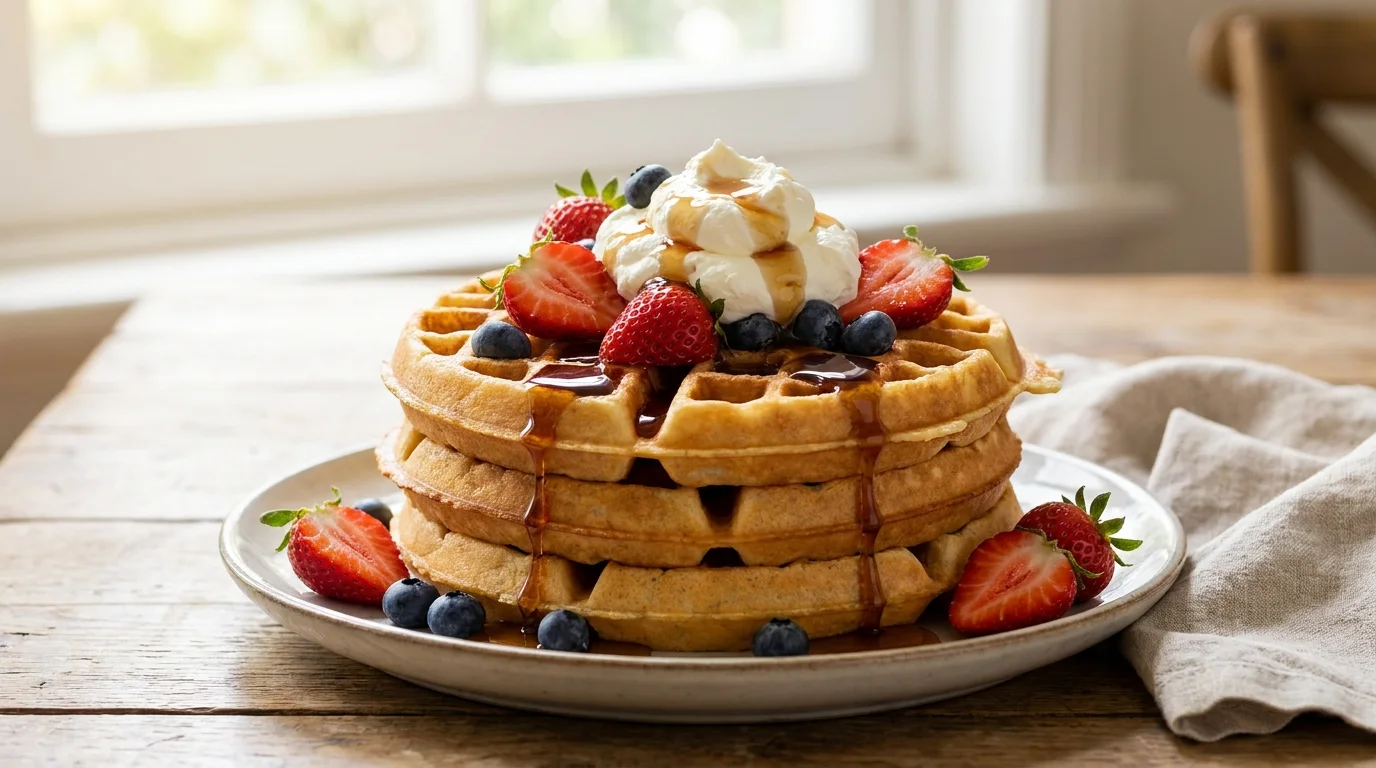
Belgian waffle makers produce thick, fluffy waffles with deep square pockets that hold syrup, cream and fruit, the cafe-style 'real waffle' most people picture. This is by far the most popular type, and the deep grids are forgiving: they hold toppings beautifully and give you that satisfying crisp-outside, soft-inside texture. The Cuisinart, our family pick, is a deep-pocket Belgian maker.
Classic / Thin (and Novelty Shapes)
Classic waffle makers produce thinner, crisper waffles with shallow grids. They are cheaper and lighter, and they suit people who prefer a crisp edged waffle over a fluffy one, as well as novelty shapes like heart shaped or mini waffles that kids love. Two of our picks live here. The budget way into waffles is the Bestron Mini, a compact single waffle machine that makes one little 10cm waffle: more of a fun snack and kids novelty than a family workhorse.
If you want the classic thin style or a fun shape, this is the category to look at, but most Australian buyers searching for a waffle maker are after the deep Belgian style.
Vertical-Pour
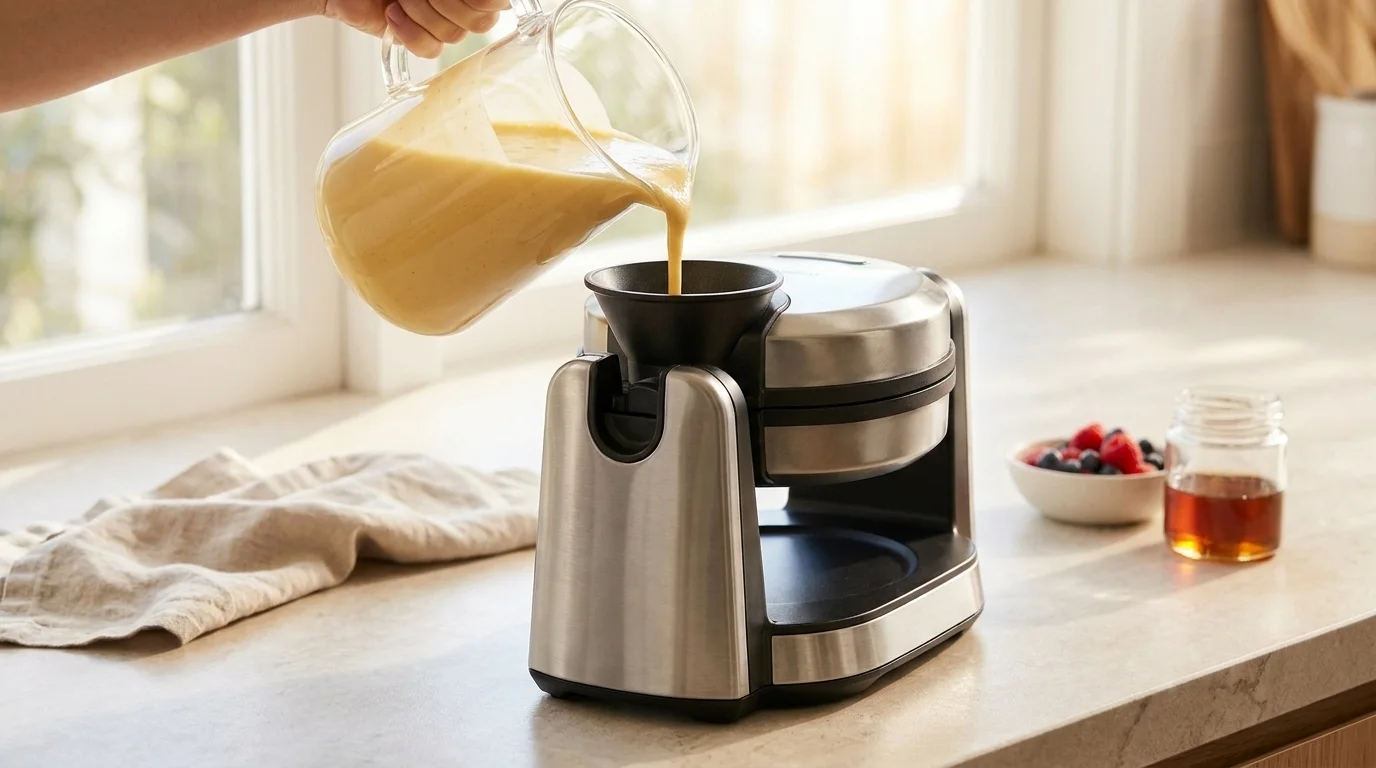
Vertical-pour makers are an upright design where you pour batter into a funnel at the top rather than spooning it onto a flat plate. The batter fills the chamber evenly from the inside, which means no overflow and no dripping down the sides, and the machine stores upright to save bench and cupboard space. This is the neatest, least-messy way to make waffles. Our best-for-most pick, the Sunbeam, uses exactly this design.
Browning Control: The Feature That Matters Most
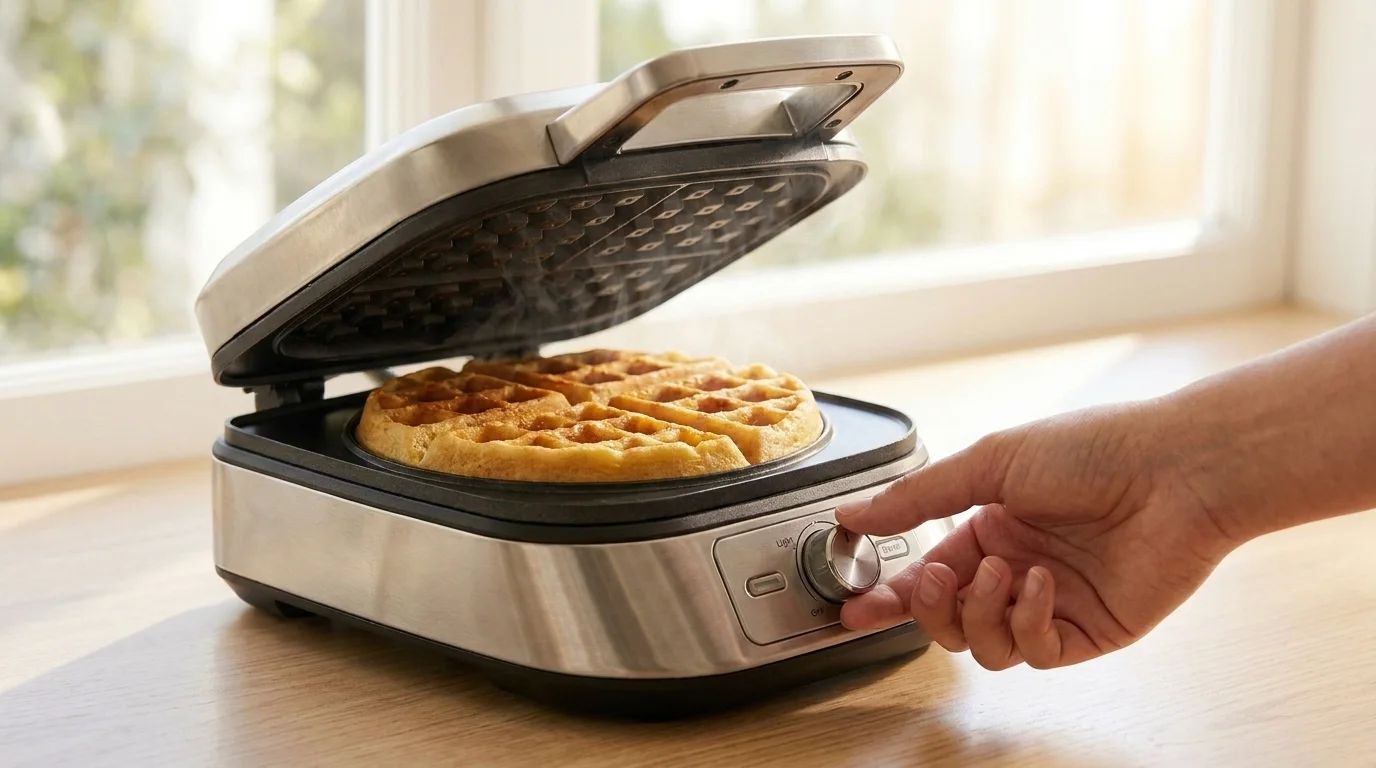
If you only weigh one feature when buying a waffle maker, weigh this one. A shade or browning dial lets you choose anywhere from light-and-fluffy to dark-and-crispy, and it is the difference between a waffle you love and a waffle that is somebody else's idea of done. Everyone has a preference, and a fixed-temperature machine simply cannot honour it.
More settings mean finer control. The Cuisinart and the Sunbeam each offer 5 shade settings, which is plenty for a household to find its sweet spot, and the No-Mess Iron sits a notch higher with a 7-setting dial. The Breville Smart Waffle goes furthest with 12 browning settings plus an 'A Bit More' button that adds extra colour without restarting the whole cycle, genuinely useful when one person likes their waffle a shade darker than the rest of the table.
Just as important is knowing when the waffle is ready. Indicator lights (ready-to-bake and ready-to-eat, as on the Cuisinart) or an on-screen timer (as on the Sunbeam and Breville) take the guesswork out of timing, so you are not lifting the lid early and tearing a half-set waffle. A machine that tells you when it is done is worth far more than its price difference in saved waffles.
Capacity: How Many Waffles At Once
Capacity decides whether your family eats together or in shifts, so match it to your household and how often you host brunch.
A 1-waffle maker, like the Bestron mini, suits a couple or a single-person household, quick to heat, easy to store, but slow if you are feeding a crowd. A 2-waffle maker, like the Breville Smart Waffle, is a sensible default for most homes: it keeps a steady supply going for two to four people without anyone waiting too long. A 4-waffle maker, like the Cuisinart, bakes four deep Belgian waffles in a single batch, so a family or a table of guests is served at once rather than the cook eating last and cold.
If you regularly host weekend brunch or have hungry kids on school holidays, the larger capacity earns its bench space. If waffles are an occasional treat for two, a smaller machine is plenty.
Mess Management: The Number-One Annoyance
Ask anyone who owns a waffle maker what they dislike about it and the answer is the same: batter overflows easily, and baked-on batter is a chore to scrub off the bench and the machine. This is the most common waffle-maker complaint, and the good news is that several of our picks tackle it a different way.
The Cuisinart uses a locking lid mechanism that clamps shut and prevents batter leaking out the sides while it cooks. The Breville Smart Waffle has a No-Mess Moat, a channel around the plates that catches and actually cooks any overflow batter, so there is nothing to wipe up afterwards. The Sunbeam sidesteps the problem entirely with its vertical-pour funnel: because batter goes in from the top and fills the sealed chamber, it physically cannot overflow onto the bench.
If overflow is your single biggest gripe, the Breville No-Mess Waffle Iron is built entirely around the fix: a wide wrap around moat encircles the plates and catches and cooks any spill, so there is genuinely nothing to wipe up. It pairs that with a 7 setting browning dial and Thermal Pro even heat, and sits between the Sunbeam and the Smart Waffle.
A machine with no mess feature means wiping cooked-on batter off the counter every time, which is exactly the kind of friction that sends a waffle maker to the back of the cupboard for good. It is a feature worth paying for.
Even Heat: No Crispy Edges With Raw Middles
Cheap waffle makers have a habit of giving you crispy, almost-burnt edges with a raw, doughy middle, because the heat is concentrated in one spot rather than spread across the plate. Even heat distribution fixes this. The Breville machines use Thermal Pro even heat to keep the whole plate at temperature, and the Sunbeam's upright design heats the chamber uniformly from both sides, so the waffle cooks edge to edge at the same rate. If you have ever bitten into a waffle that was perfect on the outside and gluey inside, even heat is the feature that solves it.
Non-Stick and Care
Every good waffle maker uses a non-stick coating. Look for PFOA-free, as on the Breville plates. A few care habits will keep that coating working for years:
- Never use metal utensils on the plates. They scratch the non-stick. Use silicone or wood to lift waffles out.
- A light brush of oil on the plates before the first use helps the coating season and release cleanly.
- Let the machine cool fully, then wipe the plates clean rather than soaking them.
- Never submerge the body in water. It houses the electrical element. Wipe the exterior with a damp cloth only.
Treated this way, a quality waffle maker will outlast a decade of weekend brunches.
The Australian Context: An Occasional-Use Treat
It is worth being honest about where a waffle maker sits in an Australian kitchen. Waffles are a weekend-brunch and school-holiday favourite rather than a daily breakfast, so a waffle maker is a treat appliance. It lives in the cupboard most of the week and does take up shelf space. That is the main trade-off, and it is why a cheaper, simpler machine is genuinely plenty for the occasional weekend batch.
The other honest trade-off is mess: batter overflow is the main hassle, which is exactly why the mess features above earn their keep. And whichever machine you buy, the real secret to good waffles is the batter and the technique, not the price tag: a thick batter, a hot, fully preheated plate, and a light brush of oil do most of the work. A budget four-slice Belgian maker handles the occasional family brunch beautifully; the premium smart machine suits people who make waffles often and want them dialled in perfectly every single time.
If you are still kitting out a first kitchen, a waffle maker is a nice-to-have rather than a first-week essential. The everyday workhorses (kettle, toaster and a sandwich press) come first, and a kitchen essentials guide covers the priority order before you start adding treat appliances like this one. A bench-top pie maker belongs in the same bracket: a weekend machine rather than a weeknight one.
How to use a waffle maker
Preheat first and do not rush it. Every machine here needs a few minutes to come up to temperature, and batter poured onto a half-warm plate sticks and steams instead of crisping. Brush the plates lightly with a neutral oil the first time you use them, even on non-stick, then only when the waffles start clinging.
Make the batter thicker than pancake batter so it holds its shape in the pockets. A stand mixer makes short work of whipping the egg whites separately and folding them through, which is the single biggest difference between a dense waffle and a light one. Rest the batter for 10 minutes before the first pour.
Pour into the centre and stop short of the edge, because batter spreads as it cooks and overflow is the main complaint people have about every model. Close the lid, leave it alone, and let the machine tell you when it is done: on the picks here that is a ready light, a shade setting or the Waffle IQ timing on the Breville Smart Waffle. Most waffles take about 3 to 6 minutes depending on the shade you choose. Lift with a silicone or wooden tool rather than metal, and rest the finished waffle on a rack rather than a plate so the underside stays crisp.
What else can you cook in a waffle maker?
More than you would think. Hash browns from grated potato, toasted cheese sandwiches, leftover mashed potato, brownie batter, cornbread and even falafel mix all work in a waffle maker, because the deep plates give you a lot of crisp surface for very little cooking time. Anything with cheese or sugar in it will stick harder than batter does, so oil the plates properly and clean them while they are still warm. If pressed weekend cooking is the appeal, a bench-top pie maker covers the savoury side of the same job.
Frequently Asked Questions
What type of waffle maker is best?
For most people, a Belgian or deep-pocket waffle maker is the best choice. It makes the thick, fluffy, cafe-style waffles with deep squares that hold syrup, cream and fruit that most people picture when they think of a waffle. If mess and bench space are your main concerns, a vertical-pour machine like the Sunbeam is the neatest option because batter goes in from the top and cannot overflow. If you make waffles often and want consistent results with no guesswork, a smart machine like the Breville senses and times the cook for the exact style and shade you choose. The right type depends on the waffle you want and how much control you are after.
What is the difference between Belgian and classic waffles?
Belgian waffles are thick and fluffy with deep, large pockets that hold plenty of syrup, cream and toppings. They are the cafe-style waffle most people picture. Classic or traditional waffles are thinner and crisper with a shallow, finer grid pattern. Belgian makers are the most popular type and tend to be more forgiving with toppings, while classic makers are cheaper and lighter and suit people who prefer a crisp-edged waffle or want novelty shapes like heart-shaped or mini waffles. Neither is better in absolute terms. It comes down to whether you want a thick, fluffy waffle or a thin, crisp one.
How many waffles should a waffle maker make at once?
Match the capacity to your household. A 1-waffle maker suits a couple or a single person. A 2-waffle maker, like the Breville, is a sensible default for most homes and keeps a steady supply going for two to four people. A 4-waffle maker, like the Cuisinart, bakes four deep Belgian waffles in a single batch, so a family or a table of guests is served at once rather than eating in shifts while the cook waits. If you regularly host weekend brunch or feed hungry kids on school holidays, the larger capacity is worth the extra bench space.
How do I stop batter overflowing and making a mess?
Batter overflow is the number-one waffle-maker annoyance, and there are three good solutions. A locking lid, like the one on the Cuisinart, clamps shut and stops batter leaking out the sides. A moat that catches and cooks overflow, like the Breville No-Mess Moat, means there is nothing to wipe up afterwards. A vertical-pour funnel, like the Sunbeam, fills a sealed chamber from the top so batter physically cannot overflow onto the bench. Beyond the machine, using a slightly thicker batter and not overfilling the plates also helps. Pour a little less than you think you need, because the batter spreads and rises as it cooks.
How do I clean a waffle maker?
Let the machine cool fully first, then wipe the non-stick plates clean with a damp cloth or paper towel rather than soaking them. Never submerge the body in water, because it houses the electrical element. Wipe the exterior with a damp cloth only. Never use metal utensils on the plates, as they scratch the non-stick coating; lift waffles out with silicone or wood instead. If batter has baked on, a soft brush or a damp cloth with a little warm water usually lifts it, and a light brush of oil before the next use keeps the plates releasing cleanly. Treated this way, the non-stick coating lasts for years.
Do I need browning control on a waffle maker?
Yes, if you weigh one feature above all others, weigh this one. A shade or browning dial lets you choose anywhere from light-and-fluffy to dark-and-crispy, and it is the difference between a waffle you love and one that is somebody else's idea of done. More settings give finer control: the Cuisinart and Sunbeam each have 5 shade settings, while the Breville has 12 plus an 'A Bit More' button for adding extra colour without restarting. Indicator lights or an on-screen timer also matter, because they take the guesswork out of knowing when the waffle is ready so you do not tear a half-set waffle by lifting the lid early.
Which waffle maker should I buy?
For most Australian homes, the Sunbeam Vertical Waffle Maker is the best all rounder: the vertical pour design is the neatest and most mess free, the on screen timer starts automatically when it senses batter, and it stores upright in a tight cupboard. If you are feeding a family, the Cuisinart 4-Slice Belgian Waffle Maker bakes four deep Belgian waffles at once with browning control and a no leak locking lid. If you make waffles often and want them perfect every time, the Breville the Smart Waffle uses Waffle IQ to dial in the exact style and shade, with even heat and a No-Mess Moat for overflow. Choose based on your budget, how often you make waffles, and how much you care about mess.
How do you make waffles without a waffle maker?
You cannot make a true pocketed waffle without the plates, but you can get close. A ridged stovetop griddle or a sandwich press with flat plates gives you the crisp outside and the shape, if not the deep pockets. Waffle batter also cooks well as thick pancakes in a heavy frying pan, or baked in a hot oven in a muffin tin for a crisp edge. If you want real pockets, the plates are the machine, and the Bestron Mini is the budget way in.
Can you use pancake mix in a waffle maker?
Yes, but thicken it first. Pancake mix is deliberately runny, so straight from the packet it spreads past the plate edges and comes out soft rather than crisp. Add an extra tablespoon or two of oil or melted butter per cup of mix, cut the liquid back slightly, and let it rest for 10 minutes. The fat is what crisps the outside, which is the real difference between waffle batter and pancake batter.
How long do waffles take in a waffle maker?
Between about 3 and 6 minutes once the plates are hot, depending on the machine and the shade you want. A light golden waffle sits at the shorter end, a dark crisp one at the longer. The picks with a shade selector, such as the Sunbeam Vertical and the Cuisinart, take the guesswork out, and the Breville Smart Waffle sets the time itself. Preheating adds a few minutes on top, so plan for about 10 minutes from cold to first waffle.