Why Australians buy a home weather station
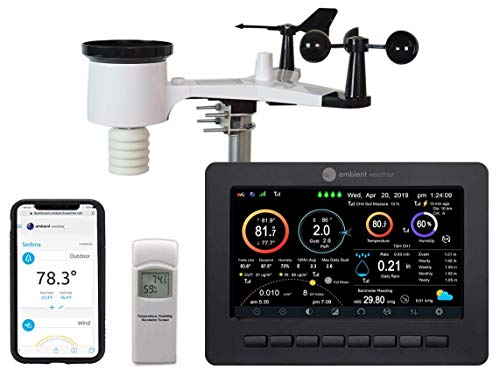
The best home weather station in Australia depends on what you want to measure. A display station reads indoor and outdoor temperature and humidity, while a full array adds wind, rainfall in millimetres, UV and solar radiation. For most backyards we pick the ECOWITT WS2910, a 7 in 1 solar array with a colour console.
The best home weather station in Australia for most backyards is the ECOWITT WS2910, a 7 in 1 solar array with a colour console and Wi-Fi upload; the La Crosse 308-1711 is the budget display and the Davis Vantage Pro2 is the accuracy pick if you have the budget for it. A home weather station, also called a personal weather station, puts real measurement where you actually live rather than at the nearest Bureau of Meteorology site, which can be many kilometres and a very different microclimate away. Gardeners use one to track rainfall in millimetres and watch for frost on cold nights, which is what decides whether the garden hose comes out on a Saturday morning; hobbyists like comparing their own readings against the BoM; people with sheds, pools and rooftop solar want to know wind, sun and temperature on their own block; and storm-watchers simply enjoy seeing a front roll through on live wind and pressure. The category splits cleanly in two. Simple display stations show indoor and outdoor temperature and humidity and sometimes a forecast icon, but nothing more. Full sensor-array stations add wind speed and direction, rainfall, UV and solar radiation and usually upload it all to the internet. This guide spans both, from a battery powered display to full sensor arrays with a 7 inch console, so you can match the station to what you really want to measure.
The twelve home weather stations compared
Every station side by side. The line that matters is the third column: a display station never measures wind or rain, no matter what it costs.
| Model | Role | Sensors | Wi-Fi upload | Sensor power | Wireless range | Rating |
|---|
| La Crosse 308-1711 | Best budget display | Temperature and humidity only | No | Battery | 90m (300ft) | 4.3 |
| La Crosse WS6825 | Best colour display | Temperature and humidity, forecast icon | No | 5V USB and AAA | Not stated | 4.4 |
| ECOWITT WS2320 | Best value 7-in-1 | 7-in-1 array, mono console | Yes | Solar sensor | Not stated | 4.2 |
| ECOWITT WS2910 | Best overall | 7-in-1 array, colour console | Yes | Solar sensor | Not stated | 4.6 |
| ECOWITT HP2551 | Best big screen | 7-in-1 array, 7-inch TFT, up to 8 extra sensors | Yes | Solar sensor | Not stated | 4.7 |
| Ambient Weather WS-2000 | Could not be bought on 10 October 2026 | Tablet console, SD card history, text alerts, 915 MHz | Yes | Solar sensor | Not stated | 4.4 |
| ECOWITT Wittboy Pro HP2564 | Colour console kit | 7 in 1 array, 7 inch TFT console | Yes | Solar sensor | Up to 150 m with obstacles | See product card |
| ECOWITT GW2002 | Wi-Fi hub kit, no display console | 7 in 1 array, hub with pressure sensor | Yes | Solar sensor | Up to 100 m | See product card |
| PanTech PT-WH2900 | Australian brand colour display | Rain gauge, anemometer, solar powered | Yes | Solar sensor | Not stated | See product card |
| Urageuxy Wi-Fi station | Large LCD base station | Rain gauge, anemometer, UV, pressure | Yes | Not stated | Up to 100 m | See product card |
| Kalawen colour station | Display station, two outdoor sensors | Temperature and humidity, barometer forecast | Not stated | Not stated | Up to 100 m in open areas | See product card |
| AcuRite 00829 | Display station, Amazon US Global Store | Temperature, humidity, pressure trend | Not stated | Not stated | Not stated | See product card |
Most stations here read to about plus or minus 1 degree, and the ECOWITT WS2320 and WS2910 listings state that the outdoor sensor reports to the console every 16 seconds, which is the figure that decides whether your data is useful for anything beyond a glance.
How to choose a home weather station in Australia
Before the individual picks, it helps to know the axes that separate these stations. The first is the big one: a display station versus a full array. A display station gives you indoor and outdoor temperature and humidity, and sometimes a pressure-based forecast icon, but no wind or rain; a full array adds wind speed and direction, rainfall in millimetres, UV and solar radiation. The second axis is Wi-Fi and cloud upload: the ECOWITT and Ambient stations push live data to Weather Underground, Ecowitt or AmbientWeather.net so you can log history, compare with nearby stations and get alerts, while the simpler La Crosse displays stay offline. Then there is the outdoor sensor power: solar-charged sensors (every ECOWITT array here) versus plain battery sensors. The console matters too, from a basic monochrome LCD to a colour screen to a large TFT tablet. Expandability is the next consideration: some consoles take extra indoor, soil moisture or air quality sensors. And finally accuracy and calibration, and the Australian power and frequency notes covered in the honest sections below. Settle those and the right pick falls out quickly.
How we picked
This guide is research, not a hands on test. We compared home weather stations from their Amazon Australia listings, reading each for the sensors it includes, how the outdoor sensor is powered, how the readings are shared and who sells it. Each card's seller and stock were read from its Amazon Australia buy box, and the stations sold through an overseas Global Store say so on their cards. Star ratings and review counts come from those listings. For the build and sensor notes we also used the maker specification table and feature list on the ECOWITT HP2564 listing.
Display stations and full sensor arrays sit in one guide because they answer different questions, so we judged each against its own job. We treat the Bureau of Meteorology as the reference for official observations and warnings, and describe a home station as a local complement to it, not a replacement.
Last checked: 10 October 2026, covering the stock, seller and rating of every listing on Amazon Australia.
Best budget display: La Crosse 308-1711 wireless weather station
The 308-1711 is the cheapest honest entry point, and it is a display station through and through. It shows indoor and wireless outdoor temperature and humidity on one screen, adds a heat index and dew point, and lets you set high and low temperature alerts, with the time, date and a moon phase rounding it out. The outdoor sensor links over a 300 ft (90 m) wireless connection, which covers a typical backyard or shed.
For Australian buyers the key detail is that it runs on batteries, so it completely avoids the US 110V plug-pack problem that affects some mains-powered La Crosse models on our 240V supply. With 632 ratings at 4.3 stars it is a proven budget choice. Just be clear on what it is not: there is no wind, rain or UV measurement here.
Display station vs full weather station: which do you need
This is the single most important decision, so be honest with yourself about it. A display station like the La Crosse 308-1711 and WS6825 here gives you indoor and outdoor temperature and humidity and maybe a pressure based forecast icon, and that is genuinely all it does. It does not measure wind, it does not measure rainfall, and it has no UV reading. If all you want is to know how hot and humid it is inside and out, that is plenty and you can stop there. But if you want rainfall in millimetres for the garden, wind speed for the shed or pool, or a UV reading for the kids, you need a full-array station like the ECOWITT WS2320, WS2910 or HP2551, or the Ambient WS-2000. Do not expect wind or rain from a cheap display station, no matter how good the screen looks: the sensors simply are not there.
What about Davis, and the Australian brand Holman?
Two names come up in every Australian discussion of this category and neither is on our list, so here is the honest position. Davis is what serious Australian weather watchers buy: the Vantage Pro2 is the reference standard for accuracy and build, and both the Facebook and Reddit threads that rank for this search recommend it by name. It costs several times the price of anything above and it is not an Amazon AU purchase, so we do not pick it, but if you want the best and the budget exists, buy a Davis from an Australian instrument specialist.
Holman is the Australian brand, and the Aspect Wireless Data Centre is the model to look at. It is a display station rather than a full array, so it competes with the La Crosse units above rather than the ECOWITT ones, but it is sold through Bunnings, which means a local warranty and a shop you can walk into when a sensor stops reporting. That is worth more than it sounds in a category where replacement sensors are the usual failure point.
Will a US weather station work in Australia
This trips people up, so it is worth spelling out. Some US-numbered La Crosse stations that run off mains power ship a 110V US plug-pack, and that mains feature will not work on Australia's 240V supply without a workaround like a step-down transformer. The budget La Crosse 308-1711 sidesteps the problem because it is battery powered, so there is no plug to worry about. The WS6825 comes with an included 5V power adapter plus battery backup, so check the plug type on that adapter before you order. The other geo-honest note concerns radio frequency. The Ambient Weather WS-2000 uses a 915 MHz radio, which is the correct band for Australia, but it means any add on sensors you buy later must be the US and Australian 915 MHz versions, not the European 868 MHz ones, and mixing them will not pair. And because Ambient is a US brand, returns and support can be slower than buying a locally stocked station.
Getting accurate readings
Home weather stations are typically accurate to around plus or minus 1 degree C, which is fine for everyday use, but placement and a quick calibration get you closer to the truth. Mount the outdoor temperature sensor in the shade and away from walls, paving and anything that radiates heat, because a sensor baking against a brick wall or sitting above pavers will read several degrees too high in the afternoon sun. Calibrate the barometer to your local sea-level pressure when you set it up so the forecast logic and pressure trend are meaningful. A manual rain gauge is still the cheapest way to sanity-check what the tipping bucket is reporting. On ECOWITT units you may also need a one-time wind-direction offset for the southern hemisphere so the vane reads true. The good news for Australian buyers is that these stations report rainfall in millimetres and temperature in degrees C natively, so they suit local use straight out of the box with no unit conversion to fiddle with.
One more limit on display stations: the forecast icon is not a real forecast. Clocks Central, an Australian weather station retailer, notes that these icons rely on barometric pressure trends, not satellite data, so they are a short term guide, and a rapid pressure drop over a few hours is a far more reliable storm signal than any icon.
Wi-Fi and Weather Underground
A console with Wi-Fi is one more thing on the home network, so it belongs in the same plan as the rest of your smart home devices.
The reason to choose a connected station is what happens to the data once it is measured. The ECOWITT WS2320, WS2910 and HP2551 and the Ambient WS-2000 all upload their live readings over Wi-Fi to services like Weather Underground, Ecowitt or AmbientWeather.net. That lets you log a full history of your own weather, compare your readings against nearby stations to sanity-check them, view everything from your phone away from home and set up alerts for things like a temperature drop or heavy rain. The simpler La Crosse display stations do not do any of this: they show the current reading on the console and nothing leaves the device. If logging history and comparing online matters to you, that alone is a reason to step up from a display station to one of the Wi-Fi full arrays.
Build quality matters more in Australia than a sensor list suggests, because the outdoor array sits in sun and rain all year. The ECOWITT Wittboy Pro HP2564 listing says it meets Waterproof IPX5 standards and is made from thermal insulation materials. The PanTech listing describes stainless steel construction for durability in Australia's diverse climate, and the Urageuxy listing says it is built waterproof and windproof. The HP2564 listing gives an operating temperature range of minus 40 to 60 degrees C, but the PanTech listing states none and the Urageuxy listing gives only an upper limit of 50 degrees C, so for those two check the manual before mounting a sensor on a hot roof or an exposed rural post.
Frequently Asked Questions
What is the difference between a display weather station and a full weather station?
A display station shows indoor and outdoor temperature and humidity, and sometimes a pressure based forecast icon, but nothing else: the La Crosse 308-1711 and WS6825 are display stations. A full weather station adds a sensor array that measures wind speed and direction, rainfall in millimetres, UV and solar radiation, like the ECOWITT WS2320, WS2910 and HP2551 or the Ambient WS-2000. If you want wind or rain data, you need a full array, because a display station simply does not have those sensors.
Do home weather stations connect to Wi-Fi and Weather Underground?
The full-array stations here do, but the display stations do not. The ECOWITT WS2320, WS2910 and HP2551 and the Ambient WS-2000 upload live data over Wi-Fi to services like Weather Underground, Ecowitt or AmbientWeather.net, so you can log history, compare with nearby stations, view your weather from your phone and set alerts. The simpler La Crosse 308-1711 and WS6825 display stations stay offline: they show the reading on the console and nothing is uploaded. If logging and online comparison matter to you, choose one of the Wi-Fi full arrays.
Will a US weather station work in Australia?
It depends on the model. Some US-numbered La Crosse stations ship a 110V US mains plug-pack that will not work on our 240V supply without a step-down transformer. The battery powered La Crosse 308-1711 avoids this, and the WS6825 comes with an included 5V power adapter, so check its plug type before you order. On frequency, the Ambient WS-2000 uses a 915 MHz radio, which is correct for Australia, but any add-on sensors must be the 915 MHz versions, not the European 868 MHz ones, and as a US brand its support and returns can be slower.
How accurate are home weather stations?
They are typically accurate to around plus or minus 1 degree C, which is fine for everyday use, and you can get closer with good placement and a quick calibration. Mount the outdoor sensor in shade away from walls and pavers so it does not read too high in the sun, calibrate the barometer to your local sea-level pressure, and on ECOWITT units apply a one-time wind-direction offset for the southern hemisphere. These stations report rainfall in millimetres and temperature in degrees C natively, so they suit Australian use out of the box without any unit conversion.
Are the outdoor sensors solar or battery powered?
It varies by station. The ECOWITT full array outdoor sensors in this guide, the WS2320, WS2910 and HP2551, are solar powered 7 in 1 units that charge during the day and use battery backup, which keeps maintenance low. The Ambient WS-2000 array is also solar-assisted. The simpler La Crosse display sensors run on batteries. Solar sensors are convenient because they top themselves up, but on a shaded mounting spot or through a run of overcast days the backup batteries still do the work, so it is worth checking them once a year regardless.
Can a weather station measure rainfall and wind for my garden?
Only a full-array station can. If you want rainfall in millimetres and wind speed for the garden, you need a station with a rain gauge and an anemometer, such as the ECOWITT WS2320, WS2910 or HP2551, or the Ambient WS-2000, and all of these measure rain, wind speed and direction, UV and solar. The cheaper La Crosse display stations cannot do this; they only track temperature and humidity. The HP2551 goes a step further with optional soil-moisture sensors, which gardeners often add.
Which weather station is best for an Australian backyard?
For most backyards the ECOWITT WS2910 is the best all round choice: it has a full 7 in 1 solar array measuring wind, rain, UV and solar, a colour console and Wi-Fi upload to Weather Underground, and at 4.6 stars it balances features and rating better than anything else here. If you only want temperature and humidity on a simple display, the battery powered La Crosse 308-1711 is the budget pick. For a big screen with on console history step up to the ECOWITT HP2551. The Ambient WS-2000 has a tablet console and SD card history export, but it could not be bought on Amazon Australia on 10 October 2026.
Is a home weather station more accurate than the Bureau of Meteorology?
For your own block, usually yes, and that is the whole point. The Bureau runs a sparse network of very well sited instruments, and the nearest one can be tens of kilometres away across a different microclimate: a coastal station will not tell you the frost risk in a valley, and an airport station will not tell you how much rain fell on your roof. A home station reads to about plus or minus 1 degree, which is less precise than a Bureau instrument but far more relevant. Use the Bureau for the forecast and your own station for what actually happened in your yard.
Is the Bureau of Meteorology or Weatherzone more accurate?
They are closer than the argument suggests, because Weatherzone and most Australian weather apps are built on Bureau observations and models with their own presentation on top. The Bureau is the source for observations and warnings, and it is the one to trust for severe weather. Commercial apps often win on hourly detail and radar presentation. Neither knows what is happening in your backyard, which is why a personal weather station whose outdoor sensor reports every 16 seconds tells you something neither can.
Which home weather station is the most reliable?
Davis has the strongest reliability reputation in Australia and the Vantage Pro2 is what long term watchers buy. Among the stations on this page, ECOWITT is the brand to back, and the WS2910 holds 4.6 stars while the HP2551 holds 4.7. The usual failure point is not the console but the outdoor sensor, so the practical question is whether you can buy a replacement locally. Solar-charged arrays outlast plain battery sensors in Australian sun, and Holman, sold through Bunnings, is the easiest to get a warranty on.
Where can I buy a home weather station in Australia?
Amazon AU carries every pick on this page except the Ambient Weather WS-2000, which could not be bought on Amazon Australia on 10 October 2026. Bunnings stocks Holman, which is the easiest local warranty in the category. Instrument specialists and Ecowitt resellers carry the ECOWITT range and are the only realistic source for a Davis. Harvey Norman and JB Hi-Fi carry a rotating handful of mid-range stations. Buy the 915 MHz version of anything with add-on sensors, because the European 868 MHz units will not pair with Australian hardware.
What sensors do weather stations use?
A full weather station uses a thermo hygrometer for temperature and humidity, an anemometer for wind speed, a wind vane for direction, a rain gauge and a light and UV sensor. The ECOWITT WS2910 listing names exactly these in its 7 in 1 outdoor sensor, while a display station only has temperature and humidity.
Which weather station is the most accurate?
The Davis Vantage Pro2 is the accuracy reference among Australian weather watchers, but it costs several times more than the stations on this page and is not sold by Amazon AU. A home station typically reads to about plus or minus 1 degree C, so shade, distance from walls and calibration matter as much as the model.
What is the best weather station for farms in Australia?
For a farm choose a full array rather than a display station, because only an array measures rainfall in millimetres and wind speed and direction. The ECOWITT HP2551 can add soil moisture probes, and the PanTech and Urageuxy listings both describe a rain gauge and anemometer for farm or garden use.
What is the best home weather station for accurate forecasts in Australia?
No home station gives an accurate forecast by itself, because console forecast icons rely on barometric pressure trends, not satellite data. Use the Bureau of Meteorology for the forecast and a full array such as the ECOWITT WS2910 to record what actually happened in your yard.
Which weather station has the most accurate weather?
For stated accuracy, look at the ECOWITT Wittboy Pro HP2564: its listing gives temperature accuracy of plus or minus 1 degree C at 0.1 degree resolution and a piezo rain gauge with 0.1 mm resolution, accurate to plus or minus 10 percent between 5 and 50 mm per hour. A display station measures only temperature and humidity, and shade, distance from walls and calibration matter as much as the model.