By Anish Puri·6 June 2026·Last updated 23 October 2026·14 min read
The best yoga mat in Australia for most people is the Gaiam Premium Print Yoga Mat, a 6mm PVC mat rated 4.7 stars from 19,568 ratings on Amazon AU. The PROIRON TPE Foldable folds for travel, the PROIRON NBR goes to 10mm, and thickness, material and grip decide the rest.
Prices checked 23 October 2026 on Amazon AU and subject to change.
The best yoga mat in Australia for most people is the Gaiam Premium Print Yoga Mat, a 6mm PVC mat rated 4.7 stars from 19,568 ratings on Amazon AU. The PROIRON TPE Foldable Yoga Mat is the folding travel option, and the PROIRON NBR Yoga Mat is 10mm thick. A yoga mat looks like the simplest purchase in fitness, a rectangle of foam, and that is exactly why so many people buy the wrong one. The mat that cushions your knees during floor pilates may wobble under you in a standing balance, and a grippy mat can feel hard and thin under your spine. The right mat depends on how you actually practise.
This guide reads the Amazon AU listing for each mat, so thickness, material, size and rating come from the listings and not from our own testing. Below the picks we walk through the things that separate a good mat from a frustrating one: thickness, material, grip, length and width, alignment lines, carry straps and care, so you can match a mat to your body and your practice the first time.
Best overall: Gaiam Premium Print Yoga Mat
The Gaiam Premium Print Yoga Mat is the best overall mat in this guide because it has the highest rating here, 4.7 stars from 19,568 ratings on Amazon AU, and its listing gives a 6mm thickness with a textured sticky non slip surface. The listing shows Amazon AU as the seller.
The title gives the size as 68 inches long by 24 inches wide, and the product table gives 172.7 by 61 centimetres at 0.6 centimetres thick. The product table lists the material as polyvinyl chloride (PVC), the bullets call it 6P free PVC and say it is free of DEHP, DBP, BBP, DINP, DIDP and DNOP, and the product table gives the item weight as 1.34 kilograms. The purchase includes a free bonus downloadable yoga workout. The listing advises unrolling the mat and airing it out for two to three days before use because a harmless odor may be present when unwrapped, and its care line says hand wash only.
The bullets also describe the mat as lightweight and extra thick for the additional cushioning your joints need during any yoga or fitness routine, with a stylish design to keep you motivated and focused. The title says it is for all types of yoga, pilates and floor workouts. The product table lists the brand and manufacturer as Gaiam and the colour as Violet Vision. Those are the listing's own words and not our test results, and the rating is buyer opinion.
Top pick
Gaiam
Gaiam Premium Print Yoga Mat
4.7(19,568)
The highest rating in this guide: 4.7 stars from 19,568 ratings on Amazon AU. The listing gives a 6mm thickness, a textured sticky non slip surface and 6P free PVC, and it is sold by Amazon AU.
$62.00
Amazon.com.au price as of 06:12 pm AEDT, subject to change
As an Amazon Associate, NestPath earns from qualifying purchases.
How do the yoga mats compare at a glance?
Gaiam Premium Print has the highest rating of the five mats in the table, 4.7 stars from 19,568 ratings, and PROIRON NBR follows at 4.6 stars from 6,342 ratings. Thickness runs from 6mm to half an inch across PVC, TPE, NBR and foam. The sixth card has a dated note in its own section.
Mat
Thickness
Material
Rating and count
Length
Gaiam Premium Print Yoga Mat
6mm
PVC
4.7 (19,568 ratings)
172.7 cm
PROIRON TPE Foldable Yoga Mat
6mm
TPE
4.5 (521 ratings)
183 cm flat, folds to about A4 size
adidas Fitness Mat
7mm (0.7 cm in the product table)
NBR in the bullets, Other in the product table
4.4 (980 ratings)
173 cm
PROIRON NBR Yoga Mat
10mm
NBR
4.6 (6,342 ratings)
183 cm
Retrospec Solana Yoga Mat
Half inch (1.3 cm in the product table)
Foam
4.4 (18,450 ratings)
182.9 cm
Ratings and counts are from the Amazon AU listings, and lengths are from the product tables.
A rating and a count tell you different things. The Gaiam, Retrospec and PROIRON NBR figures rest on thousands of ratings, while the PROIRON TPE Foldable and adidas figures rest on 521 and 980. A 4.4 from 18,450 ratings and a 4.4 from 980 ratings are the same star score with very different amounts of buyer opinion behind them, and neither is a test result.
Thickness: the biggest decision
Thickness is the first thing to settle because it drives how a mat feels. A thinner mat keeps you close to the floor, which gives a direct connection for balance poses, and it packs down smaller for travel. A thicker mat trades some of that planted feel for cushioning under your knees, hips, elbows and spine on hard floors. This is general advice, not a listing claim.
The mats in this guide run from 6mm to half an inch. The Gaiam Premium Print Yoga Mat and the PROIRON TPE Foldable Yoga Mat give 6mm in their titles. The adidas Fitness Mat gives 7mm in its listing page title and 0.7 centimetres in its product table. The PROIRON NBR Yoga Mat gives 10mm in its title. The Retrospec Solana Yoga Mat gives half an inch in its title and 1.3 centimetres in its product table, which makes it thicker than the 10mm PROIRON mat. If you want more padding than any of these, our guide to the exercise mat picks covers thicker mats.
If you are starting out, the two 6mm mats are the ones whose listings talk about cushioning at that thickness. The PROIRON TPE Foldable listing says the 6mm thickness "offers just the right balance of cushioning and support, protecting knees and joints without feeling unstable", and the Gaiam listing says its mat gives "the additional cushioning your joints need". For sore knees, the thickest listings here are the Retrospec, whose bullets say the half inch mat "cushions your joints, hips, and knees", and the PROIRON NBR, whose bullets call the 10mm thickness "soft and comfortable". The PROIRON TPE Foldable carries the Budget pick label in this guide, but at 6mm it is thinner than both.
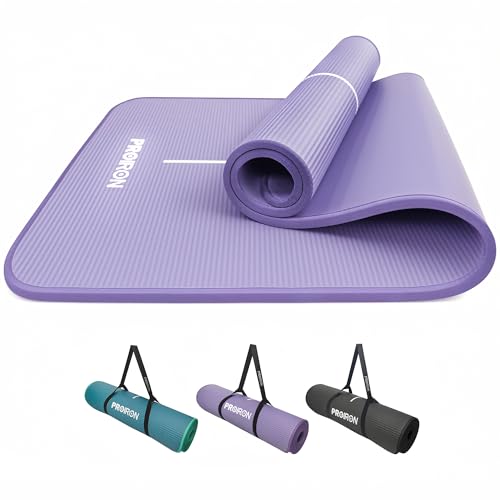
PROIRON TPE Foldable Yoga Mat
The PROIRON TPE Foldable Yoga Mat is a 6mm TPE mat. Its title calls it a folding travel yoga mat, and its bullets say it folds down about A4 size (31*31 cm).
The bullets say it is made of high density TPE with a dual sided non slip design, and they name pilates, travel, office yoga breaks, outdoor picnics and gym sessions as uses. The title adds that it is easy to carry to class, beach, park, travel and picnics. The listing shows that it ships from Amazon, with a rating of 4.5 stars from 521 ratings, the smallest count of the five live mats.
Budget pick
PROIRON
PROIRON TPE Foldable Yoga Mat
4.5(521)
A 6mm TPE mat that folds to about A4 size, rated 4.5 stars from 521 ratings on Amazon AU, with a double textured grip pattern as the listing describes it.
$29.99
Amazon.com.au price as of 11:00 pm AEDT, subject to change
As an Amazon Associate, NestPath earns from qualifying purchases.
Material: TPE, PVC, NBR or foam
The live listings name four materials, and each listing describes its material in its own words. Here is what each one says.
PVC (polyvinyl chloride): the Gaiam Premium Print Yoga Mat's product table gives the material as Polyvinyl Chloride, and its bullets describe a 6P free PVC mat.
TPE (thermoplastic elastomer): the PROIRON TPE Foldable Yoga Mat's product table gives Thermoplastic Elastomers, and its bullets say it is made of 100% recyclable TPE, described as PVC free, latex free and phthalate free.
NBR (nitrile butadiene rubber): the PROIRON NBR Yoga Mat's product table gives Nitrile Butadiene Rubber, and its bullets say advanced NBR material with a high rubber content foaming process. The adidas Fitness Mat's bullets say it is made from NBR material, but its product table gives the material as Other.
Foam: the Retrospec Solana Yoga Mat's product table gives the material as Foam.
How a material feels comes down to grip, weight and cushion, and the listings are our only source for what each mat is made of. Match the material to the detail you care about most: a textured sticky surface on the Gaiam, a fold on the PROIRON TPE Foldable, weight and an alignment line on the PROIRON NBR, or a half inch of foam on the Retrospec.
Grip and non slip
Grip is where a thin or slippery mat fails you most visibly. There are two kinds to think about: dry grip, and wet grip, which only matters if you sweat heavily or do hot yoga. Every claim below is the listing's own wording, and we have not tested any mat.
The Gaiam listing describes a textured sticky non slip surface for excellent traction and superior grip. The PROIRON TPE Foldable listing describes a double textured grip pattern that it says gives superior traction even during sweaty hot yoga or flow poses. The PROIRON NBR listing describes a surface of horizontal stripes and says its increased weight is helpful for the anti slip effect. The adidas listing says its ridged bottom helps grip the floor and reduce movement, and the Retrospec listing describes a non slip surface that grips the floor.
Our own advice, which is not a listing claim, is that if you sweat heavily a thin yoga towel over any mat gives you a second layer of grip. A microfibre gym towel handles the smaller version of the same problem, keeping your hands and forearms dry between poses.
BalanceFrom Go Yoga Mat
Could not be bought on 23 October 2026: the original ASIN opened a substituted listing on Amazon AU, a different listing from the one this card was built on, so we have not confirmed any figure for this mat.
Fitvids
BalanceFrom Go Yoga Mat
Could not be bought on 23 October 2026: the original ASIN opened a substituted listing on Amazon AU, a different listing from the one this card was built on. We have not confirmed any figure on this card.
As an Amazon Associate, NestPath earns from qualifying purchases.
Length and width
Length matters most for taller people, whose hands or feet can hang off the end of a short mat in a full stretch. The Gaiam title gives 68 inches and its product table gives 172.7 centimetres, and the adidas product table gives 173 centimetres. The PROIRON TPE Foldable product table gives 183 centimetres flat, the PROIRON NBR bullets give 183cm and the Retrospec product table gives 182.9 centimetres.
Width is 61 centimetres in the Gaiam, PROIRON TPE Foldable and Retrospec product tables, and 66 centimetres on the PROIRON NBR, which gives more room to spread out in wide legged and floor poses. The adidas listing gives two widths, 24 cm in its page title and 61 centimetres in its product table, so we do not compare its width. A mat that is slightly too big is easier to live with than one that is too small.
Alignment lines
Alignment lines are printed guides for where your hands and feet land. The PROIRON NBR listing says the series "added alignment line to help standardize and guide your yoga pose". In our view they can help you set symmetrical foot placement and square your hips, especially if you practise at home without a teacher, though that is our opinion and not a listing claim.
PROIRON NBR Yoga Mat
The PROIRON NBR Yoga Mat is 10mm thick. Its bullets give the size as 183cm by 66cm by 10mm and the weight as 1.1kg, say a shoulder strap is included, and say the edge is stitched and strengthened for better protection against tearing.
The bullets describe a surface of horizontal stripes for grip, call the 10mm thickness cold proof and moisture proof, and say the stitched edge also reduces the possibility of crimping. The listing shows that it ships from Amazon. Its rating is 4.6 stars from 6,342 ratings, the second highest rating in this guide.
Also great
PROIRON
PROIRON NBR Yoga Mat
4.6(6,342)
A 10mm NBR mat rated 4.6 stars from 6,342 ratings on Amazon AU, with an alignment line and a shoulder strap. The listing says it weighs 1.1kg and that the added weight helps the anti slip effect.
$59.99
Amazon.com.au price as of 06:12 pm AEDT, subject to change
As an Amazon Associate, NestPath earns from qualifying purchases.
Carry strap and weight
If you practise anywhere but home, weight and how you carry the mat decide how painless the trip is. The PROIRON NBR listing says a shoulder strap is included and the Retrospec listing says it comes with a nylon strap. The PROIRON TPE Foldable title says it comes with a storage bag, and its bullets say it folds down about A4 size.
Weights come from different parts of the listings. The PROIRON NBR bullets and product table both give 1.1kg, and the bullets say it is heavier than most yoga mats. The Gaiam product table gives 1.34 kilograms and the Retrospec product table gives 2.75 pounds. The PROIRON TPE Foldable gives two weights: its bullets say it weighs only 1.7 lbs, while its product table gives 1.02 kilograms, so we do not rank it on weight. The adidas bullets call its design lightweight and say it rolls tight for transport and storage. If your mat lives in a car boot or a gym bag, a strap and a low weight matter; if it never leaves the lounge room, neither does.
The Gaiam, PROIRON TPE Foldable, PROIRON NBR and Retrospec listings make material claims in their bullets, and we repeat them only as the listings word them. We have not tested any mat. The PROIRON TPE Foldable bullets describe TPE that is PVC free, latex free and phthalate free. The Gaiam bullets describe 6P free PVC that is free of DEHP, DBP, BBP, DINP, DIDP and DNOP. The PROIRON NBR bullets say its products have passed environmental protection testing and give limits for phthalates and lead. The Retrospec bullets say BPA free materials.
The Gaiam listing also advises unrolling and airing out the mat for two to three days before use, because a harmless odor may be present when unwrapped.
adidas Fitness Mat
The adidas Fitness Mat's bullets say it has a lightweight design that rolls tight for transport and storage, a ridged bottom that helps grip the floor and reduce movement, and that it is ideal for ground exercise and general training and easy to wash and clean. The listing gives two materials: the bullets say NBR, while the product table says Other. It gives 7mm in its page title and 0.7 centimetres in its product table, and the seller shown is GA Sports Australia.
The product table lists the brand as adidas and the colour as Grey, and the page title carries the model code ADMT-11014GR. The bullets run to five short lines covering transport, material, grip, use and cleaning, so this listing gives fewer specifications than the Gaiam and PROIRON listings. Its rating is 4.4 stars from 980 ratings.
Also great
adidas
adidas Fitness Mat
4.4(980)
A 7mm mat rated 4.4 stars from 980 ratings on Amazon AU, sold by GA Sports Australia. The listing calls it ideal for ground exercise and general training and says it is easy to wash and clean.
$53.15$59.95
Save 11%
Amazon.com.au price as of 06:12 pm AEDT, subject to change
As an Amazon Associate, NestPath earns from qualifying purchases.
Brand coverage on Amazon AU
The cards in this guide are Amazon AU listings, so the brands are the ones with a listing we could read. We have not read listings for studio or boutique mat brands, so this guide makes no claims about them. If you want one of those, use this guide to see which specs to compare: thickness, material, length and width, grip and care.
Ratings on the five live listings run from 521 ratings on the PROIRON TPE Foldable to 19,568 on the Gaiam, so a rating means more on the mats with the larger counts. A rating is buyer opinion, not a test result.
Retrospec Solana Yoga Mat
On 23 October 2026 this listing showed an Amazon US seller and a notice that US imports may differ from local products.
The title gives the thickness as half an inch, which the product table gives as 1.3 centimetres. The bullets say the mat cushions your joints, hips, and knees during floor workouts, has a non slip surface that grips the floor, comes with a nylon strap, and uses BPA free materials with simple soap and water cleaning. The listing text for the mat says to wipe it clean with a mix of water and a light amount of gentle soap, then hang it to dry, and not to submerge it.
The bullets add that the durable construction handles daily use and intense workouts without breaking down, whether you are practising at home or taking it to the studio, and that the strap makes rolling up and carrying the mat effortless. The product table gives the colour as Graphite. Its rating is 4.4 stars from 18,450 ratings, the second largest count in this guide.
Also great
Retrospec
Retrospec Solana Yoga Mat
4.4(18,450)
A half inch mat rated 4.4 stars from 18,450 ratings on Amazon AU, with a nylon strap. The listing says the mat cushions your joints, hips and knees.
$69.96
Amazon.com.au price as of 05:00 am AEDT, subject to change
As an Amazon Associate, NestPath earns from qualifying purchases.
How we checked these mats
We read the Amazon AU listing for each mat: the title, the bullet points, the product information table and the seller shown on the buy box. Specs come from the maker's bullet points and the product information on each listing. Thickness, material, length, weight, rating and count on this page come from those listings, and where a listing gives a figure in two places we name both. We did not test any mat, and we have no maker page or manual saved for these mats, so what this page says about grip, care and safety is the listings' own wording.
Last checked: 23 October 2026.
How to choose a mat for your practice
Pull it together like this. If you travel or are tight on space, the PROIRON TPE Foldable Yoga Mat folds to about A4 size. If you want one mat for general practice, the Gaiam Premium Print Yoga Mat has the highest rating here and a 6mm thickness. For floor work, the adidas Fitness Mat is a 7mm pick whose listing says it is ideal for ground exercise and general training. If your knees demand the most padding, the PROIRON NBR Yoga Mat is 10mm thick with an alignment line, and the Retrospec Solana Yoga Mat is a half inch mat with a nylon strap. Whichever you land on, a pair of yoga blocks brings the floor up to you instead of forcing you down to it.
Thick yoga mat for bad knees
For bad knees, the thickest listings in this guide are the Retrospec Solana Yoga Mat at half an inch and the PROIRON NBR Yoga Mat at 10mm. The Retrospec bullets say its mat cushions your joints, hips and knees during floor workouts, and the PROIRON NBR bullets call the 10mm thickness soft and comfortable. The PROIRON TPE Foldable holds the Budget pick role and is 6mm, so it is the thinner choice of the three.
The Gaiam bullets say its extra thick mat gives the additional cushioning your joints need. Check thickness in both the title and the product table before you buy: the Retrospec title says half an inch and its product table says 1.3 centimetres, which is thicker than the 10mm PROIRON mat.
Floor work and pilates
Several listings name floor work or pilates. The Gaiam title says it is for all types of yoga, pilates and floor workouts, the Retrospec title lists yoga, pilates, stretching, floor and fitness workouts, and the adidas bullets say it is ideal for ground exercise and general training. The PROIRON TPE Foldable bullets call it perfect for pilates and for travel. These are the listings' own descriptions, and we have not tested any mat for pilates.
When a listing gives two figures
Two of the five live listings give different figures for the same spec, so we name both wherever they matter. The adidas listing gives 24 cm wide in its page title and 61 centimetres in its product table, and NBR in its bullets but Other in its product table. The PROIRON TPE Foldable gives 1.7 lbs in its bullets and 1.02 kilograms in its product table. Read the title, the bullets and the product table together before you decide.
A firm bolster pillow is the other prop worth owning. It holds its shape under your spine in supported backbends and restorative poses, where a folded blanket flattens out after a minute.
Cleaning a yoga mat so it lasts
Follow the care line on your own listing first. The product tables give these care lines: Gaiam and adidas say Hand Wash Only, PROIRON TPE Foldable says wipe clean with a damp cloth, PROIRON NBR says hand wash and wipe with disinfectant, and the Retrospec listing text says to wipe it clean with a mix of water and a light amount of gentle soap, then hang it to dry, and not to submerge it. The Retrospec bullets add simple soap and water cleaning, and the adidas bullets say it is easy to wash and clean. None of those care lines mentions a washing machine. The steps below are general advice and do not replace the care line.
After a sweaty session, wipe both sides with a damp cloth.
When it needs more than a wipe, use the method your care line gives. For the Retrospec that means wiping it clean with water and a little gentle soap and not submerging it, so do not soak or dunk that mat.
Hang it over a line or a shower rail and let it dry completely before rolling it up.
Roll it with the top surface facing out so the edges sit flat rather than curling up.
If a new Gaiam mat has an odor, the listing says to unroll it and air it out for two to three days before use.
Frequently Asked Questions
Which thickness is best for a yoga mat?
Choose 6mm for general practice and 10mm if cushioning matters most. The mats here run from 6mm to half an inch: Gaiam and the PROIRON foldable are 6mm, adidas is 7mm, PROIRON NBR is 10mm and Retrospec is half an inch. Thinner keeps you nearer the floor for balance poses, while thicker cushions knees and hips.
What are the best yoga mats made of?
The mats here use four materials as their listings give them. Gaiam is polyvinyl chloride (PVC), the PROIRON foldable is thermoplastic elastomer (TPE), PROIRON NBR is nitrile butadiene rubber, and Retrospec lists foam. The adidas bullets say NBR material, while its product table says Other. Which suits you depends on grip, weight and cushion.
Which is the best quality yoga mat?
Gaiam Premium Print has the highest rating in this guide, 4.7 stars from 19,568 ratings on Amazon AU, and PROIRON NBR follows at 4.6 stars from 6,342 ratings. We did not lab test any mat, so quality here means what the listings show and what buyers rate. A rating reflects buyer opinion, not a lab result.
Which brand of yoga mat is considered the best?
Among the mats checked, Gaiam has the highest rating, 4.7 stars from 19,568 ratings on Amazon AU. PROIRON offers a foldable TPE mat and a 10mm NBR mat, adidas lists a 7mm mat and Retrospec a half inch mat. We did not test brands side by side, so we name no single best brand.
What are the benefits of using a yoga mat?
A mat gives you a cushioned, grippy surface between you and the floor. The listings describe cushioning for joints, hips and knees, a non slip surface for traction, and in some cases a strap or a fold for carrying. The Gaiam listing also includes a free downloadable yoga workout. Benefits vary with thickness and material.
How much should I pay for a good yoga mat?
The live cards show each mat's current price, so compare what you get rather than chasing the lowest figure. Match thickness, material and length to how you practise. The PROIRON TPE Foldable holds the Budget pick role here, and Gaiam is the best overall mat, rated 4.7 stars from 19,568 ratings.
DETAILED REVIEWS
Top pick
Gaiam
Gaiam Premium Print Yoga Mat
4.7(19,568)
The highest rating in this guide: 4.7 stars from 19,568 ratings on Amazon AU. The listing gives a 6mm thickness, a textured sticky non slip surface and 6P free PVC, and it is sold by Amazon AU.
$62.00
Amazon.com.au price as of 06:12 pm AEDT, subject to change
As an Amazon Associate, NestPath earns from qualifying purchases.
Budget pick
PROIRON
PROIRON TPE Foldable Yoga Mat
4.5(521)
A 6mm TPE mat that folds to about A4 size, rated 4.5 stars from 521 ratings on Amazon AU, with a double textured grip pattern as the listing describes it.
$29.99
Amazon.com.au price as of 11:00 pm AEDT, subject to change
As an Amazon Associate, NestPath earns from qualifying purchases.
Fitvids
BalanceFrom Go Yoga Mat
Could not be bought on 23 October 2026: the original ASIN opened a substituted listing on Amazon AU, a different listing from the one this card was built on. We have not confirmed any figure on this card.
As an Amazon Associate, NestPath earns from qualifying purchases.
Also great
adidas
adidas Fitness Mat
4.4(980)
A 7mm mat rated 4.4 stars from 980 ratings on Amazon AU, sold by GA Sports Australia. The listing calls it ideal for ground exercise and general training and says it is easy to wash and clean.
$53.15$59.95
Save 11%
Amazon.com.au price as of 06:12 pm AEDT, subject to change
As an Amazon Associate, NestPath earns from qualifying purchases.
Also great
PROIRON
PROIRON NBR Yoga Mat
4.6(6,342)
A 10mm NBR mat rated 4.6 stars from 6,342 ratings on Amazon AU, with an alignment line and a shoulder strap. The listing says it weighs 1.1kg and that the added weight helps the anti slip effect.
$59.99
Amazon.com.au price as of 06:12 pm AEDT, subject to change
Affiliate Disclosure: As an Amazon Associate, NestPath earns from qualifying purchases. This means if you click a product link and buy something, we may receive a small commission at no extra cost to you. We only recommend products we genuinely believe will help new homeowners. This does not influence our recommendations.
CERTAIN CONTENT THAT APPEARS ON THIS SITE COMES FROM AMAZON. THIS CONTENT IS PROVIDED ‘AS IS’ AND IS SUBJECT TO CHANGE OR REMOVAL AT ANY TIME.