What 10x42 actually means - and what suits you
Before you compare a single pair, learn to read the two numbers on every binocular - it is the whole game. A 10x42 brings things 10 times closer (the magnification) through 42mm lenses (the objective size, in millimetres). Magnification is reach, but higher is not automatically better: an 8x is much easier to hold steady than a 10x, with a wider field of view, while 10x shows more detail but magnifies every hand-shake too. The objective size controls brightness - bigger lenses gather more light, so a 42mm stays usable at dawn and dusk where a tiny 21mm fades, but bigger also means heavier. Get those two numbers right for how you will use them and everything else falls into place.
The six picks below run from a Pentax up to an Athlon, and they cover the main jobs people buy binoculars for: birdwatching, nature, sport, travel and casual stargazing. Most are 10x42 - the all-round configuration - with one 8x42 for steadier holding and one compact 6.5x21 built for unique super-close focus. The other things worth weighing as you read are ED glass for sharper, fringe-free images, waterproof and fog-proof sealing for the outdoors, and close focus distance if you like watching butterflies and insects up close. Match those to your real use and you will not overspend. For children, a kids microscope is often the better first buy, because a slide holds still and a bird does not.
Pentax Papilio II 6.5x21 Binoculars
The Pentax Papilio II is the cheapest way in and the most distinctive pair here, because nothing else focuses anywhere near as close. It will sharpen on something just 50cm from your face, which effectively turns it into a hand-held magnifier for butterflies, flowers, insects and museum artwork - a genuinely different experience from ordinary binoculars that need several metres of distance to focus.
At 6.5x through fully multi-coated BaK-4 optics the view is bright and clear, it is compact and light enough for children to use, and the diopter adjustment plus long eye relief keep it comfortable even when you wear glasses. The honest trade-off is those small 21mm objectives - they gather far less light than a 42mm lens, so this is a daylight close-up and travel specialist rather than a low-light, long-range or stargazing tool.
SVBONY SV202 10x42 ED Binoculars
The SVBONY SV202 is the pick if you want ED glass without paying premium prices, since extra-low dispersion lenses are normally the line between budget and serious optics. The ED glass cuts chromatic aberration - the colour fringing that shows up most at dawn and dusk - so the view looks cleaner than you would expect under 200 dollars, and the 10x42 layout keeps plenty of light coming in at 10x magnification.
It is well built too, with an IPX7 waterproof and fog-proof magnesium alloy body that is light, strong and shock absorbing, plus a handy 2m close focus distance. The honest caveat is the small review base of just over 90 ratings - early feedback is strong, but there is far less long-term track record here than on the Vortex or Athlon, so you are trusting the spec sheet more than the crowd.
Bushnell Engage X 10x42 Binoculars
The Bushnell Engage X is the sweet spot for most buyers, because 10x42 is the configuration the whole category is built around - enough reach for birds, wildlife and sport, with a 42mm objective that stays usably bright at dawn and dusk. It is the easiest pair here to recommend without knowing exactly what you will point it at.
Where it pulls ahead is weather protection: an EXO Barrier coating that makes rain, fog, dust and fingerprints slide straight off, plus an IPX7 rating and a rugged all-metal chassis at around 2lbs, which all matters for the Australian outdoors. Fully multi-coated optics keep the view clear for general nature watching. The honest trade-off is that at 10x it is a fraction harder to hold rock-steady than an 8x, and the optics are very good rather than premium ED-glass territory, which is exactly why it sits in the value tier.
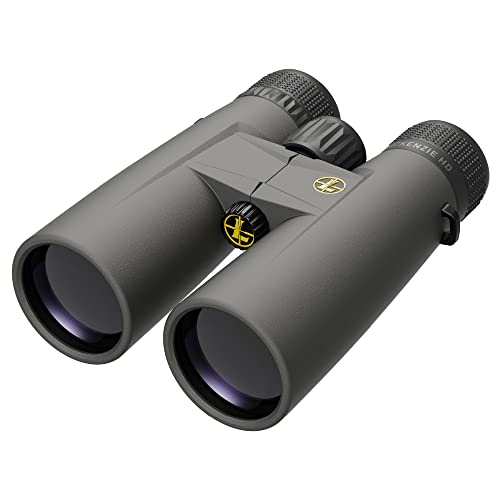
Leupold BX-1 McKenzie HD 10x42 Binoculars
The Leupold BX-1 McKenzie HD is the pick if you want a respected optics name and the reassurance of strong after-sales support behind your purchase. It pairs HD glass with a fully multi-coated lens system and BAK 4 prisms, so you get a bright image with a round exit pupil and virtually no edge distortion - crisp from the centre right out to the edge of the view.
The open-bridge roof prism design keeps it lightweight and ergonomic in the hand, it is fully waterproof and fog-proof, and Leupold backs it with customer care that has a genuine reputation among buyers. The honest note is that it sits very close to the Bushnell on both price and capability, so the deciding factor is really whether you value the Leupold name and warranty over the Bushnell weather coatings - both are strong 10x42 all-rounders.
Vortex Crossfire HD 10x42 Binoculars
The Vortex Crossfire HD is the pick if you want the safest, most-proven choice, because nothing else here comes close to its review base of well over 3,700 ratings at 4.8 stars. When that many buyers keep rating a binocular highly, it tells you the day-to-day experience holds up across years of real use, not just on a spec sheet.
It earns that reputation with select HD glass elements that cut chromatic aberration and lift colour fidelity, fully multi-coated lenses and a compact, durable roof prism design with edge-to-edge sharpness. Practical touches help too: twist-up eyecups for glasses wearers, a smooth centre focus wheel, grippy rubber armour and tripod adaptability for long, steady sessions. The honest trade-off is that it is the priciest of the 10x42 options here, so you are partly paying for the Vortex name and warranty - but for a do-everything binocular with a track record this deep, many buyers find that worth it.
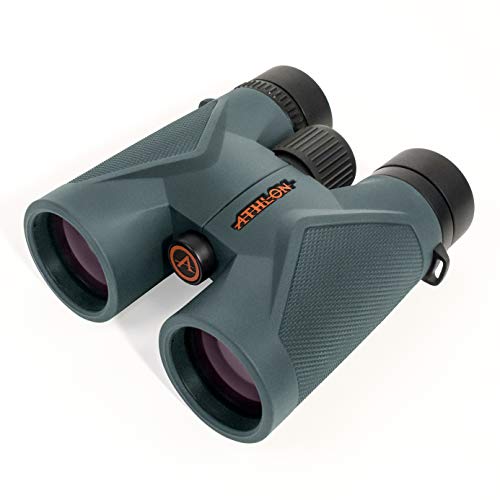
Athlon Midas 8x42 ED Binoculars
The Athlon Midas is the standout for pure optical quality, and the only pick here that pairs premium glass with the easier-to-hold 8x magnification. It runs ED glass to all but eliminate colour fringing, ESP dielectric prism coatings that reflect over 99% of the light to your eyes, and advanced fully multi-coated lenses for true colour and high light transmission - the combination that separates serious birding optics from everyday pairs.
At 8x it is also noticeably steadier in the hand than the 10x options, with a wider field of view, which keeps long sessions comfortable and makes it easier to find and track a moving bird. Argon purging gives it solid waterproofing and thermal stability for the outdoors. Two honest caveats temper the appeal: it is the most expensive pick here, and stock is often scarce, so you may need to wait for availability rather than buying the moment you decide.
How to choose the right binoculars for you
Start with the job, not the brand. For all-round use - birds, wildlife, sport and a bit of travel - a 10x42 like the Bushnell, Leupold or Vortex is the default for good reason: it balances reach and brightness better than anything else. If you mainly want steady, comfortable viewing for long birding sessions or you find binoculars shaky, an 8x like the Athlon Midas is easier to hold and gives a wider field of view, which actually helps you find things faster. If your interest is butterflies, flowers, insects or museum detail, the Pentax close-focus pair does something none of the others can.
Then weigh the practical factors against your budget. Waterproof and fog-proof sealing is worth having for any outdoor use in Australian conditions, and every pair here except the Pentax is sealed. ED or HD glass sharpens the view and cuts colour fringing, which you notice most in tricky low light - it is the main thing your extra dollars buy as you move up this list. Be honest about how often you will use them: a casual user is well served at the entry end of this list, while frequent birders who care about glass quality will appreciate stepping up to the Vortex or Athlon.
What the key specs mean
A handful of numbers and terms do most of the work. The two headline numbers - magnification and objective size, as in 10x42 - tell you reach and brightness: more magnification shows more detail but shakes more and narrows the view, while a bigger objective gathers more light for dawn, dusk and shade at the cost of weight. Field of view, often a by-product of lower magnification, is how wide a scene you see, which matters for tracking moving birds and sport. Close focus is the nearest distance a pair can sharpen on, and it is the spec that makes the Pentax special at 50cm.
On the glass and build side, ED (extra-low dispersion) and HD glass reduce chromatic aberration - the faint colour fringe around high-contrast edges - for a sharper, truer image. Lens coatings matter too: fully multi-coated optics and dielectric prism coatings boost light transmission and brightness. Roof prism designs, used on most pairs here, are slimmer and more durable than the older porro style. Finally, waterproof, fog-proof and argon or nitrogen purging keep the inside dry and clear in rain and temperature swings. Read magnification, objective, glass type and sealing together and any product page starts to make sense.
Frequently Asked Questions
8x or 10x binoculars - which should I buy?
It comes down to steadiness versus reach. An 8x binocular, like the Athlon Midas, magnifies less but is much easier to hold steady, gives a wider field of view and makes it simpler to find and track moving birds - which is why many experienced birders prefer 8x. A 10x, like the Bushnell, Leupold and Vortex pairs, shows more detail at distance but magnifies every hand tremor too and has a narrower view. If you want comfortable all-day viewing or your hands are not rock-steady, choose 8x; if you mostly watch distant or static subjects and want maximum detail, choose 10x.
What does 10x42 mean on binoculars?
It is the two key numbers that describe almost every binocular. The first number, 10x, is the magnification - it brings the subject 10 times closer than your naked eye. The second number, 42, is the objective lens diameter in millimetres, which controls how much light the binoculars gather and therefore how bright the view is. So a 10x42 magnifies 10 times through 42mm lenses, a popular all-round balance of reach and brightness. A compact 6.5x21 like the Pentax magnifies less through much smaller, dimmer lenses, while a 42mm pair stays usable in low light.
What is the difference between roof prism and porro prism binoculars?
It is mostly about shape and durability. Roof prism binoculars, which most modern pairs including all the sealed models here use, have straight barrels that make them slimmer, lighter and more rugged, and they are easier to fully waterproof. Porro prism binoculars have the older offset, zigzag shape with a wider body, and they can offer a more three-dimensional view and sometimes more brightness for the money, but they are bulkier and less weather-resistant. For general outdoor and travel use most buyers now choose roof prism for the compact, durable build.
Are binoculars good for stargazing?
Yes, binoculars are a great low-cost way into the night sky, though they suit some targets more than others. A 10x42 or 8x42 with good light-gathering will show the Moon craters, the four big moons of Jupiter, star clusters and the Milky Way beautifully, and being hand-held they are far easier to grab and use than a telescope. For astronomy the objective size matters most because it gathers faint light, so the 42mm pairs here work well while the compact 21mm Pentax is too small for serious night use. For steady high-magnification viewing of fainter objects a tripod helps a lot.
Is ED glass worth it in binoculars?
For most regular users, yes - it is the single upgrade you notice most. ED, or extra-low dispersion glass, reduces chromatic aberration, the faint colour fringing that appears around high-contrast edges like a dark bird against bright sky. The result is a sharper, cleaner, more true-to-colour image, and the difference is especially clear in low light at dawn and dusk. Pairs like the SVBONY SV202, Vortex Crossfire HD and Athlon Midas use ED or HD glass for exactly this reason. If you only use binoculars occasionally in good daylight you may not need it, but for birding and frequent use it is well worth the step up.
Do binoculars need to be waterproof?
For any outdoor use, it is strongly recommended. Waterproof and fog-proof binoculars are sealed and usually filled with argon or nitrogen gas, which keeps moisture out and stops the internal lenses fogging when you move between temperatures - like stepping from an air-conditioned car into humid morning air. Every pair here except the compact Pentax is sealed this way, with ratings such as IPX7 on the SVBONY and Bushnell. If you only ever use binoculars indoors or in dry weather you can get away without it, but for Australian birding, hiking and sport, sealing protects your investment.
How much should I spend on a good pair of binoculars?
You can get a genuinely good all round pair without spending a lot, where this guide starts. At that level - the Pentax, SVBONY, Bushnell and Leupold - you get sharp multi-coated optics, weather sealing on most, and configurations that suit birding, travel and sport. Spending more, as with the Vortex or Athlon, mainly buys better glass, premium coatings, easier 8x handling and a deeper track record rather than dramatically more magnification. The honest answer is to match spend to use: occasional users are well served at the lower end, while frequent birders who care about image quality will appreciate stepping up.