What actually matters in a bottle warmer
The two things that decide whether a bottle warmer is worth owning are simple to name and genuinely hard to nail: even, gentle heating and speed. You want the feed brought to a comfortable body temperature without scalding hot spots, and you want it done in minutes rather than waiting out a jug of warm water at 2am. Those sound basic, but they are exactly where warmers fall short, which is why the whole category rates modestly and why uneven-heating complaints turn up across almost every brand. Read the reviews and you will see the same gripe again and again - one part of the bottle too hot, another barely warm.
Beyond heating, weigh the practical fit. Does the chamber take your bottle brand and size, and does it have an auto shut-off so it cannot run dry while you settle the baby? Some units double as a steriliser or food warmer, which can replace a separate gadget on a crowded bench. The six picks below run from straightforward steam warmers up to the premium Philips Avent. One safety rule cuts across all of them: always swirl and test the milk temperature on your wrist before feeding, and never microwave breast milk, because microwaves heat unevenly and can destroy nutrients.
Tommee Tippee All-in-One Bottle Warmer
If you just want a dependable, straightforward warmer, the Tommee Tippee All-in-One is a sensible place to start, and it comes from a baby brand most parents already trust. It warms milk, food jars or pouches in as little as 4 minutes using natural steam, and you can start from room temperature, cold or frozen by selecting the right setting.
The automatic timer works out the warming time for you, there is an auto shut-off for added safety, and the chamber is spacious enough for most bottle and food-jar brands while still sitting neatly on a bench. The honest tradeoff is a modest rating, which is about par for this category, so treat it as a solid everyday warmer and always wrist test the feed.
NUK Thermo Express Bottle Warmer
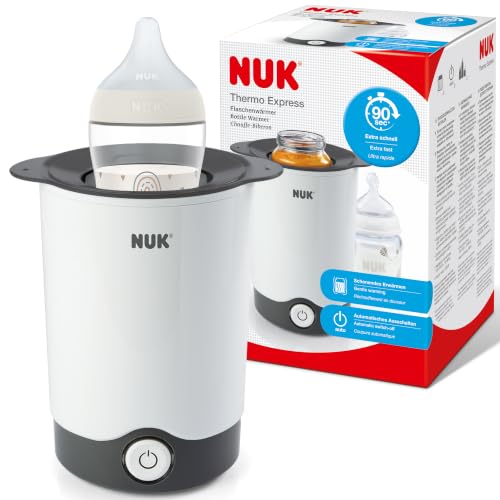
The NUK Thermo Express is the pick if speed is your priority. It warms milk and soft baby food quickly and gently with steam, which matters most during night feeds when every minute of a crying baby feels longer. It comes from NUK, a long-established baby brand, and carries a large review base of more than 1,000 ratings, so plenty of parents have put it through real use.
An indicator light shows the warming phase so you can check progress at a glance, it switches off automatically at the end of the cycle, and a lift-out basket helps you remove a hot bottle without scalded fingers. The catch is a modest 3.8 rating - some buyers find the heating uneven, the common bottle-warmer gripe - so swirl and wrist-test before every feed.
Tommee Tippee Easiwarm Bottle Warmer
The Easiwarm is the better-rated Tommee Tippee in this guide, and the one to choose if you value a steady temperature over a long feature list. It uses gentle warming to preserve the nutrients in expressed breast milk or ready-made formula and to prevent the hot spots that can scald a baby's mouth, with three settings covering warm-from-fridge, warm-from-room-temperature and keep-warm.
Everything runs off a single dial, which is exactly what you want on no sleep, and the smart timer decides the best warming time from the setting you pick and the bottle's starting temperature. With more than 3,000 ratings at 4.3 stars it is one of the more reassuring picks here. The honest note is that it is a warmer only, with no steriliser mode, so it does one job and does it well.
Winged Whale 9-in-1 Bottle Warmer
The Winged Whale 9-in-1 is the pick if you want one device to do several jobs. It covers warming, defrosting, sterilising, keep-warm and complementary-food heating, so it can clear a couple of single-purpose gadgets off the bench. Its real standout is capacity: an extra-large chamber holds two bottles at once, which is genuinely useful for twins or for batching night feeds.
An LCD screen and touch controls show the temperature clearly and let you preset feeds for early-morning starts, while a timer and an automatic power-off if the water runs dry add a margin of safety. It suits bottles, milk bags and food jars of most sizes. The honest caveat is that multifunction warmers can heat a little less evenly than simpler ones, so swirl and wrist-test each feed.
GROWNSY 10-in-1 Bottle Warmer
The GROWNSY 10-in-1 is our pick because it nails the two things this category most often gets wrong, speed and even warming, and has the reviews to prove it. It uses 360 degree steam to bring 120ml of milk to body temperature in about 3 minutes, fast enough to settle a crying baby in the middle of the night, with warming time scaling sensibly to volume, starting temperature and bottle material.
Ten modes cover warm, thaw, keep-warm, steam, food heating and sterilising, so it replaces several gadgets, and the keep-warm function holds temperature for repeat feeds. Auto shut-off engages when the feed is ready to prevent overheating. At 4.4 stars it is well rated. The honest note is the universal one here: swirl and wrist-test before feeding.
Philips Avent Premium Bottle Warmer
The Philips Avent Premium is the pick if you want a premium brand on the bench. It uses smart temperature control to warm evenly and is designed to avoid the hot spots that plague cheaper warmers, which is exactly the weak point that drags this whole category down. It warms milk and baby food evenly, so it earns its space.
A keep warm mode handles repeat feeds, an automatic shut off adds a safety margin, and it carries an enormous review base of more than 7,900 ratings, the largest in this guide. The honest caveat is that like the category as a whole it still rates around 4.1, so even and gentle as it is, the wrist test rule still applies to every feed.
How to choose the right bottle warmer for you
Start with how you feed and what you warm. If you mostly warm expressed breast milk, lean towards a warmer that emphasises gentle, even heating and a keep warm mode, because milk loses nutrients when it is overheated, and prioritise automatic shut off so it cannot run dry while you are settling the baby. If you also warm food jars and pouches, or you are feeding twins, a roomier multifunction unit like the Winged Whale earns its place. And if you want one device to also sterilise bottles, the GROWNSY lists sterilisation among its functions.
Then check the boring but decisive details: does the chamber actually fit your bottle brand and size, especially wide-neck bottles, and is the warmer quick enough for the night feeds you dread? Set your expectations honestly too. This is a category that rates modestly because even heating is hard, so the wins are speed, convenience and safety features rather than perfection - which is precisely why the wrist-test habit matters no matter which unit you buy.
Using a bottle warmer safely
The single most important habit is to swirl the bottle and test a few drops of milk on the inside of your wrist before every feed. It should feel lukewarm, not hot. Swirling matters because warmers can leave hot spots even when the average temperature looks right, and a spot that feels fine on the bottle can still scald a baby's mouth. Never feed straight from the warmer without that check, however gentle the unit claims to be.
Avoid the microwave entirely for breast milk and formula. Microwaves heat unevenly, creating pockets hot enough to burn, and the high heat can destroy some of the nutrients and antibodies in breast milk. Warm only what you need, do not re-warm a feed more than once, and follow the storage guidance for expressed milk so you are not warming something that has been out too long. Used this way, a warmer is a real convenience rather than a risk.
Frequently Asked Questions
How long does a bottle warmer take to warm milk?
Most of the warmers here reach a comfortable body temperature in roughly 3 to 4 minutes for a standard bottle, with the GROWNSY rating about 3 minutes for 120ml and the Tommee Tippee All-in-One quoting from 4 minutes. The exact time depends on how much milk is in the bottle, whether it started from the fridge, room temperature or frozen, and the bottle material. Warming from frozen takes considerably longer. Whatever the timer says, always swirl and wrist-test before feeding rather than trusting the clock alone.
Are bottle warmers worth it, or can you just use hot water?
A jug of warm water works, but it is slow and fiddly at 2am, and it is hard to hit a consistent temperature. A bottle warmer's value is speed, repeatability and safety features like auto shut-off and keep-warm, which genuinely help during night feeds and with a hungry baby. The honest flip side is that this category rates modestly because even heating is hard, so a warmer is a convenience rather than a perfect device. If night feeds are frequent, most parents find one well worth the modest outlay.
Why do bottle warmers heat unevenly?
Uneven heating is the most common bottle-warmer complaint, and it comes down to how steam and warm water circulate around a bottle - some areas get hotter than others, leaving hot spots even when the overall temperature looks right. Wider or taller bottles make it worse because heat reaches the centre last. It is why no warmer fully escapes the gripe, even premium ones. The fix is in your hands: swirl the bottle thoroughly to even out the temperature, then test on your wrist before every feed.
Can you microwave breast milk instead?
No. You should never microwave breast milk. Microwaves heat unevenly and create pockets hot enough to scald a baby's mouth, and the intense heat can break down some of the nutrients and protective antibodies that make breast milk valuable. A steam bottle warmer heats far more gently and gradually, which is exactly why it is the safer tool. The same caution applies to formula. Whichever method you use, swirl and wrist-test the milk before it goes near your baby.
Will a bottle warmer fit my bottle brand and size?
Most warmers here are built to take a wide range of bottle and food-jar brands, but it is worth checking before you buy, especially if you use wide-neck bottles or larger sizes. The Tommee Tippee All-in-One and the Winged Whale both highlight roomy chambers, and the Winged Whale even fits two bottles at once. If you are committed to a particular bottle system, confirm the chamber dimensions against your tallest, widest bottle so it sits properly and warms evenly.
Do bottle warmers also sterilise bottles?
Some do. The GROWNSY 10-in-1 lists sterilisation among its functions alongside warming. The Philips Avent Premium and the NUK Thermo Express focus on warming. If you want one unit that both warms and sterilises, look at the GROWNSY; if you already own a steriliser, a dedicated warmer may be all you need.
What is the safest way to warm a baby's bottle?
Use a steam or warm-water bottle warmer rather than a microwave, warm only what you need, and choose a unit with auto shut-off so it cannot run dry. Heat the feed to body temperature, not hot, and never re-warm a bottle more than once. The non-negotiable final step on every feed, regardless of which warmer you own, is to swirl the bottle to even out the temperature and test a few drops on the inside of your wrist - it should feel lukewarm before it reaches your baby.