The cheapest way to keep your cardio honest at home
An exercise bike is one of the best-value pieces of home fitness gear you can buy. It gives you steady, low-impact cardio that is easy on the knees, it works whatever the weather, and a good one will outlast the gym membership you keep meaning to use. If you want that same low-impact cardio standing up and using your arms too, a cross trainer is the other machine to weigh. For as little as $219 you can have a quiet, folding bike that tucks against a wall, and for a bit more you can have a heavy-flywheel spin bike that feels like a proper studio session. The six picks below run from a $219 folding upright up to a $750 smart bike with a built-in HD touchscreen, and every one uses quiet magnetic resistance rather than the noisy friction pads on cheaper machines.
The question that decides everything: which bike type?
Before you compare prices, answer one question: what kind of riding do you actually want to do? The single biggest split in this guide is not brand or budget - it is bike type, and there are three.
- Upright and folding bikes (the leikefitness, MERACH and PROIRON here) are compact, comfortable and fold away. They suit small apartments, casual everyday cardio, and anyone who wants to sit fairly upright and just pedal while watching TV.
- Indoor cycling, or spin, bikes (the PASYOU and JOROTO) have a heavy flywheel and put you in a forward, racing posture. They are built for hard, sweaty interval training and standing climbs, and they do not fold.
- Smart bikes (the Yesoul G1M Plus) add a built-in HD touchscreen for on-screen app classes. They cost much more, and the screen is what you are paying for - the cardio itself is no better than the cheaper bikes.
Get this choice right and the rest is detail. A folder for the apartment, a spin bike for the sweat, or a smart bike if you genuinely want instructor-led classes on a screen.
Folding bikes: the small-apartment cardio answer
If floor space is tight, a folding bike is the obvious pick, and three of our six fold flat. The leikefitness LEIKE X Bike is the cheapest way in at around $219, with a 2-in-1 frame and 10 levels of magnetic resistance. The MERACH steps up to 16 resistance levels, a wider and genuinely comfortable seat, and a 4-in-1 frame that adds arm and back work - which is why it is our pick for most people. The PROIRON leans hardest into comfort, with a thick backrest, armrests and a cushioned seat that make it the gentlest of the three for older riders or anyone easing back into exercise.
All three fold to lean against a wall or roll away on transport wheels, and all three run quiet magnetic resistance. The trade-off is honest: these are comfortable do-everything cardio bikes, not heavy spin machines. They are perfect for steady pedalling while you watch something, but they are not built for the standing sprints a spin bike handles.
Spin bikes: the choice when you want to sweat
If your goal is hard interval training, standing climbs and a genuine sweat, a spin bike is the right tool, and we have two. The PASYOU S30 is the value way in at around $300, pairing magnetic resistance and a five-groove belt with a weighted 30 lb flywheel for that smooth, road-like momentum. The JOROTO at around $357 goes heavier still, with a chromed 18 kg flywheel - the heaviest here - thick 50 mm tubing, and a 160 kg weight limit that makes it the most solid frame on the list.
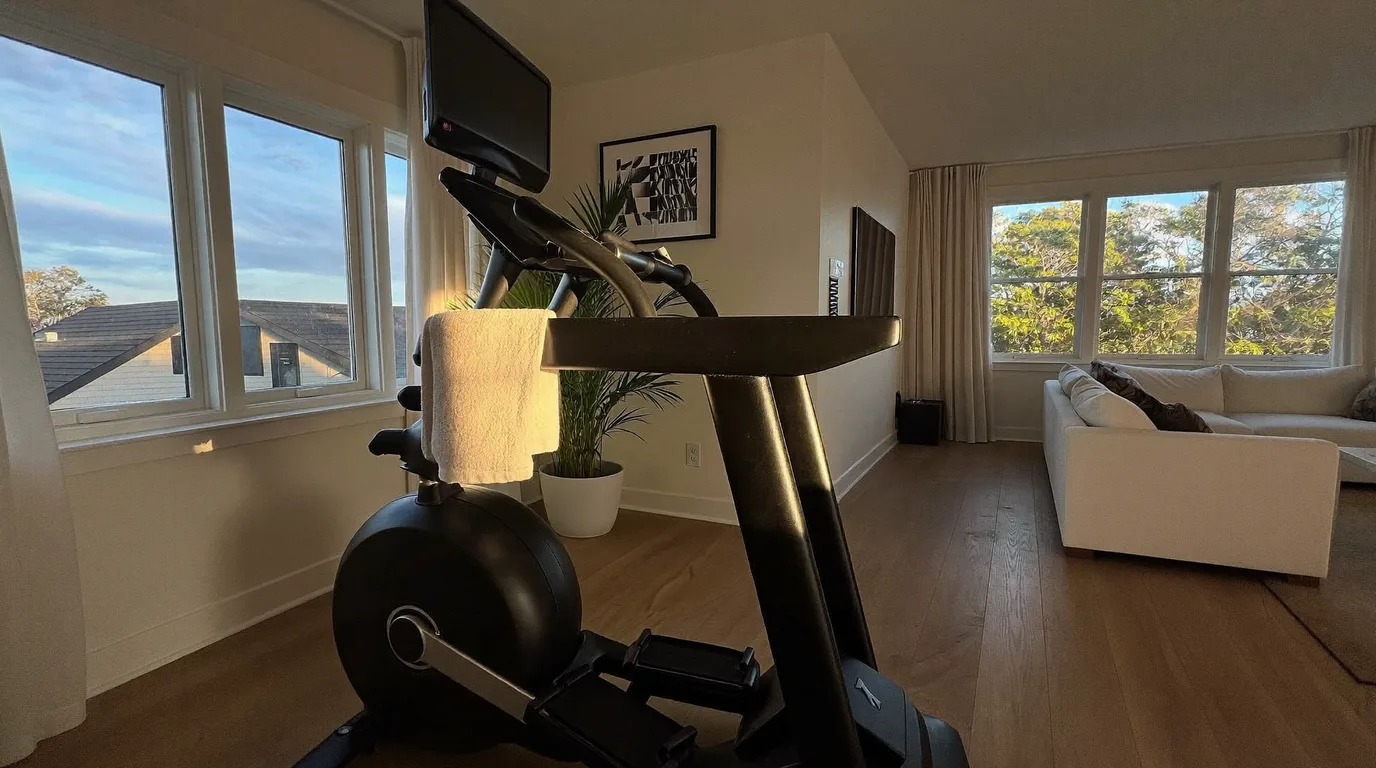
Both use a belt drive and magnetic resistance, so they are nearly silent and almost maintenance-free, and both put you in a forward, racing posture. That posture is the catch: it is less relaxing than an upright or recumbent, and neither bike folds away, so you need a spot to leave it. If you want to train hard rather than just tick over, though, the weighted flywheel is exactly what you are after. Sweat is the one thing to plan for, because a spin session drips onto the frame and the floor in a way an upright ride does not, so keep a quick-dry gym towel over the bars.
Magnetic resistance, and why it matters more than the number
Every bike in this guide uses magnetic resistance, and that is deliberate. Older and cheaper bikes use a friction pad that physically presses on the flywheel - it works, but it wears out, needs adjusting, and squeaks or hums as it goes. Magnetic resistance uses magnets that never touch the flywheel, so it is quieter, smoother and effectively maintenance-free. On a bike you might use at 6am or late at night in an apartment, that quiet is worth a lot.
You will see resistance-level counts quoted - 10 on the leikefitness, 16 on the MERACH - and more levels mean finer steps between a gentle warm-up and a hard push. But do not over-weight the number. A bike with 16 smooth levels is not automatically better than one with 10; what matters more is that the resistance is magnetic, the steps feel even, and the top end is hard enough to challenge you. The spin bikes use micro-adjustable magnetic tension that is effectively stepless.
Weight limits, folding and the practical checks
Two practical numbers decide whether a bike actually suits your home. The first is the max user weight: it ranges from 120 kg on the PROIRON and Yesoul up to 160 kg on the JOROTO and 300 lb (136 kg) on the MERACH and PASYOU. Always pick a bike rated comfortably above your weight, because the rating reflects frame strength and stability, not just a safety sticker. The second is whether it folds - the leikefitness, MERACH and PROIRON all fold to lean against a wall or roll away, while the two spin bikes and the smart bike stay put. If you do not have a dedicated corner, folding is close to essential.
Beyond those two, check seat and handlebar adjustment so the bike fits your height, and look for transport wheels if you will move it. Most bikes here arrive needing some self-assembly, so set aside half an hour and follow the manual rather than rushing the bolts.
Smart screens: worth it, or a $500 tablet stand?
The Yesoul G1M Plus is the one bike here with a screen built into the frame - a 21.5 inch HD touchscreen for on-screen classes and streaming. If you genuinely want guided, instructor-led sessions and the motivation of a studio-style class without juggling a tablet, it delivers the most polished version of that experience, and it is a fine bike underneath.
But be honest with yourself about the maths. At around $750 it costs more than double the JOROTO spin bike, and the actual cardio is no better - a flywheel is a flywheel. Every other bike here has a phone or tablet holder, so you can prop your own device and stream the same kind of classes for nothing extra. Buy the screen if the built-in, all-in-one experience is the thing that will get you riding. If you are disciplined enough to ride without it, a $240 to $357 bike plus your own phone covers the same ground for far less.
Frequently Asked Questions
Upright vs spin vs recumbent exercise bike - which should I buy?
It comes down to how you want to ride. An upright or folding bike sits you fairly upright for relaxed, everyday cardio and usually folds away, which suits small apartments and casual use - the leikefitness, MERACH and PROIRON here. A spin or indoor cycling bike has a heavy flywheel and a forward, racing posture built for hard interval training and standing climbs, like the PASYOU and JOROTO. A recumbent position, available on the 2-in-1 and 3-in-1 folders here, leans you back with a backrest for the gentlest, most back-friendly ride. Match the type to your goal first, then compare prices.
Are cheap exercise bikes any good?
The affordable bikes in this guide are genuinely good for home cardio. A $219 to $357 bike with quiet magnetic resistance, a stable frame and a sensible weight limit will give you the same real cardio as a far dearer machine - the flywheel does not know what it cost. What you give up at the bottom of the range is a basic LCD instead of a screen, lighter folding frames rather than heavy spin builds, and fewer resistance levels. As long as you pick one rated comfortably above your weight and with magnetic rather than friction resistance, a cheaper bike is money well spent.
What is magnetic resistance and why does it matter?
Magnetic resistance uses magnets that sit close to the flywheel without touching it to slow it down, instead of a friction pad that physically presses on it. Because nothing rubs, it is much quieter, runs smoother, and is effectively maintenance-free - there is no pad to wear out or adjust. Every bike in this guide uses it, which is why they can all be ridden early in the morning or late at night in an apartment without disturbing anyone. If you only remember one spec when shopping, make it this one: choose magnetic over friction resistance.
Do you need a smart exercise bike with a screen?
No - a built-in screen is a convenience, not a requirement. The Yesoul G1M Plus here has a 21.5 inch HD touchscreen for on-screen app classes, which is great if you want studio-style guided sessions in an all-in-one package. But it costs around $750, more than double the spin bikes, and the cardio is no better. Every other bike in this guide has a phone or tablet holder, so you can prop your own device and stream the same kind of classes for nothing extra. Buy the screen only if the built-in experience is what will actually get you riding.
How much space does an exercise bike need and does it fold?
It depends on the type. Folding bikes like the leikefitness, MERACH and PROIRON collapse down - the PROIRON folds to under a square metre - so they lean against a wall or roll away on transport wheels when you are done, which is ideal for small apartments. Spin bikes like the PASYOU and JOROTO, and the smart Yesoul, do not fold and need a dedicated spot, roughly the footprint of a bike plus room to mount it. If floor space is tight, prioritise a folding model and check the folded dimensions before you buy.
How much weight can an exercise bike hold?
It varies by model, so always check the max user weight before buying. In this guide the PROIRON and Yesoul are rated to 120 kg, the MERACH and PASYOU to 300 lb (136 kg), and the JOROTO to 160 kg, which is the highest here. Pick a bike rated comfortably above your own weight rather than right at the limit, because the rating reflects the strength and stability of the whole frame, not just a maximum it can technically survive. A heavier-rated bike also tends to feel more solid and stable when you ride hard.
How do I stop an exercise bike being noisy?
Start by choosing magnetic resistance, which every bike here uses - it is far quieter than friction-pad bikes because nothing rubs on the flywheel, and a belt drive like the JOROTO and PASYOU use is quieter again than a chain. Beyond the bike itself, put a rubber exercise mat underneath to dampen vibration and protect the floor, make sure all the foot pads are levelled so it does not rock, and tighten any bolts that have worked loose after a few rides. Do that and even an early-morning session should not carry through the walls.
Found this helpful?
Check out more guides for new homeowners.