Read the temperature rating honestly, then choose your fill
Before you compare a single bag, understand the number on the label. That temperature rating is almost always a survival or limit rating - the point at which an average person can get through the night without harm, not sleep comfortably - so the honest rule is to buy a bag rated colder than the night you actually expect. It matters more in Australia than people assume: clear desert nights and alpine areas drop well below zero even when the day was warm, so a bag that felt generous in a mild forecast can leave you shivering. When in doubt, size up the warmth and vent the bag if you get too hot.
The second decision is fill. Down is the warmest and lightest insulation for its weight and packs down tiny, which is why backpackers love it - but it loses most of its warmth when wet and costs more. Synthetic is heavier and bulkier but cheaper, and it keeps insulating even when damp, which suits wet coastal camping and anyone who would rather not babysit their gear. The six picks below run from a synthetic MalloMe up to a Kelty Cosmic down bag, and they cover both camps, so match the rating and the fill to where and how you camp, and the rest is detail.
Beyond rating and fill, weigh shape and packed size. Mummy bags are warmer and lighter because they hug your body with less air to heat, while rectangular bags are roomier but bulkier and colder for the same fill. Packed size and weight decide whether a bag is for backpacking or car camping, and big-and-tall sizing matters if a standard bag leaves you cramped. Hold those axes in mind as you read each pick.
| Pick | Best for | Standout feature |
|---|
| MalloMe Plush Comfort Sleeping Bag | Budget casual camping | Synthetic fill, waterproof shell |
| TETON Sports Celsius XXL Sleeping Bag | Cold nights | Rated to minus 18C, XXL cut |
| Coleman Heritage Big and Tall Sleeping Bag | Tall sleepers | Fits up to 6ft 7in, rectangular |
| QEZER Down Sleeping Bag 4 Season | Packable down bag | 600+ fill down, about 1650g |
| Marmot Trestles 30 Long Sleeping Bag | EN-rated synthetic | Synthetic, EN-rated |
| Kelty Cosmic 20 Down Sleeping Bag | Do-it-all down bag | 550 fill DriDown |
Best budget: MalloMe Plush Comfort Sleeping Bag
If you just want a warm, affordable bag for casual camping, the MalloMe is the entry point here. It is the cheapest pick, and it leans on synthetic fill and a waterproof hex tech outer shell, so it copes with damp far better than down and wipes clean or goes in the machine. It fits a 6ft adult, weighs about 4.4 lbs and still packs into a compression sack, so it is easy to carry and easy to live with.
The honest framing is its rating: roughly 0 to 18C, which suits mild to cool nights rather than a frosty desert or alpine one, so treat the cold end as a survival limit and pack a liner if a cold snap is forecast. Its review base is also smaller at about 100 ratings, so there is less long-term feedback than the bigger sellers carry - though what is there is strongly positive.
Best for cold nights: TETON Sports Celsius XXL Sleeping Bag
The TETON Celsius XXL is the pick if you want a bag that genuinely handles cold nights without paying for down. It is rated to -18C, with double-layer construction and draft tubes that trap warmth, plus a half-circle mummy-style hood that keeps your head warm and your pillow clean. The XXL cut gives you room to move rather than the coffin feel of a tight mummy bag.
It unzips at the top or bottom for easy access and venting, and comes with a heavy-duty compression sack so you stuff it rather than roll it. With well over 7,500 ratings it has by far the largest happy review base in this guide. The honest notes are that, as a synthetic bag, it packs bigger and heavier than the down options - so it suits car camping more than long hikes - and stock can run low, so it is not always available the moment you want it.
Best for tall campers: Coleman Heritage Big and Tall Sleeping Bag
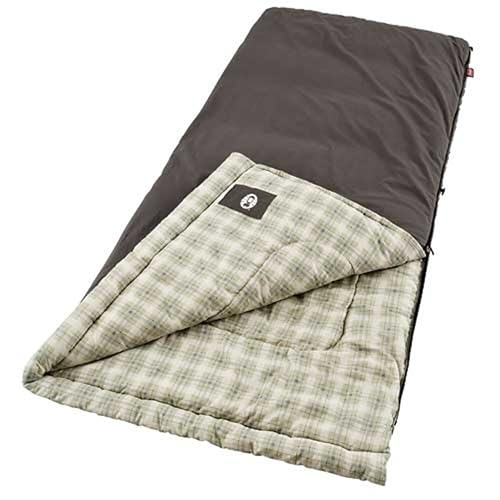
The Coleman Heritage is the pick if you are tall or broad, or simply dislike the boxed-in feeling of a mummy bag. It is a rectangular big-and-tall cut that fits adults up to 6ft 7in, so there is genuine room to stretch and roll over, and the heat-locking flannel liner makes it feel more like a warm bed than a technical sack.
It is rated to around -12C with a draft tube along the zipper to stop heat escaping, a no-snag zipper and a 5-year limited warranty that reflects its durable build. The honest trade-off is shape: a roomy rectangular bag has more air to heat and packs bigger and heavier than a mummy bag, so it is built for car camping and cabins rather than backpacking, and stock can be low at times.
Best packable down: QEZER Down Sleeping Bag 4 Season
The QEZER is the pick if you carry your bag on your back and want real down warmth without the weight. It is filled with RDS-certified 600+ fill-power duck down, which is why it weighs only about 1650g yet packs down to roughly 38 x 19cm - far smaller than any synthetic bag here. That makes it the natural choice for multi-day hikes where every litre of pack space counts.
The mummy shape and draft-blocking design keep you comfortable around 0C and down to a low of about -8 to -12C, and the two-way zips let two bags join into a double. The honest caveats are the nature of down itself: it loses warmth if it gets wet, so it suits dry conditions and a good tent rather than damp camping, and with about 139 ratings its review base is smaller than the big synthetic sellers.
Best EN-rated pick: Marmot Trestles 30 Long Sleeping Bag
The Marmot Trestles 30 Long is the pick if you want a trusted outdoor brand and an EN-tested rating rather than a marketing number. Marmot uses synthetic Spirafil High Loft insulation, so you get the damp-tolerance of synthetic in a light, packable mummy bag at roughly 1507g, with a draft collar and hood that lift its real-world warmth.
The long 198cm cut suits taller campers, the EN-tested range runs from about 2C down to -19C, and it earns the strongest rating in this guide at 4.8 stars. Two honest notes temper that: the 4.8 comes from a smaller base of about 82 ratings, so there is less long-term feedback than the bigger sellers carry, and stock can be low, so it is worth grabbing when you see it available.
Best overall: Kelty Cosmic 20 Down Sleeping Bag
The Kelty Cosmic 20 is the standout in this guide and the recognised do-it-all down bag that backpackers reach for. Its 550 fill-power DriDown is treated to handle a little damp better than plain down, which softens down's one big weakness, and the trapezoidal baffle construction squeezes more warmth out of the fill.
It is light, compressible and built around a large footbox, with dual locking zippers, an anti-snag draft tube and an internal stash pocket for a phone or headlamp - the kind of thoughtful detail Kelty has built since 1952. The honest caveat is price: it is the most expensive pick here, and as a 3 season bag rated near 20F it is matched to mild to cold nights rather than deep alpine cold, so for genuine sub zero camping you would size up the warmth.
How to choose the right sleeping bag
The single biggest mistake is trusting the temperature number at face value. Because most ratings are survival or limit figures rather than comfort ones, you should buy a bag rated several degrees colder than the lowest night you realistically expect, then vent it if you run hot. In Australia that means respecting how cold clear desert and alpine nights get even after a warm day - a bag rated to -12C or -18C is not overkill if you camp inland or in the high country in the cooler months.
After that, match fill and shape to how you travel. If you backpack and carry your gear, a down mummy bag like the QEZER or Kelty pays for itself in light weight and small packed size, as long as you keep it dry. If you car camp, want to save money, or expect damp conditions, a synthetic bag like the TETON, Coleman or Marmot is the smarter buy. And if a standard bag leaves you cramped, prioritise a roomy or big-and-tall cut even at the cost of a little extra weight - the warmest bag is the one you actually sleep well in.
What the key specs mean
A handful of specs do most of the work. The temperature rating is the headline, but read it as a limit rather than a comfort figure - the night you sleep well at is usually several degrees warmer than the number. Fill type tells you the trade-off: down gives the most warmth for the least weight and packed size but hates moisture, while synthetic is cheaper, bulkier and keeps insulating when damp. Fill power, where quoted on down bags like the 600 and 550 figures here, measures loft and therefore warmth for weight - higher is warmer and lighter for the same fill.
Shape and packed size finish the picture. A mummy shape with a hood and draft collar is warmest and lightest because it minimises the air your body has to heat; a rectangular shape is roomier but colder and bulkier for the same insulation. Packed size and weight decide backpacking versus car camping, and an EN-tested rating, like the Marmot's, is more trustworthy than an in-house number because it follows a standard lab protocol. Read temperature rating, fill, shape and packed size together and any product page starts to make sense.
Frequently Asked Questions
What temperature rating should I choose for a sleeping bag?
Choose a bag rated colder than the lowest night you realistically expect, not exactly matched to it. Most ratings are survival or limit figures - the point you can survive the night, not sleep comfortably - so the temperature you actually sleep well at is usually several degrees warmer than the number on the label. As a rule, give yourself a buffer of at least 5 to 10 degrees, then vent the bag or stick a foot out if you run hot. In Australia, where clear desert and alpine nights get genuinely cold, that buffer is what keeps a warm-day camp from turning into a freezing night.
Down or synthetic - which sleeping bag fill is better?
It depends on weight versus weather. Down gives the most warmth for the least weight and packs down the smallest, which is why backpackers favour it - bags like the QEZER and Kelty are light and tiny packed. Its weakness is moisture: wet down loses most of its warmth and is slow to dry, so it suits dry conditions and a good tent. Synthetic, as in the TETON, Coleman and Marmot, is heavier and bulkier and usually cheaper, but it keeps insulating even when damp and dries faster, which suits wet coastal camping and lower-maintenance use. Pick down for light, dry backpacking and synthetic for damp conditions or a tighter budget.
Mummy or rectangular - which shape should I get?
Mummy bags are warmer and lighter; rectangular bags are roomier. A mummy shape tapers toward the feet and adds a hood and draft collar, so there is less air for your body to heat and it traps warmth efficiently while weighing and packing less - ideal for cold weather and backpacking. A rectangular bag, like the Coleman Heritage, gives you room to stretch and roll over and feels more like a bed, but it has more air to warm and packs bigger and heavier, so it is colder for the same fill and better suited to car camping. If you feel claustrophobic in a mummy bag, a roomy or big-and-tall rectangular cut is worth the trade-off.
How small should a sleeping bag pack, and how much should it weigh?
It depends entirely on whether you carry it. For backpacking, packed size and weight are critical: a down bag like the QEZER weighs around 1650g and compresses to roughly 38 x 19cm, and the Marmot is lighter still at about 1507g, which is what you want when every litre of pack space counts. For car camping you can ignore both numbers and prioritise warmth and room, which is why the roomy synthetic bags here are heavier and bulkier without it mattering. Decide how you will actually travel first, then let that set how much you should care about packed size.
Do Australian nights really get cold enough for a proper sleeping bag?
Yes, far more than first-time campers expect. Australia's interior and alpine regions have a huge day-to-night temperature swing - a warm or even hot day can be followed by a night that drops below freezing, especially under clear skies in the desert or in the high country during the cooler months. Coastal and lowland summer camping can be mild, but if you camp inland, at altitude, or outside the peak of summer, a bag rated only to mild temperatures will leave you cold. It is one reason several picks here are rated to -12C or -18C - that headroom is genuinely useful in Australian conditions.
What does fill power mean on a down sleeping bag?
Fill power measures the loft, or fluffiness, of the down, and higher numbers mean more warmth for less weight. A 600 fill-power down, like the QEZER's, traps more air per gram than a lower-rated down, so the bag can be warm while staying light and compressible. It is not the same as how much down is in the bag - a bag can have lots of low-fill-power down or a little high-fill-power down - but for the same warmth, higher fill power means a lighter, smaller-packing bag. It is one of the main reasons quality down bags command a premium over synthetic.
How do I keep a down sleeping bag from losing warmth?
The key is keeping it dry and well lofted. Down's strength is warmth for weight, but wet down clumps and stops insulating, so use a good tent, a groundsheet and a sleeping pad to keep moisture out from below, and avoid breathing into the bag on cold nights. Treated down like Kelty's DriDown handles a little damp better, but no down loves real wet. Store the bag loosely uncompressed at home rather than crushed in its stuff sack so the loft recovers, and air it out after trips. Looked after this way, a down bag stays warm and lasts for many years.