Kids headphones in Australia: the short answer
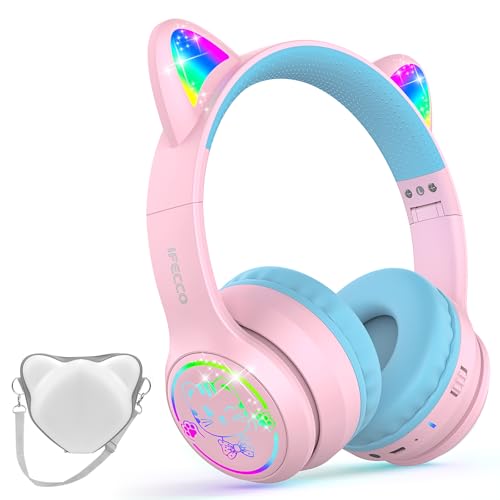
The best overall kids headphones in Australia on this page are the IFECCO Kids Bluetooth Headphones with Case, Cute LED Light Up Cat Ears, which show 4.7 stars from 1,141 ratings and state an 85 dBA volume limit in their bullets. They are Bluetooth, and the bullets say a 3.5mm aux cable is included for wired mode. For a wired pair, compare the EarFun and the JBL Jr310.
A volume limit is the maximum sound level a maker says the headphones will play. The listings here write it in decibels, as dB or dBA, and some give two figures. Compare the limit first, then the connection, the fit for your child's age and what comes in the box. Each pair in the table has an Ear Placement row in its product table that reads Over Ear or On Ear, so there are no earbuds among these six. The sections below use only what the Amazon Australia listings say.
This table sets the six live pairs side by side. Each figure is the listing's own wording, and the section for each pair names the part of the listing it comes from. The Snug Play+ has a dated note, so it is not in the table.
| Headphones | Connection | Volume limit as listed | Rating (ratings) | Ear placement |
|---|
| IFECCO Kids Bluetooth Headphones with Case | Bluetooth 6.0, aux cable, TF card | 85 dBA | 4.7 (1,141) | Over Ear |
| EarFun Kids Wired Headphones with Microphone | Wired, 3.5 mm jack | 85dB/94dB in the title and bullets, A.85dB/96dB in the product table | 4.6 (8,710) | Over Ear |
| JBL Jr310 Kids Wired Headphones | Wired per the product table, 3.5 mm jack | Under 85dB | 4.5 (1,736) | On Ear |
| iClever BTH18 Kids Bluetooth Headphones | Bluetooth5.3, AUX cable | 74/85dBA, with 85dBA for wired mode | 4.6 (4,804) | Over Ear |
| Skullcandy Grom Kids Wireless Headphones | Wireless, removable aux cable | 85dB with optional override | 4.4 (835) | Over Ear |
| Puro Sound Labs BT2200-Plus Kids Bluetooth Headphones | Bluetooth | 85dB | 4.3 (549) | On Ear |
Where a cell shows two values, the listing gives the figure two ways and the section for that pair names where each sits.
Best overall: IFECCO Kids Bluetooth Headphones with Case, Cute LED Light Up Cat Ears
The IFECCO pair has the highest rating of the six live pairs on this page, 4.7 stars from 1,141 ratings. Its bullets state that built in volume limiting circuitry keeps sound within 85 dBA, and they list three ways to play: a Bluetooth 6.0 connection, a 3.5mm aux cable for wired mode and a TF card slot for songs without a phone or internet. The bullets say the case is included for easy travel and protects the foldable headphones, and that reinforced materials keep the headphones from breaking easily.
Read these details before you buy. The battery is given two ways: the bullet heading says 40H with RGB Off and 6H with Lights On, while the bullet text says up to 50 hours of nonstop listening in Bluetooth mode with the RGB lights off, 6+ hours per charge with the cat ear lights on and 18.5 hours in TF card mode without lights. The Bluetooth range is also given two ways: the bullets say within 10m/30ft and the product table says 15 Meters. The bullets say fast charging fully recharges the headphones in just 1.5 hours.
The bullets are written to a girl and her parent, with wording such as your girl and your daughter, and they mention soft protein foam earpads for a gentle, comfortable fit and a built in HD microphone. The product table's Age Range Description row reads Kid, Teen and its Item Highlight row says for 3 to 14 years. The same table lists a 1 Year Manufacturer warranty and has no Item Weight row.
How we checked these kids headphones
We read each pair's Amazon Australia listing: the title, the bullet points, the product information table, the description and any A+ content, which is the maker's own wording on that listing. Specs come from the maker's bullet points and the product information on each listing. For each pair we recorded the rating and count the listing showed, the volume limit it states and the part of the listing each figure sits in. Where two parts of a listing disagree, we show both values. We have not tested the headphones or measured their volume, and no separate maker manual is used here.
Last checked: 24 October 2026.
Volume limits: what each listing says
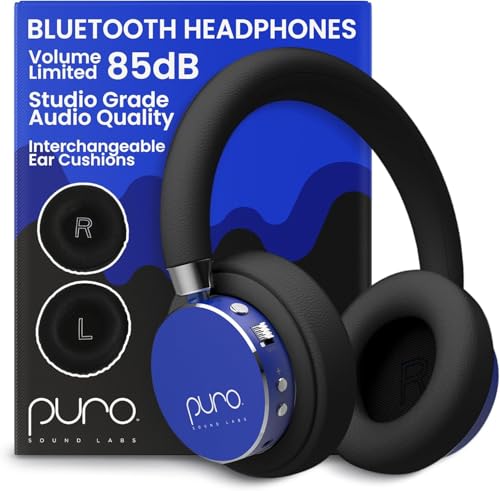
The volume limit is the reason to buy a kids pair, so start here. Every live listing on this page states one, but they do not state it the same way. The IFECCO bullets say its built in volume limiting circuitry keeps sound within 85 dBA. The Skullcandy bullets say volume is limited to 85dB with optional override for noisy environments. The Puro bullets say it limits volume to 85dB and cite the World Health Organization's recommendation of an 85dB limited volume range.
The JBL title reads JBL Safe Sound (<85dB), and its A+ text says the volume limit is designed to never exceed 85 dB. The iClever title gives Safe Volume 74/85dBA, and its bullets add that 85dBA is for wired mode. The EarFun title and bullets give 85dB/94dB, but its product table style name reads A.85dB/96dB, so the listing gives the higher figure two ways and we show both.
A stated limit is the maker's wording on the listing, not something we measured. The IFECCO, JBL and Puro listings each give a single figure, the EarFun and iClever give two, and the Skullcandy gives one figure with an optional override. Check the figure that applies to the mode your child will use.
Wired or Bluetooth for kids
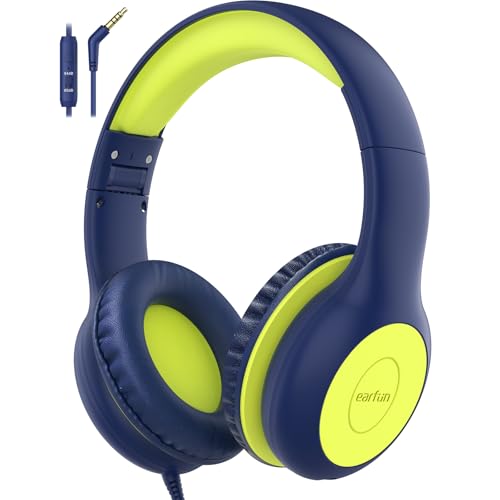
Two pairs here are described as wired. The EarFun title says Wired, and its product table lists a 3.5 mm jack and Connectivity Technology Wired, although a Wireless Technology row reads Bluetooth. The JBL Jr310 product table lists Style Name Wired, a 3.5 mm jack and Connectivity Technology Wired, but it also has Wireless Technology Bluetooth and Bluetooth Version 5 rows beside a Bluetooth support row that reads No, so we treat it as a wired pair. The EarFun bullets name devices with a 3.5mm audio jack, such as Kindle Fire Tablet, iPad, Switch, Chromebook and PC.
The IFECCO, iClever, Skullcandy and Puro are Bluetooth pairs. The IFECCO bullets list Bluetooth 6.0 and the iClever title lists Bluetooth5.3. Each of these four also mentions a wired cable: the IFECCO bullets say a 3.5mm aux cable is included, the iClever bullets say the AUX cable is included, the Skullcandy bullets say the aux cable is removable, and the Puro description says a volume limiting 3.5mm auxiliary audio cable is included. The Puro product table gives Cable Features as Without Cable, so that listing says it two ways.
A wired pair connects through a 3.5 mm socket, so check that your child's device has one. A Bluetooth pair connects wirelessly and adds battery hours and range to compare. The IFECCO bullets give a range of 10m/30ft against 15 Meters in its product table, the iClever and Skullcandy product tables list 10 Meters, and the Puro product table lists 30 Feet.
Fit, age and weight
Age wording differs between listings. The IFECCO product table's Age Range Description reads Kid, Teen and its Item Highlight row says for 3 to 14 years. The EarFun, JBL and Puro product tables say Kid, the iClever table says kids and teenagers, and the Skullcandy table says Adult even though its title says for Kids. The Puro description says the design suits boys, girls and teens, while its table says Kid.
Item weights, where a product table gives them, are 105 Grams for the JBL, 160 Grams for the Skullcandy and 175 Grams for the EarFun. The iClever is given two ways: the bullets say Weighed 5.57oz and the product table says 250 Grams, so confirm which is right before you compare it. The IFECCO and Puro product tables have no Item Weight row.
Ear placement comes from each product table: the IFECCO, EarFun, iClever and Skullcandy are Over Ear, and the JBL and Puro are On Ear. The Puro bullets say its interchangeable ear cups turn on ear to over ear for a better seal and more comfort, and its description mentions a smooth sliding arm so that boys, girls and teens can adjust the headphones. The EarFun bullets mention ultra soft ear caps combined with adjustable sliders, the iClever bullets mention rotatable over ear cups, and the JBL A+ text mentions a padded ear cup.
Sharing audio with a second pair
If two children listen to one tablet, check for a sharing connection. The EarFun bullets say the 3.5mm sharing jack allows kids to share audio with friends or families with no need for a splitter. The Skullcandy bullets say its share audio port lets two kids listen together using a wired connection. The Puro description says a daisy chain cable for shared audio between two headsets is included. We found no sharing port or sharing cable in the IFECCO, JBL or iClever bullets, product tables or description text.
Microphones and warranty rows
Five of the six listings mention a microphone. The IFECCO bullets list a built in HD microphone, the EarFun bullets describe a microphone on the audio cable with in line control, the JBL title lists a built in mic, the iClever bullets list a built in mic and the Skullcandy bullets list a built in mic with voice assistant activation. We did not find a microphone mentioned in the Puro bullets.
Warranty rows in the product tables read 1 Year Manufacturer for the IFECCO, 18 MONTHS for the EarFun, 12 Months Replace for the JBL, a 12 month replacement warranty for the iClever and 1 Year Limited Warranty for the Skullcandy. These are the listings' own wording, and the Puro table is not quoted here.
Isolation and noise control
The product tables list Noise Control as Sound Isolation for the IFECCO and Puro, Passive Noise Cancellation for the iClever, and None for the EarFun, JBL and Skullcandy. The Puro bullets add that its fully passive design blocks 83% of the ambient noise at 1 kHz just by wearing them. That is the maker's figure on the listing and we did not measure it.
Battery and charging
Battery figures matter for the Bluetooth pairs. The iClever title says 43H Playtime and the Skullcandy bullets say up to 45 hours battery. The IFECCO gives 40H and up to 50 hours with the lights off and 6 hours or more with the lights on, as covered in its section, and the bullets say fast charging takes 1.5 hours. The Puro description says up to 20 hours of battery life for music playback.
Durability: what the listings claim
These are the makers' claims, not our tests. The IFECCO bullets say reinforced materials keep the headphones from breaking easily. The EarFun bullets say the headband headphones can stand being squished in the bag or dropped, even with any tough twists and pulling, and describe a nylon braided cord as a tangle free cable, while its product table lists Cable Features as Retractable, so the listing gives the cable two ways. The iClever bullets say the headphones are tough enough to handle any twist or tear. The Puro bullets describe durable, vegan protein leather ear cushions and headband. The JBL A+ text mentions a compact and foldable design.
EarFun Kids Wired Headphones with Microphone and Share Port
The JBL Jr310 was our previous pick and has 4.5 stars from 1,736 ratings. Its title reads JBL Safe Sound (<85dB), Designed for Kids, with a built in mic, comfort fit and ultra portable. The A+ text says the headphones are compact and foldable and that the volume limit is designed to never exceed 85 dB. The product table lists a 3.5 mm jack, a Remote control type, 105 Grams and a 12 Months Replace warranty. As covered above, its Style Name and Connectivity Technology rows say Wired while a Wireless Technology row reads Bluetooth, and we rely on the Wired rows and the Bluetooth support row reading No.
iClever BTH18 Kids Bluetooth Headphones with LED Lights
On 24 October 2026 this listing was shipped and sold by Amazon US and carried an Amazon Global Store notice that US imports may differ from local products. The Puro BT2200-Plus has 4.3 stars from 549 ratings. The bullets say it limits volume to 85dB, with the maker citing the World Health Organization's recommendation of an 85dB limited volume range, and list a Puro Balanced Response Curve, a fully passive design that blocks 83% of the ambient noise at 1 kHz, interchangeable ear cups and durable vegan protein leather ear cushions and headband. The description adds up to 20 hours of battery life for music playback, a volume limiting 3.5mm auxiliary audio cable, a daisy chain cable for shared audio between two headsets and a carrying case. The product table lists a 30 Feet Bluetooth range and On Ear placement.
Which kids headphones should you buy?
Buy the IFECCO if you want one Bluetooth pair with a case, a stated 85 dBA limit and an aux cable for wired use, and you accept the lights shortening the battery. Choose the EarFun or the JBL Jr310 for a wired pair, and the iClever, Skullcandy or Puro for other Bluetooth options.
The EarFun suits a wired buyer who wants a 3.5mm sharing jack, and it has the most ratings of any live listing here. The JBL Jr310 is a wired pair whose title and A+ text state a limit under 85dB. The iClever offers LED lights and two stated limits, the Skullcandy states up to 45 hours of battery and a share audio port, and the Puro bullets state a passive design that blocks 83% of the ambient noise at 1 kHz, with its overseas details in its own section. The Snug Play+ has a dated note and is not recommended.
For a teenager who wants adult headphones, see our noise cancelling headphones guide. If the headphones are for a long trip, our kids suitcase guide covers the luggage, and for school gear see our kids backpack guide.
Frequently Asked Questions
What are the best headphones for children?
Our best overall choice is the IFECCO Kids Bluetooth Headphones with Case, Cute LED Light Up Cat Ears, which show 4.7 stars from 1,141 ratings and state an 85 dBA volume limit in their bullets. For a wired pair, the EarFun and the JBL Jr310 are the other options we checked, and the table above sets out each limit.
Which headphones are better for kids?
It depends on where they are used. The EarFun and the JBL Jr310 are wired pairs with a 3.5 mm jack, while the IFECCO, iClever, Skullcandy and Puro are Bluetooth pairs with batteries. The IFECCO, iClever, Skullcandy and Puro listings also mention a cable for wired use. Choose by device, battery and where your child listens.
What are some good wireless Bluetooth headphones for kids?
Four Bluetooth pairs are on this page: the IFECCO with Bluetooth 6.0 in its bullets, the iClever BTH18 with Bluetooth5.3 in its title, the Skullcandy Grom and the Puro Sound Labs BT2200-Plus. Read the Puro section before buying. Their ratings run from 4.3 to 4.7.
Can a 3 year old have headphones?
This page gives no medical advice on age. The IFECCO product table says for 3 to 14 years, the EarFun, JBL Jr310 and Puro tables say Kid, and the Skullcandy table says Adult. Choose a size and volume limit that suit your child, and ask a health professional if you are unsure.
Are headphones ok for children?
This page gives no medical advice, so ask a health professional about wear time. The listings state a volume limit for each pair: 85 dBA for the IFECCO, 85dB for the Puro, 74/85dBA for the iClever, 85dB with an optional override for the Skullcandy, 85dB/94dB for the EarFun (its product table reads A.85dB/96dB) and under 85dB for the JBL.
What is the best brand for kids' headphones?
We do not rank brands. We compared six pairs from IFECCO, EarFun, JBL, iClever, Skullcandy and Puro Sound Labs by what each Amazon Australia listing states. Ratings on the listings run from 4.3 to 4.7 and the counts from 549 to 8,710, so read each section for the limit, fit and connection.