How to choose a microfibre cloth in Australia
The best microfibre cloth in Australia for most homes is the MR.SIGA Microfibre Cleaning Cloth, All Purpose, Pack of 6, rated 4.6 from 12,198 ratings on its Amazon AU listing. For glass, the MR.SIGA Ultra Fine pack lists 320 grams per square metre and lint free. For a bulk stack, Amazon Basics sells a pack of 24. For car work, The Rag Company Liquid8r and Eagle Edgeless 500 are the towels to compare. Microfiber, spelled the American way, is the same fabric.
Four listing facts decide the choice. Fabric weight, written GSM, is grams per square metre: the glass cloths list 320, the Eagle Edgeless 500 lists 500 and the Liquid8r lists 1100. Size and pack count decide how many jobs one pack covers, from a single towel to 24 cloths. Edge is the part of the cloth that meets the surface: the Eagle lists no tags and an edgeless design, and the Liquid8r a hemmed hidden border. Care wording tells you how to wash a cloth, so read it before the first wash.
The table gives fabric weight, size, pack count and edge as each listing states them. Not stated means we searched the listing text and found no figure. It covers five of the six cards; the sixth, the CarMax towel, has its own section below.
| Cloth and job | Fabric weight | Size | Pack | Edge |
|---|
| MR.SIGA Microfibre Cleaning Cloth, All Purpose, Pack of 6 (rated 4.6 from 12,198 ratings), everyday cleaning | Not stated | 13.8 x 15.7 in in the title, 40 x 40 cm item dimensions | 6 | Reinforced edges, hanging loop |
| MR.SIGA Ultra Fine pack, glass and mirrors | 320 GSM | 35 x 40 cm | 6 | Not stated |
| Amazon Basics pack of 24, bulk wiping | Not stated | 0.3 m x 0.41 m | 24 | Not stated |
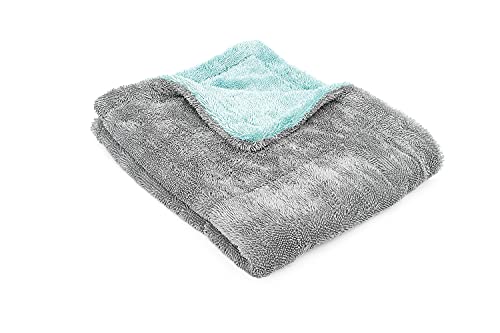
| The Rag Company Liquid8r, drying a car | 1100 GSM | 20 in x 24 in | 1 | Hemmed hidden edge |
| The Rag Company Eagle Edgeless 500, product on paint | 500 GSM | 40 cm x 40 cm | 4 | No tags, edgeless design |
How we checked these microfibre cloths
We read the Amazon AU listing for each of these six cloths: the title, the bullet points, the product information table and the maker's own wording on the page. We took GSM, size, pack count, fabric blend, edge and care wording only from those words, and the star rating and rating count from the listing page. Where a listing gave two values for one fact, such as the All Purpose size and its drying advice, we say so. We read listings and do not run lab tests, so any claim about how a cloth performs is the maker's wording, labelled as that.
Last checked: 22 October 2026.
Best overall: MR.SIGA Microfibre Cleaning Cloth, All Purpose, Pack of 6
The MR.SIGA Microfibre Cleaning Cloth, All Purpose, Pack of 6 is the best overall pick for everyday cleaning, rated 4.6 from 12,198 ratings on its Amazon AU listing. The listing says the cloths soak up water from the countertop and tables without lint or streaks left behind, and clean with or without water and with or without chemical cleaners, from worktops and appliances to kitchens, bathrooms and mirrors. It also calls them perfect dish rags which don't smell. The product information lists a hanging loop.
The listing adds that the cloths are ultra soft and highly absorbent, gentle enough to be used as washcloths and bath towels but strong enough for household cleaning. It says they remove grease and particles from the microwave oven, plates, pots or pans, and can dust silverware and glasses. The pack is six cloths in grey, the product information gives an item weight of 310 Grams for the pack, and the bullets say the stitching and reinforced edges are made to last hundreds of washings. These are the maker's words and we have not tested them.
The listing leaves some facts open. It states no GSM. The page title reads 13.8 x 15.7 in, while the item dimensions read 40 x 40 cm, so we quote the title size and suggest you check the cloth when it arrives. The bullets say tumble dry low, while the product information says do not tumble dry, so follow the label on your cloth. It is sold by MR. SIGA AU and shipped from Amazon. Floors are a different job: a microfibre pad on a steam mop covers a whole room without a bucket.
What microfibre is made from
Microfibre, or microfiber on an American label, is the fabric these listings describe as polyester blended with nylon or polyamide: 87% polyester and 13% nylon for the All Purpose cloth, 84% and 16% for the glass cloths, 90% polyester and 10% polyamide for Amazon Basics, and 70% polyester and 30% polyamide for the Eagle. The Liquid8r title says 70/30 blend. None of them is listed as cotton. We have not tested how each blend performs, so the blend is a fact to compare, not a ranking.
GSM and matching the weight to the job
GSM is grams per square metre, the weight of the fabric, and the listing field is called Fabric Weight. Four of the six listings state it in their product information: 320 for the glass cloths, 500 for the Eagle, 1100 for the Liquid8r and 1400 for the CarMax towel, which has its own section below. The All Purpose cloth and the Amazon Basics pack state no GSM, so we do not give one. None of the cloths here states 600 GSM. The Liquid8r pairs 1100 gsm with a double twist loop for drying a car, while the glass cloths are the lightest stated weight at 320. We have not tested whether a heavier cloth wipes or dries better, so match the weight to the job each listing describes.
Do not confuse the weight field with the item weight. The All Purpose listing gives an item weight of 310 Grams for its pack of six, and the glass pack gives 282 Grams for its six, but those are the weight of the whole pack, not GSM, and they cannot be compared with the fabric weight of 320 or 500. If a listing gives no fabric weight, as the All Purpose and Amazon Basics listings do, the honest reading is not stated, and the job words in the bullets are the better guide.
Lint free microfibre cloths for windows and mirrors
Three of the listings use the words lint free. The MR.SIGA Ultra Fine glass cloths say lint free and non abrasive in the bullets and list Lint Free, Scratch Free in the product information. The All Purpose listing says its cloths soak up water without lint or streaks left behind and lists Lint Free in the product information, and the Amazon Basics bullets promise streak free and lint free results when cleaning dry or with liquid cleaners. For a final polish on a mirror or window, a clean cloth reserved for glass is our advice. We have no source on which cloth professional window cleaners choose.
The two MR.SIGA packs describe windows differently. The glass pack lists mirror, window, stemwares, lens and glasses as ideal uses, while the All Purpose bullets call its cloths great for cleaning windows, kitchenware, car or other delicate surfaces. If you clean glass and the kitchen in the same week, buying both packs lets you keep the jobs apart, which is our advice rather than either listing's.
Edgeless or hemmed edges: protecting your paint
The listings use different words for the edge. The Eagle says no tags and an edgeless design, which it says means no scratches. The Liquid8r says a soft hemmed hidden / edgeless design border, and the All Purpose cloth says reinforced edges that prevent unraveling. The Eagle listing is the one that makes the no scratches claim for paint work; that is the maker's claim and we have not tested it. The Amazon Basics, MR.SIGA glass and CarMax listings do not state an edge type. Where a listing says nothing about the edge, treat the edge as not stated, check the cloth by hand when it arrives and keep any cloth with a hard seam away from paint, which is our advice rather than the maker's.
Washing and care
The care wording is on the listings, so follow it. The MR.SIGA glass cloths say to hand or machine wash separately in warm water with mild detergent, with no bleach or fabric softener, no tumble dry and no ironing. The All Purpose product information says the same, but its bullets say tumble dry low, so the two disagree: the cautious choice is not to tumble dry, and the label on your cloth has the final word. Amazon Basics and the Eagle list machine wash. The Amazon Basics bullets say the cloths can be rinsed and reused 100's of times, and the Eagle bullets say towel softness increases with each washing and that it can withstand hundreds of washings with proper care. The care fields differ in detail: the All Purpose product information reads do not iron, do not tumble dry, do not use bleach or fabric softener, and machine wash or hand wash separately in warm water and mild detergent, while the Amazon Basics, Liquid8r and Eagle fields read Machine Wash only. Where a field is short, follow the label on the cloth and wash it on its own.
Washing microfibre cloths step by step
Wash a microfibre cloth separately from other items, in warm water with mild detergent, as the MR.SIGA listings say. Leave out bleach and fabric softener. Keep the cloth dry after use, as the All Purpose bullets say. For drying, follow the label: the glass listing says do not tumble dry. A cloth kept for glass or paint is best washed on its own so it stays clean for that job; that is our advice, not the maker's.
Pack count, size and weight on the listings
Pack count and item weight show what you carry home. The All Purpose pack is six cloths and lists 310 Grams, the Ultra Fine glass pack is six cloths and lists 282 Grams, the Amazon Basics pack is 24 cloths and lists 1.53 Pounds, and the Eagle pack is four towels and lists 0.34 Kilograms. The listings use different units, so we show them as written rather than converting.
Then read the size. The glass bullets give 35 x 40 cm and 13.7 x 15.7 in, the Eagle towels are 40 cm x 40 cm, and the Liquid8r is 20 in x 24 in. The All Purpose listing gives 13.8 x 15.7 in in the title and 40 x 40 cm in its item dimensions, so treat those two as a pair to check when the cloths arrive. A size in inches and one in centimetres describe the same cloth only when the listing gives both.
Choosing a cloth by job
For wiping benches and kitchen surfaces, start with the MR.SIGA All Purpose pack, whose listing names worktops, appliances, kitchens, bathrooms and mirrors. If you want more cloths for the same job, the Amazon Basics pack holds 24. For mirrors, windows and lenses, the Ultra Fine pack names those uses in its bullets.
For drying a car, the Liquid8r is the towel here built around it: its title names cars, trucks and SUVs and its bullets say it quickly absorbs everything in its path. For waxes, detailing sprays and polishes, the Eagle bullets name those products. These are matches between the job and each listing's own words, not test results.
Colour coding to keep jobs separate
The simplest way to keep jobs apart is to give each job its own colour. The Amazon Basics pack is listed in pink, green and gray, so you can assign one colour to the kitchen, one to the bathroom and one to the car, and never let the cloth that wiped one job touch the next. This is our advice, not the listing's: the listing states the colours, not a colour system. Keep a separate cloth for glass and another for paint.
Koala Cloth and other branded cloths
None of the six listings in this guide is a Koala Cloth, so we cannot rate its claims here. If you are comparing a branded cloth with these packs, compare the same listing facts: fabric blend, GSM, size, pack count and care wording. Where a listing leaves one out, treat it as not stated.
Our verdict
For most homes the MR.SIGA Microfibre Cleaning Cloth, All Purpose, Pack of 6 is the cloth to start with, rated 4.6 from 12,198 ratings: its listing covers worktops, appliances, kitchens, bathrooms and mirrors, and it comes with a hanging loop and reinforced edges. For glass and mirrors, the MR.SIGA Ultra Fine pack is the specialist. For a bulk stack, the Amazon Basics pack of 24 comes in pink, green and gray. For drying a car, the Liquid8r is the 1100 GSM towel, and for product on paint the Eagle Edgeless 500 lists no tags and an edgeless design.
Frequently Asked Questions
Which brand of microfiber cloth is best?
Brand matters less than the job. In this guide the MR.SIGA Microfibre Cleaning Cloth, All Purpose, Pack of 6 is the best overall for everyday cleaning, rated 4.6 from 12,198 ratings, and MR.SIGA also sells a separate pack of 6 for glass. Amazon Basics sells a pack of 24, and The Rag Company sells the car towels.
What is the best brand of microfiber cleaning cloths?
For household cleaning the MR.SIGA Microfibre Cleaning Cloth, All Purpose, Pack of 6 is the best overall here, rated 4.6 from 12,198 ratings on its Amazon AU listing. Amazon Basics, with a pack of 24 rated 4.6 from 86,629 ratings, is the other brand to compare for general wiping.
What are the best microfiber cloths to buy?
It depends on the job. We chose the MR.SIGA Microfibre Cleaning Cloth, All Purpose, Pack of 6, rated 4.6 from 12,198 ratings, for general cleaning, the MR.SIGA Ultra Fine pack of 6 for glass and mirrors, the Amazon Basics pack of 24 for a bulk stack, and The Rag Company Liquid8r or Eagle Edgeless 500 for car work.
What type of microfiber cloth is best?
The best type matches the job. The MR.SIGA Ultra Fine pack is listed as lint free for mirrors and windows at 320 GSM. The Liquid8r is a twist loop drying towel at 1100 GSM. The Eagle Edgeless 500 lists 500 GSM, no tags and an edgeless design for product on paint.
Is there a special way to clean microfiber cloths?
Follow the care wording on your cloth. The MR.SIGA listings say to wash separately in warm water with mild detergent and not to use bleach or fabric softener. For drying, the All Purpose listing gives conflicting wording, tumble dry low in its bullets and do not tumble dry in its product information, so check the label.
What cloth do professional window cleaners use?
We do not have a source on what professional window cleaners use, so we do not name one. For home glass, the MR.SIGA Ultra Fine cloth is listed as lint free, non abrasive and ideal for mirror, window, stemwares, lens and glasses, in a pack of 6 at 320 GSM.
What is the best kitchen cleaning cloth?
For kitchens we chose the MR.SIGA Microfibre Cleaning Cloth, All Purpose, Pack of 6, rated 4.6 from 12,198 ratings. Its listing says it soaks up water from the countertop, and cleans with or without water and chemical cleaners. For a bigger stack, the Amazon Basics pack of 24 is listed as soaking up eight times its own weight.
Is there a difference between microfiber cloths?
Yes. The listings differ in fabric weight, size, pack count and edge. The weights in product information run from 320 GSM in the MR.SIGA glass pack to 1400 GSM in the CarMax towel, with 1100 GSM in the Liquid8r, and packs run from 24 cloths to one towel. The Eagle lists no tags and an edgeless design.
Which microfiber towel is best for a car?
For drying, the Liquid8r lists 1100 GSM, 20 in x 24 in and a hemmed hidden edge, and its bullets say it is safe on all surfaces. For waxes, detailing sprays and polishes, the Eagle Edgeless 500 pack of 4 lists 500 GSM, no tags and an edgeless design, which the maker says means no scratches.
What are the disadvantages of microfiber cloths?
The listings point to care as the thing to watch. The MR.SIGA listings say to wash separately, with no bleach and no fabric softener, and the All Purpose product information says do not iron. The blend is polyester with nylon or polyamide, 87% polyester and 13% nylon in the All Purpose pack, not cotton. We have not tested durability.