How to choose a neck fan in Australia
A neck fan is a hands-free wearable personal fan, and the key thing to understand is that it cools you, not the room. You wear it on hot days, on the commute, gardening, playing sport or sitting in a stuffy office, and it keeps a stream of air on your neck and face while your hands stay free. When you are choosing one, the things that actually matter are bladeless safety, battery capacity in mAh for runtime, the number of speeds, how quiet it is right next to your ears, and the comfort of the fit. Design splits into open headphone-style fans and more supportive neckbrace shapes. This guide covers six neck fans, each suited to a slightly different need, from the cheapest convertible option to the most comfortable premium fit.
One fan, several uses - the convertible option
Before you settle on a dedicated neck fan, it is worth knowing that some fans do more than one job. A convertible 3-in-1 like the Refluxe works as a handheld you point at yourself, clips around your neck for hands-free cooling, and stands on a desk - so a single cheap device covers the commute, the garden and the desk rather than buying separate fans for each. The trade-off is that an all-rounder is not as specialised as a purpose-built neck fan, so if hands-free wearing is the only thing you care about you may prefer a dedicated model. But for the lowest cost and the most flexibility, starting with a 3-in-1 makes a lot of sense - it is the cheapest fan here and the most adaptable.
Bladeless safety - why it matters most
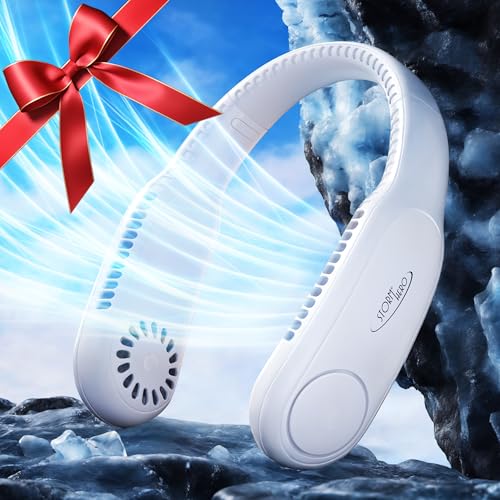
The single most important feature in a neck fan is that it is bladeless. A bladeless fan moves air without an exposed spinning blade near your head, which makes it far safer around long hair, beards and curious kids - there is nothing for hair to get caught in and nothing sharp close to your face. Almost every fan worth buying now uses a bladeless design, including the STORM HERO and the rest of the picks here, and it is the first thing to check on any model you are considering. Older bladed neck fans with two small exposed propellers still exist and are cheaper, but the risk of catching hair is a real reason to avoid them, especially for anyone with long hair or for children. Treat bladeless as a non-negotiable.
Battery capacity and runtime
Because a neck fan is something you wear away from a power point, battery capacity decides how long it actually keeps you cool. Capacity is measured in mAh, and more is better for runtime - a 4000 to 5000mAh battery like the one in the AMACOOL will see you through a long day outdoors, while smaller batteries suit shorter outings. The honest catch is that runtime drops sharply on the highest speed, so the long figures you see quoted usually assume a low setting - plan for less if you run it flat out on a scorching day. Most fans charge over USB, so you can top them up from a laptop, power bank or wall charger. If you are out for hours at a time, prioritise the larger batteries; for a short commute, a smaller one is fine.
Comfort, fit and design
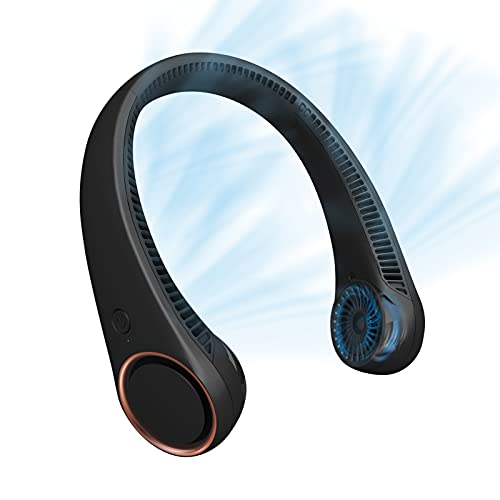
A neck fan only gets worn if it is comfortable, so fit matters as much as airflow. There are two main shapes - open headphone-style fans like the CIVPOWER that rest around the neck the way over-ear headphones do, and more supportive neckbrace designs that hug the shoulders and stay put when you move. Weight matters too, since you are carrying it on your neck for hours, and a lighter fan is easier to forget you are wearing. How the air is delivered also affects comfort - fans that spread airflow through many outlets feel gentler and more even than ones that blast from a couple of vents. If you will wear it for long stretches or while active, lean toward a secure, supportive fit; if you want something light and casual, an open headphone style is easy to live with.
Airflow and how it is delivered
Two fans with similar specs can feel very different depending on how they push the air. The standout approach is many small outlets rather than a couple of big ones - the JISULIFE Portable fan uses 78 air outlets that spread airflow right around your neck and up toward your face, so the cooling feels even and surrounding rather than a narrow blast on one patch of skin. More speeds help here too, letting you dial the airflow to the conditions instead of choosing between too little and too much. Be realistic about what a neck fan does, though - it cools you locally with moving air, which feels great on a hot day, but it is not an air conditioner and will not drop the temperature of a room. Judge it on how good the breeze on your neck feels, not on cooling a space.
Noise and the highest speed
Because a neck fan sits right next to your ears, noise matters more than it would with a desk fan. A model that is quiet on its lower speeds is far more pleasant to wear for hours, and bladeless designs tend to be smoother and quieter than bladed ones. The catch is the top speed - every fan here is noticeably louder and drains its battery faster when you push it to maximum, so the highest setting is best saved for the hottest moments rather than left running all day. A fan with more speed steps, like the five gears on the upgraded JISULIFE, lets you find a quieter middle setting that still moves enough air, instead of jumping straight to the loud one. If wearing it at a desk or in a quiet space matters, prioritise quiet low-speed operation and plenty of speed steps.
Our verdict
For most people the JISULIFE Portable Neck Fan with 78 air outlets is the smart buy, it is by far the most reviewed fan here with more than 60,000 ratings, uses a safe bladeless headphone design, and its many outlets spread the air evenly around your neck and face, which is why it is our pick. If you want the cheapest and most flexible option, the Refluxe 3-in-1 converts between handheld, neck and desktop. The STORM HERO is the simplest no frills bladeless pick. The CIVPOWER is a proven crowd favourite with 360 degree cooling, and for the longest days out the AMACOOL carries a large 5000mAh battery. And if comfort and control matter most, the JISULIFE Upgraded neckbrace model is the premium pick, with a supportive fit, 5 speeds and a 5000mAh battery.
Frequently asked questions
Are neck fans actually worth it?
For staying cool when you cannot sit in front of a fan or air conditioner, yes. A neck fan keeps a stream of air on your neck and face while your hands stay free, which is genuinely useful on a hot commute, in the garden, during sport or in a stuffy office. The key thing to understand is that it cools you, not the room - it will not drop the temperature of a space. The Refluxe 3-in-1 is an easy way to try one, and the much reviewed JISULIFE Portable fan is the proven pick.
Are bladeless neck fans safer than bladed ones?
Yes, and it is the most important feature to check. A bladeless fan moves air without an exposed spinning blade near your head, so there is nothing for long hair, beards or a child's fingers to get caught in - much safer than older fans with two small open propellers. Every pick in this guide, including the STORM HERO and the JISULIFE Portable fan, uses a bladeless design. If you or your kids have long hair, treat bladeless as a non-negotiable.
How long does a neck fan battery last?
It depends on the battery size and the speed you run it at. A larger 4000 to 5000mAh battery like the one in the AMACOOL or the upgraded JISULIFE will see you through a long day outdoors, while smaller batteries suit shorter outings. The honest catch is that runtime drops sharply on the highest speed, so the long figures you see quoted usually assume a lower setting. If you are out for hours at a time, prioritise the larger batteries and plan for less than the headline number on full power.
Do neck fans cool the whole room?
No. A neck fan is a personal device that blows moving air onto your neck and face to cool you directly - it is not an air conditioner and will not lower the temperature of a room. That local cooling feels great on a hot day because moving air helps sweat evaporate, but the effect only reaches you, not the space around you. If you want to cool a room you need a pedestal fan or air conditioner; if you want to cool yourself anywhere you go, a neck fan like the JISULIFE Portable is the right tool. If you want whole-room airflow instead, our best tower fan guide covers the Amazon AU picks.
How many speeds do I need on a neck fan?
Three speeds is enough for most people - it lets you choose a gentle breeze, a medium setting or full power for the hottest moments. More speed steps give finer control, which is handy if you wear the fan in quiet places, since you can find a middle setting that moves enough air without being loud. The upgraded JISULIFE offers five gears for exactly that reason, while the STORM HERO and CIVPOWER keep it simple with three. Match the number of speeds to how much control you want.
Are neck fans noisy?
They are quiet on their lower speeds and noticeably louder on the highest one. Because the fan sits right next to your ears, noise matters more than it would with a desk fan, and bladeless designs tend to be smoother and quieter than bladed ones. The practical tip is to run it on a low or medium setting most of the time and save the top speed for the hottest moments, which also saves battery. A fan with more speed steps, like the five gears on the upgraded JISULIFE, makes it easier to find a quiet setting that still moves enough air.
Which neck fan should I buy first?
For most people the JISULIFE Portable Neck Fan with 78 air outlets is the one to start with, it has more than 60,000 ratings, by far the most here, uses a safe bladeless headphone design, and its many outlets spread the air evenly around your neck and face. If you want to spend less, the Refluxe 3-in-1 is the cheapest and most flexible option, and the CIVPOWER is a popular value pick with more than 12,200 ratings. Decide whether you want the safe best-seller, the cheapest all-rounder or the most comfortable premium fit, then pick from there.
Found this helpful?
Check out more guides for new homeowners.