Magnetic, water or air? Resistance type is the real decision
Before you compare a single price, answer this: how do you want the machine to feel and sound? Resistance type is what splits this whole category, and it decides everything else. Magnetic rowers are whisper-quiet and apartment-friendly, with electronic levels you set by a dial - the budget and value entry point. Water rowers use an oak-and-water tank and give the most realistic on-water feel, with a gentle swoosh on every stroke. Air rowers are the commercial-grade choice, where the intensity scales with how hard you pull, so they reward real effort like a gym ergometer. There is also a full-motion hydraulic style with 360-degree arms for the widest range of movement. Get that one decision right and the rest is easy.
The six picks below run from the Wenoker magnetic rower up to the PASYOU air rower, and they map cleanly onto that split: three magnetic rowers for quiet apartment use, a water rower for the realistic feel, a full motion hydraulic machine for range of movement, and an air rower for the most demanding workout. Match the resistance to your home and your goals and you will not overspend. If you would rather walk or jog at home, see our best treadmill for home use in Australia.
Wenoker Magnetic Rowing Machine for Home
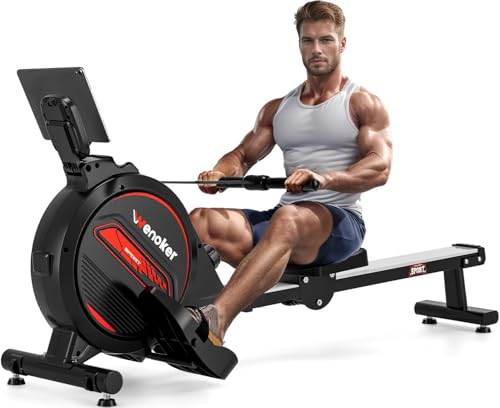
If you just want to start rowing at home without spending much, the Wenoker is the entry point. It is the cheapest pick here, and its magnetic resistance is rated at under 30 decibels, which makes it genuinely quiet enough to use early or late without disturbing the house or the neighbours. It stays stable rather than wobbling even when you push the resistance high.
The long slide rail fits a wide range of heights, the textured silicone handle keeps sweaty hands from slipping, and the LCD monitor plus tablet holder cover the basics for tracking and entertainment. It is an Amazon best-seller in this category too. The honest trade-off at this price is a still-small review base of 26 ratings, so it has less of a track record than the more-reviewed picks further down.
JOROTO MR20HB Magnetic Rowing Machine
The JOROTO MR20HB is the magnetic rower to pick if you want finer control than the budget Wenoker offers. Its headline feature is 16 levels of magnetic resistance, which lets you dial in the effort precisely and keep progressing as you get fitter, while the aluminium-alloy flywheel and rail keep the stroke smooth and low-maintenance.
Two thick stabilisers stop it shifting under hard pulls, it supports up to 159 kg, and the Bluetooth monitor links to apps like Kinomap so you can follow guided routes and race other rowers online. It assembles without a drill and rolls away on transport wheels. The catch is the review base: at 20 ratings it is the smallest in this guide, so the strong spec has the least owner feedback behind it so far.
Lifespan Fitness ROWER-445 Magnetic Rower
The ROWER-445 is the pick if you want a recognisable name behind your machine, because Lifespan Fitness is the genuine heritage Australian fitness brand in this guide. It runs a magnetic flywheel system with a wide range of resistance, is built for durability and a smooth stroke, and folds down for storage between sessions so it does not dominate a room.
The large grooved foot pedals suit a range of foot sizes, which makes it easy to share across a household. The honest caveats are two: it carries the lowest star rating of the magnetic rowers here at 4.2, and you pay a little more for the brand than you would for the cheaper JOROTO and Wenoker, both of which post higher ratings.
JOROTO MR280PRO Water Rowing Machine
The MR280PRO is where this guide crosses from magnetic to water resistance, and it is the pick if you want the most realistic feel. Water resistance comes closest to the sensation of pulling a boat through water, and you set the intensity by adding or draining water across six tank markings rather than flicking through electronic levels. The FSC-certified solid oak frame looks the part in a living room rather than a garage.
The Bluetooth monitor links to Kinomap for guided routes, the rail suits longer legs, and it folds away to save floor space. It also carries by far the largest review base in this guide. Two honest notes temper that: the review count is pooled across Amazon globally rather than Australia alone, and a water tank makes a gentle swoosh on every stroke, so it is not silent the way a magnetic rower is.
Sunny Health Smart Compact Full Motion Rower
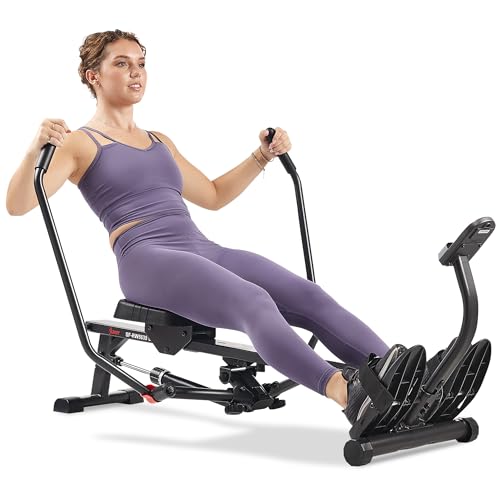
The Sunny Health Smart Compact is the pick if you want the widest range of movement plus a guided-workout app to keep you motivated. Instead of a fixed straight pull, its 360-degree full-motion arms mimic natural rowing form, spreading the work across legs, back, core and arms. The SunnyFit app opens access to over 1000 workouts and thousands of scenic global routes through a Bluetooth link.
It has the highest weight capacity in this guide at 180 kg, yet it packs into a compact footprint with an extra-long rail, and the digital monitor tracks stroke rate, time, count and calories. The honest caveat is that hydraulic full-motion arms feel noticeably different from a fixed-rail rower and can soften slightly as they warm up over a long session, so try the style first if you can before committing.
PASYOU PR70 Commercial-Grade Air Rower
The PASYOU PR70 is our overall pick for committed rowers, because air resistance gives the most honest workout in the guide. The intensity scales with exactly how hard you pull, so it rewards real effort the way a gym ergometer does rather than capping out at a fixed level. On top of the air system it adds 10 levels of adjustable resistance for finer control, with a 4.5 kg flywheel and triple rollers for a smooth, quiet stroke.
The 49.5-inch rail and 350 lb frame suit almost everyone, the backlit Bluetooth monitor links to Kinomap, and reviewers repeatedly describe it as a Concept2-style feel for less than half the price of that brand. The honest caveats are the highest price here and the nature of air rowers in general: the whoosh of the fan makes it louder than the magnetic picks, so it is less suited to a thin walled apartment.
How to match the rower to your home and goals
The single biggest mistake is buying for the workout you imagine rather than the home you live in. If you row in an apartment or a shared room where noise matters, a magnetic rower is the smart buy, because under 30 decibel resistance lets you train without waking anyone. If you want the workout to feel like real rowing and you have the space for a handsome oak frame, the water rower earns its higher price. And if you want a demanding, effort-scaled session and can live with fan noise, the air rower is the one serious rowers gravitate to.
Space and storage are the other deciding factors. Most rowers here fold or stand on end to save room, but a water rower with a full tank is heavier to move, and an air rower has a longer footprint when set up. Be realistic about where the machine will live and how often you will fold it, because the best rower is the one you will actually leave out and use rather than wrestle back into a cupboard.
What the key specs actually mean
A few numbers and labels do most of the work when you compare these machines. Resistance type tells you the feel and the noise: magnetic is quietest, water is the most realistic, air scales with effort, and full-motion hydraulic gives the widest range of movement. Resistance levels matter for progression - the JOROTO MR20HB offers 16 magnetic levels and the PASYOU adds 10 over its air system, while a water rower is adjusted by the amount of water in the tank rather than by electronic steps.
Weight capacity matters for safety and stability: the picks here range from 150 kg on the water rower up to 180 kg on the Sunny Health, so check the limit against your own weight and leave some headroom. Rail length decides whether taller users fit comfortably, and a Bluetooth monitor with an app like Kinomap or SunnyFit turns a bare stroke counter into guided routes and progress tracking. Read those together and any spec sheet starts to make sense.
Frequently Asked Questions
Magnetic vs water vs air rower - which should I buy?
It comes down to feel and noise. A magnetic rower is the quietest, often under 30 decibels, which makes it the best choice for an apartment or shared home and the cheapest way in. A water rower uses an oak-and-water tank for the most realistic on-water feel, with a gentle swoosh on each stroke. An air rower is commercial-grade and scales its intensity to how hard you pull, so it rewards real effort like a gym machine but is the loudest. If quiet matters most buy magnetic; if realism matters buy water; if you want the most demanding workout buy air.
Are cheap magnetic rowing machines any good?
Yes, for what they are. A cheaper magnetic rower like the Wenoker does the core job well: quiet under 30 decibel resistance, a stable frame, a long rail that fits most heights, and an LCD monitor with a tablet holder. They are genuinely good for steady cardio and full-body workouts in a small home. The honest limits are smaller review bases and fewer resistance levels than pricier machines, so judge a cheap magnetic rower as a solid quiet trainer rather than expecting the effort-scaling feel of an air rower.
Is a water rower worth the extra money?
If you want the workout to feel like real rowing, yes. A water rower like the JOROTO MR280PRO uses a tank so the resistance builds naturally with each stroke, which many rowers find more satisfying and immersive than electronic magnetic levels, and the solid oak frame looks good enough to leave out in a living room. The trade-offs are a higher price, more weight to move when the tank is full, and a gentle swoosh on every stroke that means it is not silent. If realism and looks matter to you, it earns the premium.
How quiet are these rowing machines?
It depends entirely on resistance type. Magnetic rowers are the quietest - the Wenoker here is rated at under 30 decibels, quiet enough to row early or late without disturbing anyone. Water rowers add a soft swooshing sound as the paddles move through the tank, which most people find pleasant rather than disruptive. Air rowers are the loudest because the flywheel is a fan, so the harder you pull the more whoosh you hear. For a thin-walled apartment a magnetic rower is the safe choice; for a house or garage an air rower is fine.
What weight capacity do I need on a rowing machine?
Choose a machine with a limit comfortably above your own body weight for a stable, longer-lasting stroke. The picks here range from 150 kg on the JOROTO water rower up to 180 kg on the Sunny Health full-motion rower, with the magnetic rowers around 159 to 160 kg. As a rule, leave some headroom rather than buying right up to the stated ceiling, because rowing involves driving your full weight back and forth, and a higher rated capacity usually means a sturdier frame and rail.
Do rowing machines fold up for small spaces?
Most do, but how compact they get varies. The magnetic rowers here, the Lifespan ROWER-445 and the JOROTO machines, fold or stand on end and roll away on transport wheels, which suits apartments and shared rooms. The water rower folds too but is heavier to move when its tank is full, and the air rower has a longer footprint when set up. If space is tight, a folding magnetic rower is the easiest to tuck away, so be honest about how often you will actually fold it before you buy.
Is a rowing machine a good full-body workout?
Yes - rowing is one of the most complete cardio machines you can own. A single stroke engages your legs, glutes, core, back, arms and shoulders while also working your heart and lungs, so it builds strength and endurance at the same time with low impact on the joints. That makes it a strong choice for people who want efficient sessions or who find running hard on the knees. Any of the rowers here delivers that full-body benefit; the resistance type just changes how the effort feels.