The Best Smart Thermostats in Australia (2026): Researched Picks for Ducted, Split-System and Hydronic Homes
By Anish Puri·23 June 2026·Last updated 6 September 2026·12 min read
The Meross MTS200 is our top pick, a wall-mounted thermostat for hydronic, gas-boiler and electric underfloor homes at under $120, the Inkbird ITC-308 WiFi is the budget winner that plugs into any power point, and the Google Nest Thermostat is the choice for ducted and gas central heating on 24V wiring. We explain the C-wire trap, why split-system owners often want an AC controller instead, and how each pick handles an Australian system.
Prices checked 25 September 2026 on Amazon AU and subject to change.
Which smart thermostat is actually worth buying in Australia in 2026?
If you want the short answer: the Meross MTS200 is the best smart thermostat for most Australian homes, a wall-mounted unit for hydronic, gas-boiler and electric underfloor systems at under $120, the Inkbird ITC-308 WiFi is the budget winner because it plugs into a power point and needs no wiring at all, and the Google Nest Thermostat is the one to look at if you have ducted reverse-cycle or gas central heating on 24V wiring. Those three cover the three situations almost every first-home buyer falls into.
Here is the part the American review sites bury, and the part that matters most: a smart thermostat only works if your heating and cooling system has somewhere to wire it. Most of the famous units (Nest, ecobee, Honeywell) are built for 24V low-voltage HVAC, which is common overseas. In Australia, a huge share of homes run split-system air conditioners with an infrared remote, ducted systems with a proprietary wall controller, or hydronic heating. That changes the answer completely, and it is why our list is sorted by the system you actually have rather than by brand prestige.
We researched the live Amazon Australia catalogue, cross-checked star ratings and review counts on each listing, and read through Australian owner reviews to find the units that genuinely work here. Every price and rating below was read from the Australian listing on the day this guide was written. Prices move, so treat them as a guide and check the current figure before you buy.
The quick answer: our top smart thermostat picks at a glance
Short on time? Here is the TL;DR. The Meross MTS200 is the pick for most homes, and the one to buy for hydronic and underfloor setups. The Inkbird ITC-308 WiFi is the cheapest way in and works with anything you can plug into a wall. The Google Nest Thermostat is the choice for a typical ducted or gas-central-heating home on 24V wiring. Everything else on this list is here because it solves a specific scenario better than those three.
Best overall (hydronic, boiler, underfloor): Meross MTS200, around $118
Best for ducted and gas central heating: Google Nest Thermostat, around $169
Best budget (plug-in, no wiring): Inkbird ITC-308 WiFi, around $70
Best premium learning unit: Google Nest Learning Thermostat 3rd Gen, around $426
Best for energy reporting: ecobee Smart Thermostat Essential, around $277
Best HomeKit and geofencing all-rounder: Honeywell Home T6, around $242
Best for room-by-room hydronic control: tado Smart Radiator Thermostat 3-pack, around $261
Last updated June 2026. We review this guide every few months and refresh pricing, availability and picks as the Amazon Australia catalogue changes.
How did we choose these smart thermostats?
We are a small Australian team, not a lab, and we are upfront about that. We do not pull thermostats off a wall and wire them into a test rig. Instead we aggregate the evidence that already exists and filter it through one question: will this actually work in an Australian home? Here is the method behind every pick.
Australian listings first. Every pick was checked against its live Amazon Australia listing on the day this guide was written, with a verified star rating and a real review count. Grey-import-only listings did not make the list.
System compatibility, not brand hype. We sorted picks by the heating and cooling system Australians actually own: ducted reverse-cycle, gas central, split-system, hydronic and electric underfloor. A five-star thermostat that cannot wire into your system is a zero-star thermostat for you.
Real owner reviews, weighted for Australia. We read through verified reviews, paying special attention to Australian buyers and to the recurring complaints (the C-wire warning, voltage mismatches, app quirks) that tell you what living with the device is like.
Ratings and review depth. We favour units with a solid star rating backed by enough reviews to be meaningful, rather than a perfect score from a handful of buyers.
Total cost and self-install reality. We factored in whether you can fit it yourself in 30 minutes or whether you will be calling an electrician, because in Australia that call-out can cost more than the thermostat.
Where a product that dominates overseas reviews is not genuinely available or suitable here, we say so plainly rather than pad the list. That is the whole reason NestPath exists.
Best smart thermostat overall: Meross MTS200
The Meross MTS200 is the wall thermostat we would point most Australian first-home buyers toward. It carries a 4.4 star rating across more than 2,700 reviews, it is the cheapest wall-mounted smart thermostat in this guide at under $120, and it suits the systems Australians actually inherit: hydronic heating, a gas boiler or electric underfloor heating. For a category where the famous brands charge $250-plus, that combination is hard to beat.
Top pick
meross
Meross MTS200
4.4(2,741)
Our pick. If your home runs hydronic heating, a gas boiler or electric underfloor heating, the Meross MTS200 is the wall thermostat we would point most Australian first-home buyers toward: a 4.4 star rating across more than 2,700 reviews, under $120, and support for every major smart-home ecosystem, where the famous brands charge $250-plus for less.
$114.24
Amazon.com.au price as of 10:00 pm AEST, subject to change
As an Amazon Associate, NestPath earns from qualifying purchases.
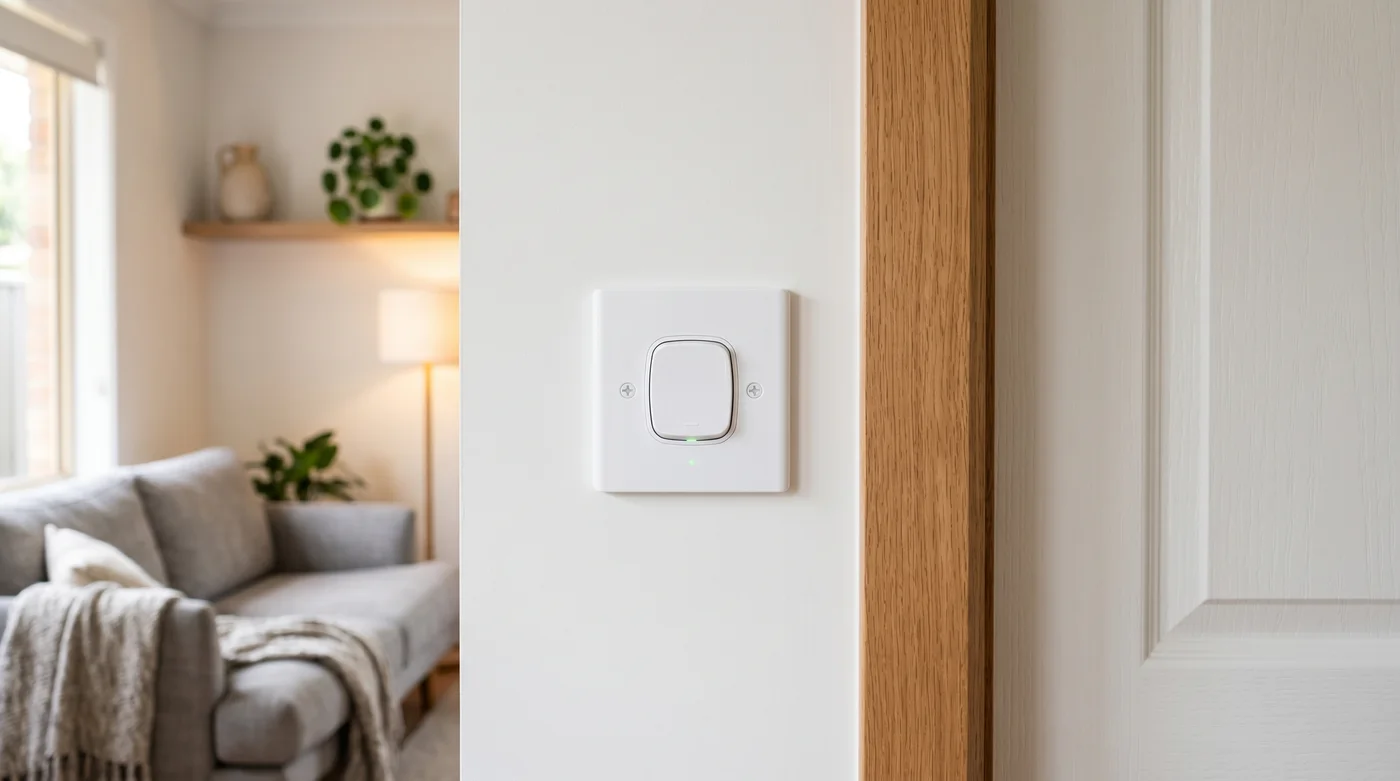
The MTS200 is a wall-mounted, hardwired unit with a clean glass front and an LED touchscreen. It needs no separate hub, connecting straight to your 2.4GHz Wi-Fi, and it works with most boilers and water-based underfloor heating. Where it pulls ahead of cheaper rivals is the ecosystem support: it works with Apple HomeKit, Siri, Amazon Alexa and Google Assistant, so whatever phone and smart speaker you own, you can change the temperature by voice or from the Meross app while you are still in bed. There is a dual-sensor system, an integrated air-temperature sensor plus an external probe for floor overheating protection, and a 0.1 degree accuracy claim that owners back up in reviews.
Practical touches matter here too. A window-open detection feature pauses the heating when it senses a temperature drop, there is a summer mode for cooling systems such as air-source heat pumps, and the schedule covers seven days with multiple time blocks. Meross backs it with a two-year warranty and lifetime technical support, which is reassuring for a sub-$120 device. For a first-home buyer who inherited hydronic heating and wants app control without remortgaging, this is the smart pick.
Flaws but not dealbreakers
It needs mains power at the thermostat location, so if you are replacing an old battery thermostat you may need a neutral wire run to the wall box, which is fixed wiring and must be done by a licensed electrician. The included instructions are translated and reviewers describe the wiring step as the one place to slow down and get right, ideally with the brand's responsive support on hand. The display is bright but a couple of owners wanted it brighter still in daylight. It is a scheduling thermostat rather than a self-learning one, so you set the routine yourself. None of this is a dealbreaker for the money, but it is not a five-minute swap if your wiring is bare-bones.
Best for ducted and gas central heating: Google Nest Thermostat
If your home has ducted reverse-cycle heating or a gas furnace with a standard low-voltage wall thermostat, the Google Nest Thermostat is the unit to look at. It is the cheapest way into the mainstream smart-thermostat world, it looks genuinely good on a wall, and the Google Home app is the one most people already have on their phone. On the Australian listing it holds a 4.1 star rating across more than 16,000 reviews, which is a deep, battle-tested pool of feedback rather than a handful of glowing entries.
Runner-up
Google
Google Nest Thermostat
4.1(16,477)
The Google Nest Thermostat is the mainstream smart thermostat for homes with a compatible 24V ducted or central system. It is an easy way into the smart-thermostat world, it looks genuinely good on a wall, and the Google Home app is the one most people already have on their phone, all backed by more than 16,000 reviews.
No current price: out of stock at Amazon AU
Amazon.com.au price as of 04:00 am AEST, subject to change
Currently out of stock at Amazon AU, last verified on 25 September
As an Amazon Associate, NestPath earns from qualifying purchases.
What you get is the sensible, modern version of Nest. The listing states ENERGY STAR certification, it turns itself down when you leave so you are not heating an empty house, and it sends an alert through HVAC monitoring if it spots something odd with your system. You program an energy-saving schedule in the Google Home app, and Savings Finder nudges you toward tweaks that trim your bill. It runs on two included AAA batteries and is designed to install yourself, usually in 30 minutes or less, with the mounting screws and steel plate in the box.
For an Australian buyer the appeal is the price-to-polish ratio. At around $169 it costs less than half what the Nest Learning Thermostat does, and it pairs cleanly with Google Assistant and Amazon Alexa for voice control. The counterweight is the 4.1 star rating, the lowest of any pick in this guide, and the reason for it is in the flaws below.
Flaws but not dealbreakers
The big one, and Australian reviewers raise it repeatedly, is the C-wire question. The Nest Thermostat is designed to work without a common (C) wire in most homes, but heating-only, cooling-only, zone-controlled and heat-pump systems often need one or a separate power accessory. Several Australian owners report a persistent on-screen warning that the C-wire is not set up even when the unit otherwise runs fine, and at least one found it simply would not work on a two-wire setup. Before you buy, photograph the wires behind your existing thermostat and check compatibility. It is also Wi-Fi dependent, so remote control and notifications stop if your internet drops.
Best budget smart thermostat: Inkbird ITC-308 WiFi
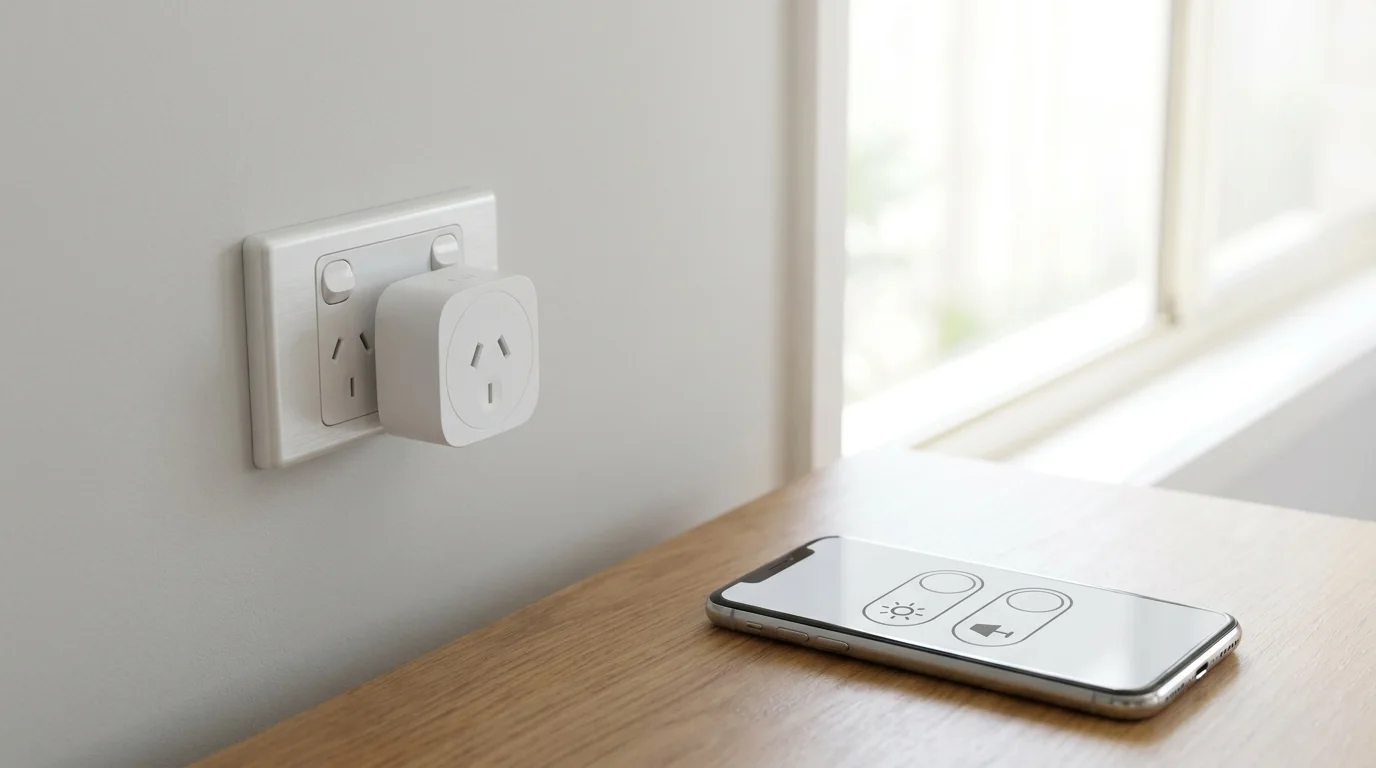
The Inkbird ITC-308 WiFi is the cheapest and most Australian-friendly way to add smart temperature control, because it sidesteps the wiring problem entirely. It is a plug-in controller: you plug it into a power point, plug your heater or cooler into it, and the Inkbird app turns any dumb appliance into a scheduled, app-controlled, voice-compatible one. It holds a strong 4.6 star rating, and crucially the reviews are full of verified Australian buyers using it exactly the way you would.
Budget pick
Inkbird
Inkbird ITC-308 WiFi
4.6(153)
The Inkbird ITC-308 WiFi is the cheapest and most Australian-friendly way to add smart temperature control, because it sidesteps the wiring problem entirely. It is a plug-in controller that turns any portable heater, oil column heater or cooler into a scheduled, app-controlled device, and the reviews are full of verified Australian buyers using it in nurseries, cabins and granny flats.
$69.99
Amazon.com.au price as of 10:00 pm AEST, subject to change
As an Amazon Associate, NestPath earns from qualifying purchases.
This is the unit for renters, for nurseries, for a granny flat or a cabin, and for anyone with portable electric heaters, oil column heaters or evaporative coolers rather than a wired HVAC system. The dual relay output means it can switch a heating device and a cooling device at the same time, holding a room within a set band. It supports the Inkbird app on iOS and Android over 2.4GHz Wi-Fi, works with Google Assistant, Alexa and IFTTT, and includes a temperature probe plus high and low temperature alarms. Maximum load is 2200W at 220V, so it comfortably handles most plug-in heaters.
Australian reviewers describe using it for a baby's room oil heater, a small cabin, a fermenting fridge and a greenhouse, and consistently report it holds temperature within a fraction of a degree. At around $70 it is less than half the price of a wired smart thermostat, and you can take it with you when you move. For a first-home buyer who is not ready to rewire anything, it is the most sensible entry point on this list.
Flaws but not dealbreakers
It is not a wall thermostat for your central system, so it will not control ducted heating or a split-system air conditioner. It controls whatever you plug into it, full stop. A few owners found the initial Wi-Fi pairing fiddly and needed a couple of attempts before it connected, though once set up they report it is reliable. The styling is utilitarian rather than the glass-and-metal look of a Nest. If you want a single elegant wall unit, look higher up this list; if you want cheap, flexible, renter-friendly control, this is it.
Best premium learning thermostat: Google Nest Learning Thermostat (3rd Gen)
If you want the flagship experience and the look to match, the Google Nest Learning Thermostat is the premium pick. It earns a 4.4 star rating on the Australian listing and is the unit people picture when they hear the words "smart thermostat": a polished metal dial with a bright, high-resolution display that shows the temperature, weather or time as you walk past, a feature Nest calls Farsight.
Also great
Google
Google Nest Learning Thermostat
4.4(522)
The premium pick for buyers who want the flagship learning experience and the polished metal-and-glass look to match. It programs itself after watching your first week, drops to an Eco temperature when the house is empty, and works with Alexa and Google Assistant, at a price that reflects the hardware finish.
No current price: out of stock at Amazon AU
Amazon.com.au price as of 10:00 pm AEST, subject to change
Currently out of stock at Amazon AU, last verified on 25 September
As an Amazon Associate, NestPath earns from qualifying purchases.
The difference between this and the cheaper Nest Thermostat is the learning. Rather than you building a schedule, the Learning Thermostat watches the temperatures you choose over the first week and programs itself, then keeps adapting. Home and Away Assist drops it to an Eco temperature when it senses the house is empty, Energy History shows you where your usage went, and the Nest Leaf appears when you pick an energy-saving temperature. It works with the Nest Temperature Sensor (sold separately) so a specific room can be the one it prioritises, and it supports Alexa and Google Assistant for voice control. Google quotes independent studies showing average savings of 10 to 12 percent on heating and around 15 percent on cooling, though it is careful to note individual savings vary.
At around $426 it is the most expensive single thermostat here, and you are paying for the hardware finish and the self-programming smarts. For a buyer who wants the centrepiece smart-home device and has a compatible system, it is the one to lust after.
Flaws but not dealbreakers
The price is the obvious hurdle: it costs more than twice the standard Nest Thermostat for gains that are real but incremental for most people. It is corded and built for 24V systems, so the same compatibility homework applies, and reviewers in markets with different wiring (the UK, for instance) have been caught out by voltage mismatches. The Learning feature is genuinely useful but takes time to settle, and if you already keep a tight manual schedule the payback is smaller. Lovely to own, hard to justify if budget is tight.
Best for energy reporting and DIY install: ecobee Smart Thermostat Essential
The ecobee Smart Thermostat Essential is the pick if energy feedback and a genuinely easy self-install matter most to you. It is the 2025 model, ENERGY STAR certified, and carries a 4.3 star rating across more than 1,500 reviews. ecobee's whole pitch is savings you can see, and the Essential leans into it with clear energy tracking in a well-regarded app and a colour touchscreen on the unit itself.
Also great
ecobee
ecobee New 2025 ecobee Smart Thermostat
4.3(1,553)
The pick for buyers who want clear energy reporting and a genuinely easy self-install. ENERGY STAR certified, compatible with up to 95 percent of systems, and backed by ecobee's well-regarded phone support for tricky wiring, with savings claims of up to 23 percent a year.
No current price: out of stock at Amazon AU
Amazon.com.au price as of 04:00 pm AEST, subject to change
Currently out of stock at Amazon AU, last verified on 25 September
As an Amazon Associate, NestPath earns from qualifying purchases.
ecobee quotes savings of up to 23 percent a year on heating and cooling, claiming the unit pays for itself in around six months, and it is compatible with up to 95 percent of systems (there is an online compatibility checker worth using before you buy). It auto-adjusts to your schedule to save energy when you are out and optimise comfort when you are home, and it works with Siri, Alexa and Google Assistant. Reviewers single out ecobee's phone support as a standout, walking buyers through unusual wiring step by step. For the "no C-wire, no problem" crowd there is a Power Extender Kit available separately.
At around $277 it sits in the upper-mid tier. It is a strong choice for the data-driven buyer who wants to watch consumption trend down and likes the idea of friendly support if the install gets tricky.
Flaws but not dealbreakers
It is a US-focused product, so check system compatibility carefully for an Australian setup, and note the Essential supports only one fan speed, which matters for some multi-speed systems. One detailed negative review flagged a hardware failure outside the short warranty window and an unhelpful warranty response, so weigh that against the many positive install stories. The C-wire kit and trim kit are extra. As with every unit here, it is Wi-Fi dependent for its smart features.
Best HomeKit all-rounder with geofencing: Honeywell Home T6
The Honeywell Home T6 is the pick for buyers who want broad smart-home compatibility and geofencing in a trusted name. It holds a 4.4 star rating and works with Apple HomeKit, Google Home, Amazon Alexa and IFTTT, which is about as wide a net as any thermostat here casts. Honeywell is a name Australians associate with heating controls, and the T6 is its mainstream connected model.
Also great
Honeywell Home
Honeywell Home T6 Smart Thermostat
4.4(105)
The HomeKit all-rounder, with geofencing that adjusts the temperature based on your phone's location and broad compatibility across Apple HomeKit, Google Home, Alexa and IFTTT. Its receiver-box architecture suits hydronic and gas-boiler homes from a name Australians trust for heating controls.
$250.19
Amazon.com.au price as of 10:00 pm AEST, subject to change
As an Amazon Associate, NestPath earns from qualifying purchases.
The headline feature is geofencing: the Honeywell Home app uses your phone's location to know when you are heading home or leaving, then adjusts the temperature so the house is comfortable on arrival and not wasting energy when empty. It is programmable with 7-day, 5/2-day and single-day scheduling and up to six time settings per day, all adjustable remotely if your plans change. The install uses a wall plate and a separate receiver box near the boiler, with an LED indicator and a manual start button, which suits hydronic and gas-boiler homes.
At around $242 it is priced like a premium unit, and what you are buying is the combination of HomeKit support, location-based automation and a known brand. European reviewers describe straightforward Wi-Fi setup and reliable Siri integration. For an Apple household that wants the thermostat to just disappear into the background and react to where you are, the T6 is a smart fit.
Flaws but not dealbreakers
It is geared toward boiler and hydronic systems with that receiver-box architecture, so it is less relevant if you have ducted reverse-cycle air. A handful of reviewers found the multi-day programming menus take a little learning, and one noted the initial pairing needed a couple of goes. The two-box install is more involved than a single wall unit. None of that undermines the core appeal, but it means the T6 rewards a buyer who matches it to the right system.
Best for room-by-room hydronic control: tado Smart Radiator Thermostat (3-Pack)
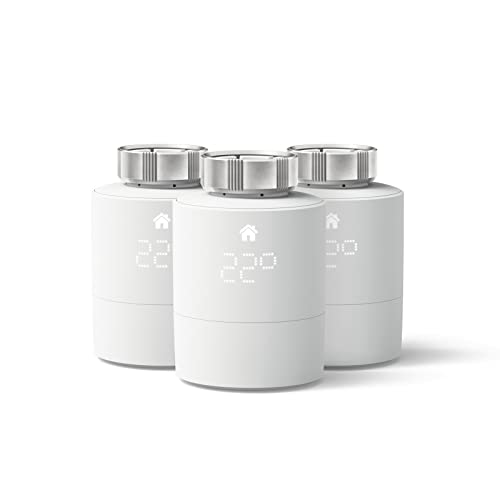
If you have radiators and want different temperatures in different rooms, the tado Smart Radiator Thermostat 3-pack is the specialist pick. It carries an excellent 4.5 star rating across more than 7,500 reviews, one of the deepest review bases here, and it tackles a problem the wall-mounted units cannot: per-radiator, per-room control.
These are smart valve heads that replace the manual thermostatic radiator valves on your existing radiators. You can then set and manage an intelligent schedule for each room or zone in one app, so the bedroom warms before you wake and the spare room stays cool when nobody uses it. The set includes three valve heads, adapters to fit most common valves, and the batteries, and they mount vertically or horizontally with no risk of water leakage during installation. Features include weather adaptation, energy-saving reports, a heating boost function, and frost and child protection, all working with Alexa, Apple HomeKit and Google Assistant.
At around $261 for three, it is a considered purchase, and it is aimed squarely at the hydronic-radiator home that wants smart zoning rather than a single set-point for the whole house. For the right home it is transformative.
Flaws but not dealbreakers
The crucial caveat: this 3-pack is an add-on. It requires a tado Starter Kit with an Internet Bridge, sold separately, to function. Budget for that on top, or you will have three valves that cannot connect to anything. It is also only relevant if your heating runs through radiators with replaceable valve heads, which is far less common in Australia than ducted or split-system air. For homes that fit the profile it is superb; for everyone else it is the wrong tool.
What should you look for in a smart thermostat in Australia?
The single most important thing to check is compatibility with the system you already own, because that determines whether any of this works at all. Here is what to weigh up before you spend.
What heating and cooling system do you have?
This is the whole game. Ducted reverse-cycle and gas central heating usually use a low-voltage wall thermostat that units like the Nest and ecobee are built for. Split-system air conditioners are controlled by an infrared remote, so a wall thermostat cannot help them directly; you want a smart AC controller instead (more on that below). Hydronic, gas-boiler and electric underfloor systems suit the Meross, Honeywell T6 and tado. Portable heaters and coolers suit the plug-in Inkbird. Match the tool to the system first, and only then compare features.
Does your wiring have a C-wire?
A common wire (C-wire) delivers continuous power to a smart thermostat. Many Australian wall boxes were wired for simple thermostats that do not have one. Some smart units run without a C-wire, some need an adapter or power extender kit, and some need the wire run by an electrician. Photograph the back of your current thermostat and check the wires before you buy. This is the number-one cause of disappointed reviews.
Which smart-home ecosystem do you use?
If you are an Apple household, prioritise HomeKit support (Meross, Honeywell T6 and tado have it; the Nest units do not). Android and Google Home users are well served by almost everything here. Alexa support is near universal. Pick the unit that speaks your existing setup's language so voice control and automations just work.
Wi-Fi thermostat or true smart thermostat?
A Wi-Fi thermostat lets you change settings remotely from an app. A true smart thermostat goes further: it learns your habits, uses geofencing or occupancy sensing, and adjusts itself automatically. The Nest Learning Thermostat sits at the smart end, the Meross and Inkbird are closer to capable Wi-Fi units with scheduling. Decide how much automation you actually want, because you pay for it.
Will you install it yourself?
Plug-in units like the Inkbird are genuinely five-minute jobs. Wall-mounted hardwired units are often a 30-minute DIY task if the wiring cooperates, but can become an electrician call-out if you need a neutral or C-wire run. Factor that cost in, because in Australia the call-out can rival the price of the device.
How do you keep a smart thermostat running well?
Smart thermostats are low-maintenance, but a few habits keep them accurate and reliable for years.
Keep it on stable Wi-Fi. Every smart feature depends on a connection. A 2.4GHz network reaches further than 5GHz, and these units almost all use 2.4GHz, so make sure your router covers the wall it lives on. A mesh node nearby helps in larger homes.
Calibrate the temperature if it reads off. Most apps let you offset the reading against a separate thermometer. If your thermostat sits near a sunny window or a draught, a small calibration keeps it honest.
Use the external probe where one is included. Units like the Meross and Inkbird ship with a sensor. For underfloor or awkward locations, the external probe gives a far more accurate reading than the built-in sensor.
Keep the app and firmware updated. Reviewers repeatedly note that firmware updates fixed early Wi-Fi dropouts and added features. Let updates install.
Replace batteries before winter. Battery-powered units (the Nest Thermostat, tado valves) should be freshened before the heating season so they do not drop offline on the coldest night.
Set a sensible schedule, then leave it. The savings come from the schedule and the away mode doing their job. Constant manual overrides undo the benefit, so dial in a routine and trust it.
Frequently asked questions about smart thermostats in Australia
What is the best smart thermostat in Australia?
For most Australian homes the Meross MTS200 is the best all-round pick: a wall-mounted thermostat with 4.4 stars across more than 2,700 reviews, HomeKit, Alexa and Google Assistant support, and the lowest price of any wall unit here at under $120. It suits hydronic, gas-boiler and electric underfloor systems. For ducted reverse-cycle or gas central heating on 24V wiring the Google Nest Thermostat is the one to look at, and for plug-in heaters the Inkbird ITC-308 WiFi is the cheapest way in.
Do smart thermostats work with split-system air conditioners in Australia?
Not directly. A standard wall thermostat cannot control a split-system air conditioner that uses an infrared remote. For those systems you want a smart AC controller (such as a Sensibo or Cielo unit) that learns your remote's signals and lets you schedule and app-control the air conditioner. We cover that route in the competition section below.
What is a C-wire and do I need one?
A C-wire (common wire) supplies continuous power to a smart thermostat. Some units run without one, others need an adapter or power extender kit, and some need the wire run by an electrician. The lack of a C-wire is the most common reason an Australian install goes wrong, so photograph your existing wiring and check compatibility before buying.
What is the difference between a Wi-Fi thermostat and a smart thermostat?
A Wi-Fi thermostat lets you adjust settings remotely from an app but only when you tell it to. A true smart thermostat learns your habits and preferences over time and adjusts automatically, using features like geofencing or occupancy sensing. The Nest Learning Thermostat is a true smart unit; simpler models are really capable Wi-Fi thermostats with scheduling.
Do smart thermostats actually save money?
They can, mainly by not heating or cooling an empty home and by running an efficient schedule. Manufacturers quote figures like 10 to 15 percent on heating and cooling, and ecobee claims up to 23 percent, but real savings depend on your home, climate and habits. The savings come from letting the away mode and schedule do their job rather than overriding them constantly.
Are there any downsides to smart thermostats?
Yes. They cost more upfront than basic programmable units, their smart features rely on a stable internet connection, and not every system supports them without extra wiring such as a C-wire. Compatibility is the big one in Australia, where many homes run split-systems or proprietary ducted controllers that a generic smart thermostat cannot replace.
What about Sensibo, Cielo and the brands we left off?
A few names you will see elsewhere did not make our main list, and it is worth explaining why so you can shop with clear eyes.
Smart AC controllers (Sensibo, Cielo, Tuya). If you have a split-system air conditioner, this is genuinely the category you want, not a wall thermostat. These devices sit near your AC, learn the infrared signals from its remote, and then let you schedule, geofence and voice-control the unit from your phone. The Sensibo Air is widely stocked in Australia through JB Hi-Fi, Bunnings and other retailers rather than carried consistently in the Amazon Australia buy-box, so we point you to those retailers directly for it. For the very common Australian split-system home, a smart AC controller is the smarter spend.
ecobee Smart Thermostat Premium. The Premium adds a built-in air-quality sensor and a Siri/Alexa voice assistant on the unit, and it tops several overseas best-of lists. It is a fine product, but at well over $400 it is a hard sell against the cheaper Essential for an Australian buyer, and the same system-compatibility caveats apply. If you want ecobee, start with the Essential we picked.
Australian-made specialists (Milieu, Thermogroup, OzThermostats). There are local brands designed for Australian conditions, including premium options aimed at tricky installs. They are worth a look if you have an unusual system and a bigger budget, but they typically sell direct or through trade channels rather than Amazon, and they sit above the price points most first-home buyers are working with.
The theme across all of these: the best smart thermostat for you is dictated by your system, not by which brand a US reviewer ranked first. Sort by what is on your wall, then by budget.
Complete the smart-home setup
A smart thermostat is one piece of a comfortable, connected home. If you are kitting out a first home, these NestPath guides pair naturally with it and use the same Australian-first, real-review approach.
Anish Puri founded NestPath in 2026 after going through the Australian first-home-buyer process himself. NestPath focuses on Australian first-home buyers because the existing review sites are American, generic, or both. Anish handles editorial selection across the homeowner hub. Reach out: hello@nestpath.com.au
DETAILED REVIEWS
Top pick
meross
Meross MTS200
4.4(2,741)
Our pick. If your home runs hydronic heating, a gas boiler or electric underfloor heating, the Meross MTS200 is the wall thermostat we would point most Australian first-home buyers toward: a 4.4 star rating across more than 2,700 reviews, under $120, and support for every major smart-home ecosystem, where the famous brands charge $250-plus for less.
$114.24
Amazon.com.au price as of 10:00 pm AEST, subject to change
As an Amazon Associate, NestPath earns from qualifying purchases.
Runner-up
Google
Google Nest Thermostat
4.1(16,477)
The Google Nest Thermostat is the mainstream smart thermostat for homes with a compatible 24V ducted or central system. It is an easy way into the smart-thermostat world, it looks genuinely good on a wall, and the Google Home app is the one most people already have on their phone, all backed by more than 16,000 reviews.
No current price: out of stock at Amazon AU
Amazon.com.au price as of 04:00 am AEST, subject to change
Currently out of stock at Amazon AU, last verified on 25 September
As an Amazon Associate, NestPath earns from qualifying purchases.
Budget pick
Inkbird
Inkbird ITC-308 WiFi
4.6(153)
The Inkbird ITC-308 WiFi is the cheapest and most Australian-friendly way to add smart temperature control, because it sidesteps the wiring problem entirely. It is a plug-in controller that turns any portable heater, oil column heater or cooler into a scheduled, app-controlled device, and the reviews are full of verified Australian buyers using it in nurseries, cabins and granny flats.
$69.99
Amazon.com.au price as of 10:00 pm AEST, subject to change
As an Amazon Associate, NestPath earns from qualifying purchases.
Also great
Google
Google Nest Learning Thermostat
4.4(522)
The premium pick for buyers who want the flagship learning experience and the polished metal-and-glass look to match. It programs itself after watching your first week, drops to an Eco temperature when the house is empty, and works with Alexa and Google Assistant, at a price that reflects the hardware finish.
No current price: out of stock at Amazon AU
Amazon.com.au price as of 10:00 pm AEST, subject to change
Currently out of stock at Amazon AU, last verified on 25 September
As an Amazon Associate, NestPath earns from qualifying purchases.
Also great
ecobee
ecobee New 2025 ecobee Smart Thermostat
4.3(1,553)
The pick for buyers who want clear energy reporting and a genuinely easy self-install. ENERGY STAR certified, compatible with up to 95 percent of systems, and backed by ecobee's well-regarded phone support for tricky wiring, with savings claims of up to 23 percent a year.
No current price: out of stock at Amazon AU
Amazon.com.au price as of 04:00 pm AEST, subject to change
Currently out of stock at Amazon AU, last verified on 25 September
As an Amazon Associate, NestPath earns from qualifying purchases.
Also great
Honeywell Home
Honeywell Home T6 Smart Thermostat
4.4(105)
The HomeKit all-rounder, with geofencing that adjusts the temperature based on your phone's location and broad compatibility across Apple HomeKit, Google Home, Alexa and IFTTT. Its receiver-box architecture suits hydronic and gas-boiler homes from a name Australians trust for heating controls.
$250.19
Amazon.com.au price as of 10:00 pm AEST, subject to change
Affiliate Disclosure: As an Amazon Associate, NestPath earns from qualifying purchases. This means if you click a product link and buy something, we may receive a small commission at no extra cost to you. We only recommend products we genuinely believe will help new homeowners. This does not influence our recommendations.
CERTAIN CONTENT THAT APPEARS ON THIS SITE COMES FROM AMAZON. THIS CONTENT IS PROVIDED ‘AS IS’ AND IS SUBJECT TO CHANGE OR REMOVAL AT ANY TIME.