Best Smoke Detectors in Australia 2026: Laws, Types and Photoelectric Picks
By Anish Puri·4 April 2026·Last updated 14 October 2026·8 min read
The best smoke alarms in Australia are photoelectric and certified to AS 3786. Our best overall pick is the PSA Lifesaver LIF6800, a 240V alarm with a 9V battery backup that is listed to AS3786 and ActivFire. This guide also covers state laws, battery types and when to replace alarms.
Prices checked 16 October 2026 on Amazon AU and subject to change.
Smoke detectors are one of those home safety items that most Australians know they should have but few think about carefully. You moved in, there was an alarm on the ceiling, and you assumed that was good enough. In many cases, it is not, and the consequences of having the wrong type, or an expired unit, can be devastating. The best smoke alarms in Australia are photoelectric, interconnected and listed as certified to AS 3786:2014, and our best overall pick is the ActivFire listed PSA Lifesaver LIF6800 240V unit, with the LEVSUPTY 5-Pack Wireless Interconnected Photoelectric the best fit for five alarms across a whole home and the Quell Q301 the single alarm budget pick. Smoke alarm testing is item #1 on the monthly home maintenance checklist, and if you are a new homeowner ticking off settlement-week tasks, it sits alongside the rest of our new home checklist for week-one priorities.
Australia has some of the most specific smoke alarm legislation in the world, and it has been tightening progressively over the past decade. Queensland's phased smoke alarm reforms began on 1 January 2017 and reach every existing home on 1 January 2027. New South Wales and Victoria have their own standards. Rental properties face particularly strict obligations. The result is a confusing patchwork of rules that leaves many homeowners unsure whether they are actually compliant, and whether the alarm on their ceiling would actually wake them in time during a fire.
This guide covers what Australian law requires, what the technology actually means, and which specific smoke alarms are worth buying on Amazon Australia in 2026 across every budget level. Our best overall pick is the PSA Lifesaver LIF6800 240V Photoelectric Smoke Alarm, an alarm listed to AS3786 and ActivFire. For whole home protection the best fit is the LEVSUPTY 5-Pack Wireless Interconnected Photoelectric, five alarms that arrive already linked, so when one detects smoke every alarm in the house sounds at once. The listing states AS 3786:2014 certification; the alarm is photoelectric, runs a 10-year sealed battery, and you install it yourself with no electrician. Where battery powered alarms are permitted, it is the cheapest path to a fully interconnected system.
Five alarms arrive already linked over wireless RF, so when one detects smoke every alarm in the house sounds at once. The listing states photoelectric sensors, AS3786:2014 certification and a 10 year sealed battery, and you fit them yourself with no electrician.
$199.87
Amazon.com.au price as of 11:01 am AEDT, subject to change
As an Amazon Associate, NestPath earns from qualifying purchases.
The Three Picks Compared
Every alarm here is photoelectric, which is the sensor type Australian fire services recommend. The differences that matter are the power source, whether the alarms talk to each other, and the certification stack.
Smoke alarm legislation in Australia is set at the state and territory level, which means the requirements vary depending on where you live. However, every state in the country requires working smoke alarms in residential dwellings. There is no jurisdiction where you are legally permitted to have a home without them.
Queensland has the strictest requirements in the country, following legislative changes phased in since 2017. Interconnected photoelectric smoke alarms are required in new or substantially renovated homes and in any home sold or leased, and every other private home must have them by 1 January 2027: in every bedroom, in hallways that connect bedrooms to the rest of the home, and on every level of the dwelling. The interconnection requirement is the critical one: when one alarm sounds, all alarms in the home must sound simultaneously. For a single-storey home with three bedrooms and one hallway, this typically means four or five alarms. Wireless-interconnected alarms are usually paired with a wider smart home setup. The same Zigbee or Wi-Fi hub that runs your locks and cameras can also relay smoke-alarm events to your phone. For a two-storey home, potentially seven or eight. The maximum penalty for an owner who fails to install compliant alarms is 5 penalty units under the Fire Services Act 1990. Both landlords and owner-occupiers are responsible for compliance.
New South Wales requires at least one working smoke alarm on every level of a home. Photoelectric alarms are recommended by Fire and Rescue NSW; check the National Construction Code for new builds. Landlords must install working smoke alarms and tenants must not remove or tamper with them.
Victoria requires smoke alarms in all residential buildings. Photoelectric alarms are recommended by Fire Rescue Victoria; check the National Construction Code for new builds. The state recommends replacing any ionisation-type alarms with photoelectric models.
Western Australia requires smoke alarms in all homes, with hardwired alarms required for new builds and major renovations. WA smoke alarm laws also require mains powered alarms in any home sold, rented or hired since 1 October 2009. Battery-powered alarms are acceptable for existing homes that do not meet the wiring criteria. WA, like other states, strongly recommends photoelectric over ionisation technology.
South Australia, Tasmania, the ACT, and the Northern Territory all require working smoke alarms in residential properties, with varying specifics around interconnection and placement. The universal minimum in every jurisdiction: one working smoke alarm per level.
State or territory
Minimum requirement
Photoelectric
Interconnection
Penalty
Queensland
Every bedroom, every hallway connecting bedrooms, every level
Yes, photoelectric required
Yes, in new, renovated, sold and leased homes, and in every other home from 1 January 2027
Maximum 5 penalty units
New South Wales
At least one AS 3786 alarm on each level of the premises
Type not specified by NSW Planning; AS 3786 required
Not required in existing homes; new builds follow the National Construction Code
Not published by NSW Planning
Victoria
At least one on each level and between each sleeping area and the rest of the house
AS 3786 alarms required
Interconnected hardwired alarms are required in homes built or renovated after 1 May 2014
Not published by Fire Rescue Victoria
Western Australia
Mains powered alarms are required in homes built or significantly renovated since 1 July 1997, and in any home sold, rented or hired since 1 October 2009
AS 3786 required; DFES recommends photoelectric
Required in homes built from 1 May 2015
Not published by DFES
South Australia
Alarms are required in every dwelling; hardwired in homes approved since 1 January 1995, or a 10 year sealed battery where there is no mains supply; a home sold since 1 February 1998 needs hardwired or 10 year battery alarms within 6 months
AS 3786 alarms required
Required in new class 1 dwellings from 1 May 2014
Not published by SA MFS
Tasmania
At least one alarm in every hallway or corridor connected to bedrooms, and on each level of a multi-storey home, even levels without bedrooms
Photoelectric recommended by TFS; Building Code standard at time of construction
Hardwired from 1 August 1997; hardwired and interconnected in homes built or renovated from 1 May 2014
Not published by TFS
Australian Capital Territory
On or near the ceiling in bedrooms or the corridor leading to bedrooms, and on each level of a multi-level home
AS 3786 required in rental properties; ACT Fire and Rescue encourages photoelectric replacements
Required on each level of a multi-level home
Not published by ACT ESA
Northern Territory
Approved alarms in all residential premises and movable dwellings, including caravans
Yes, photoelectric required
Required where there is more than one alarm in a home built or renovated from 1 May 2014, under the National Construction Code
Not published by NT Police, Fire and Emergency Services
Two rules apply everywhere. Every smoke alarm must be replaced 10 years after the manufacture date printed on the back, whether or not it still passes the test button. And the count follows the floor plan rather than the floor area: a single storey three bedroom Queensland home with one hallway needs four or five interconnected alarms, and a two storey version needs seven or eight. Smoke alarm rules and home fire extinguishers are separate: Queensland, for example, sets no legal duty for a house or unit to keep an extinguisher, though alarms, an extinguisher and a first aid kit are still worth having from day one.
The practical takeaway: if you own a home in Queensland, you almost certainly need more smoke alarms than you currently have, and they must be interconnected. If you are in any other state, you need at least one per level, and it should be photoelectric. Landlords face the strictest enforcement obligations. Smoke alarm compliance is routinely checked during rental inspections and property sales.
Photoelectric vs Ionisation: Which Type?
The single most important decision when choosing a smoke alarm in Australia is selecting the correct technology type. There are two main types of smoke detection sensor: photoelectric and ionisation. They detect different types of fires, and for Australian homes, one is clearly superior.
Photoelectric smoke alarms work by shining a light beam inside a sensing chamber. When smoke particles enter the chamber, they scatter the light onto a photosensor, triggering the alarm. This technology is particularly effective at detecting slow, smouldering fires, the type that produce large smoke particles and often begin with materials like foam furniture, bedding, and carpets. Smouldering fires are the most common type of residential house fire in Australia, and they are particularly dangerous because they can produce toxic gases and fill a home with smoke before any flames are visible. A photoelectric alarm may detect a smouldering fire significantly earlier than an ionisation alarm, potentially giving occupants more time to evacuate.
Photoelectric alarms also produce substantially fewer false alarms from cooking, steam from showers, and burnt toast, one of the primary reasons people disconnect or remove alarms and leave themselves unprotected. In Australian conditions, where timber-framed homes with soft furnishings are the norm, photoelectric technology is the appropriate choice.
Ionisation smoke alarms work differently. They use a tiny amount of radioactive material to ionise the air inside a sensing chamber, creating a small electrical current. When smoke disrupts this current, the alarm sounds. Ionisation alarms are faster at detecting fast-flaming fires with small combustion particles, the type associated with paper, thin wood, and similar materials. However, they are notoriously prone to false alarms from cooking and steam, and they are slower to respond to the smouldering fires that most commonly kill people in their homes.
Ionisation alarms are being progressively phased out across Australia. Queensland has banned them outright for new installations. The ACT has also moved away from them. Most fire services around the country recommend replacing any ionisation alarms with photoelectric models, even where ionisation alarms are not yet legally prohibited.
The conclusion is simple: buy photoelectric alarms. There is no good reason to install an ionisation alarm in an Australian home in 2026, and compelling safety reasons not to.
Best Battery Smoke Alarms: LEVSUPTY 5-Pack and Quell Q301
Battery-powered smoke detectors are the most common choice for existing homes, particularly where hardwiring is not practical or cost-effective. Modern battery-powered alarms (especially those with 10-year sealed lithium batteries) are reliable, easy to install, and genuinely effective.
The LEVSUPTY 5-Pack Wireless Interconnected Photoelectric is the best fit for whole home protection, and it is a battery powered system: each of the five alarms runs a 10 year sealed lithium battery, so you install them once and never touch the battery for the life of the unit. What sets the LEVSUPTY apart from a single standalone alarm is that the five units arrive pre-linked over wireless RF: when one detects smoke, all five sound together. The listing states AS 3786:2014 certification; the alarm is photoelectric, the sensor type fire authorities recommend. Because it is battery powered, you fit the whole set yourself with a drill and a screwdriver (no electrician), which makes it the cheapest practical route to a fully interconnected home, in places where battery powered alarms are permitted. It rates 4.1★ across 369 Amazon ratings.
The Quell Q301 is the standout budget single alarm. With an Amazon's Choice badge, it is photoelectric, AS3786 compliant, and carries a Hush button that silences cooking related false alarms without removing the unit from the ceiling or pulling the battery, the kind of feature that stops people permanently disabling their alarms out of frustration. Quell is part of Kidde Australia, a trusted name, and the Q301 backs that with a 10-year warranty. It runs a 9V battery rather than a sealed 10-year cell, so set an annual reminder to test and replace it. As a standalone alarm it is the right choice for a single-level apartment, a rental, or topping up a level that only needs the legal minimum. It rates 4.5★ across 77 ratings.
For budget battery alarms, the practical advice is consistent: where you can, prioritise 10-year sealed battery models over replaceable battery models. The research is unambiguous. Replaceable battery alarms are frequently found with dead or missing batteries during fire investigations. The marginal upfront cost of a sealed battery alarm is trivially small compared to the risk of a flat battery in an emergency.
Best overall: PSA Lifesaver LIF6800 240V Photoelectric Smoke Alarm
Mains-powered (240V) smoke alarms are connected to your home's electrical supply, with a backup battery for power outages. They are required in new builds and major renovations in most Australian states, and they are generally preferred by fire services because they cannot be accidentally left without power and the backup battery keeps them functional during power cuts, exactly the conditions that can occur during severe fire events.
The PSA Lifesaver LIF6800 is our best overall pick and the single most safety credible alarm in this guide. It is made by PSA Products, an Australian company, runs on 240V mains with a 9V battery backup, and uses an Advance Sensor photoelectric chamber. Its real differentiator is certification: it is ActivFire listed (the AFAC/CSIRO scheme that independently tests and lists fire products for the Australian market) and AS3786:2014 certified, the strongest certification stack of any alarm here. It is an Amazon's Choice listing and rates 4.6★ across 83 ratings. The one genuine caveat is that 240V wiring must be installed by a licensed electrician. That is a legal requirement in every Australian state, not a recommendation. Buy this where you want maximum credibility on a single point alarm and either have a spare ceiling rose or an electrician booked.
Made by PSA Products, with 240V mains power, a 9V battery backup and an Advance Sensor photoelectric chamber. The listing states ActivFire listing and AS3786:2014 certification, and a licensed electrician must install it.
$49.10
Amazon.com.au price as of 11:01 am AEDT, subject to change
As an Amazon Associate, NestPath earns from qualifying purchases.
A note on Clipsal/PDL. If you have used an electrician for smoke alarms before, you may have had a Clipsal 755-series alarm fitted. Clipsal (now part of Schneider Electric, alongside PDL) is one of the most widely installed hardwired alarm brands in Australian homes. We do not list it as a pick here for a simple reason: Clipsal/PDL alarms are sold through electrical wholesalers, not the retail buy-box. You generally get them by having a sparky supply and fit them, not by buying online. They are a good product; they are just not an Amazon AU purchase, so they sit outside this guide's lineup. If your electrician recommends a Clipsal 755-series unit for a wired install, that is a sound choice.
If you are installing any mains-powered alarm, the installation must be performed by a licensed electrician in all Australian states. This is not a DIY job from a legal or safety standpoint. Professional installation by a licensed electrician is a worthwhile investment for the certainty of a compliant, correctly wired system.
Best Interconnected Smoke Alarms: LEVSUPTY 5-Pack Wireless
Interconnected photoelectric smoke alarms are the gold standard for residential fire safety, and Queensland law requires every existing private home, townhouse and unit to have them by 1 January 2027. When any one alarm in an interconnected system detects smoke, every alarm in the home sounds simultaneously. This is particularly important for larger homes, multi-storey homes, and any home where occupants sleep with doors closed, conditions where a single alarm at the far end of the house might not be audible in a bedroom.
The critical safety case for interconnection is straightforward: a fire can start anywhere in the house, at any hour, and often a long way from the room you are sleeping in. If a fire starts in the kitchen at 2am, an alarm in the hallway outside the bedrooms is more valuable than an alarm only in the kitchen. In a fully interconnected system, the kitchen alarm triggering immediately causes every bedroom alarm to sound as well, waking every occupant regardless of where in the home the fire originates. Keep a torch beside the bed as well, because the other thing that fails in a night-time house fire is the lighting.
The LEVSUPTY 5-Pack Wireless Interconnected Photoelectric is the best fit for whole home protection precisely because it achieves interconnection without any hardwiring between units. The alarms link over a wireless RF signal, and crucially they ship pre-linked. You don't have to pair them yourself. You install each alarm independently (battery powered, no electrician required) and they sound as one network: when any unit detects smoke, all five sound. For an existing home where running hardwired interconnect cable through walls and ceilings would be impractical and expensive, this wireless system delivers the full safety benefit of interconnection. The listing states AS 3786:2014 certification, and the alarm rates 4.1★ across 369 Amazon ratings.
The system is particularly well suited to Queensland homeowners retrofitting for compliance, where the interconnection requirement reaches every existing home from 1 January 2027, and to renters in any state who need to meet a landlord's compliance obligations. A typical three bedroom home with one hallway needs four or five interconnected alarms, which the five pack covers in a single purchase, installed by the homeowner without an electrician.
Always follow the manufacturer's manual and the requirements of your state or territory regulator.
Do smoke alarms call the fire brigade?
A standard home smoke alarm sounds in the house, and it reaches the fire brigade only if it is connected to a monitored service. The WA Department of Fire and Emergency Services says you can connect your smoke alarms to a personal alarm system so a monitoring company can respond, and the ACT Emergency Services Agency reminds residents: "In a life threatening emergency dial Triple Zero (000)." If an alarm sounds, get everyone out first, then call 000.
10-Year Sealed Battery vs Replaceable Battery
The choice between a 10-year sealed battery alarm and a replaceable battery alarm is one where the data and the recommendation from every Australian fire service aligns unambiguously: choose the 10-year sealed battery.
The reason is human behaviour under routine conditions. Battery replacement is genuinely boring and easy to forget. When the low-battery chirp starts at 3am (which is when low temperatures typically cause marginal batteries to lose voltage), the immediate response is to remove the battery and go back to sleep, with every intention of replacing it in the morning. This does not consistently happen. Fire investigation data from around Australia repeatedly finds homes that have experienced fire with smoke alarm units in place but batteries removed or dead.
The 10-year sealed battery eliminates this failure mode entirely. You install the unit once. For the entire legal life of the alarm (typically 10 years from the manufacture date), you never interact with the battery. At the end of 10 years, you dispose of the entire unit and install a new one.
It is worth noting that the 10-year battery life in sealed units refers to standby life: the alarm sitting on the ceiling detecting nothing, consuming minimal power. In the event of an actual alarm, the battery still powers the unit adequately. The 10-year seal is a genuine design choice based on the expected operational life of the sensing chamber and electronics, not just the battery.
For hardwired alarms, the battery backup is typically a 9V replaceable cell. This is acceptable because the primary power source is mains electricity. The battery is genuinely a backup for outage conditions rather than the primary power source. Check and replace hardwired alarm backup batteries annually, ideally aligned to daylight saving time changes as a regular reminder.
When to Replace Smoke Alarms
Smoke alarms do not last forever. Every alarm has a maximum service life of 10 years from the date of manufacture, regardless of whether it is functioning correctly. This is because the photoelectric sensing chamber accumulates dust and contamination over time, and the sensitivity of the sensor degrades gradually in ways that are not detectable through routine testing.
The WA Department of Fire and Emergency Services states that all smoke alarms and heat alarms must be replaced every 10 years.
The manufacture date is printed on a label on the back of every smoke alarm. If you have moved into a home with existing smoke alarms, check the manufacture date immediately. It is common to find alarms that are well past their replacement date. An alarm that looks fine and passes the test button check may still be operating with significantly degraded sensitivity.
Replace your smoke alarms immediately in the following circumstances: the unit chirps persistently after battery replacement or testing; the unit fails to respond to the test button; the unit sounds false alarms without any apparent cause; or the manufacture date on the back indicates the unit is 10 or more years old. The test button check (which most smoke alarm packaging recommends performing monthly) does confirm that the alarm circuit and sounder are working, but it does not test the sensitivity of the photoelectric sensor to actual smoke.
Whatever you replace an old alarm with, buy a credible AU brand rather than the cheapest no-name unit. Our budget pick for exactly this job is the Quell Q301: it is photoelectric, AS3786 compliant, carries a Hush button for cooking false alarms, and comes from Quell (part of Kidde Australia) with a 10 year warranty. It is an Amazon's Choice listing and rates 4.5★ across 77 ratings. Use it to replace an expired standalone alarm on a single level, or to bring a rental up to the legal minimum, without overpaying.
Budget pick
Quell
Quell Q301 Photoelectric Smoke Alarm
4.5(78)
Quell is part of Kidde Australia, and the Q301 is photoelectric, AS3786 compliant and has a Hush button to silence cooking false alarms. It runs on a 9V battery, carries a 10 year warranty and is standalone with no interconnect.
$38.00
Amazon.com.au price as of 11:01 pm AEDT, subject to change
As an Amazon Associate, NestPath earns from qualifying purchases.
A note on smart Wi-Fi alarms. If you specifically want phone alerts and app-based self-testing, the brand most often raised is X-Sense. We have not made it a pick here because the X-Sense alarms listed on Amazon AU come through overseas Global Store sellers, and their listings do not state AS3786 certification. X-Sense also sells its smoke and CO alarms direct from x-sense.com. It is a legitimate option if app connectivity matters to you. Just be aware you are buying direct, and check the specific model is AS3786:2014 certified for Australian use before you commit. For most first-home buyers, the interconnected LEVSUPTY set or the ActivFire-listed PSA Lifesaver covers the actual safety need without a subscription or app.
How we picked
We chose the three alarms from Amazon AU listings, reading each listing's title, bullet points, certification claims and buy box seller, together with the star ratings and rating counts held in our database. We looked for a photoelectric sensor, an AS 3786 certification statement, a clear power arrangement and a seller that delivers in Australia.
For the law and fire safety points we used state and territory fire service pages, including the WA Department of Fire and Emergency Services, Fire and Rescue NSW and Fire Rescue Victoria, and the maker details on each listing. We have not lab tested these alarms, so the picks rest on listing specifications and published certification claims, and you should confirm the markings on the box before you rely on a model.
Last checked: 13 October 2026, covering the stock, seller and rating of every listing on Amazon Australia.
Frequently Asked Questions
How many smoke alarms do I legally need in my home?
The minimum in most Australian states is one working smoke alarm per level of the home, so a two-storey home requires at least two alarms. Queensland has significantly stricter requirements: interconnected photoelectric alarms in every bedroom, in every hallway connecting bedrooms to the rest of the home, and on every level, required in new, renovated, sold and leased homes and in every other home from 1 January 2027. For a typical Queensland home this means four to seven alarms depending on the floor plan. Check your specific state's fire service website for the exact requirements applicable to your property, as the rules also vary for new builds, renovations, and rental properties.
Can I install smoke alarms myself, or do I need an electrician?
A homeowner can fit a battery powered alarm, including a wireless interconnected one, but several states require mains powered alarms in homes that are new, renovated, sold or rented, so check your state rule before you rely on batteries. No licence or permit is required. Hardwired smoke alarms (240V mains connected) must be installed by a licensed electrician in all Australian jurisdictions. This is a legal requirement, not a recommendation. If you are retrofitting for Queensland compliance using battery-powered wireless interconnect alarms, you can do the entire installation yourself in a few hours with a drill and a screwdriver.
Where exactly should I position smoke alarms on the ceiling?
Smoke alarms should be installed as close to the centre of the ceiling as practical, and at least 300mm from any wall or corner. Dead air zones exist in ceiling corners where smoke takes longer to accumulate, which delays detection. Avoid installing alarms directly above cooking appliances, in bathrooms, or in areas with high humidity, because these locations cause chronic false alarms. In hallways, the alarm should be positioned where it can be heard from all bedrooms with doors closed. The alarm manufacturer's installation guide will include specific placement guidance for that unit. Follow it, because it is based on how that product performs.
Why is my smoke alarm chirping?
Three causes, in order of likelihood. A low battery is the usual one, and the chirp starts at about 3am because that is when the house is coldest and a marginal 9V cell drops voltage. Dust in the sensing chamber is second: vacuum the vents and wipe the case. End of life is third, and it is the one people miss. A sealed 10 year alarm chirps at the end of its life and no battery will fix it, so check the manufacture date on the back before you buy anything.
How do you change a smoke alarm battery?
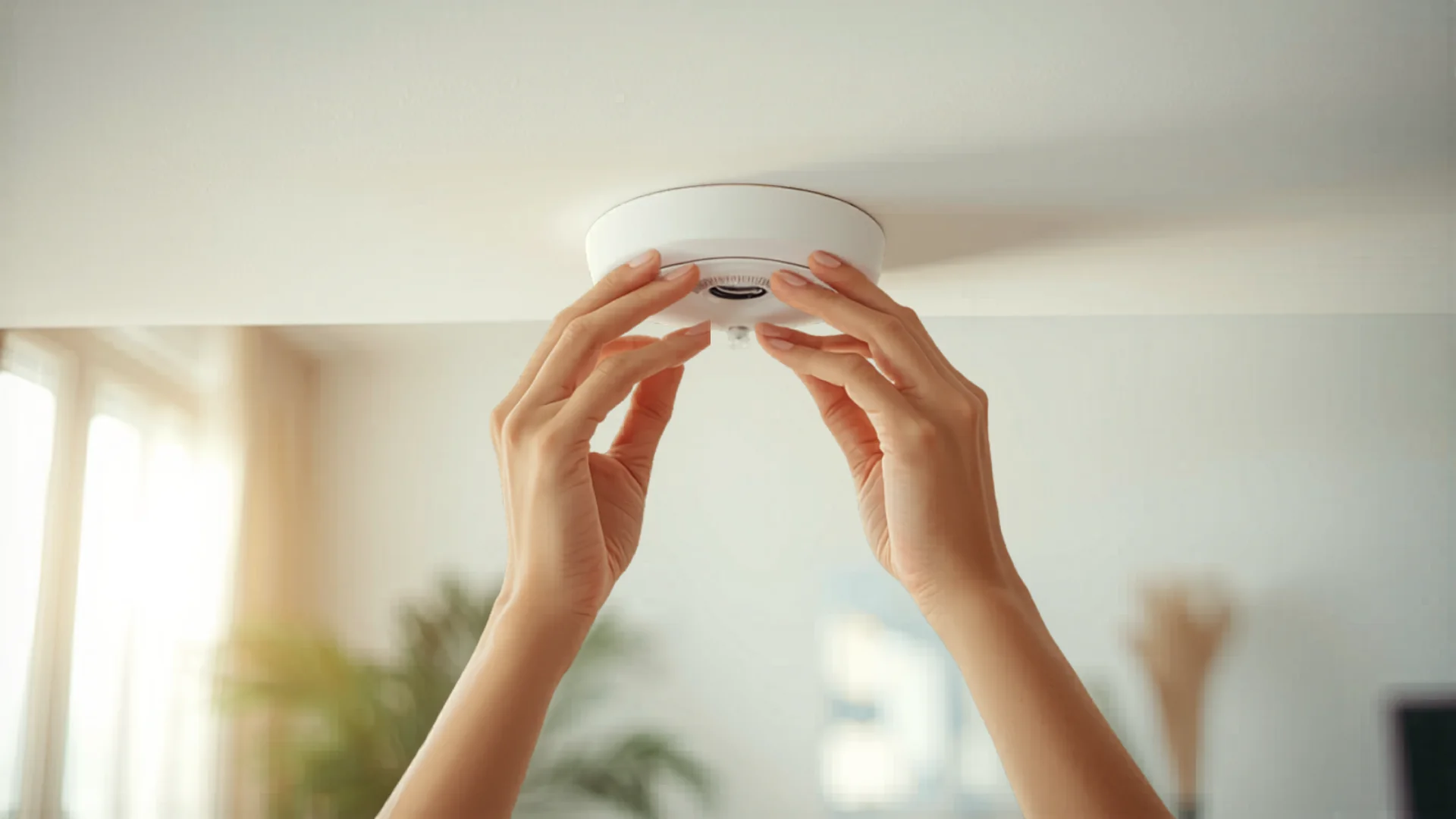
Twist the alarm anticlockwise off its base plate, open the battery door, replace the 9V cell with a fresh one the same way round, refit the alarm and press the test button until it sounds. Do it once a year and use the daylight saving change as the reminder. On a sealed 10 year unit such as the LEVSUPTY there is no battery door at all: the whole alarm is replaced at the end of its life, which is the point of the design.
How do you turn off a smoke alarm?
Press the hush button. On an alarm like the Quell Q301 that silences a cooking false alarm for several minutes without taking the unit off the ceiling, which is the whole reason the button exists. Clear the smoke, open a window and let it reset itself. Do not pull the battery or take the alarm down, because an alarm that has been disabled cannot warn you, and on a 240V unit the wiring work is an electrician job in every state.
Which smoke alarm brand is most reliable in Australia?
Judge it on the certification and the warranty rather than the badge. The PSA Lifesaver LIF6800 is the strongest here because the listing states it is certified to AS 3786:2014 and ActivFire listed, which means an independent scheme has assessed and listed it for the Australian market. Quell, part of Kidde Australia, backs the Q301 with a 10 year warranty. Clipsal is the brand most Australian electricians fit, but it is sold through electrical wholesalers rather than online.
Smoke detectors are part of the broader entry-security stack, alongside a smart lock for keyless entry and a doorbell camera for the front-door log.
What type of battery should you use in a smoke detector?
Use the battery type the alarm was built for. A replaceable alarm such as the Quell Q301 takes a 9V battery, and the WA Department of Fire and Emergency Services says to replace it every year if it is a 9 volt alkaline. A sealed 10 year alarm such as the LEVSUPTY set has no battery to change.
Which smoke alarm does the fire brigade recommend?
The WA Department of Fire and Emergency Services recommends mains powered photoelectric smoke alarms for inside the home. All three alarms in this guide are photoelectric, and the PSA Lifesaver LIF6800 is the mains powered one, running on 240V with a 9V battery backup.
What are the best quality smoke alarms in Australia?
Look for a photoelectric sensor and AS 3786 certification, then choose by power source. The PSA Lifesaver LIF6800 is our best overall pick, and its listing states ActivFire listing and AS3786 certification. The LEVSUPTY 5 Pack suits whole home interconnect, and the Quell Q301 is the standalone budget choice.
What is a fire alarm used for?
A home fire alarm is a smoke alarm: it detects smoke and sounds a loud alarm so everyone can wake and get out early. Interconnected sets such as the LEVSUPTY 5 Pack link over wireless RF, so when one alarm detects smoke every alarm in the house sounds at once.
What do reviews say about Bunnings smoke alarms?
Read the reviews for the exact Bunnings model, and judge it on the same three checks used here: a photoelectric sensor, AS 3786 certification and a 10 year life. Star averages alone can hide chirping and false alarm complaints, so look for those in the review text before you buy.
What is the best 240V hardwired smoke alarm for Australian homes?
The PSA Lifesaver LIF6800 is the best 240V hardwired smoke alarm in this guide. Its listing states a photoelectric chamber, 240V mains power with a 9V battery backup, ActivFire listing and AS3786 certification. A licensed electrician must install it in every state.
Made by PSA Products, with 240V mains power, a 9V battery backup and an Advance Sensor photoelectric chamber. The listing states ActivFire listing and AS3786:2014 certification, and a licensed electrician must install it.
$49.10
Amazon.com.au price as of 11:01 am AEDT, subject to change
Five alarms arrive already linked over wireless RF, so when one detects smoke every alarm in the house sounds at once. The listing states photoelectric sensors, AS3786:2014 certification and a 10 year sealed battery, and you fit them yourself with no electrician.
$199.87
Amazon.com.au price as of 11:01 am AEDT, subject to change
As an Amazon Associate, NestPath earns from qualifying purchases.
Budget pick
Quell
Quell Q301 Photoelectric Smoke Alarm
4.5(78)
Quell is part of Kidde Australia, and the Q301 is photoelectric, AS3786 compliant and has a Hush button to silence cooking false alarms. It runs on a 9V battery, carries a 10 year warranty and is standalone with no interconnect.
$38.00
Amazon.com.au price as of 11:01 pm AEDT, subject to change
Affiliate Disclosure: As an Amazon Associate, NestPath earns from qualifying purchases. This means if you click a product link and buy something, we may receive a small commission at no extra cost to you. We only recommend products we genuinely believe will help new homeowners. This does not influence our recommendations.
CERTAIN CONTENT THAT APPEARS ON THIS SITE COMES FROM AMAZON. THIS CONTENT IS PROVIDED ‘AS IS’ AND IS SUBJECT TO CHANGE OR REMOVAL AT ANY TIME.