A trampoline is one of those backyard buys that looks simple until you start reading the fine print. Spring count, net placement, weight limits, galvanised versus painted steel, ASTM certification, whether the thing will survive a Brisbane summer or a Melbourne winter. Get it wrong and you are either nursing a sprained ankle or watching the frame rust through in two seasons. Get it right and it is the cheapest way to keep kids off screens and outside for years. The only backyard buy that does the same job for less money is a decent soccer ball.
We are a first-home-buyer site, so we look at trampolines the way you would look at any backyard investment: what does it actually cost, will it last, and is it safe enough that you do not lie awake worrying. To put this guide together we studied the Amazon Australia trampoline catalogue, cross-checked it against the national consumer-group safety findings, and read through hundreds of verified Australian reviews so you do not have to.
One thing up front. The brands that win the glossy magazine roundups in Australia, Springfree and Vuly, are premium springless trampolines that sell direct and through specialist retailers, not on Amazon. They are excellent and they are expensive, often $1,800 to $3,000-plus. This guide focuses on the trampolines you can actually buy on Amazon Australia today, which is where most families with a normal budget are shopping. We will be honest about where those premium brands beat everything here.
What is the best trampoline in Australia right now?
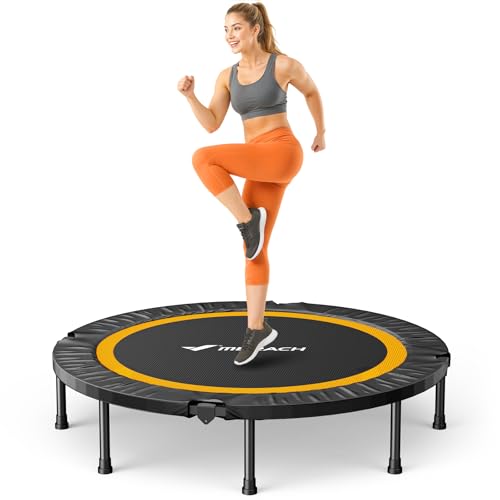
For most Australian families the best all-round backyard trampoline on Amazon is the Everfit 8ft. It has a galvanised steel frame, 20mm foam padding over 48 springs, a full enclosure net and a 120kg limit, and it carries the strongest run of recent Australian reviews in its price band. If you want a bigger jumping surface, the LeJump round trampoline is the value choice. If you are in an apartment or have no yard, the MERACH mini rebounder at $119.99 is the budget pick, and our guide to the best mini trampolines in Australia compares the adult fitness rebounders in full.
Here is the short version before we get into each one.
- Best all-round backyard trampoline: Everfit 8ft, 4.3 stars from 161 reviews, around $268.
- Best value bigger trampoline: LeJump round (7.7/10/12ft), 4.4 stars from 205 reviews, from around $260.
- Best budget mini rebounder: MERACH 40-inch, 4.6 stars from 113 reviews, $119.99.
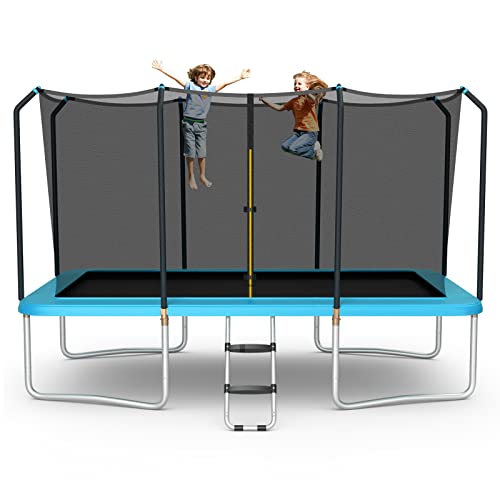
- Best for older kids and teens: HONEY JOY 14 x 8ft rectangular, ASTM certified, 200kg limit.
- Best for toddlers: Giantex 6ft with built-in swing, 4.6 stars, Amazon's Choice.
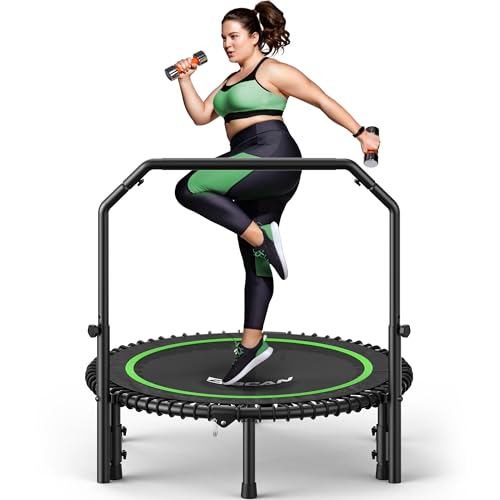
- Most-reviewed fitness rebounder: BCAN 40-inch, 4.4 stars from more than 2,300 reviews.
Last updated June 2026. Prices are indicative and move around, so check the live listing before you buy.
How do these trampolines compare at a glance?
The eight trampolines below split into three jobs: full-size backyard trampolines for general family use, smaller toddler trampolines with low frames and built-in extras, and mini fitness rebounders for indoor exercise. They are not really competing with each other so much as suiting different yards and ages. The comparison cards under each pick show the headline specs, and the table in your head should be simple: bigger diameter and higher weight limit for older or heavier jumpers, lower frame and enclosed net for toddlers, bungee cords and a handlebar for adult fitness.
Across all eight, the most-reviewed by a wide margin is the BCAN fitness rebounder with more than 2,300 ratings. The highest star ratings on the list, at 4.6, belong to the MERACH mini and the Giantex toddler trampoline. We have noted where a pick has a thin review count so you can weigh that yourself.
How we evaluated these trampolines
We are an aggregator, not a testing lab. We do not jump on these ourselves or run frames through a stress rig. What we do is gather and weigh the evidence that already exists, then apply consistent rules so the picks are comparable. Here is exactly how we chose.
- In stock on Amazon Australia. Every pick was confirmed available to Australian buyers at the time of writing. Trampolines go in and out of stock seasonally, so we noted alternatives where supply looked tight.
- Real ratings and real review counts. We only included trampolines with a genuine Australian or global star rating and at least a handful of verified reviews. We pulled the exact star value and review count for each and we name them in the text rather than rounding up.
- Verified specifications. Spring count, weight limit, frame material, diameter and certification claims were taken from each product listing, not estimated. Where a listing claimed ASTM certification we noted it as a claim from the listing.
- Safety signals. We weighted enclosure design, frame galvanising, padding thickness and the presence of recognised safety standards, informed by the national consumer group's long-running warnings that many cheap trampolines fail safety tests.
- Reading the negative reviews. We read the one and two-star reviews as closely as the five-star ones, because for trampolines the failure modes (missing parts, fiddly net assembly, frames loosening over time) are where the real buying advice lives.
- Fit for Australian conditions. UV resistance and corrosion protection matter more here than in most markets, so weatherproofing claims and galvanised frames were a tie-breaker.
Which trampoline is best for a family backyard?
For a general-purpose family backyard, the Everfit 8ft Round Trampoline is our top pick. It is the trampoline most likely to keep one or two kids happy for years without rusting out or feeling cheap, and it sits at a price most families can justify. The 8ft diameter is the sweet spot for an average Australian backyard: big enough for real bouncing, small enough that it does not swallow the whole lawn.
Everfit is a Melbourne-founded fitness brand, and this model is built around a marine-grade hot-dip galvanised steel frame, which is the construction you want for something living outside in Australian sun and rain. The bounce comes from 48 triple-rate springs under a 5000-hour UV-tested mat, with 20mm of foam padding over the springs and an anti-graze mat to stop scrapes. The enclosure uses a double-lock zip-and-clip entry so a toddler cannot simply push the door open. The rated capacity is 120kg and it is recommended for ages six and up, which covers most primary-school households and lets an adult get on with a child.
The reviews back this up. Across 161 ratings it sits at 4.3 stars, and the recurring theme in the Australian reviews is genuine surprise at the quality for the money. One verified buyer called it "pretty much the only trampoline you should buy off Amazon" and warned against the sub-$200 models, saying "for just a little more you get one built for an adult, really safe and fantastic." Another noted it is "low off the ground so the kids can climb up by themselves," which matters for younger jumpers.
Flaws but not dealbreakers
The instructions are the weak point. Several reviewers found them unclear, and the net assembly requires removing and re-attaching springs, which is genuinely annoying and a two-person job. One buyer reported missing and damaged pieces on arrival, so check your box on delivery and contact the seller promptly if anything is short. None of this is unusual for flat-pack trampolines, but budget an hour or two and a helper for setup, and look up the screwdriver trick for getting springs on.
What is the best value trampoline for a growing family?
If you want more jumping room without jumping in price, the LeJump round trampoline is the best value on this list. It comes in 7.7ft, 10ft and 12ft, so you can buy the size that matches your yard and your kids' ages, and the larger frames lift the weight limit to 150kg, which is enough for older kids and the occasional adult. For families who expect the trampoline to still be useful in five years, that headroom is worth a lot.
The LeJump is ASTM approved according to its listing, with curved enclosure poles that keep the net away from the jumping zone so a jumper who drifts sideways meets soft net rather than a hard pole. The frame is galvanised inside and out and the legs are powder-coated for extra rust protection, again the right call for Australian weather. It ships with a ladder, the safety net and a storage bag for shoes and keys, and the mat is high-quality PP mesh rated to hold a large static load.
With 205 reviews at 4.4 stars, it has the deepest track record of any full-size outdoor trampoline here. Australian buyers repeatedly mention easy assembly once you decode the instructions and a spacious, sturdy bounce. One recent reviewer liked that the 10ft was "big enough for kids to play" and called it a "great buy," while another praised a zip-free overlapping flap entry that does not block jumpers doing flips.
Flaws but not dealbreakers
The most serious complaint is missing parts. One Australian buyer reported parts missing across two deliveries, which is frustrating and worth flagging. As with most trampolines in this class, the in-motion weight limit (100kg on the smallest size) is lower than the static rating, so do not read "300kg at rest" as a green light for heavy simultaneous jumpers. Match the size to the weight limit you actually need, and inventory every part against the manual before you start building.
What is the best cheap trampoline for an apartment or small space?
If you have no backyard, the answer is a mini rebounder, and the best budget option is the MERACH 40-inch at $119.99. It is the cheapest pick in this guide, it needs no real assembly, and it is built for quiet indoor use, which is exactly what you want in an apartment or a small courtyard. This is not a kids' play trampoline so much as a fitness tool that the whole household can use.
The headline feature is how quiet it is. MERACH rates the bounce at around 20dB thanks to a multi-layer rebound system and anti-slip leg caps, and the reviews confirm it. One Australian buyer wrote that they "bounced on this thing at 11:00pm at night for twenty minutes and it was so quiet. No springing sounds." The frame is industrial-grade steel with triple-welded joints and a 150kg weight capacity, it folds for storage, and it ships ready to use straight out of the box. It also carries a 1-year warranty plus a 3-year frame warranty.
At 4.6 stars from 113 reviews it is among the highest-rated trampolines in this guide. Reviewers who had previously owned expensive bungee rebounders said this one was "far superior" for the price, and several apartment-dwellers described using it for low-impact exercise and stress relief without disturbing neighbours.
Flaws but not dealbreakers
It is a fitness rebounder, so the bounce is centre-focused and the diameter is small. It is not a substitute for a backyard trampoline if what you actually want is kids leaping around. Unfolding it the first time takes some force and a couple of reviewers warned to mind your knuckles. If you want a folding frame to tuck flat behind a cabinet, note that some owners just remove the legs and roll it on its side instead.
What is the best trampoline for older kids and teenagers?
Older kids and teens jump higher, land harder and want to do tricks, and that is where a rectangular trampoline earns its keep. The HONEY JOY 14 x 8ft is our pick here. Rectangular trampolines concentrate the bounce rather than pushing jumpers toward the centre, which is why gymnasts use them, and this one is ASTM certified with a 200kg weight capacity, the highest limit in this guide.
The build is serious: 84 springs, a hot-dip double-side galvanised steel frame, four U-shaped legs for stability and a combined safety pad sealing the gap between mat and net. At 4.3m long it needs real space, and at 95kg it is a substantial unit, so this is a commitment rather than a casual buy. The curved poles and included safety net follow the same logic as our other picks, keeping hard parts away from the jumping zone, and the early Australian review describes it as "very sturdy and good quality" with a "big area for the kids and teens to flip on."
One honest caveat: this listing currently has only four reviews, far fewer than our top picks. The rating is a strong 4.7, but four reviews is a thin base to lean on, so we are recommending it on its specifications and certification rather than a deep review history. If you are risk-averse, the bigger LeJump or Goplus round trampolines have far more reviews, just with a lower, more spread-out bounce.
Flaws but not dealbreakers
The thin review count is the main thing to weigh. Beyond that, a 14 x 8ft rectangular trampoline is large, heavy and a genuine two-person assembly that will dominate a small yard. The listing does not advertise a warranty, so factor that into your decision. For the right yard and the right ages, though, nothing else here delivers the same controlled, springy bounce.
What is the best trampoline for toddlers?
For toddlers and pre-schoolers, you want a low frame, a fully enclosed net and a small footprint, and the Giantex 6ft Kids Trampoline with Swing nails all three. It is an Amazon's Choice product designed specifically for three to eight year olds, and the built-in swing is the kind of detail that keeps a two-year-old occupied far longer than a plain mat would.
This is a rectangular toddler trampoline with 40 springs, a high-density jumping mat and a galvanised steel frame in a U-shaped, anti-skid configuration for stability. The enclosure net has a smooth zipper and double buckles, the upper poles are foam-padded and the design is gap-free so little hands and feet cannot slip through. The trampoline holds up to 100kg and the detachable swing holds up to 50kg, and the whole thing works indoors or out, which is handy for rainy days.
At 4.6 stars from 112 reviews it is one of the highest-rated and best-reviewed toddler options on Amazon Australia. Parents and grandparents describe it as easy to assemble and very sturdy, with one calling it "the best thing I could have ever bought" for a young grandchild. Reviewers consistently mention kids using it daily and the swing being a genuine bonus rather than a gimmick.
Flaws but not dealbreakers
It is genuinely small. Reviewers are clear that this suits toddlers and young children, and a five-year-old will outgrow it within a couple of years. Take the swing out when a younger child is bouncing so they do not land on it, and follow the picture-only instructions carefully, as the foam sleeves need to go on the poles before the net. The zipper drew a couple of durability complaints, but the side buckles provide backup if it fails.
What is the best fitness rebounder for home workouts?
If your goal is adult exercise rather than backyard play, the BCAN 40-inch foldable fitness trampoline is the safest bet, and it is the most-reviewed trampoline in this entire guide with more than 2,300 ratings. That depth of feedback is the main reason it makes the list: when thousands of buyers converge on 4.4 stars, you can trust the picture more than any single glowing review.
The BCAN uses 32 thickened bungee cords rather than springs, which gives a softer, quieter bounce that is gentler on knees and backs, a recurring theme in the reviews from older users. It has a 3mm steel frame and a listing-rated 204kg capacity, a four-level adjustable handlebar for balance, and a foldable frame that drops to about a fifth of its open size for storage. It arrives roughly 60 percent pre-assembled with the bungees largely in place and a tool included for the rest.
Australian reviewers in their 60s and 70s repeatedly say it feels stable and safe and is gentle on the joints, with one 78-year-old writing "I feel safe to bounce away." Others compared it favourably to band-style rebounders costing four times as much. The bounce is described as firm and supportive without being harsh.
Flaws but not dealbreakers
The handlebar is the recurring weak point. Several reviewers found the legs that anchor the handlebar work loose over time, especially if children swing on it, so tighten the legs periodically and treat the handlebar as a balance aid rather than something to lean your weight on. A few buyers received instructions with a missing page and had to find assembly help on YouTube. Attaching the bungees in a balanced, cross-pattern order makes setup much easier.
What should you look for when buying a trampoline in Australia?
The single most important factor is safety construction, because the national consumer group has warned for years that too many trampolines on sale still fail safety tests. Beyond that, the decision comes down to size, weight limit, enclosure design and how well the thing will survive Australian weather. Here is what actually matters.
Round or rectangular: which shape is better?
Round trampolines push jumpers back toward the centre, which is safer for general family play and why most backyard models are round. Rectangular trampolines give a higher, more controlled bounce across the whole mat, which gymnasts and confident teens prefer but which is less forgiving. For most households with young kids, round is the sensible default. Mini rebounders are round and centre-focused by design, built for exercise rather than play.
How much weight should a trampoline hold?
Check the in-motion or jumping weight limit, not just a static "at rest" figure, because they can be very different. The picks here range from 60kg toddler limits up to 200kg on the HONEY JOY rectangular. As a rough guide, a 100 to 120kg limit suits primary-school kids, while 150kg or more lets teens and adults join in. Never exceed the rated limit and never put more jumpers on than the trampoline is rated for at once.
Does the safety net design matter?
It matters a lot. The best enclosures use curved poles that lean the net away from the jumping surface, or place the net inside the springs so a jumper never contacts the hard frame. Look for foam-sleeved poles, a gap-free pad sealing the springs, and a double-lock or double-buckle entry so a small child cannot simply push the door open. A net that is tightly woven also stops fingers and toes getting caught.
How do you weatherproof a trampoline for Australian conditions?
UV and rain are the enemies. A hot-dip galvanised frame, galvanised inside and out, resists rust far better than painted or single-side-galvanised steel. UV-stabilised mats and pads, often advertised as 5000-hour UV tested, hold up to Australian sun. A weather cover extends the life of the mat and padding noticeably, and one Everfit reviewer specifically recommended buying a cover "so it stays in tip top shape." Anchoring the trampoline against wind is also worth doing, especially in storm-prone areas.
How do you keep a trampoline safe and lasting longer?
A trampoline is a long-term outdoor investment, and a little maintenance dramatically extends its life and keeps it safe. The good news is that almost all of it is simple and cheap.
- Check the springs, mat and net monthly. Look for stretched or detached springs, fraying mat stitching and holes in the enclosure net. Catching a worn spring early is far cheaper than replacing a mat.
- Tighten the hardware regularly. Legs and handlebar fittings work loose over time on almost every model, as BCAN and Everfit owners both report. A periodic spanner check prevents wobble and the kind of failure that injures.
- Use a weather cover and anchor kit. A cover protects the mat and pads from UV when the trampoline is not in use, and ground anchors stop it lifting or tipping in strong wind.
- Enforce one jumper at a time for younger kids. Most trampoline injuries happen with multiple jumpers of different sizes. The smaller jumper comes off worst. The enclosure does not change this rule.
- Bring mini rebounders inside. Fitness rebounders like the MERACH and BCAN are not built for permanent outdoor exposure. Fold or store them indoors between uses.
- Keep it clear underneath and around. Maintain a clear safety zone around the trampoline and never store anything beneath it that a child could crawl toward.
What else will you want with a new trampoline?
A trampoline rarely arrives alone. A few inexpensive extras make it safer, last longer and turn the backyard into a proper play and entertaining space. These all pair naturally with the picks above.
The competition: trampolines we considered
Two further trampolines made our research shortlist without quite earning a headline slot, and they are worth knowing about as backups.
The Goplus ASTM-approved round trampoline is sold in six sizes from 8ft up to a huge 16ft, with spring counts and weight limits scaling up across the range, and it carries clear ASTM F381-16 and F2225-15 certification claims. It is a flexible choice for a big family who wants a large footprint. We held it just below our top picks because its review average sits at 4.0 from 28 ratings, lower than the Everfit and LeJump, with one overseas buyer flagging flimsy parts. It is still a legitimate option if you want a specific large size the others do not offer.
The ADVWIN 40-inch mini rebounder is a close alternative to our MERACH budget pick: a bungee-cord rebounder with a 150kg limit, five height-adjustable handlebar levels and a quiet bounce, sitting at 4.4 stars from 29 reviews. Australian reviewers loved the bounce and quietness, with the main gripe being that it does not fold flat for storage. If the MERACH is out of stock, this is the one to grab.
And the honest note on the premium end: if your budget stretches past $1,800, the springless Springfree and Vuly trampolines sold direct in Australia are the safest on the market, with the consumer group singling out Springfree, and they are not available on Amazon. For Amazon shoppers on a normal budget, our picks above are the strongest value, but you deserve to know the ceiling exists.
Frequently asked questions
What brand of trampoline is best in Australia?
For maximum safety regardless of price, the springless brands Springfree and Vuly lead the Australian market, with Springfree recommended by the national consumer group. For value on Amazon Australia, Everfit and LeJump are the standout backyard brands in our research, and MERACH and BCAN lead the mini-rebounder category. The "best" brand depends on your budget and whether you want backyard play or indoor fitness.
What should you look out for when buying a trampoline?
Prioritise a galvanised steel frame, a tightly woven enclosure net on curved or inside-mounted poles, foam padding over the springs and a recognised safety standard such as ASTM. Check the in-motion weight limit rather than the static rating, match the diameter to your yard, and read the one-star reviews for the real failure modes, which are usually missing parts and frames loosening over time.
Is 10 minutes on a trampoline equal to 30 minutes of running?
This is a popular claim that traces back to an old NASA study on rebound exercise, and several mini-trampoline listings repeat it. It is a marketing simplification rather than a precise fact. Rebounding is genuinely good low-impact cardio that is gentle on the joints, which is the real reason older users in the reviews love it, but treat the "10 minutes equals 30 minutes running" line as a rough motivational claim, not a measured equivalence.
Is a trampoline good for autistic children?
Many parents and occupational therapists use trampolines as a form of sensory and proprioceptive input, and several reviewers specifically mention buying one for a child with sensory or stimming needs. A low-frame, fully enclosed model like the Giantex toddler trampoline is often the safest starting point. As with any therapy tool, it is worth a quick chat with your child's OT about supervision and the right size.
Round or rectangular trampoline, which is safer?
For general family use a round trampoline is the safer default because it naturally steers jumpers back toward the centre and away from the edge. Rectangular trampolines give a higher, more even bounce that suits gymnastics and confident teens but is less forgiving. Whichever shape you choose, the enclosure net and padding quality matter more for safety than the shape itself.
How long does a trampoline last in the Australian climate?
A well-made trampoline with a hot-dip galvanised frame and a UV-stabilised mat can last many years outdoors in Australia, while a cheap painted-frame model may rust within a couple of seasons. The mat and padding are the first parts to degrade under UV, so a weather cover and occasional spring or bungee replacement will extend the usable life considerably.
Complete the backyard
A trampoline is usually one piece of a bigger outdoor plan. If you are setting up a family-friendly yard from scratch, these NestPath guides pair naturally with it.
About the author
Anish Puri founded NestPath in 2026 after going through the Australian first-home-buyer process himself. NestPath focuses on Australian first-home buyers because the existing review sites are American, generic, or both. Anish handles editorial selection across the homeowner hub. Reach out: hello@nestpath.com.au
Found this helpful?
Check out more guides for new homeowners.