Single or double? That is the first decision
Before you compare a single spec, answer this: are you hanging solo or sharing? It is the question that splits this whole category in two. A single hammock is lighter and packs smaller, which makes it the right call for solo backpacking where every gram counts - the Gold Armour single here weighs only about 650g. A double is wider and roomier, so it can take two people or give one person space to sprawl and wrap up, at the cost of a bit more weight and bulk. The other thing to check before you buy is whether tree straps and carabiners are actually included, because some sellers list the straps separately and a hammock with no way to hang it is no use at all. If your yard has neither trees nor a beam, a hanging chair on a stand solves the same problem standing on the paving.
The six picks below run from the Gold Armour single up to the Wise Owl Outfitters, and they map cleanly onto that split: singles and lightweight packable options for solo trips, and roomy doubles for sharing or sprawling. The other things worth weighing as you read are weight capacity, packed size and weight for backpacking, and fabric - ripstop parachute nylon is the durable standard, and every pick here uses 210T parachute nylon. Five of the six arrive complete with wide tree straps and carabiners; match the hammock to how you will actually use it and you will not overspend.
Short answer: the Gold Armour Camping Hammock Single at about $36 is the cheapest complete kit here, the Kootek Camping Hammock Double at about $51 is the value pick for two, and the Wise Owl Outfitters at about $97 has by far the deepest review record. If weight capacity is the worry, the MalloMe is rated to 300 kg.
| Hammock | Single or double | Packed weight | Rated capacity | Straps and carabiners | Price, about |
|---|
| Gold Armour Camping Hammock Single | Single | About 650 g | Up to 500 lbs, about 227 kg | Included, 10 foot straps | $36 |
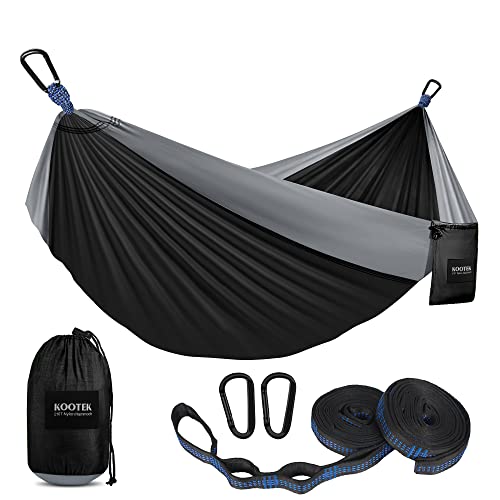
| Kootek Camping Hammock Double | Double | About 1 kg | Up to 500 lbs, about 227 kg | Included, 18 plus 1 loops | $51 |
| MalloMe Camping Hammock | Single or double | Not published | 300 kg, the highest here | Included, 22 loops | $53 |
| AnorTrek Lightweight Camping Hammock | Single or double | About 590 g, single | Up to 500 lbs, about 227 kg | Included, 5 plus 1 loops | $63 |
| Gold Armour XL Double Parachute Hammock | Double | About 900 g | Up to 500 lbs, about 227 kg | Included, 16 loops | $77 |
| Wise Owl Outfitters Camping Hammock | Single or double | 456 g single, 737 g double | Up to 181 kg | Carabiners attached | $97 |
Best budget: Gold Armour Camping Hammock Single
If you just want to start hammocking without any fuss, the Gold Armour single is the entry point and the cheapest pick here. It arrives as a complete kit - the hammock plus two heavy-duty carabiners and two tree-friendly straps that are 10 feet long - so there is nothing extra to buy before your first hang, which is exactly what a first-timer wants.
At only 23oz (about 650g) it packs down to the size of a small cabbage and unfolds from its stuff sack in seconds, making it ideal for a solo backpacker or a backyard nap. The 210T parachute nylon and triple interlocking stitching support up to 500 lbs, so it is reassuringly strong for one person. The honest trade-off at this price is that it is a single, so it is snug for two - if you want room to share, look at the doubles below.
Best value double: Kootek Camping Hammock Double
The Kootek is the value bestseller and the pick if you want a roomy double without overpaying. At 120 by 78 inches it comfortably takes two adults, or gives one person a generous amount of space to sprawl and wrap up on a cool evening, and its huge review base shows how many people have settled on it as the safe default.
It comes complete with tree-friendly straps carrying 18 plus 1 adjustment loops each plus the matching carabiners, so you clip on and fine-tune the height with no knots to learn. At about 2.2 lbs (1kg) it still folds into its attached sack and travels easily, and the 210T parachute nylon with triple interlocking stitching supports up to 500 lbs. The honest note is that a double is heavier and bulkier than a single, so if you only ever hang solo and count every gram, a single packs smaller.
Best weight capacity: MalloMe Camping Hammock Single & Double
The MalloMe is the pick if weight capacity is your first worry, because it is lab-tested to 661 lbs (300kg) per hammock - the highest figure in this guide. That makes it the most reassuring choice for heavier users, or for anyone who likes to climb in for a hard sprawl rather than perch gingerly.
It uses the same premium 210T parachute nylon as the others but adds reinforced bartacks to the triple stitching, and the tree straps carry 22 connecting loops each plus carabiners, so setup takes about 60 seconds with no knots. You can choose single or double, and the stuff sack is sewn into the hammock so you cannot lose it. The honest caveat is that the headline 300kg rating is for the hammock body - your real-world limit still depends on hanging it correctly with the included wide straps at a safe height.
Lightest to carry: AnorTrek Lightweight Camping Hammock
The AnorTrek is the pick for the gram-counting backpacker, because at about 1.3 lbs (590g) for the single it is the lightest hammock in this guide and packs down small enough to throw in a daypack without a second thought. It still arrives complete with two solid steel carabiners and two tree straps, so you are not left buying hanging gear separately.
The straps carry 5 plus 1 loops each, and you can hang it between two trees in around 90 seconds. You can choose a single at 110 by 55 inches or a roomier double at 118 by 78 inches, both rated to 500 lbs in soft 210T parachute nylon. Two honest caveats temper the appeal: the straps have fewer adjustment loops than the Kootek or MalloMe, so you get slightly less fine-tuning of the hang, and stock can run low, so it is not always available the moment you want it.
Best oversized double: Gold Armour XL Double Parachute Hammock
The Gold Armour XL Double is the pick if you want a genuinely oversized double, and it is the second Gold Armour hammock in this guide - the brand earns two slots because it nails both the budget single above and this larger double. At 125 by 79 inches there is room for two people to lie comfortably, or for one person to wrap right up cocoon-style on a cool night.
Like its smaller sibling it arrives complete with two heavy-duty carabiners and two 10-foot tree straps carrying 16 loops each, so nothing else is needed, and it holds the best rating here at 4.8 stars. At 32oz (about 900g) it stays reasonably packable for its size with the stuff sack sewn in. The honest trade-off is the extra bulk and weight over a single, so it is the better backyard or two-person hammock rather than the lightest solo backpacking choice.
Most reviewed: Wise Owl Outfitters Camping Hammock
The Wise Owl Outfitters is the standout for sheer peace of mind, because with more than 51,800 ratings at 4.8 stars it has by far the largest happy review base in this guide. That kind of track record takes the guesswork out of buying your first hammock - this is the recognised name plenty of people reach for by default.
You can choose the SingleOwl at 2.7 by 1.4m and 456g or the roomier DoubleOwl at 3.1 by 1.98m and 737g, and both pack down to grapefruit size in soft, heavy-duty 210T parachute nylon, supporting up to 181kg with carabiners already attached. The honest caveat to know before buying is that it ships with two 2.4m hanging ropes rather than the wide adjustable tree straps the others include, so for tree-friendly hanging and easy height adjustment you may want to add a proper set of wide straps. Stock can also run low at this price.
How to choose the right hammock for your trips
The single biggest mistake is buying for the trip you imagine rather than the one you take most often. If the honest answer is that you hang solo and carry your gear on your back, a single or a lightweight packable like the AnorTrek is the smart buy - it packs smaller and saves weight, and a heavier double would mostly add bulk you never use. If you want to share, lounge in the backyard, or just love the extra room to wrap up, a double like the Kootek or the Gold Armour XL earns its keep.
After size, check three things in order: weight capacity, packed size and weight, and what comes in the box. Every pick here uses durable 210T parachute nylon and supports at least 181kg, with the MalloMe topping the list at 300kg, so capacity is rarely the limiting factor for one person. Packed size and weight matter most for backpacking, where the AnorTrek and Wise Owl single shine. And crucially, confirm the listing includes wide tree straps and carabiners - five of these six do, while the Wise Owl ships with ropes, so budget for straps if you pick it.
A hammock rarely travels alone. A camping chair still earns its place around the fire where there are no trees, a tent is the fallback when the site is bare or the weather turns, and a sleeping bag is what makes a hammock survivable on a cold Australian night, because the compressed insulation under your back does nothing.
What the key specs mean
A few details do most of the work when you compare hammocks. Single versus double is the headline: a single is lighter and packs smaller for solo use, a double is wider for sharing or sprawling. Weight capacity tells you the safe limit - figures here run from 181kg up to 300kg, and you want comfortable headroom over your own weight rather than a number you sit right on the edge of.
Packed size and weight decide how happily it travels - anything from about 590g packs into a daypack, while the doubles are heavier but still sack down small. Fabric is where they converge: ripstop parachute nylon, specifically 210T, is the durable standard and every pick uses it, so the real differences are size, capacity and the strap kit. The most important honest point of all: always use proper wide tree straps, not thin rope that can damage bark and is harder to adjust, and hang at a safe height so a fall is short. Read size, capacity, packed weight and what is included together and any product page starts to make sense.
Frequently Asked Questions
Single or double hammock - which should I buy?
It depends on whether you hang solo or share. A single hammock is lighter and packs smaller, which makes it the right call for solo backpacking where weight and pack space matter - the Gold Armour single here is about 650g and the AnorTrek single about 590g. A double is wider and roomier, so it can take two people or give one person space to sprawl and wrap up, at the cost of a little more weight and bulk. If you mostly hang alone and carry your gear, buy a single; if you want to share or lounge with room to spare, step up to a double like the Kootek or Gold Armour XL.
How much weight can a camping hammock hold?
Most quality camping hammocks hold a lot more than people expect. The picks in this guide range from 181kg on the Wise Owl Outfitters up to a rated 300kg (661 lbs) on the MalloMe, with several rated to 500 lbs (about 227kg). For a single person that is comfortable headroom, and even a double rated to 500 lbs takes two adults with room to spare. The honest point is that the rating is for the hammock body - your real-world safe limit also depends on hanging it correctly with strong wide straps at a sensible height, so do not treat the headline number as a licence to skip a careful setup.
Are tree straps and carabiners included?
It depends on the hammock, which is exactly why you should check before buying. Five of the six picks here - the two Gold Armour models, the Kootek, the MalloMe and the AnorTrek - arrive complete with two wide tree-friendly straps and two carabiners, so you can hang them straight away with nothing else to buy. The Wise Owl Outfitters is the exception: it comes with carabiners and two 2.4m hanging ropes rather than wide adjustable straps, so if you pick it you may want to add a proper set of wide tree straps for tree-friendly hanging and easier height adjustment. Always confirm what is in the box, because some listings sell straps separately.
How do you hang a hammock safely?
Safe hanging comes down to good anchors, wide straps and sensible height. Use two solid, living trees roughly 3 to 5m apart, or another genuinely sturdy support, and always loop wide tree straps around the trunk rather than thin rope, which can cut into bark and is harder to adjust. Aim for a gentle curve so the hammock sits like a banana, not pulled tight and flat, and hang it low - sitting height is plenty, so any fall is short. Clip the carabiners through the strap loops, test your weight gently before committing, and you are set. The wide-strap and low-height rules matter most, both for the trees and for you.
Can two people use one hammock?
Two people can share a double, but not a single. A double hammock like the Kootek (120 by 78 inches) or the Gold Armour XL (125 by 79 inches) is sized and rated for two adults, typically supporting up to 500 lbs, so sharing is comfortable. A single is built for one and is too narrow to be comfortable or safe for two. If two of you will regularly hang together, buy a double from the start; many people also find a double makes a luxuriously roomy solo hammock, so it is rarely wasted even if you usually lie in it alone.
What is the lightest hammock for backpacking?
For backpacking, the AnorTrek and the Wise Owl single are the standouts here. The AnorTrek single weighs about 1.3 lbs (590g) and packs down small enough to drop into a daypack, which makes it the lightest pick in this guide, while the Wise Owl SingleOwl is about 456g and packs to grapefruit size. Both use the same soft 210T parachute nylon as the heavier doubles, so you are not giving up durability to save weight. The honest trade-off is room: the lightest options are singles, so if you need space for two you accept a heavier, bulkier double.
What is parachute nylon and why does it matter?
Parachute nylon is the lightweight ripstop fabric used for hammock bodies, and 210T is the durable standard you will see quoted again and again - every pick in this guide uses it. The number refers to the thread count, and the ripstop weave resists tearing and fraying while staying soft and packable, which is why it is the material of choice for camping hammocks. It also dries quickly and shrugs off dirt. Because all six hammocks here share the same 210T parachute nylon, the fabric is rarely the deciding factor - the real differences come down to single versus double, weight capacity, packed weight and whether wide tree straps are included.
What is the best brand for a hammock in Australia?
For camping hammocks on Amazon Australia the names that keep coming up are Wise Owl Outfitters, which has by far the largest review base here, Gold Armour, Kootek, MalloMe and AnorTrek. The best known Australian brand is Nakie, which sells recycled-fabric hammocks through outdoor retailers rather than through this guide. Brand matters less than the three things worth checking: the rated capacity, the packed weight and whether tree straps are in the box.
Where can you buy a hammock in Australia?
Amazon Australia has the deepest range of camping hammocks and is where every pick in this guide sits. Outside it, Anaconda and BCF carry the camping and Australian brands, Wild Earth stocks the lightweight hiking end, and Bunnings sells the backyard and stand-mounted styles rather than packable camping ones. Prices move between those shops, so check the same model in two places before you buy.
Is it healthy to sleep in a hammock every night?
Plenty of people do it happily, but this is a question for a health professional rather than a buying guide, so ask your GP or physiotherapist if you have back or neck problems. The practical part we can help with: lie diagonally rather than straight along the middle, which flattens the curve and takes the banana shape out of your spine, and hang the hammock with a deep sag rather than pulled tight, which is what causes most complaints.
What is a hammock?
A hammock is a sling of fabric hung between two anchor points, so you lie suspended rather than on the ground. Camping hammocks like the ones here are made from lightweight parachute nylon, pack into an attached stuff sack and hang from tree straps with carabiners. Backyard hammocks are usually cotton or rope, heavier, and often sold with a steel or timber stand for yards with nothing to tie to.
How do you sleep in a hammock?
Lie diagonally, not down the centre line. Sleeping across the hammock at an angle of roughly 15 to 30 degrees flattens the fabric under you and lets you lie almost level. Hang the straps higher than you think and let the hammock sag, because a tight hang squeezes your shoulders. Insulate underneath with a mat or an underquilt, since a sleeping bag compressed under your body stops insulating, and that is what makes people cold rather than the air temperature.