Seven hiking backpacks verified on Amazon Australia in August 2026, ranked by how well they fit rather than how many features they list. Capacity in litres, honest waterproofing, and the flaws each pack actually has.
Prices checked 19 September 2026 on Amazon AU and subject to change.
Why does choosing a hiking backpack in Australia feel harder than it should?
Because almost every roundup that ranks for this search was written somewhere else. The American gear sites rank house brands against each other, then link you to a shop that does not deliver here. The Australian pages that do exist lean on specialist retailers whose entry price starts around $200. The question most first-time buyers actually have is smaller: how many litres do I need, will it fit my back, and what happens when it rains on the Overland Track?
This guide answers those three things, then names seven packs currently listed on Amazon Australia. Fit is treated as the headline issue rather than a footnote, because a 65 litre pack with the wrong back length will make you miserable no matter how good the fabric is. And we are blunt about waterproofing: none of these are dry bags, and we say what each one actually ships with.
What is the best hiking backpack in Australia right now?
For most people doing overnight and multi-day walks, the Osprey Men's Rook 65 is the pack to buy. It carries 65 litres, the harness adjusts so you can dial the torso length in at home, and at 4.7 stars across 312 ratings it is one of the two highest-rated packs here. The Osprey Women's Renn 65 does the same job on a women's-specific harness.
If that is more than you want to spend on a first pack, the Naturehike ROCK 60 plus 5L gets you an aluminium internal frame, a 420D nylon shell and an included rain cover for a lot less. If you only do day walks and the occasional hut night, the G4Free 35L is the cheapest pack in this guide and the one that will get used most often.
Best overall: Osprey Men's Rook 65, adjustable harness, from $326.91.
Best value multi-day: Naturehike ROCK 60 plus 5L, alloy frame and rain cover, from $119.00.
Best budget pick: G4Free 35L, 11 pockets and a rain cover, from $59.99.
Best for women: Osprey Women's Renn 65, women's harness, from $325.54.
Best for fast day walks: Salomon Trailblazer 20, listed at 0.43 kg, from $96.00.
Most volume for the money: Amazon Basics 75L internal frame, from $159.59.
Best adjustable fit on a budget: TETON Sports Scout 3400, 65 litres, from $237.25.
How do our seven hiking backpack picks compare?
Prices below are the current from-price on Amazon Australia and they move, particularly on the Osprey listings, which swing with colour and size. Ratings are parent-level, pooling every colour and size sold under one listing. Read the capacity column first and the price column last.
Pack
Capacity
Rating
From
Osprey Men's Rook 65
65 L
4.7 (312)
$326.91
Naturehike ROCK 60 plus 5L
60 plus 5 L
4.3 (503)
$119.00
G4Free 35L
35 L
4.4 (1,405)
$59.99
Osprey Women's Renn 65
65 L
4.6 (67)
$325.54
Salomon Trailblazer 20
20 L
4.6 (3,213)
$96.00
Amazon Basics 75L
75 L
4.4 (6,118)
$159.59
TETON Sports Scout 3400
65 L
4.7 (8,776)
$237.25
Two packs tie for the highest star rating at 4.7: the Osprey Men's Rook 65 and the TETON Sports Scout 3400. The Scout carries far more ratings behind that score, 8,776 against 312, making it the most-reviewed pack in this guide. The G4Free 35L is the cheapest of the seven and the Naturehike sits lowest on stars at 4.3.
How did NestPath choose these hiking backpacks?
NestPath is an aggregator, not a gear lab. We do not walk these packs up a mountain and will never pretend otherwise. We study the evidence that already exists and refuse to publish anything we cannot check.
Every pack here was verified against its live Amazon Australia listing in August 2026. We confirmed the brand on the listing itself rather than trusting a title, checked the item is available to buy here, and pulled the star rating, rating count, capacity and materials from the product data rather than another blog. Where a listing sells several colours or sizes under one parent, we counted it once, so you are not seeing the same pack three times in different jackets.
We then screened on four things. Capacity spread, so there is a 20 litre, a 35 litre and a 75 litre pack here, not seven 65 litre clones. Harness and back-length adjustability, because that is the biggest reason a pack gets returned. What the pack does about water, stated plainly as an included rain cover or a coated fabric, never as a blanket waterproof claim. And review depth in Australia specifically. Anything priced like a reseller artefact was dropped rather than explained away.
Best hiking backpack overall: which pack handles most Australian multi-day walks?
The Osprey Men's Rook 65 is the pack we would hand to someone about to do their first Overland, Larapinta section or Great Ocean Walk. Sixty-five litres is the sweet spot for three to six nights carrying your own tent, sleeping bag and food, and the Rook's harness adjusts through a range of torso lengths rather than arriving in one fixed size. That matters if you are buying online, which almost everyone outside a capital city is.
Sixty-five litres is the right size for most Australian multi-day walks, and the Rook's adjustable harness means you can correct the fit at home instead of guessing off a size chart. At 4.7 stars from 312 ratings it ties for the highest score in this guide, and reviewers consistently describe a hip belt that genuinely moves the load onto the hips.
$426.57
Amazon.com.au price as of 04:00 am AEST, subject to change
As an Amazon Associate, NestPath earns from qualifying purchases.
It sits at 4.7 stars from 312 ratings, tying with the TETON Scout for the highest score here. Reviewers describe the same things: a hip belt that genuinely transfers load onto the hips rather than hanging off the shoulders, a mesh back panel that keeps air moving, and a supplied rain cover that handles ordinary rain. They also note the bottom sleeping-bag compartment opens into the main body, and that the angled side pockets let you reach a bottle without taking the pack off.
The design is deliberately conventional: top-loading main compartment, floating lid pocket, hip belt pockets, dual side compression, pole attachments.
Flaws but not dealbreakers
It is not a lightweight pack, so skip it if you are chasing an ultralight setup. There is no back-panel access, so digging something out from the bottom means unpacking from the top. Osprey packs also have a documented habit of squeaking under load where the harness meets the frame, which owners describe and then say they stopped noticing. It sits at the top of our price range alongside the Renn.
Best value multi-day pack: is a cheaper 60 litre pack good enough?
Yes, if you accept a plainer feature set. The Naturehike ROCK 60 plus 5L gives you the two things that make a multi-day pack work, an internal frame and a load-bearing hip belt, without a specialist brand's price tag. The frame is aluminium, the shell is 420D nylon the listing calls tear-resistant, and a rain cover is included.
Runner-up
Naturehike
Naturehike ROCK Series 60+5L Aluminum Frame 420D Nylon Hiking Backpack with Rain Cover Lightweight Tear-Resistant for Multi-Day Camping & Outdoor Trekking (Grey)
4.3(503)
This is the cheapest way to get a real internal frame and a proper hip belt, the two things that make a multi-day pack work. Australian owners describe dragging it through coastal scrub and creek crossings and reporting no failures, and one weighed theirs at about 1.27 kg with the rain cover, which is genuinely light for 65 litres of usable volume.
$119.00
Amazon.com.au price as of 04:00 am AEST, subject to change
As an Amazon Associate, NestPath earns from qualifying purchases.
The Australian reviews are unusually detailed and honest, which is why we like it. One owner describes dragging it through overgrown coastal scrub, rock-hopping and wading creek crossings, and reports it still working fine. Another weighed theirs at about 1.27 kg with the rain cover, genuinely light for the volume. A third said the waterproofing got a proper workout and nothing inside got wet. The recurring phrase locally is that it is a great beginner pack for one to two night trips.
The extra 5 litres comes from an extension collar. Two large side pockets swallow a one litre bottle each, there are zipped hip belt pockets, and the back has a big stretch pocket for a wet jacket. Listed dimensions are 65 by 28 by 6 cm packed flat.
Flaws but not dealbreakers
At 4.3 stars this has the lowest rating of the seven, and the complaints are consistent enough to take seriously. It is a simple top-loader with limited organisation, and one Australian reviewer bluntly called it a big bag with straps. There is a sleeve for a hydration bladder but no hanger loop. Back length is not adjustable, so if you sit outside the middle of the size range it may not sit right. And the stretchy side mesh is the weak point: at least two owners have snagged and torn it on branches.
Best budget hiking backpack: what should you buy for day walks and the odd overnighter?
The G4Free 35L. It is the cheapest pack in this guide by a wide margin and the one most likely to leave the house every weekend. Thirty-five litres covers a day walk with layers, lunch, first aid and two litres of water, and stretches to a hut night if you pack carefully.
Budget pick
G4Free
G4Free 35L Hiking Backpack Water Resistant Outdoor Sports Travel Daypack Lightweight with Rain Cover for Women Men
4.4(1,405)
The cheapest pack in this guide and the one most likely to get used every weekend. Thirty-five litres covers a day walk with layers, lunch, first aid and two litres of water, and one Australian reviewer carried it for three days with poles and a first aid kit and reported it sitting comfortably on back and hips.
$68.99
Amazon.com.au price as of 04:00 pm AEST, subject to change
As an Amazon Associate, NestPath earns from qualifying purchases.
The spec sheet is more generous than the price suggests: 11 pockets across five compartments, ripstop nylon, a listed weight of about 0.9 kg, and a rain cover stowed in the base. There are two zipped hip belt pockets, two stretch side pockets, a sternum strap with a whistle buckle, and two hooks inside for a hydration bladder, though the bladder is not included. Listed dimensions are 50 by 32 by 22 cm and the shape fits most airline carry-on rules.
At 4.4 stars from 1,405 ratings, the Australian feedback is what you would hope for at this price. One local reviewer took it on a three-day walk carrying water, clothing, food, poles and a first aid kit, and reported everything fitting and the pack sitting comfortably on back and hips.
Flaws but not dealbreakers
The rain cover is water resistant rather than weatherproof, and the same three-day reviewer said as much. Treat it as a shower cover and use a liner inside for anything that must stay dry. The front pocket opens vertically, so things tumble out if you unzip it carelessly. A few buyers mention loose stitching threads on arrival, cosmetic rather than structural. And tall bottles work out of the side pockets unless you strap them in.
Best hiking backpack for women: does a women's-specific pack actually help?
It does, and the Osprey Women's Renn 65 is the clearest example here. A women's harness is not a colourway: the shoulder straps are cut with a different curve and set closer together, the hip belt is angled differently, and the back length range is shorter. If a men's pack has ever dug into your collarbones or ridden up off your hips, this is why.
Also great
Osprey
Osprey Women's Renn 65 Backpack
4.6(67)
The women's counterpart to the Rook, with shoulder straps cut on a different curve, a differently angled hip belt and a shorter back length range. Reviewers describe a fully packed load feeling like nothing once adjusted, and one who has owned it close to a year of heavy use reports every seam still holding.
$325.12
Amazon.com.au price as of 04:00 am AEST, subject to change
As an Amazon Associate, NestPath earns from qualifying purchases.
The Renn 65 is the direct counterpart to the Rook and does the same job: 65 litres of top-loading space, an adjustable harness, hip belt pockets, big side pockets and a mesh back panel. It carries 4.6 stars from 67 ratings. Reviewers describe a fully packed load feeling like nothing once the straps were adjusted, and one who has owned it close to a year of heavy use reports every seam still holding. A tall reviewer called out the adjustment range, worth knowing because women's packs are often assumed to suit only shorter torsos.
The advice reviewers keep repeating, and we will repeat, is to check Osprey's own torso measurement guidance before ordering rather than guessing off your height.
Flaws but not dealbreakers
Sixty-seven ratings is a thin evidence base, so the score is less settled than the TETON or Salomon numbers. An Australian reviewer this year flagged noise, describing material sliding against the back support, the same squeak complaint that follows the Rook. It sits at the top of our price range. And like every 65 litre pack, it invites you to fill it. If your walks are day trips, this is far more pack than you need.
Best pack for fast day walks: what if you only ever do a few hours on the trail?
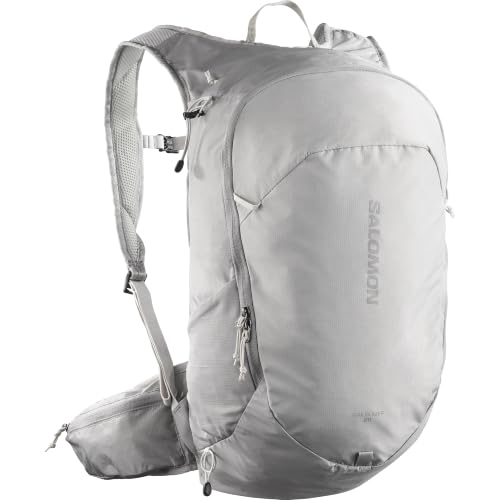
Then 65 litres is a mistake and the Salomon Trailblazer 20 is the answer. Salomon describes it as 20 litres of storage with an updated harness and back panel, and the listed weight is 0.43 kg, far and away the lightest pack here.
Twenty litres and a listed 0.43 kg make this the lightest pack here and the right answer for half-day walks, coastal tracks and summit pushes. It carries 4.6 stars from 3,213 ratings, though Salomon lists it as not water resistant, so add a rain cover or dry bag.
$119.99
Amazon.com.au price as of 04:00 pm AEST, subject to change
As an Amazon Associate, NestPath earns from qualifying purchases.
This is the pack for the Blue Mountains half-day, the coastal track, the summit push from a base camp, or honestly the daily commute. It has 4.6 stars from 3,213 ratings, the third-largest evidence base here, and reviews split between hikers and travellers using it as a personal item on flights. It has stretch side pockets, a padded back system, a padded waist belt and a hydration sleeve, with listed dimensions of 48 by 24 by 18 cm.
Construction is a polyamide body with a polyester back insert and lining. For a pack you will wear two hundred times a year, that simplicity is a feature.
Flaws but not dealbreakers
Salomon lists the water resistance level on this pack as not water resistant, and there is no rain cover in the box. If you carry a laptop or a camera, buy a separate cover or a dry bag. The listing also carries just two pockets and one main compartment, so organisation is minimal by design. One international reviewer reported a laptop wearing through the fabric within weeks, a fair warning against using it as a hard-edged bag carrier. And 20 litres will not take a sleeping bag.
Most volume for the money: what if you need to carry bulky gear on a budget?
The Amazon Basics 75L internal frame pack is the biggest here and the one to look at if your gear is bulky rather than light, which describes most people's first camping kit. Seventy-five litres is 70 litres plus a 5 litre extension collar, with a full internal frame, a large sleeping-bag compartment at the base, five pockets, multi-directional compression straps and an integrated rainfly.
Also great
Amazon Basics
Amazon Basics Internal Frame Hiking Backpack with Rainfly, Rucksack Bag for Men & Women, Large Water Resistant Trekking Hiking Bag Travel Backpack, 75L, Green
4.4(6,117)
The biggest pack here at 75 litres, which is 70 litres plus a 5 litre collar, with a full internal frame, a large sleeping-bag compartment and an integrated rainfly. The listing is refreshingly honest that the coating handles light rain only, and the ladderlock buckles are a known weak point that owners replace cheaply.
$84.90$144.22
Save 41%
Amazon.com.au price as of 04:00 pm AEST, subject to change
As an Amazon Associate, NestPath earns from qualifying purchases.
It carries 4.4 stars from 6,118 ratings and the listed shell is polyester with a water-repellent exterior coating. Amazon is explicit about the limits of that: the coating and rainfly handle light rain, and a waterproof cover is recommended for heavier weather. We appreciate a listing that says so. It is backed by a one-year limited warranty and lists at 2.95 kg, the heaviest option here by listed weight.
Australian reviews are mixed in an informative way. One buyer upgraded from the 65 litre version and called it a step up. Another found it dug into their back and shoulders on a long walk despite adjustment. A third replaced the strap ladderlock buckles with aftermarket ones for a few dollars each and then called it a brilliant beginner pack, a fair summary of what you are buying.
Flaws but not dealbreakers
The buckles are the known weak point and come up repeatedly, though they are cheap to replace. At 2.95 kg empty you carry roughly a kilogram more than a comparable premium pack before you put anything in it. Comfort under heavy load is the most common complaint, so this suits volume-heavy but weight-moderate loads. One local reviewer reported a tear while packing, a reminder that this is entry-level fabric.
Best adjustable fit on a budget: what if standard packs never sit right on you?
The TETON Sports Scout 3400 is built around that problem. It uses a multi-position torso adjustment on a shorter-than-average frame, and TETON is upfront that it was designed for shorter torsos, making it a rare option for smaller adults and teenagers who find most 65 litre packs ride halfway up their neck.
Also great
TETON Sports
TETON 65L Scout Internal Frame Backpack for Hiking, Camping, Backpacking, Rain Cover Included
4.7(8,776)
Built around a multi-position torso adjustment on a shorter-than-average frame, which makes it a rare 65 litre option for smaller adults and teenagers. It is the most-reviewed pack in this guide with 8,776 ratings and ties with the Osprey Rook at 4.7 stars, and it ships with a rainfly and a lifetime warranty.
$236.29
Amazon.com.au price as of 10:00 am AEST, subject to change
As an Amazon Associate, NestPath earns from qualifying purchases.
It is also the most-reviewed pack here by a distance, with 8,776 ratings, and it ties with the Osprey Rook for the highest star rating at 4.7. The Australian reviews are notably warm. One owner bought two and described enough space for two to three days away plus a sleeping-bag compartment that partitions off or opens into the main body. Another called out double-stitched seams and wide webbing and said it compares to far more expensive brands.
The listing specifies 65 litres, seven compartments, five pockets, a polyester shell with polyurethane lining, an included rainfly, a hydration pocket, an open-cell foam lumbar pad with moulded airflow channels, and a lifetime warranty. Listed weight is roughly 2.06 kg.
Flaws but not dealbreakers
The three-quarter frame that makes it work for shorter torsos is the same thing that limits it for tall walkers, so measure before you commit. Water resistance is listed as water resistant with a rainfly, not waterproof, so the same liner advice applies. At roughly 2.06 kg it is on the heavy side. And TETON is not widely stocked in Australian outdoor shops, so trying before you buy is difficult.
What should you look for in a hiking backpack?
Fit first, capacity second, features a distant third. That ordering is the whole game and it is where most first purchases go wrong.
How do you get the fit right when buying online?
Back length, not height, determines pack size. Measure from the bony bump at the base of your neck when you tip your head forward down to the top of your hip bones, then compare that against the maker's size chart. A pack sized to that measurement lets the hip belt sit on the crest of your hips rather than your waist, which is what allows the belt to carry the bulk of the load. The Osprey Rook, Osprey Renn and TETON Scout have adjustable harnesses and give you room to correct a near miss. Fixed-length packs like the Naturehike do not.
How many litres do you actually need?
Roughly: 15 to 25 litres for a day walk, 30 to 45 litres for an overnighter or hut trip, 50 to 65 litres for three to six nights carrying a tent, and 70 litres and up if your gear is bulky or you carry for two. A widely quoted retail rule of thumb puts a loaded multi-day pack near 20 per cent of body weight, useful for sizing rather than something we present as advice. The practical version: buy the smallest pack that fits your gear, because an oversized pack always ends up full.
What does waterproof actually mean on a hiking pack?
Very little, and this is where listings mislead. None are seam-sealed dry bags. The Osprey Rook, the Naturehike and the G4Free ship with a rain cover, a separate skin you pull over the outside. The Amazon Basics and the TETON include a rainfly and a coated shell described as handling light rain. The Salomon Trailblazer 20 is listed as not water resistant at all. In a downpour the reliable approach is a pack liner or dry bags inside, with the cover as a second line.
Which features are worth paying for?
A ventilated mesh back panel, which matters more here than in cooler countries. Hip belt pockets. Side pockets deep enough for a bottle you can reach while walking. A bottom compartment that opens into the main body. Pole attachments. Everything else is preference, and extra zips add weight and failure points.
How do you clean and store a hiking backpack so it lasts?
Packs rarely die from walking. They die in the garage, where salt, sunscreen, grit and damp do more damage than any track will.
Empty every pocket, including the hip belt ones, and shake out grit. Undo every buckle. Wash by hand in a tub with cool water and a little mild soap, using a soft brush on the hip belt and shoulder straps where body oils and sunscreen build up. Do not machine wash, tumble dry or use hot water. Several listings here specify hand wash only, including the Amazon Basics and the TETON.
Rinse thoroughly, then hang the pack upside down in the shade with every compartment open until completely dry, usually a day or two. Direct sun degrades the coating and fades the shell, so dry it in shade even though the temptation in an Australian summer is to leave it on the deck. Coastal walkers should rinse salt off zips and buckles, since salt kills zip sliders faster than anything else.
Store it loosely packed rather than compressed, somewhere dry and dark. In humid parts of Queensland and the Northern Territory a pack stored damp in a sealed tub will grow mould inside a fortnight, so hang it in a wardrobe rather than the shed. Store the rain cover separately so it dries fully, and check the hip belt foam and buckles each season. Replacement buckles cost a few dollars and are the cheapest repair you will make on a pack.
What else do you need to go with a hiking pack?
The pack is the frame. These are the pieces that make it work, and most cost less than a tank of fuel.
CamelBak Crux Reservoir. A bladder is the biggest comfort upgrade for Australian summer walking, because you sip constantly instead of stopping to dig out a bottle.
Waterproof Dry Bag Set, six sizes. Small sacks turn a top-loader into an organised pack, which solves the main complaint about the Naturehike.
TrailBuddy Trekking Poles. Every pack here has external pole attachments, which tells you how standard poles have become on long Australian descents.
Osprey Ultralight Stuff Pack. A packable day bag that lives inside your 65 litre pack and comes out for side trips from camp.
What else did we consider, and why did those packs miss out?
Plenty of packs that dominate Australian search results are not sold on Amazon Australia at all, and we would rather say so. The Osprey Exos and Exos Pro, which the specialist Australian sites recommend hardest for lightweight multi-day walking, are best bought through Osprey Australia or a dedicated outdoor shop. The same goes for most Macpac, Mont and Wilderness Equipment packs, genuinely good and genuinely Australian but outside this guide's scope.
Within Amazon Australia, a few near misses are worth naming. The Osprey Atmos AG and Aura AG are outstanding packs with a suspended mesh harness, but their listed prices here run past $580, a large ask for a first pack when the Rook and Renn cover the same job. The Osprey Daylite Plus is popular and well rated, but it is listed as a commuter pack with a laptop sleeve, and we would rather point you at the Salomon for trail use at a similar price.
We looked hard at the TETON Sports Explorer, the Scout's bigger sibling, and at the WoneNice 50L and Bseash 60L. Each duplicates a job already covered here at a similar price with less consistent local feedback. Several 65 and 80 litre listings from unfamiliar sellers were dropped for having only a handful of ratings. The Caribee Pulse 65 deserves a mention as an Australian brand, but its listing here carries only four ratings, so we cannot responsibly rank it against packs with thousands.
What do Australian buyers ask about hiking backpacks?
What size hiking backpack do I need?
Match litres to nights. A 20 litre pack like the Salomon Trailblazer 20 covers day walks, and a 35 litre pack like the G4Free 35L covers a long day or a hut overnighter. For three to six nights carrying your own tent and food, 60 to 65 litres is standard, which is what the Osprey Rook 65 and the Naturehike ROCK 60 plus 5L are built for. Go to 75 litres only if your gear is bulky or you carry for two.
How do I measure my torso for a hiking backpack?
Tip your head forward, find the bony bump at the base of your neck, then measure down your spine to the top of your hip bones. That number, not your height, is what pack size charts use. Adjustable harnesses let you correct a near miss, which is why the Osprey Rook 65 is the safest choice to buy online. Fixed-length packs such as the Naturehike ROCK 60 plus 5L need you closer to the middle of the size range.
Are hiking backpacks actually waterproof?
No. None of the packs in this guide are seam-sealed. The Osprey Rook 65, the Naturehike ROCK 60 plus 5L and the G4Free 35L each include a rain cover, a separate skin over the outside that handles ordinary rain rather than a sustained soaking. In Australian conditions the reliable approach is a pack liner or dry bags inside for your sleeping bag and spare clothes, with the rain cover as backup.
Is an expensive hiking backpack worth it?
It buys fit and load transfer, not features. The Osprey Rook 65 costs several times what the G4Free 35L does, and the difference you feel is a harness that adjusts to your back length and a hip belt that moves weight onto your hips. For a few light walks a year, a budget pack is genuinely fine. If you carry 15 kg or more for several days, the money goes into not noticing the pack.
What is the difference between a hiking backpack and a trekking backpack?
Mostly capacity and frame. Daypacks run 15 to 35 litres with a light back panel, which is the Salomon Trailblazer 20 and the G4Free 35L here. Trekking packs run 50 litres and up with an internal frame and a load-bearing hip belt, which describes the Osprey Rook 65 and the Naturehike ROCK 60 plus 5L. The frame is the real dividing line, because it is what lets a pack carry serious weight.
What else should you sort before your first trip?
A pack is one line on a longer list. If you are building an outdoor kit from scratch, these cover the rest in the same format.
Anish Puri founded NestPath in 2026 after going through the Australian first-home-buyer process himself. NestPath focuses on Australian first-home buyers because the existing review sites are American, generic, or both. Anish handles editorial selection across the homeowner hub. Reach out: hello@nestpath.com.au
Sixty-five litres is the right size for most Australian multi-day walks, and the Rook's adjustable harness means you can correct the fit at home instead of guessing off a size chart. At 4.7 stars from 312 ratings it ties for the highest score in this guide, and reviewers consistently describe a hip belt that genuinely moves the load onto the hips.
$426.57
Amazon.com.au price as of 04:00 am AEST, subject to change
As an Amazon Associate, NestPath earns from qualifying purchases.
Runner-up
Naturehike
Naturehike ROCK Series 60+5L Aluminum Frame 420D Nylon Hiking Backpack with Rain Cover Lightweight Tear-Resistant for Multi-Day Camping & Outdoor Trekking (Grey)
4.3(503)
This is the cheapest way to get a real internal frame and a proper hip belt, the two things that make a multi-day pack work. Australian owners describe dragging it through coastal scrub and creek crossings and reporting no failures, and one weighed theirs at about 1.27 kg with the rain cover, which is genuinely light for 65 litres of usable volume.
$119.00
Amazon.com.au price as of 04:00 am AEST, subject to change
As an Amazon Associate, NestPath earns from qualifying purchases.
Budget pick
G4Free
G4Free 35L Hiking Backpack Water Resistant Outdoor Sports Travel Daypack Lightweight with Rain Cover for Women Men
4.4(1,405)
The cheapest pack in this guide and the one most likely to get used every weekend. Thirty-five litres covers a day walk with layers, lunch, first aid and two litres of water, and one Australian reviewer carried it for three days with poles and a first aid kit and reported it sitting comfortably on back and hips.
$68.99
Amazon.com.au price as of 04:00 pm AEST, subject to change
As an Amazon Associate, NestPath earns from qualifying purchases.
Also great
Osprey
Osprey Women's Renn 65 Backpack
4.6(67)
The women's counterpart to the Rook, with shoulder straps cut on a different curve, a differently angled hip belt and a shorter back length range. Reviewers describe a fully packed load feeling like nothing once adjusted, and one who has owned it close to a year of heavy use reports every seam still holding.
$325.12
Amazon.com.au price as of 04:00 am AEST, subject to change
Twenty litres and a listed 0.43 kg make this the lightest pack here and the right answer for half-day walks, coastal tracks and summit pushes. It carries 4.6 stars from 3,213 ratings, though Salomon lists it as not water resistant, so add a rain cover or dry bag.
$119.99
Amazon.com.au price as of 04:00 pm AEST, subject to change
As an Amazon Associate, NestPath earns from qualifying purchases.
Also great
Amazon Basics
Amazon Basics Internal Frame Hiking Backpack with Rainfly, Rucksack Bag for Men & Women, Large Water Resistant Trekking Hiking Bag Travel Backpack, 75L, Green
4.4(6,117)
The biggest pack here at 75 litres, which is 70 litres plus a 5 litre collar, with a full internal frame, a large sleeping-bag compartment and an integrated rainfly. The listing is refreshingly honest that the coating handles light rain only, and the ladderlock buckles are a known weak point that owners replace cheaply.
$84.90$144.22
Save 41%
Amazon.com.au price as of 04:00 pm AEST, subject to change
As an Amazon Associate, NestPath earns from qualifying purchases.
Also great
TETON Sports
TETON 65L Scout Internal Frame Backpack for Hiking, Camping, Backpacking, Rain Cover Included
4.7(8,776)
Built around a multi-position torso adjustment on a shorter-than-average frame, which makes it a rare 65 litre option for smaller adults and teenagers. It is the most-reviewed pack in this guide with 8,776 ratings and ties with the Osprey Rook at 4.7 stars, and it ships with a rainfly and a lifetime warranty.
$236.29
Amazon.com.au price as of 10:00 am AEST, subject to change
Affiliate Disclosure: As an Amazon Associate, NestPath earns from qualifying purchases. This means if you click a product link and buy something, we may receive a small commission at no extra cost to you. We only recommend products we genuinely believe will help new homeowners. This does not influence our recommendations.
CERTAIN CONTENT THAT APPEARS ON THIS SITE COMES FROM AMAZON. THIS CONTENT IS PROVIDED ‘AS IS’ AND IS SUBJECT TO CHANGE OR REMOVAL AT ANY TIME.