How to choose a wrist rest in Australia
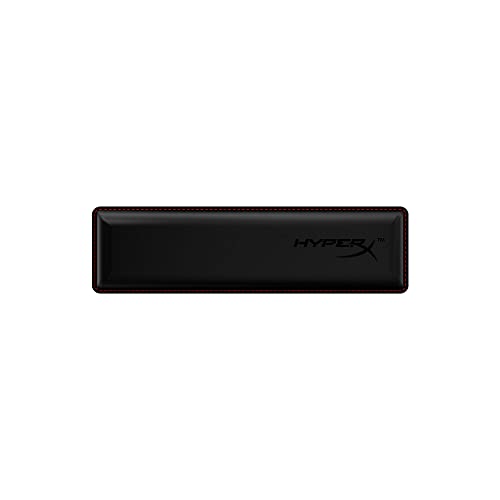
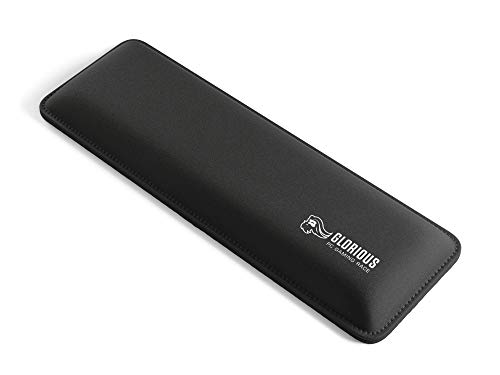
A wrist rest does one simple job - it pads the hard edge of your desk so the heel of your hand has somewhere soft to land between bursts of typing, easing the strain that builds over a long day - but the right one depends on what you are resting and how your hands run. There are a few distinct types. Gel mouse-pad rests are the cheap classic that combine the pad and the support in one piece, like the MROCO and the Fellowes. Thick memory-foam keyboard rests, like the Gimars and the HyperX, run the full width of the board and hold their shape under both wrists. Compact gaming pads like the Glorious are sized for smaller mechanical keyboards. And full-length gel rests like the Kensington Duo Gel bring cooling and a contoured shape to the whole keyboard. After settling the type, it comes down to the fill, the length, the cooling and the surface. This guide covers six wrist rests, each suited to a different hand and desk.
Memory foam or gel - firm and shape-holding, or soft and cool
The biggest single choice is the fill, because it changes how the rest feels and how it lasts. Memory foam, like the 3cm fill in the Gimars set, is firm and supportive - it holds its shape under the weight of your wrists hour after hour and does not flatten quickly, which is what you want for a keyboard hand that sits in one spot all day. Gel, like the MROCO and Fellowes pads, is softer and cooler to the touch, which a lot of people prefer for the mouse hand, but it is softer underfoot and can flatten over a long life of heavy use where dense foam holds firm. Some rests blend the two - the HyperX puts a cooling-gel layer over memory foam to get firmness and a cooler surface together. There is no single best fill: pick firm foam for shape-holding support, gel for a softer cooler feel, or a foam-and-gel blend if you want both.
Keyboard rest, mouse pad or a full combo set
The next question is what you are actually resting, because the format follows from it. A keyboard wrist rest, like the Gimars, the HyperX and the Kensington, runs the full width of the board and supports both wrists while you type. A mouse-pad-with-wrist-rest, like the MROCO and the Fellowes, combines the mouse surface and the wrist support in one piece for the mouse hand only, so you do not need a separate mouse pad as well. And a full combo set, like the Gimars three-piece, gives you a keyboard rest, a separate mouse rest and a coaster in one box, so both hands and the desk are sorted at once. Work out whether the strain is in your typing hand, your mouse hand or both, then buy the format that covers it - there is no point buying a keyboard rest if the ache is all in your mouse wrist.
Match the length to your keyboard
This is the most-missed step, and getting it wrong is the most common regret. A keyboard wrist rest should match the width of your keyboard - a full-size board wants a full-length rest, while a compact 60 to 75 percent mechanical board wants a compact rest like the Glorious that lines up with it instead of overhanging the desk on either side. The full-length Gimars and Kensington rests suit a standard or full-size keyboard, where they span both wrists evenly. If you put a long rest in front of a tiny board it juts out and looks wrong, and if you put a short rest in front of a full-size board your outer wrists fall off the end of it. Measure your keyboard width before you buy, and match the rest to it - it is the difference between a rest that disappears under your hands and one that annoys you every day.
Cooling - does your hand run hot
If your hands sweat or the room runs warm, the surface temperature of the rest matters more than you would think. Plain memory foam can feel warm and trap heat against a hand that sits on it for hours. Gel runs cooler to the touch, which is one reason people pick a gel pad like the MROCO for the mouse hand. A couple of these go further - the HyperX layers cooling gel over its foam for a cooler top surface, and the Kensington Duo Gel has a ventilation channel running through it that lets air move under your hands. If hot or sweaty hands are a real problem for you, lean toward a gel or a cooling-gel rest rather than solid foam, and accept the small trade that gel is a touch softer than dense foam for that lower temperature.
Surface, seams and the non-slip base
The build details decide how a rest holds up to daily use. The cover matters - a smooth Lycra or fabric top like the MROCO feels good under a dragging wrist, while a wipe-clean stain-resistant surface like the Fellowes suits a busy or shared office desk. Seams are the usual failure point: fray-resistant stitched edges, like on the HyperX, last where cheap seams split first, and a dual-lock stitched frame like the Glorious keeps the foam contained so it holds its shape. And the base needs to grip - a non-slip or non-skid base, which all of these have, keeps the rest planted so it does not creep across the desk while you type or move the mouse. None of this is glamorous, but on a thing your wrists touch all day, the cover, the seams and the grip are what separate a rest that lasts from one that frays and slides.
How to actually use a wrist rest
One ergonomic point matters more than any product choice: a wrist rest is for resting your hands between bursts of typing, not for planting your wrist on while you type. If you anchor your wrist on the rest and type from there, you bend the wrist and put pressure on it, which is the opposite of what you want. The right way is to keep your wrists floating and roughly level while you type, with your forearms doing the moving, and let the rest catch the heel of your hand in the pauses - so it takes the load off when you stop, rather than forcing a bent-wrist posture while you work. This is why fill firmness matters: a rest that supports the heel of the hand at about the height of the keyboard helps keep the wrist straight in those rests. Buy the right rest, then use it as a place to pause, not a place to pin your wrist down.
Our verdict
For most people the Gimars 3cm Memory Foam Keyboard Wrist Rest Set is the smart buy, it is the most reviewed product in this category by a wide margin, a thick foam keyboard rest that comes as a three piece set with a mouse rest and a coaster, which is why it is our pick. If you only need to soften the mouse hand and want to spend the least, the MROCO Gel Mouse Pad Wrist Rest is a soft gel pad with a Lycra cover. If your hands run hot, the HyperX Wrist Rest blends memory foam with cooling gel. For a compact mechanical board the Glorious Wrist Pad is sized for 60 to 75 percent keyboards. And for a heritage office piece, the Fellowes Gel Mouse Mat is a self adjusting gel mat, while the Kensington Duo Gel is the premium full length keyboard rest with a cooling ventilation channel.
Frequently Asked Questions
Should I get a memory-foam or a gel wrist rest?
It depends on your hands and what you are resting. Memory foam, like the 3cm fill in the Gimars set, is firm and holds its shape under your wrists hour after hour, which suits a keyboard hand that sits in one spot all day. Gel, like the MROCO and Fellowes pads, is softer and cooler to the touch, which many people prefer for the mouse hand, but it is softer and can flatten over a long life of heavy use. If you want both, the HyperX layers cooling gel over memory foam. There is no single best fill - firm foam for shape-holding support, gel for a softer cooler feel.
Do I need a keyboard wrist rest, a mouse rest, or both?
Work out where the strain is first. A keyboard wrist rest like the Gimars, HyperX or Kensington runs the full width of the board and supports both wrists while you type. A mouse pad with wrist rest like the MROCO or Fellowes covers the mouse hand only. If the ache is in both, the Gimars comes as a three-piece set with a keyboard rest, a mouse rest and a coaster in one box. Buy the format that covers where your strain actually is, not just the one you saw first.
How do I match a wrist rest to my keyboard size?
Match the rest length to the keyboard width - it is the most-missed step. A full size board wants a full length rest like the Gimars or Kensington that spans both wrists evenly. A compact 60 to 75 percent mechanical board wants a compact rest like the Glorious that lines up with it rather than overhanging the desk. A long rest in front of a tiny board juts out and looks wrong, and a short rest in front of a full-size board lets your outer wrists fall off the end. Measure your keyboard width before you buy and match the rest to it.
What wrist rest is best if my hands run hot or sweaty?
Lean toward gel or a cooling-gel rest rather than solid foam. Gel runs cooler to the touch, which is why a gel pad like the MROCO suits a warm mouse hand. The HyperX layers cooling gel over its foam for a cooler top surface, and the Kensington Duo Gel has a ventilation channel running through it that lets air move under your hands. The small trade is that gel is a touch softer than dense memory foam, so you give up a little firmness for the lower temperature - a fair swap if hot hands are your real problem.
How are you supposed to use a wrist rest properly?
A wrist rest is for resting your hands between bursts of typing, not for planting your wrist on while you type. If you anchor your wrist and type from there, you bend the wrist and put pressure on it, which is the opposite of the point. Keep your wrists floating and roughly level while you type, with your forearms doing the moving, and let the rest catch the heel of your hand in the pauses. A rest that supports the heel of the hand at about keyboard height helps keep the wrist straight - so use it as a place to pause, not a place to pin your wrist down.
Will a gel wrist rest flatten or wear out over time?
Gel is softer than dense memory foam and can flatten over a long life of heavy use, where firm foam like the 3cm fill in the Gimars holds its shape longer. That said, build quality matters as much as fill, fray resistant seams like on the HyperX and a dual lock stitched frame like the Glorious keep the foam contained, and a stain resistant wipe clean surface like the Fellowes lasts in a busy office. If you want the longest-lasting shape-holding support, choose firm memory foam; if you prefer the softer cooler feel of gel, expect it to give a little over years.
Are expensive wrist rests worth it over a cheap one?
Sometimes, but be clear on what the extra buys. The MROCO shows a cheap gel pad can do the core job well, with 30,587 ratings behind it. Paying more gets you specific things, not a different category: the Fellowes adds self adjusting gel and a wipe clean office build, and the Kensington adds a full length gel rest with a cooling ventilation channel and a contoured shape. Our overall pick, the Gimars set, sits in the middle and is the most reviewed of all. Spend up for cooling, a heritage build or a contoured shape - otherwise a good cheap rest is plenty.
Found this helpful?
Check out more guides for new homeowners.