Floor pump, mini pump or electric? That is the real question
Before you compare a single spec, decide where you will use the pump, because that splits this whole category three ways. A floor pump, also called a track pump, stands on the ground with a big gauge and a long stroke, so it gets your tyres to high pressure quickly and accurately - it is the one that lives at home and does the everyday inflating. A mini or hand pump is the tiny one that clips to your frame or lives in the saddlebag for roadside flat fixes; it will get you home but takes real effort to reach full pressure. An electric pump inflates hands-free to a pressure you set, then stops itself. Get that one decision right and the rest is easy.
The other thing to check on any pump is valves and pressure. Bikes use either Presta valves, the slim ones on road and performance bikes, or Schrader valves, the fatter car-style ones on many kids and mountain bikes, so make sure the pump fits both, as every pick here does. Then check it reaches the pressure your tyres need: road tyres often want 80 to 130 PSI, while mountain tyres run much lower. The six picks below include the Tiakia mini pump and the Bosch electric EasyPump, covering all three jobs. For the car in the driveway, a 12V tyre inflator is the tool, not a bike pump.
Tiakia 260PSI Mini Bike Pump
If you just want a cheap pump to carry for emergencies, the Tiakia is the entry point. It is the cheapest pick here, and it does the saddlebag job properly: an anodised aluminium alloy body that reaches a genuinely high 260 PSI for a hand pump, a dual head that fits Presta, Schrader and Dunlop valves, and a weight of only about 150 grams so it disappears into a bag or under a bottle cage.
The included bracket clips it to the frame, so it is always with you when a tyre goes soft on a ride. It has more than 6,600 ratings. The honest limit is the one that applies to every mini pump: reaching full pressure by hand takes many strokes and a fair bit of effort, so this is a get-you-home tool rather than a replacement for a floor pump at home.
CyclingDeal Floor Pump with Gauge
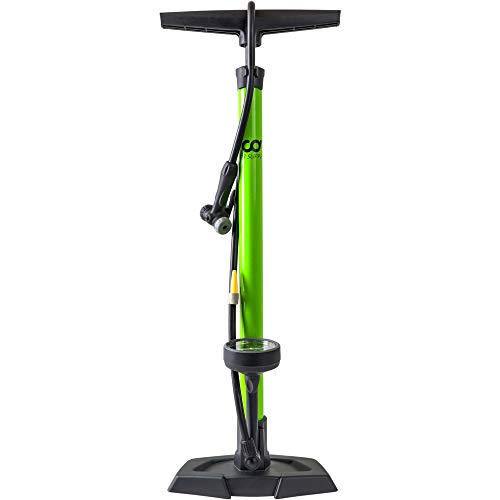
The CyclingDeal is the floor pump to pick if you want a locally sold all round pump for home. It is sold on Amazon Australia by CyclingDeal, a Melbourne bike retailer, and it covers the everyday jobs: a large gauge marked in PSI and bar that reads to 160 PSI, well past what any road or mountain tyre needs, and a Rapid T valve head that seals onto Presta and Schrader valves with a flick of a switch.
The extra long hose pivots through 360 degrees, which makes awkward valve positions easy, and the box includes a ball needle and an inflatable nozzle for sports balls and pool toys. CyclingDeal backs it with a two year warranty and the pump is made in Taiwan. There is no puncture kit in the box, so buy patches separately if you want them, and owner feedback is more limited than for the big name pumps here. For a first proper home pump from an Australian seller, it is the one to get.
GIYO 2-Stage Mini Pump with Gauge
The GIYO is the mini pump to pick if you want roadside accuracy. Where most saddlebag pumps make you guess at pressure, this one carries its own gauge that reads up to 120 PSI, so you can actually dial in a sensible pressure after a flat rather than pumping blind. Its two-stage barrel twists between a high-volume mode that fills a flat tyre fast and a high-pressure mode that finishes the job.
The valve lock lever clamps firmly onto Presta or Schrader valves so air does not leak away as you pump, and the Taiwan-made body clips to the frame with the included mount. The honest caveat is the small review base of just over 120 ratings, far fewer than the floor pumps here, so there is less long-term feedback to lean on - though the on-board gauge is a genuine advantage for a saddlebag pump.
Topeak Joe Blow Sport III Floor Pump
The Joe Blow Sport III is the floor pump to pick if you want the trusted name in cycling pumps, and this is the listing sold by Amazon AU rather than an overseas store. Topeak pairs a painted steel barrel with a hardened steel base for a stable, durable platform, and the large gauge reads clearly to 160 PSI so you can read the pressure clearly.
The TwinHead DX connector takes Presta, Schrader and Dunlop valves with no fiddly head-swapping, and the hose stays tangle-free between uses. It is the do-it-once home pump that simply lasts. The review count here is pooled globally rather than Australia-only, so treat it as broad sentiment, but for a floor pump that earns its keep year after year this is the one to beat.
Topeak JoeBlow Max II Floor Pump
The JoeBlow Max II is the twin head Topeak alternative for households that pump tyres often. Its gauge runs to a listed 120 PSI.
Ships from and sold by Amazon UK. The twin head seals onto both Presta and Schrader valves, covering road, gravel and mountain bikes without adapters. The honest trade offs are clear: it is an overseas listing rather than a local one, so check the delivery estimate at checkout, its gauge tops out at a lower 120 PSI rather than 160, and the review count is pooled globally rather than Australia only. Buy it for the twin head and the Topeak build, not for a higher pressure ceiling.
Bosch Cordless Electric Air Pump
The Bosch EasyPump is the premium, effortless pick for anyone done with pumping by hand. It is a cordless, rechargeable compressor: you set a target pressure, press start and walk away, and it inflates up to 150 PSI with real-time measurement before the autostop function cuts off the instant your tyre hits the number. That means no over or under-inflating and no counting strokes.
It is not just for bikes either - it handles car and motorcycle tyres, balls and small water-sports gear, charges over USB-C and packs into a soft bag with French-valve and ball adapters. With more than 23,100 ratings it is heavily field-tested, though that figure is pooled globally rather than Australia-only. The honest caveat is that this is a battery pump you have to keep charged, not a simple grab-and-go floor pump, so it trades a little reliability-of-readiness for a lot of convenience.
How to match the pump to how you will use it
The biggest mistake is buying one pump and expecting it to do every job. If you mostly inflate tyres at home before a ride, a floor pump like the CyclingDeal or either Topeak is the right buy: the big gauge and long stroke get you to pressure quickly and accurately, and you will reach for it far more than you expect. If your worry is flats out on the road or trail, that is a separate purchase: a mini pump like the Tiakia or GIYO that clips to the frame and weighs almost nothing. Many riders sensibly own both, since a good home floor pump and a small saddlebag pump together cost less than one premium tool.
If pumping by hand is the part you dislike, the electric Bosch changes the experience entirely - set the pressure, let it run, done. It is the answer for anyone with sore wrists, several vehicles and bikes to keep inflated, or simply no patience for stroke-counting. Just remember it needs charging, so it suits a household that will keep it topped up rather than someone who wants a tool that is always ready with zero upkeep.
Valves and pressure: the two specs that catch people out
Two details cause most of the regret with bike pumps, and both are easy to check first. The first is valve type. Bikes use either Presta valves, the slim, threaded ones on road and performance bikes, or Schrader valves, the fatter car style ones common on kids and entry level mountain bikes. A pump that only fits one will leave you stranded, which is why every pick here handles both, whether through a switchable head like the CyclingDeal or a TwinHead like the two Topeaks. If you are unsure which your bike has, look at the valve: thin with a small lock nut is Presta, thick like a car tyre is Schrader.
The second is maximum pressure. Check the number printed on your tyre sidewall and make sure the pump can reach it with headroom to spare. Road tyres often want 80 to 130 PSI, gravel and hybrid tyres sit lower, and mountain tyres run lower still. The JoeBlow Max II and GIYO are listed to 120 PSI, so check that a pump's rated maximum covers the pressure on your tyre sidewall. The Tiakia's 260 PSI ceiling is generous for a hand pump, but a low-pressure pump on a high-pressure road tyre is a recipe for frustration, so always match the pump's ceiling to your tyres.
Frequently Asked Questions
Floor pump or mini pump - which should I buy?
It depends on where you will use it. A floor pump, or track pump, stands on the ground with a big gauge and a long stroke, so it gets tyres to high pressure quickly and accurately - it is the one that lives at home for everyday inflating. A mini or hand pump is the tiny one that clips to your frame for roadside flat fixes; it will get you home but takes real effort to reach full pressure. If you mostly inflate at home, buy a floor pump; if you ride and worry about flats, also carry a mini pump. Many riders own both.
Do these pumps fit both Presta and Schrader valves?
Yes, every pump in this guide handles both Presta and Schrader valves, which are the two types you will meet on bikes. Presta valves are the slim, threaded ones on road and performance bikes, while Schrader valves are the fatter car style ones on many kids and entry level mountain bikes. Some pumps use a switchable head, like the CyclingDeal's Rapid T valve, and others use a single dual head, like the TwinHead on the Topeaks. If you are unsure which valve your bike has, a thin valve with a small lock nut is Presta and a thick one like a car tyre is Schrader.
What pressure do I need to pump my bike tyres to?
Check the number printed on your tyre sidewall, as it varies a lot by tyre type. Road tyres often want roughly 80 to 130 PSI, gravel and hybrid tyres sit lower, and mountain tyres run lower still, sometimes well under 35 PSI for grip. Always inflate within the range marked on the tyre rather than to the pump's maximum. The JoeBlow Max II and GIYO are listed to 120 PSI, so check that a pump's rated maximum covers the pressure on your tyre sidewall. A clear gauge, as on the CyclingDeal, both Topeaks and the Bosch, makes it easy to hit your target exactly.
Are electric bike pumps worth it?
For some riders, very much so. An electric pump like the Bosch EasyPump inflates hands-free to a pressure you set, then stops itself automatically, so there is no stroke-counting and no over or under-inflating. It suits anyone with sore wrists, several bikes and vehicles to keep topped up, or simply no patience for hand-pumping, and it doubles as a compressor for car tyres, balls and inflatables. The honest trade-off is that it is a battery tool you must keep charged, so it is best for a household that will maintain it rather than someone who wants a pump that is always ready with zero upkeep.
Can you fully inflate a road tyre with a mini pump?
You can, but it takes effort and patience. Mini pumps like the Tiakia and GIYO are designed for roadside fixes, so getting a high-pressure road tyre up to full pressure means many strokes and some hard work, and the result is often a little softer than a floor pump achieves. They are a get-you-home tool, not a daily driver. For comfortable, accurate inflating at home, a floor pump is far less effort, which is why the smart setup is a floor pump on the wall and a mini pump in the saddlebag.
What does a high PSI rating on a pump actually mean?
The PSI rating is the maximum pressure a pump can reach, not the pressure you should use. A higher ceiling, like the Tiakia's 260 PSI or the floor pumps' 160 PSI, simply means the pump has headroom to inflate high-pressure tyres without running out of capability. What matters is that the pump's maximum comfortably exceeds the pressure printed on your tyre, with some margin to spare. You then inflate to the tyre's recommended range, reading the gauge, rather than chasing the pump's top number.
Do I need a gauge on my bike pump?
For a home floor pump, a gauge is genuinely useful - it lets you hit your tyre's recommended pressure exactly rather than guessing, which improves comfort, grip and puncture resistance. All three floor pumps here and the Bosch electric pump have clear gauges. On a mini pump a gauge is a nice extra rather than essential, since roadside inflation is about getting rolling again; the GIYO is unusual in carrying one, while the tiny Tiakia leaves it off to stay compact. If you only buy one gauge, put it on the pump you use most, which is usually the floor pump.