Single-burner, twin-burner or boil system? That is the real question
Before you compare a single BTU figure, work out how you will actually cook. That answer splits the whole category three ways. A compact single-burner or backpacking stove is light, packs tiny and screws straight onto a gas canister - perfect for solo and couple trips where weight matters. A twin-burner is the heavy, fold-up box that car campers love, because two burners let you cook a full meal for the family - eggs in one pan while the billy boils in the other. And an integrated boil system, the Jetboil style, locks the pot to the burner so it boils water extremely fast, which is exactly what you want for brews and dehydrated meals on the trail.
The six picks below run from Coghlan's folding stove up to the Coleman Fyreknight twin burner, and they map cleanly onto that split. A camping chair is the other thing bought on the same trip. Match the stove to whether you are hiking in light, feeding a family at a campsite, or just boiling water fast - and you will not carry more, or spend more, than you need.
Coghlan's Folding Camp Stove
If you want the smallest, lightest, cheapest stove that exists, the Coghlan's folding stove is it. It is the bargain pick, and it folds dead flat into a pocket of your pack, which makes it the natural choice for an emergency kit, a glovebox or an ultralight trip where every gram counts. Instead of gas canisters it burns fuel cubes, Camp Heat or solidified alcohol, so there is nothing to leak and nothing to break.
The coated-steel frame gives a steady platform for a small to medium pot, and with more than 5,400 ratings behind it this is comfortably the most-reviewed stove in the guide. The honest trade-off is power: this is a slow, low-output stove for boiling water and heating simple meals, so treat it as a back-up or featherweight option rather than your main cooking setup.
Coleman Peak1 Single-Burner Stove
The Coleman Peak1 is the value pick and the one most solo hikers and couples should look at first. It is a compact single-burner from the biggest name in camping, and it punches well above its size: around 10,000 BTU of cooking power that boils a litre of water in about 3.25 minutes, with Perfect Flow technology to hold the flame steady when the wind picks up.
At just 190 grams it is light enough to carry hike-in, yet stable enough to cook on properly, and it takes a 6 inch pan. The honest limit is the one shared by every single-burner: you cook one pot at a time, which is plenty for two people but tight if you are trying to plate up a meal for a family.
Companion Ranger 2-Burner Stove
The Companion Ranger is the budget route into a twin-burner, and a twin-burner is what unlocks proper camp cooking - two independently adjustable burners so you can fry in one pan while the billy boils in the other. It comes with built-in windshields to steady the flames, chrome-plated burners and trivets that wipe clean, and a 1000mm hose to run it straight off a gas cylinder.
That makes it a genuinely capable budget choice for feeding a family at a campsite. The honest caveat is the standout one here: it carries a low 3.4 rating from a very small base of just 8 ratings, so it earns its place as the cheap twin-burner option rather than the recommended one. If you can stretch the budget, the Coleman Fyreknight further down is the far better-reviewed twin-burner.
Jetboil Zip Integrated Stove System
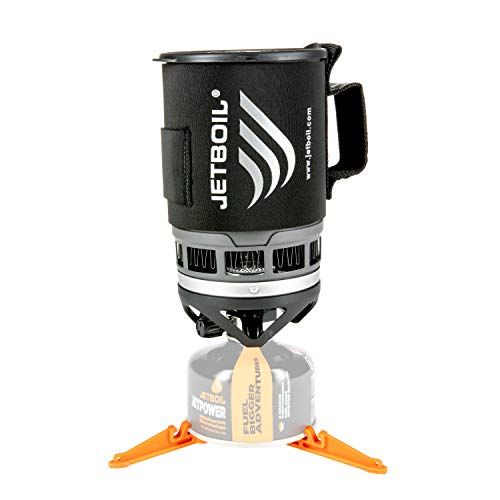
The Jetboil Zip is the pick when your camp cooking is really just boiling water - brews, instant coffee and dehydrated meals on the trail. It is an integrated boil system, which means the FluxRing cooking cup locks straight onto the burner and wraps the 0.8 litre pot in an insulating cozy, so almost all the heat goes into the water rather than blowing away around it. The result is water that boils extremely fast, even when it is cold.
The drink-through lid with its pour spout and strainer means you brew and drink from the same cup, which keeps your kit minimal. The honest caveats are that it lights with a match rather than a push-button igniter, and its adjustable burner is built to boil hard rather than simmer gently, so it heats meals more than it truly cooks them.
Jetboil MiniMo Integrated Stove
The MiniMo is the Jetboil for people who want a boil system that actually cooks. Where the Zip is built to blast water to the boil, the MiniMo's proprietary regulator gives incremental heat control from a light simmer all the way to a full boil, so you can saute greens or reduce a sauce rather than only making hot water. It still reaches a rolling boil in just over two minutes and on about half the fuel of a traditional stove.
Metal handles and a redesigned low-angle cup let you cook and eat from the same pot, and a reliable push-button igniter fires it up without matches. The honest caveat is the price: it costs well over the Zip, so the upgrade only makes sense if you genuinely want to cook real meals on the trail rather than just brew and rehydrate.
Coleman Hyperflame Fyreknight Twin Stove
The Coleman Fyreknight is the premium pick and the stove to choose if you are serious about car camping and cooking proper meals for a family. It is a high-output twin-burner that fits two full 30cm pots side by side, and its standout feature is the removable WindBlock pan supports, which shield the flame from gusts that stall cheaper stoves and waste gas - a real advantage on an exposed Australian campsite.
Built like a piece of luggage, it has a heavy-duty pivoting handle, a locking latch and corner bumpers that shrug off being loaded in and out of a 4WD. The honest caveat is the one that comes with all that capability: it is bulky and heavy, so it is overkill for any hike-in camping where you carry everything on your back - this is a stove that lives in the boot of the car.
How to match the stove to how you will camp
The biggest mistake is buying for a camping trip you imagine rather than the one you take. If you mostly hike in and carry your kit on your back, weight wins: a compact single-burner like the Coleman Peak1, or even the featherweight Coghlan's, is the smart buy, and a 7 kilogram twin-burner would mostly stay home. If you drive to a site and want to cook a full meal for the family, a twin-burner like the Companion Ranger or Coleman Fyreknight is the right call, because two burners and a big stable platform make real cooking possible.
And if your trips are about covering distance with hot food and drink at the end of the day, an integrated boil system like a Jetboil is built for exactly that - it boils fast on little fuel, which matters when you carry every gram of gas. Be honest about which camper you are, because the best stove is the one that matches the way you actually get outdoors.
Gas type, wind and ignition explained
Three practical details decide how a stove behaves in the field. Fuel type comes first: most modern camping stoves run on gas, either screw-on butane and propane canisters for backpacking stoves and Jetboils, or larger refillable cylinders for car-camping twin-burners, while the Coghlan's folding stove uses solid fuel cubes instead. Canister stoves are clean and instant; cylinder stoves give you longer cooking time for a family.
Wind protection is the detail most people overlook and then regret, because a breeze can double your boil time and your fuel use. Integrated systems like the Jetboil shield the flame by design, while the Coleman Fyreknight's WindBlock pan supports and the Companion Ranger's built-in windshields do the same job for twin-burners. Ignition is the last one: a push-button igniter, as on the Coleman Peak1 and Jetboil MiniMo, lights instantly, while match-lit stoves like the Jetboil Zip mean carrying a reliable lighter as back-up.
Frequently Asked Questions
Single-burner, twin-burner or boil system - which should I buy?
It depends on how you camp. A compact single-burner or backpacking stove is light and packs tiny, so it suits solo and couple hike-in trips where weight matters. A twin-burner is the fold-up box car campers use, because two burners let you cook a full meal for a family at a site. An integrated boil system like a Jetboil locks the pot to the burner and boils water extremely fast, which is ideal for brews and dehydrated meals on the trail. Match the stove to whether you are hiking light, feeding a family, or just boiling water. To make your own trail meals, a food dehydrator for hiking food is the other piece of kit.
What gas do camping stoves use in Australia?
Most run on gas in one of two forms. Backpacking stoves and integrated systems like the Jetboil use screw-on butane and propane canisters, which are clean and light. Twin-burner car-camping stoves like the Coleman Fyreknight and Companion Ranger connect to larger refillable LP gas cylinders for much longer cooking time. A few stoves skip gas entirely - the Coghlan's folding stove burns solid fuel cubes or solidified alcohol. Canisters suit hiking, cylinders suit campsites, and solid fuel suits emergency kits.
How fast does a Jetboil boil water?
Very fast, which is the whole point of an integrated boil system. The Jetboil MiniMo reaches a rolling boil in just over two minutes and uses about half the fuel of a traditional stove, because the FluxRing cup locks to the burner and traps the heat rather than letting it escape around the pot. The Jetboil Zip is similarly quick. If your camp cooking is mostly hot drinks and dehydrated meals, that boil speed and fuel efficiency is exactly what you want on the trail.
Can you simmer and cook on a Jetboil, or only boil?
It depends which Jetboil. The Zip is built to boil hard, so it heats meals more than it gently cooks them. The MiniMo is the one to choose if you want to cook properly - its regulator gives incremental heat from a light simmer to a full boil, so you can saute greens or reduce a sauce, not just make hot water. If you only brew and rehydrate, the cheaper Zip is fine; if you want real meals on the trail, pay up for the MiniMo's simmer control.
How important is wind protection on a camp stove?
More important than most people expect. A breeze can double your boil time and burn through fuel, especially on an exposed Australian campsite. Integrated systems like the Jetboil shield the flame by design, while twin-burners handle it with guards - the Coleman Fyreknight uses removable WindBlock pan supports and the Companion Ranger has built-in windshields. If you camp anywhere open or coastal, treat wind protection as a feature worth paying for rather than an afterthought.
What is the best lightweight stove for hiking?
For carrying on your back, weight and pack size decide it. The Coleman Peak1 single-burner is the standout here at just 190 grams, yet it still puts out around 10,000 BTU and boils a litre in about 3.25 minutes. The Coghlan's folding stove is even lighter and packs flatter, though it is far slower and lower-powered. Integrated systems like the Jetboil are a little heavier but win on fuel efficiency. For most hikers a compact single-burner like the Peak1 is the sweet spot.
Do I need a twin-burner camp stove?
Only if you cook full meals for more than one or two people. A twin-burner lets you run two pots at once - frying in one pan while the billy boils in the other - which makes cooking a real family meal at a campsite far easier. The trade-off is size and weight: stoves like the Coleman Fyreknight are bulky and heavy, so they live in the boot of the car. If you hike in or only feed one or two, a single-burner or boil system is the smarter, lighter choice.