The three power types: who each one suits
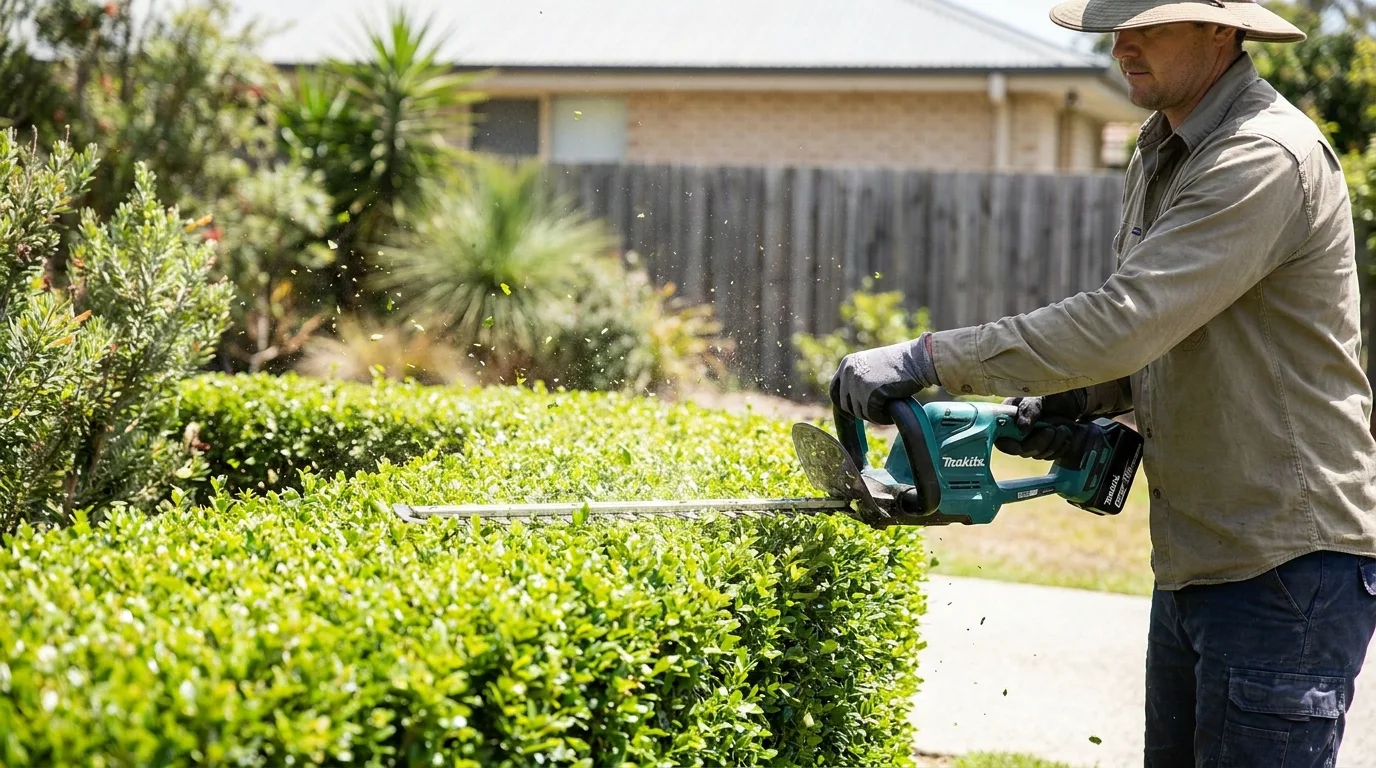
A hedge is one of the best things in an Australian garden: a living fence for privacy, a windbreak, a bit of green to soften the boundary. But left alone it sprawls, blocks paths and windows, and turns scruffy. A hedge trimmer turns an afternoon of secateur work into a much shorter job, and a tidy hedge instantly lifts the whole yard. The hard part is the choice: corded, cordless or petrol, a short blade or a long one, and a wall of brands all promising the cleanest cut. We've cut through it with three headline picks for three real situations: a corded budget all rounder, a cordless kit for the typical suburban hedge, and a powerful brushless cordless for big, thick growth. Three compact handheld cordless trimmers also sit in the product cards for light shrub and grass work.
Before you look at any brand, work out which type of trimmer fits your hedge. There are three, and the right one depends mostly on how big and how thick your hedge is, and whether you're happy to work near a power point.
Corded electric: cheapest, lightest, always ready
A corded trimmer plugs into a wall outlet through an extension lead and never runs out of charge. You get the lowest price, the lightest weight, and unlimited runtime with no battery to buy, charge or replace as it ages, so it's always ready to go. The trade-off is the cord: you're limited to the reach of your extension lead, and you have to keep the lead clear of the moving blade as you work (run it over your shoulder, away from the cutting edge). Best for a small-to-medium hedge within reach of a power point.
Cordless battery: the convenient mainstream choice
Cordless trimmers run on a rechargeable lithium battery, so you can walk the whole hedge line, around the side of the house and down to the back fence with no cord to drag or mind. They're the mainstream pick for most suburban gardens. The limits are real but manageable: runtime is finite, and you have to watch the bare-tool-vs-kit trap (more on that below), because the battery often adds a chunk to the price. Best for most suburban hedges where convenience matters.
Petrol: maximum power, but heavy, loud and high-maintenance
Petrol trimmers deliver the most raw power and unlimited runtime, which is why landscapers reach for them on very large properties and thick, overgrown hedges. For a typical suburban home, though, petrol is overkill: they're heavy, very loud, need fuel mixing and regular servicing, and produce fumes. Unless you're managing a long boundary on acreage, you almost certainly don't need one. A good corded or cordless trimmer will do everything a suburban hedge asks.
Best budget: BLACK+DECKER 600W 60cm corded
If you've got a standard suburban hedge near a power point and you don't want to think about batteries at all, this is the value buy. The BLACK+DECKER 600W is a corded trimmer with a long 60cm dual-action blade, and because it's mains-powered, there's no battery to charge before you start or replace in a few years, and the runtime is unlimited. It's lightweight and ergonomic for the price, and the dual-action blade keeps vibration down so your hands aren't buzzing after a long session.
The clever bit is the SawBlade tip: a standard hedge trimmer cuts soft growth up to around 25mm, but this one adds a saw section that cuts branches up to 35mm thick, so you can deal with the odd woody stem without swapping to loppers. The honest catch is the cord: you're tied to the reach of your extension lead, and you must keep the lead clear of the blade as you move along the hedge. For a small-to-medium hedge you can reach from one or two outlets, it's the no-fuss, always-ready pick. It pairs naturally with a corded or cordless lawn mower for a tidy front yard.
Best overall: Bosch EasyHedgeCut 18-45 cordless kit
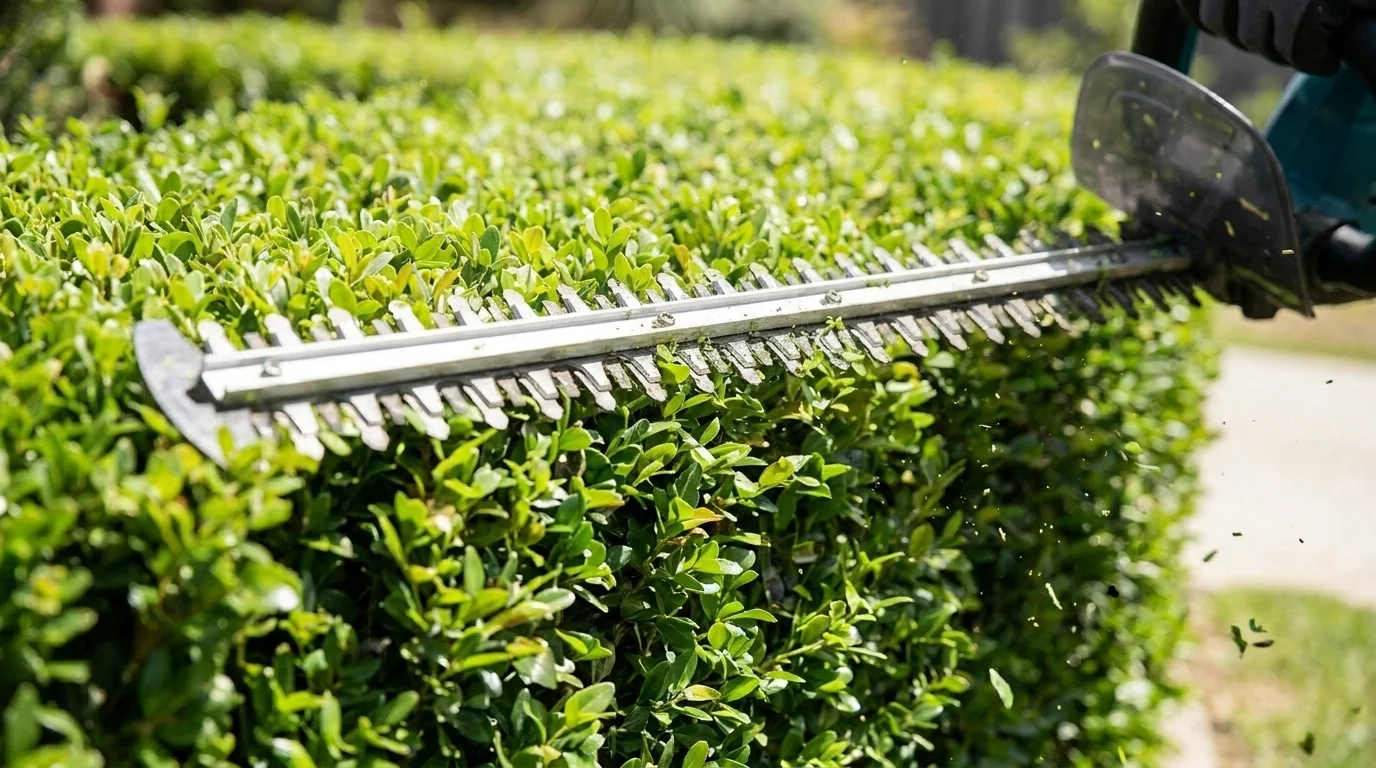
For the typical suburban hedge (lilly pilly along the fence, a murraya screen, a box border), this is the one we'd buy. The Bosch EasyHedgeCut 18-45 is a cordless 18V trimmer with a 45cm blade and 15mm tooth spacing, which is exactly right for light, regular trimming and shaping. Bosch's Anti-Blocking System helps it power through the occasional jam rather than stalling, and at 45cm it's light and easy to control for detail work and tidy lines.
The reason it's our best-for-most pick is simple: it's cordless, so there's no cord to drag or keep clear of the blade, and it ships as a complete kit. The 18V battery and the GAL 1810 CV charger are included in the box, so unlike many recognised-brand cordless trimmers there's nothing extra to buy. It runs the day it arrives. It's also part of the Bosch POWER FOR ALL 18V system, which means the battery is shared across Bosch's 18V garden and DIY range. If you already own a Bosch 18V drill or grass trimmer, that battery drops straight in; if you're starting here, the battery you get works in those tools too. Once the hedge is done, a leaf blower clears the clippings off the path in a couple of minutes.
Bosch's published technical data for the EasyHedgeCut 18-45 lists a 45 cm blade, a 15 mm tooth opening and a weight of 2.300 kg, powered by an 18 V battery of 2 Ah.
For a big, thick or overgrown hedge (a long conifer screen, mature photinia, a hawthorn or berberis run that's got away from you), the Bosch AdvancedHedgeCut 36V-65 is the premium pick. It runs a brushless motor on Bosch's 36V POWER FOR ALL platform, with a longer 65cm bar that trims tall hedges in fewer passes and the grunt to cut thick branches up to 28mm. Bosch rates its cutting speed as equivalent to a corded tool, and its Syneon power-and-endurance management squeezes useful runtime and power out of the 36V pack, so you get corded-level pace without the cord. It also carries the Anti-Blocking System to push through jams. It's made in Europe and built for serious, regular work.
Be clear on one thing before you buy: this is sold as a bare tool. The 36V battery and charger are not included. A 36V 2.0Ah or 4.0Ah starter kit is an extra purchase. Note too that the 36V tools use a separate 36V battery, not the 18V pack from the EasyHedgeCut, so an existing 18V battery won't run this one. If you're already in the Bosch 36V system, that's exactly why it's priced this way and it's great value; if you're starting from scratch, budget for a battery and charger on top of the body price. The honest case for this pick is a large or heavy hedge where reach and thick-branch power matter. It is not the cheapest way in, but the most capable cordless trimmer here. It slots in alongside other Bosch tools like a cordless drill.
What about Ozito, Ryobi, Makita and Stihl?
Those four are what Australians actually search alongside this category, and they are worth knowing even though we do not pick one. Ozito is the Bunnings house brand and the cheapest way into a battery platform if you already own Ozito tools. Ryobi is the other Bunnings platform, one step up. Makita and Stihl are the trade names: the Makita DUH507Z is sold as a bare tool at Total Tools, and the Stihl HSA 45 through Stihl dealers. All four are sold through Australian shopfronts rather than Amazon AU, which is why our main picks are BLACK and DECKER and Bosch. If you already own batteries in one of those systems, buy the bare tool that matches it and ignore everything else on this page.
Is a hedge cutter the same thing as a hedge trimmer?
Yes. In Australia the retail word is trimmer and the trade word is cutter, and the machines behind both words are identical: a powered reciprocating blade for shaping soft hedge growth. Hedge shears are the manual, two-handed version, and loppers or a pruning saw are what you use once a stem is thicker than the trimmer rates.
This is the single biggest trap when you buy a cordless garden tool, so it's worth slowing down on. Cordless tools are sold two ways, and the same tool often sells both ways at very different prices:
- Kit: includes a battery and charger and works out of the box. Our Bosch EasyHedgeCut 18-45 is a kit (battery and charger in the box), so it runs the moment it lands.
- Bare tool (or skin): the tool body only, no battery and no charger, on the assumption you already own a compatible battery from another tool in the same system. Our premium Bosch 36V is a bare tool.
The catch is that a bare-tool listing always looks cheaper, because you're only paying for the body. If a cordless price looks surprisingly low, it's almost always a skin. Check the listing carefully for the words battery included, kit, or body only before you buy, and add the cost of a battery and charger if it's a bare tool. Getting this wrong is how people end up with a trimmer they can't use until a second parcel arrives.
The Bosch POWER FOR ALL Battery System
One reason we lean Bosch for the cordless picks is the battery ecosystem. Bosch's POWER FOR ALL 18V batteries are shared across Bosch's 18V garden and DIY tools, so a battery from a Bosch 18V grass trimmer, blower or drill drops into the 18V hedge trimmer and back out again. Build one battery system and you stop paying for a battery with every tool. The marginal cost of the next tool is just the bare body. The one thing to keep straight: the 36V tools (like our AdvancedHedgeCut) use a separate 36V battery, so the 18V and 36V packs are not interchangeable. Decide which platform you're building on and stick to it.
What to Look For in a Hedge Trimmer (Australia)
Once you've settled on a power type, these are the features that actually matter on the hedge.
- Blade (bar) length. A longer bar (55 to 65cm) trims a big hedge in fewer passes and gives a flatter, straighter line on long runs. A shorter bar (around 45cm) is lighter, easier to control, and better for small shrubs, tight corners and detail shaping. Match the length to the size of your hedge, not the biggest number on the box.
- Tooth spacing and branch-cut capacity. Wider tooth spacing plus more power cuts thicker stems. A trimmer with 15mm spacing is built for light, leafy trimming; a more powerful tool can chew through 28mm woody branches. If your hedge has thick growth, buy for the thick branches, not the leaves.
- Anti-blocking / anti-jam system. A good system either reverses the blade briefly or powers through when a thick stem jams it, instead of stalling and leaving you to clear it by hand. Both Bosch picks here have it.
- Weight and balance. You hold a hedge trimmer up at shoulder height, often at arm's length, so a lighter, well-balanced tool is far less tiring over a long hedge. This matters more than most buyers expect. Weigh it in your hands if you can.
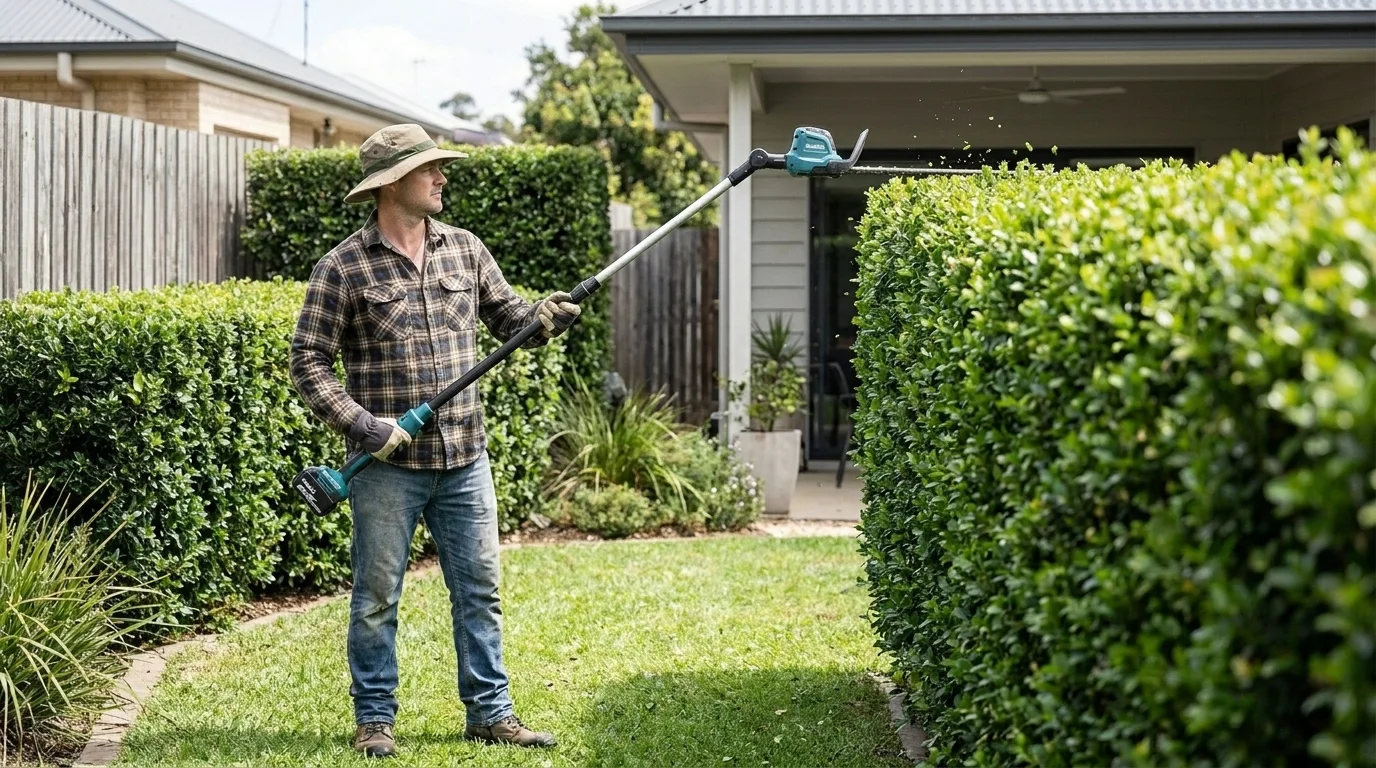
- Pole / telescopic option for tall hedges. If you can't safely reach the top of the hedge from the ground, a pole (telescopic) hedge trimmer extends your reach to roughly 2.6m and lets you trim the top while keeping both feet planted, far safer than balancing a trimmer on a ladder.
- Safety features. Look for a two-handed safety switch (the tool only runs when both hands are on it) and a blade brake that stops the blade quickly when you release the trigger. Dual-action blades also cut vibration, which saves your hands and arms on a long session.
Which Hedge Trimmer for Your Hedge?
A quick way to match the pick to your place:
- Small to medium hedge near a power point, no batteries wanted: the corded BLACK+DECKER (cheapest of the three headline picks, always ready, unlimited runtime, and the saw blade tip handles the odd thick stem).
- Typical suburban hedge, want cordless convenience: the Bosch EasyHedgeCut 18-45 kit (battery and charger included, light and easy, and it shares batteries with your other Bosch 18V tools).
- Big, thick or overgrown hedge: the Bosch AdvancedHedgeCut 36V-65 (longer bar, brushless power, cuts 28mm branches). Just budget for the 36V battery and charger, as it's a bare tool. For the stems no trimmer should take, keep a pair of secateurs on your belt.
- Long boundary on acreage or very heavy, woody growth: a petrol trimmer for the raw power and unlimited runtime. Overkill for everyone else.
Small shrubs, edging and light grass work: one of the compact handheld cordless trimmers in the product cards is enough, but know their limits. The WORKPRO listing gives a maximum cutting thickness of 7.8mm for its hedge blade, against the 25mm a standard hedge trimmer handles and the 25mm of the BLACK+DECKER (35mm with its saw blade tip), the 28mm of the larger Bosch and the 15mm tooth spacing of the Bosch 18V crown model above. For a hedge of any size, buy a full size trimmer.
An Australian Note on Timing and Safety
Australian hedges (lilly pilly, murraya, photinia, box and conifers are the common ones) can take a light tidy almost year-round, but the main shaping trims are usually done after the spring and summer growth flush. Late winter and early spring are good times for a tidy up, and a sensible time to buy, so you are ready before the growing season kicks off. A couple of honest trade-offs to keep in mind: corded ties you to a power point and you must mind the lead; cordless runtime is finite and the bare-tool trap adds hidden cost; and petrol is genuinely overkill for a suburban block. Most important, for a tall hedge you can't safely reach from the ground, use a pole trimmer or call in a professional rather than balancing on a ladder with a running blade. It's not worth the fall. While you're sorting the garden kit, our garden hose guide and pressure washer guide round out the rest of the backyard setup.
How we picked
We chose the three headline picks from Amazon AU listings for corded, cordless kit and bare tool hedge trimmers, and added three compact handheld cordless trimmers from the same category. For each one we read the Amazon AU listing for blade length, branch capacity, what is in the box and who sells it, and we compared those details with Bosch's published technical data and the maker descriptions on the listings. Star ratings and review counts come from the Amazon AU listings. We have not bench tested these trimmers ourselves.
Last checked: 14 October 2026, covering the stock, seller and rating of every listing on Amazon Australia.
Frequently Asked Questions
What is the best hedge trimmer in Australia for 2026?
For most suburban gardens, the Bosch EasyHedgeCut 18-45 is the best all rounder. It's cordless with no cord to drag, it ships as a complete kit with the 18V battery and charger included, and the 45cm blade handles light, regular trimming of lilly pilly, murraya and box hedges. For a budget buy near a power point, the BLACK+DECKER 600W 60cm Corded trimmer gives unlimited runtime and a saw blade tip that cuts branches up to 35mm, while the Bosch AdvancedHedgeCut 36V-65 (bare tool) suits big, thick or overgrown hedges.
Are corded, cordless or petrol hedge trimmers better?
It depends on your hedge. Corded electric trimmers are the cheapest and lightest, with unlimited runtime and no battery, but you're tethered to a power point and must keep the lead clear of the blade. Cordless battery trimmers give you freedom to roam the whole hedge with no cord, which is why they're the mainstream choice, though runtime is finite and you must watch the bare-tool-vs-kit trap. Petrol delivers the most power and unlimited runtime for very large or overgrown hedges, but it's heavy, loud and high-maintenance, and overkill for a typical suburban block.
What blade length do I need on a hedge trimmer?
Match the blade length to the size of your hedge. A longer bar of 55 to 65cm trims a big hedge in fewer passes and gives a flatter, straighter line on long runs, which is why our premium pick uses a 65cm bar. A shorter bar of around 45cm is lighter, easier to control and better for small shrubs, tight corners and detail shaping. That's why our best-for-most Bosch uses a 45cm blade. Don't just buy the longest blade; a heavy long bar is tiring to hold up over a small hedge.
What is the difference between a bare tool and a kit?
A kit includes a battery and charger and works straight out of the box. Our Bosch EasyHedgeCut 18-45 is a kit, so it runs the day it arrives. A bare tool, sometimes called a skin, is the tool body only with no battery or charger, on the assumption you already own a compatible battery from another tool in the same system. Our premium Bosch 36V is a bare tool. The same tool often sells both ways, and a bare-tool listing always looks cheaper because you're only paying for the body. If a cordless price looks surprisingly low, it's usually a skin, so always check before you buy.
Can a hedge trimmer cut thick branches?
It depends on the tool. A standard hedge trimmer is built for leafy growth and soft stems, typically up to around 25mm, and will stall or jam on anything woodier. For thicker branches you need either more power or a special blade: the BLACK+DECKER pick adds a saw-blade tip that cuts branches up to 35mm, and the brushless Bosch 36V chews through woody stems up to 28mm such as hawthorn or berberis. For anything thicker than that, switch to loppers or a pruning saw rather than forcing the trimmer.
How do I trim a tall hedge safely?
Do not balance a running hedge trimmer on a ladder. It's one of the most common causes of serious garden injuries. For the top of a tall hedge you cannot reach from the ground, use a pole or telescopic hedge trimmer, which extends your reach to roughly 2.6m and lets you trim while keeping both feet planted. If the hedge is too tall, too thick or too awkward even for a pole trimmer, hire a professional with the right gear rather than risking a fall. Always wear eye protection and gloves, and keep any power cord well clear of the blade.
When should I trim hedges in Australia?
You can give most Australian hedges (lilly pilly, murraya, photinia, box and conifers) a light tidy almost year-round, but the main shaping trims are usually done after the spring and summer growth flush. Winter is a good time for a tidy-up and to get your gear sorted before the growing season starts, when stock is good and the garden is dormant. Avoid hard-cutting in the hottest part of summer, as fresh cuts can scorch, and check for nesting birds before a heavy trim in spring.
What is the difference between a hedge cutter and a hedge trimmer?
Nothing. They are the same tool under two names: trimmer is the word Australian retailers use, cutter is the trade and UK word. Both mean a powered bar with reciprocating teeth that shapes soft hedge growth. What is genuinely different is hedge shears, which are the manual two-handed version for a small box hedge, and loppers or a pruning saw, which are what you use once a stem is thicker than your trimmer is rated for. Our picks here cut up to 35mm on the corded BLACK and DECKER and up to 28mm on the Bosch 36V.
How do you sharpen hedge trimmer blades?
Disconnect the power or pull the battery first, then clamp the bar and work along it with a flat mill file. Follow the bevel the factory ground on each tooth, push the file in one direction only on the cutting stroke, and give every tooth the same number of passes so the bar stays even. Ten strokes a tooth is usually plenty. Finish with a resin remover to strip the sap, wipe dry, then a light machine oil on the blade. Sharpen once a season on a suburban hedge, or whenever the trimmer starts tearing leaves rather than slicing them.
How do you use a hedge trimmer safely?
Two hands on the machine at all times, eye protection and ear protection on, gloves and closed shoes, and never on a ladder: for anything above shoulder height use a pole trimmer or pay someone. Cut the hedge slightly wider at the bottom than the top so light reaches the lower foliage and the base does not go bare. Sweep the blade in a slow arc, let the teeth do the work and do not force it into a stem thicker than the rating. Keep an extension lead over your shoulder and behind you, away from the blade.
How do you clean hedge trimmer blades?
After every session, because hedge sap is acidic and it corrodes the bar. Kill the power, brush the clippings out of the teeth with a stiff brush, then wipe the blade down with a resin or sap remover, or with mineral turpentine on a rag. Dry it, then run a light film of machine oil along both sides of the bar and open and close the blades once to spread it. Ten minutes of this is the difference between a trimmer that lasts a decade and one that binds up in its third summer.
Which is better, an electric or battery hedge trimmer?
Battery is the better choice for most suburban hedges because there is no cord to manage, while a corded electric trimmer suits a hedge near a power point because runtime is unlimited. In this guide the corded BLACK+DECKER cuts branches up to 35mm, and the Bosch EasyHedgeCut 18-45 kit includes its battery and charger.
Which brand is best for hedge trimmers?
Bosch is the brand this guide leans on, because its 18V batteries are shared across its garden and DIY tools and the EasyHedgeCut 18-45 kit is our best overall pick. The best brand for you is usually the one whose batteries you already own, such as Makita, Stihl, Ozito or Ryobi.
What months are you not supposed to cut hedges?
Avoid hard cutting in the hottest part of summer, when fresh cuts can scorch, and check for nesting birds before any heavy spring trim. Winter is the quietest time for a tidy up. Rules on disturbing active nests come from state wildlife laws, so check your state environment agency before cutting.
What is the best petrol hedge trimmer in Australia?
Petrol only earns its weight on a long boundary or very thick growth, and none of the trimmers in this guide is petrol. Compare the Stihl and Makita petrol ranges at an Australian dealer, and expect a heavier, louder machine that needs fuel mixing and regular servicing.