How to choose a curling wand in Australia
The best curling wand in Australia for most people is the ghd Creative Curl Wand, a clipless salon grade wand with a tapered 28 to 23mm barrel for soft beachy waves, sold with an Australian plug. The barrel decides the curl, so this guide sorts six wands by barrel size, automatic or manual use and coating.
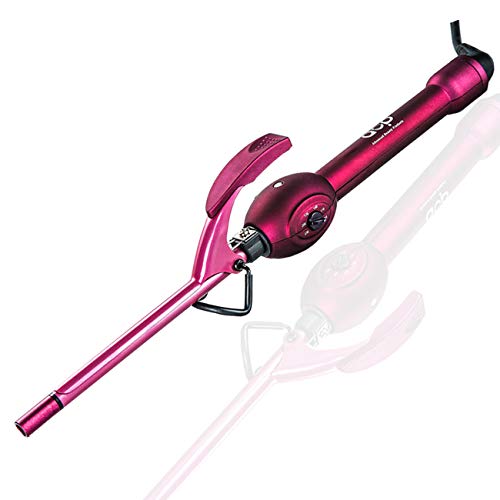
The single most important thing to understand about a curling wand is that it is clipless: instead of clamping the hair like a traditional curling iron, you wrap a section around the bare barrel and hold it there for a few seconds. The BaByliss Rose Quartz Conical Wand is a tapered barrel that runs from 25mm at the base to 13mm at the tip. That gives a more natural curl with no clip dent, and it means the curl you get is decided almost entirely by the barrel itself. A thin barrel makes tight ringlets, a thick or tapered barrel makes loose beachy waves, an automatic wand does the wrapping for you, and a multi-barrel set covers several looks from one kit. After you have settled on the curl you want, it comes down to the coating and heat settings, automatic versus manual, whether you need dual voltage for travel, and how much to spend. This guide covers six curling wands, each suited to a different kind of curl.
Barrel size and the curl you get
Barrel size is the first decision because it dictates the curl, not the other way around. A thin barrel like the MBHAIR's 9mm produces tight, defined ringlets and spiral curls and suits short hair and fringes. A larger barrel makes a looser, more relaxed curl, and the biggest barrels give soft beachy waves. There is no single best size: it depends on the look you want and your hair length, with longer hair generally carrying a larger barrel better. If your hair already curls and you only want to define it, see our guide to the best hair diffusers in Australia for natural curls. If you only ever want one kind of curl, pick the barrel size that matches it. If you want flexibility, that is where tapered barrels and multi-barrel sets come in, which the next sections cover. Picture the curl you actually want first, then choose the barrel that makes it.
What barrel size makes beach waves?
InStyle's curling wand guide says that for effortless, tousled beach waves a barrel size around one inch is the sweet spot, and that a slightly tapered barrel can add a varied wave shape. One inch is about 25mm, which is the TYMO CURLPRO barrel and the wide end of the BaByliss, while the ghd tapers from 28 to 23mm.
Where Kmart, Big W and Cloud Nine fit
Plenty of Australians start with a cheap wand from Kmart or Big W, and for an occasional curl before a night out that is a fair place to begin. What you give up is barrel choice, heat control and the coatings that keep the ends from frying. At the other end, salon names such as Cloud Nine, Muk, H2D and Silver Bullet sell mainly through hair salons and beauty retailers rather than Amazon Australia, so they are not picks here. We only rank wands we can point you to a live Australian listing for.
| Pick | Best for | Barrel | Type |
|---|
| ghd Creative Curl Wand | Best overall, soft beachy waves | 28 to 23mm tapered | Manual wand |
| BaByliss Rose Quartz Conical Wand (C454E) | Tight curls and beach waves from one wand | 13 to 25mm tapered | Manual wand |
| MBHAIR 9mm Thin Curling Wand | Tight ringlets and short hair | 9mm straight | Manual wand |
| Remington From Silk Curling Wand (CI96W1) | A simple everyday wand | Not stated | Manual wand |
| BESTOPE PRO 5 in 1 Curling Wand Set (crimper set) | Several looks from one kit | Interchangeable barrels plus a crimper | Manual set |
| TYMO CURLPRO Automatic Curling Iron | The easiest to use | 25mm automatic | Automatic |
Best overall: ghd Creative Curl Wand
The ghd Creative Curl Wand is our top pick because it pairs a salon grade tapered barrel with the result most people want from a wand: soft, relaxed beachy waves. The barrel narrows from 28mm to 23mm, a gentle taper chosen for loose waves rather than tight ringlets, and the listing says it suits all hair types, lengths and textures.
It is sold with an Australian plug, so it is ready to use here, and the buy box names Amazon AU as the seller. ghd designs its tools to run at an optimal styling temperature rather than the highest heat, which sets a curl without pushing the hair harder than it needs. It holds 4.5 stars from more than 1,300 ratings.
Flaws but not dealbreakers
The taper is gentle, so this is a wave maker. For tight ringlets or short hair the MBHAIR 9mm wand has a thinner barrel, and if you want the wand to do the wrapping, the TYMO CURLPRO is automatic.
Tapered versus straight barrels
This is the choice that decides how versatile your wand is. A straight barrel is one constant diameter top to bottom, so it makes one curl size, simple and predictable. A tapered or conical barrel narrows from base to tip, like the BaByliss that runs from 25mm at the base to 13mm at the tip, and that single shape gives you a range: wrap near the thin tip for tight curls or near the wide base for loose beach waves. A tapered barrel is the most practical shape for most people because one wand covers several looks. The premium ghd uses a gentler 28 to 23mm taper aimed specifically at soft waves. If you want one wand that does more than one thing, a tapered barrel is usually the smarter buy than a straight one. If you want the opposite effect on the same head of hair, a hair straightener is the other half of the kit.
Multi-barrel sets for several looks
If even a tapered barrel does not cover enough ground, a multi-barrel set is the most flexible option of all. A 5-in-1 kit like the BESTOPE PRO ships with several interchangeable barrels you can swap onto one handle, plus extras like a crimper and waver for textured, non-curl styles. The appeal is range: thin barrel for tight curls today, thick barrel for loose waves tomorrow, crimper when you want texture, all from one kit. These sets suit people who like to change their look often and do not mind swapping a barrel to do it. The trade-offs are that changing barrels takes a moment and a single dedicated wand can feel marginally more polished, but for sheer variety nothing beats a set.
Automatic versus manual wands
A manual wand asks you to wrap the hair around the barrel yourself, which gives full control but takes a little practice. An automatic wand removes that step entirely. A tool like the TYMO CURLPRO has a barrel that rotates and draws the hair in, curling it for you while you just feed in a section. That makes automatics the easiest, most beginner-friendly way to curl, with no wrapping technique to learn and a consistent result every time. The trade-off is that you give up some control over exactly how the curl sits, and automatics tend to cost more than a simple manual wand. If curling by hand sounds fiddly or you want curls quickly with no learning curve, automatic is the way to go. If you enjoy the control, a manual wand is the better choice.
Coatings, heat and dual voltage for travel
Two smaller features round out the decision. The barrel coating affects how the hair glides and how the curl finishes: ceramic and tourmaline coatings, including ghd's optimal styling temperature and Remington's silk ceramic surface, give smoother, shinier curls with less frizz than a bare metal barrel, and ionic tools like the TYMO help tame frizz further. Heat control matters too: enough heat to set a curl without cranking it higher than your hair needs. The other thing to check if you travel is dual voltage. A wand like the TYMO that is dual voltage and lightweight works on overseas power and packs down small, while a single voltage tool can be damaged abroad without a converter. Look for the right coating for your hair and dual voltage if you take it travelling.
One safety figure is worth knowing: the Medical Journal of Australia reports that hair straightening devices can take 30 minutes to cool to below 50°C, so give a hot wand the same time on a heat proof surface and keep it away from children.
How do these six curling wands compare?
Barrel shape decides the curl, so read the barrel column before the price. For a heated brush alternative, a thermal hot brush for curls and waves is the other tool to weigh. Curls also set better on hair that is completely dry, so a decent hair dryer matters as much as the wand, and second-day hair holds a curl longer than freshly washed hair, which is where dry shampoo earns its place.
| Pick | Best for | Barrel | Rating |
|---|
| MBHAIR 9mm Thin Curling Wand | Tight ringlets and short hair | 9mm straight | 4.4 |
| Remington From Silk Curling Wand (CI96W1) | A simple everyday wand | Silk ceramic coating | 4.5 |
| BaByliss Rose Quartz Conical Wand 13-25mm (C454E) | Tight curls and beach waves from one wand | 13 to 25mm tapered | 4.5 |
| BESTOPE PRO 5-in-1 Curling Wand Set | Several looks from one kit | 5 interchangeable barrels | 4.3 |
| TYMO CURLPRO Automatic Curling Iron | The easiest to use | 25mm automatic | 4.4 |
| ghd Creative Curl Wand | Best overall, salon grade beachy waves | 28 to 23mm tapered | 4.5 |
How we picked
We compared wands using the Amazon AU listings themselves: the listed barrel size, coating, voltage and plug, the seller named in the buy box, and the star rating and review count shown for each card. We also read the maker specifications each listing states in its bullet points for the barrel sizes, coatings and voltage figures the page quotes. For beach wave barrel size we also used InStyle's published curling wand guide. We have not tested the wands ourselves, so the order follows the listing facts and the review figures rather than a lab result.
If we earn a commission when you buy through a link, it never changes the order.
Last checked: 14 October 2026, covering the stock, seller and rating of every listing on Amazon Australia.
Our verdict
For most people the ghd Creative Curl Wand is the smart buy: a salon grade tapered 28 to 23mm barrel for soft beachy waves, sold with an Australian plug, with a 4.5 star average from 1,383 ratings, which is why it is our pick. For tight curls at the tip or loose beach waves at the base from one wand, the BaByliss Rose Quartz Conical Wand has a tapered 13 to 25mm barrel. If you want the budget pick or specifically want tight ringlets, the MBHAIR 9mm wand is built for spiral curls and short hair. Want a trusted brand for less? The Remington From Silk is a simple, reliable everyday wand. For the most versatility, the BESTOPE PRO 5-in-1 set swaps between barrels and adds a crimper. The easiest pick is the TYMO CURLPRO automatic, which wraps the hair for you, and the premium choice is the ghd Creative Curl for soft, salon grade beachy waves.
Frequently asked questions
What is the difference between a curling wand and a curling iron?
A curling wand is clipless: you wrap a section of hair around the bare barrel and hold it for a few seconds, then release. A curling iron has a clip or clamp that holds the hair against the barrel for you. The wand gives a more natural curl with no dent where a clip would sit, and lets you control exactly where the curl starts, but it takes a little practice and you usually wear a heat-resistant glove. An iron is easier to load one-handed but can leave a clip mark. Most of the tools in this guide, including the MBHAIR and the BaByliss, are clipless wands.
What barrel size should I choose for the curls I want?
The barrel size decides the curl. A thin barrel like the MBHAIR's 9mm makes tight ringlets and spiral curls and suits short hair and fringes. A larger barrel makes a looser, more relaxed curl, and the biggest barrels give soft beachy waves like the ghd Creative Curl. If you want both, a tapered barrel like the BaByliss 13 to 25mm gives tight curls at the thin tip and loose waves at the wide base from one wand. Picture the curl you want first, then pick the barrel that makes it.
What is a tapered or conical curling wand?
A tapered or conical wand has a barrel that narrows from a wide base to a thin tip, rather than staying one constant diameter. That single shape makes it versatile: wrap your hair near the narrow tip for tight curls or lower on the wide base for loose beach waves, all from one wand. The BaByliss runs from 25mm at the base to 13mm at the tip, and the ghd Creative Curl uses a gentler 28 to 23mm taper aimed at soft waves. A tapered barrel is the most practical shape for most people because one wand covers several curl sizes.
How do you use a clipless curling wand safely?
Because a clipless wand has no clip to hold the hair, you wrap a section around the hot barrel and hold the end with your fingers, which is why most wands come with a heat resistant glove. The MBHAIR and the BaByliss both include one. Wear the glove on the hand holding the hair, wrap small sections away from your face, hold for a few seconds and release. If you would rather skip the wrapping entirely, an automatic wand like the TYMO CURLPRO rotates and curls the hair for you, so there is no wrapping technique to learn.
Are automatic curling wands easier to use than manual ones?
Yes, for most people. An automatic wand like the TYMO CURLPRO has a barrel that rotates and draws the hair in, curling it for you while you just feed in a section, so there is no wrapping technique to learn and the result is consistent every time. That makes it the most beginner-friendly way to curl. The trade off is that you give up some control over exactly how the curl sits. If curling by hand sounds fiddly, automatic is the easiest route.
Do curling wand coatings like ceramic and tourmaline matter?
They do. A ceramic or tourmaline coating gives the barrel a smoother surface, so the hair glides on cleanly and comes off shinier with less frizz than bare metal. The Remington From Silk uses a silk ceramic coating and the BaByliss a rose quartz ceramic one. Ionic tools like the TYMO CURLPRO help tame frizz further, and premium wands like the ghd Creative Curl run at an optimal styling temperature so they set a curl without overheating the hair. The coating is part of what separates a smooth, shiny curl from a frizzy one.
Can I use an Australian curling wand overseas?
Only if it is dual voltage. A dual voltage wand like the TYMO CURLPRO works on overseas power and is lightweight enough to pack, so it travels easily, and you only need a plug adapter for the socket shape. A single-voltage wand can be damaged abroad without a proper voltage converter, so check the label before you pack it. Some wands are also sold with an Australian plug ready to use here, like the ghd Creative Curl. If you travel often, dual voltage is the feature to look for.
How do you curl your hair with a curling wand?
Work on completely dry hair and mist on a heat protectant first. Take sections about the width of two fingers, wrap each one around the bare barrel away from your face, hold for a few seconds, then slide it off and let it cool in your palm before you touch it. Cooling is the step most people skip and it is what makes the curl last. Wear the heat glove that wands like the BaByliss include.
How do you use a curling wand with a clamp?
A wand with a clamp is really a curling iron. Open the clamp near the ends of a section, close it on the hair, then roll the barrel up towards the scalp and hold it there before releasing. Clamp lightly, because pressing hard is what leaves the crease people complain about. Every wand in this guide is clipless instead, including the Remington From Silk, so you wrap by hand and avoid the dent altogether.
How do you curl short hair with a curling wand?
Short hair needs a thin barrel, because a wide one runs out of hair before it finishes a turn. The MBHAIR 9mm wand is the pick here, since a 9mm barrel makes a full ringlet out of a very short section. Work in small sections, wrap away from your face, and hold the wand vertically for spirals or horizontally for a softer bend. Keep the hot barrel clear of your neck and ears.
What is the best curling wand in Australia?
The ghd Creative Curl Wand is the best overall curling wand for most people: a salon grade tapered barrel from 28 to 23mm for soft beachy waves, sold with an Australian plug. If you want tight curls and loose beach waves from one wand, the BaByliss Rose Quartz Conical Wand has a tapered barrel that runs from 25mm at the base down to 13mm at the tip.
Which curling wand is closest to a Dyson Airwrap?
Nothing here works the way an Airwrap does, because that tool curls with airflow rather than a hot barrel and it is a multi-styler rather than a wand. The closest in spirit is the BESTOPE PRO 5-in-1 set, which swaps between several barrels plus a crimper on one handle, or the TYMO CURLPRO, which rotates and wraps the hair for you.
Which hair curler machine is best?
The ghd Creative Curl Wand is the best overall curler in this guide for soft beachy waves, with a 28 to 23mm tapered barrel and an Australian plug. For tight curls the MBHAIR 9mm wand is thinner, and for hands off curling the TYMO CURLPRO is automatic.
Is a curling wand better than a curling iron?
Neither is better for everyone. A wand is clipless, so it gives a natural curl with no clip dent but needs a heat resistant glove and a little practice, while an iron clamps the hair and is easier to load. The picks in this guide are clipless wands.
What is the easiest curling wand to use?
The TYMO CURLPRO automatic wand is the easiest here, because its 25mm barrel rotates and draws the hair in for you. A simple manual wand such as the Remington From Silk is the next easiest for beginners.
What is the best hair curler in Australia according to reviews?
By reviews, the TYMO CURLPRO has the largest base with 16,745 ratings at 4.4 stars, while the ghd Creative Curl Wand and the BaByliss Rose Quartz Conical Wand both hold 4.5 stars. Our best overall pick is the ghd Creative Curl Wand.