How to choose a Dutch oven in Australia
A Dutch oven is a heavy lidded pot that goes from the stovetop into the oven; the Lodge title says oven safe up to 500 degrees Fahrenheit or on stovetop. The best Dutch oven in Australia for most kitchens is the Crock-Pot Artisan 5 quart in Teal Ombre, rated 4.7 from 12,991 ratings on Amazon AU. This guide compares six enamelled cast iron pots on size, shape, oven limit, care and origin, using what each Amazon AU listing states.
Every pot here is enamelled cast iron, not bare seasoned cast iron. The Amazon Basics, Overmont, Lodge and Cuisinart titles all say Enameled Cast Iron, the Crock-Pot bullets call it an Enameled Cast Iron Dutch Oven with a porcelain enamel finish, and the Le Creuset bullets list vitreous enamel inside and out. In the Lodge listing's words, porcelain enamel on cast iron is glass that becomes bonded to the cast iron at high temperatures. Enamel changes the care, so the sections below quote each listing's care line. Bare seasoned cast iron is a different tool again, and our cast iron skillet guide covers that side.
Names vary between listings. The Cuisinart is titled an oval covered casserole and the Le Creuset a round casserole, while the Le Creuset product table gives its item type as an Enameled Cast Iron Round Dutch Oven. Search either word and check the capacity and shape. This guide is for homeowners and home cooks, so each pot section says who it suits. With the material settled, the real decisions are size, shape, the oven limit and how much hand washing you will accept.
How the six Dutch ovens compare
Here is the shortlist side by side. Ratings and counts are the ones shown on each Amazon AU listing, and the live listing is the final word.
How we chose these six Dutch ovens
We read the Amazon AU listing for each pot and the maker's own wording on it: the bullet points, the product information table, the description and the A+ content. We did not test any pot, so this guide reports what the listings state and where a listing disagrees with itself, as several do on dishwasher use. Ratings and counts are the ones the listing shows. Where a listing gives two different values for one detail we name both or leave the figure out. Last checked: 21 October 2026.
Best overall: Crock-Pot Artisan Enamelled Cast Iron Dutch Oven (5 Quart, Teal Ombre)
The Crock-Pot Artisan is the pot we would send most people to. It is rated 4.7 from 12,991 ratings, level with the Le Creuset on the top rating here, and it has the largest rating base of the pots rated 4.7. Its listing describes a self basting lid, use on gas, electric, ceramic and induction cooktops, and an oven rating of 500 degrees Fahrenheit for the stainless knobs and cookware.
At 5 quarts it sits in the middle of the range, between the 4.5 quart Overmont and Lodge and the 6 quart Amazon Basics; that size choice is our reasoning, not a listing claim. The listing says the surface is nonstick and the porcelain enamel finish is easy to clean. The trade off is care: it says hand wash recommended, the product table lists dishwasher safe as No, and the A+ content advises wooden, silicone or nylon utensils because metal can scratch. The item weight is listed as 12.2 pounds, so check you can lift it full. It suits a household that wants one pot for braising, slow cooking and baking, which is how its bullets describe it.
Amazon Basics Enamelled Cast Iron Dutch Oven (6 Quart, 5.7L Round)
Choose the Amazon Basics when you cook for a bigger table. Its listing says the 5.7 litre, 6 quart capacity serves 4 to 6 people, and it has the most ratings of the six, 4.6 from 47,703. The listing gives three oven figures that do not agree: the bullets say oven safe up to 260 degrees celsius, the product table lists a temperature rating of 500 degrees Fahrenheit and the A+ text says oven safe up to 400 degrees without naming a unit, so treat its oven limit as unconfirmed. They also describe looped side handles and a fitted lid that traps heat and moisture.
It is hand wash only, and the listing says to avoid metal utensils and citrus based cleaners. The product table lists 5.92 kg, China as the country of origin and the colour Matte White. The A+ content says cast iron "can be used either in the oven or on the stovetop", but we found no statement naming induction or another cooktop type, so check that before using it on a hob type that matters to you.
Overmont Enamelled Cast Iron Dutch Oven (4.5 Quart Round)
The Overmont suits a smaller household or a first pot; that is our reasoning from the 4.5 quart size, not a serving figure from the listing. Its title lists a cookbook and cotton potholders with the pot, and it is rated 4.6 from 2,399. The bullets describe a flat, smooth enamel surface that wipes clean with a soft sponge, a lid designed so that water vapor condenses evenly, and a cotton heat resistant cap for the handles and lid.
The product table lists hand wash only, a temperature rating of 500 degrees Fahrenheit, a 24 cm diameter, 5.5 kilograms and the colour Powder Pink. The title also names braising, stews, roasting and bread baking. The listing we checked was the pink one, and we found no cooktop or induction statement in it.
Lodge Enamelled Cast Iron Dutch Oven (4.5 Quart Round)
On 21 October 2026 the buy box of this Lodge listing was shipped and sold by Amazon US and carried the notice "US imports may differ from local products. Additional terms apply." The same listing adds "Manufacturer warranty may not apply but you may have other rights under law." Read both before you order.
Lodge is the American name here: the listing says the Lodge family founded the company in 1896 and still owns it. The title gives an oven limit of 500 degrees Fahrenheit and 4.5 quarts, and it is rated 4.5 from 154, the smallest rating base of the six. The description says the color porcelain enamel can be used on gas, electric, ceramic and induction cooktops, and that it is not for microwaves.
The listing disagrees with itself on washing: the bullets recommend hand washing but say enameled cast iron is dishwasher safe, while the product table lists dishwasher safe as No and the care line as Hand Wash Only. Hand wash it. The description says two layers of very hard, glossy porcelain enamel are chip resistant. Amazon's customer summary says durability gets mixed reviews, with some customers reporting rusted rims, so check the rim and enamel on arrival. The same summary says customers like its size for sourdough.
Cuisinart Chef's Classic Enamelled Cast Iron Oval Casserole (5.5 Quart)
Choose the Cuisinart if you want an oval, and it is the only oval of the six. The title reads as an oval covered casserole, the product table gives 5.5 quarts, and it is rated 4.6 from 599. The bullets list stovetop, oven and broiler use, induction stovetop compatibility, wide cast iron handles and an oven safe knob, with no oven temperature stated. The product table lists a limited lifetime warranty.
On washing the listing differs: the bullets and table say dishwasher safe, while the care line says hand wash only for the lid and not to use it in a microwave, refrigerator, freezer or grill. The table's Material row says Stainless Steel while the title and bullets say cast iron, so this guide relies on the title and bullets. The product table lists 30.5W x 15.2H centimetres in one row and 15.6 x 10.9 x 6.2 centimetres in another, so treat the size as unconfirmed and check the live listing before you measure your hob and oven shelf.
Le Creuset Signature Cast Iron Round Casserole (4.2L, 24 cm)
The Le Creuset Signature is the made in France pot here: the bullets and product table both list France as the country of origin. It is rated 4.7 from 7,781, level with the Crock-Pot. The table lists 4.2 litres, 4.3 kilograms, a 24 centimetre diameter and a temperature rating of 500 degrees Fahrenheit. The bullets describe 45 percent larger handles that distribute weight more evenly, vitreous enamel inside and out and an enhanced tight fitting lid. The A+ content says the enameled Dutch oven needs no seasoning and is compatible with all cooktops.
Le Creuset Signature compared with the Amazon Basics: the Amazon Basics lists 5.7 litres and 5.92 kg, the Le Creuset 4.2 litres and 4.3 kilograms, and the Amazon Basics table gives China as its country of origin. We have not tested cooking results, so we do not claim either cooks better. On washing, the Le Creuset product table says hand wash preferred and dishwasher safe Yes, while its A+ content says safe for dishwasher and metal utensils; we follow the hand wash line.
Size: matching capacity to how many you cook for
Start with how many people you cook for, because capacity drives the choice. The listings give 4.2 litres for the Le Creuset, 4.5 quarts for the Overmont and Lodge, 5 quarts for the Crock-Pot, 5.5 quarts for the Cuisinart and 6 quarts (5.7 litres) for the Amazon Basics. The Amazon Basics title pairs 5.7 Liters with 6 Quart, so one quart is a little under a litre. Only one listing gives a serving figure: the Amazon Basics says its capacity serves 4 to 6 people.
Where the listings give weights, they read 4.3 kilograms for the Le Creuset, 5.5 kilograms for the Overmont, 5.62 kg for the Lodge and 5.92 kg for the Amazon Basics. The Crock-Pot is listed at 12.2 pounds, so check you can lift any of them full. The Cuisinart weight row reads 1 Pounds, which we do not use. The 5 quart Crock-Pot is the middle size, which is part of why it comes first here. For a large or 6 quart Dutch oven, the Amazon Basics is the largest capacity in this guide.
Round or oval: the shape changes what fits
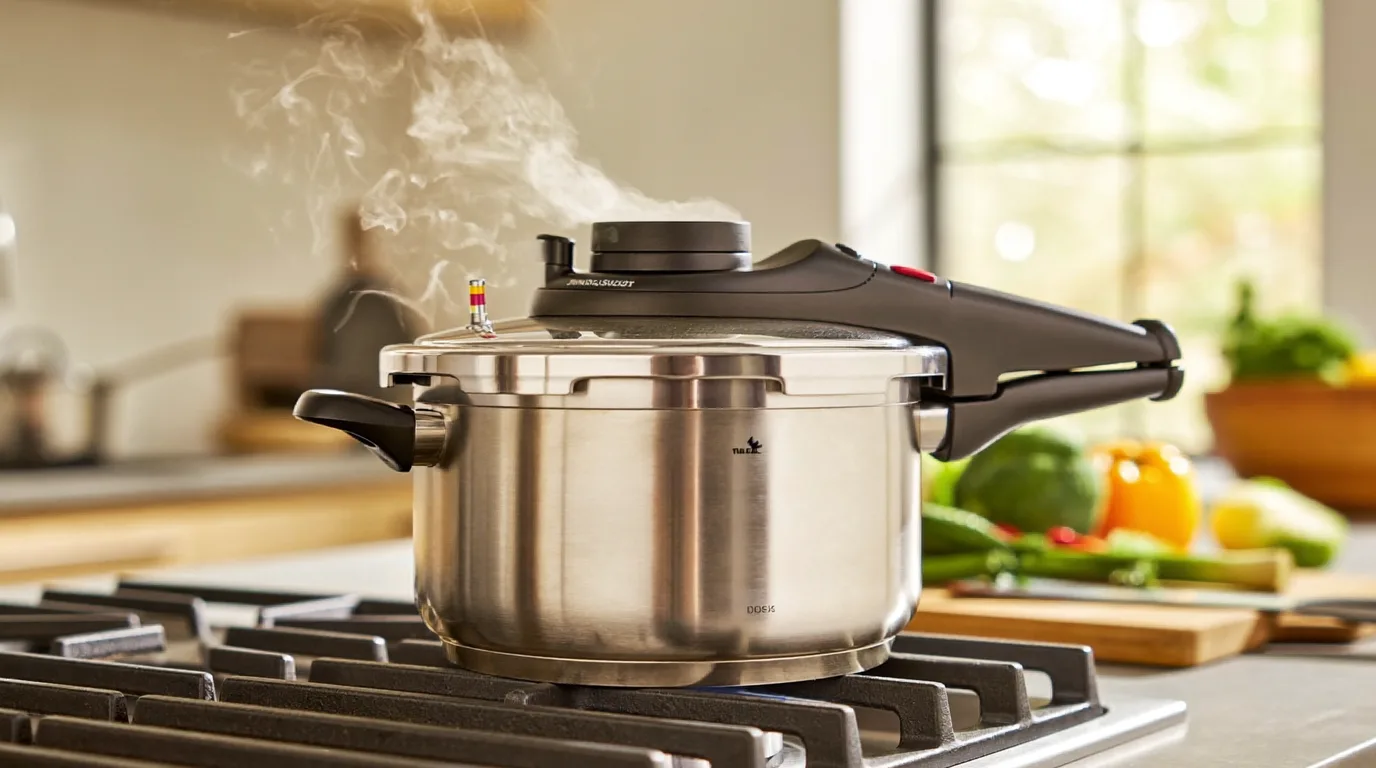
Five of the six pots are round and the Cuisinart is an oval. The product tables list round for the Amazon Basics, Overmont, Lodge, Crock-Pot and Le Creuset, and the Cuisinart table lists oval. The Cuisinart's size figures conflict on its listing, as noted above, so measure your hob and oven shelf before choosing an oval. If you want braises finished faster on the same burner, a stovetop pressure cooker for faster braises is the other pot to compare. A hot pot needs somewhere safe to rest and a safe grip, and our trivet guide and oven mitts guide cover both.
Care: what each listing says
Care lines decide how long the enamel looks good, and the listings do not agree with each other. Amazon Basics: hand wash only, avoid metal utensils and citrus based cleaners. Overmont: hand wash only. Crock-Pot: hand wash recommended, dishwasher safe No, and the A+ content advises wooden, silicone or nylon utensils. Lodge: the bullets recommend hand washing, while the table says dishwasher safe No and Hand Wash Only. Cuisinart: dishwasher safe, with hand wash only for the lid. Le Creuset: hand wash preferred, while its A+ content says safe for dishwasher. Where a listing says both, we follow the hand wash line.
The Cuisinart care line also says not to use it in a microwave, refrigerator, freezer or grill, and the Lodge description says it is not for microwaves and not recommended for outdoor grills or open outdoor flames. On cooktops, the Crock-Pot and Lodge descriptions name induction, the Cuisinart bullets say induction stovetop compatible and the Le Creuset A+ content says all heat sources including induction. The Amazon Basics A+ content says its cast iron can be used on the stovetop but names no cooktop type, and we found no cooktop statement in the Overmont listing. For a glass topped stove, the Le Creuset A+ content says to lift the pan when moving it and never slide it, as this may damage the stove top or the base of the pan. For oven limits, see the second answer in the questions below.
Baking sourdough and bread in a Dutch oven
The listings point to bread baking. The Overmont title names bread baking, the Crock-Pot listing says it suits baking, and Amazon's customer summary for the Lodge says customers like its size for sourdough. We found no listing that gives a loaf size or a baking method, so we do not give one: follow your recipe and check the oven limit and the lid knob limit on your pot first.
The Crock-Pot A+ content and the Lodge description both mention the stainless knob alongside 500 degrees Fahrenheit, while the Cuisinart says only oven safe knob. Weigh your dough on a digital kitchen scale before you decide on a pot size. If you would rather let a machine do it, our bread maker guide covers that route, and a slow cooker is the alternative for the braising side of what a Dutch oven does.
Brand, origin and warranty: what each listing states
The product tables give origin for most pots: China for the Amazon Basics, Overmont, Crock-Pot and Cuisinart, and France for the Le Creuset. The Lodge table gives no origin row, but its description ends with Made in China. The only warranty field among the six is the Cuisinart's, which reads Limited Lifetime. The Lodge section quotes the warranty line from its listing notice, and the other four listings show no warranty row, so we state none for them.
Lodge describes itself as a family owned company founded in 1896, and Le Creuset's A+ content says its cast iron has been recognized for strength and durability since 1925. Weigh the brand for its listed aftercare and track record, not for any promise that it cooks better.
Which Dutch oven suits which cook
Match the pot to the job, using what the listings state. For a bigger table, the Amazon Basics 6 quart is the largest capacity here and its listing says it serves 4 to 6 people. For one all round pot that braises, slow cooks and bakes, the Crock-Pot Artisan 5 quart is the one we put first. For a smaller household or a first pot, the Overmont 4.5 quart has a cookbook and cotton potholders listed in its title. If you want an oval, the Cuisinart is the only one. If you want a made in France pot, the Le Creuset Signature is the one whose listing says so.
For induction cooking, the Crock-Pot, Lodge and Cuisinart listings name induction and the Le Creuset A+ content names induction among its heat sources. Only the Cuisinart shows a limited lifetime warranty. The Lodge has the smallest rating base, so read the reviews on its listing before you order.
What to check on any Dutch oven listing
Read the capacity in the unit you think in. The Amazon Basics title pairs 5.7 Liters with 6 Quart, while the Le Creuset table gives litres only, so convert before you compare. Read the oven limit and which part it applies to, because the Crock-Pot and Lodge wording mentions the stainless knob. Read the care line, because the Lodge, Cuisinart and Le Creuset listings each say two things about the dishwasher. Look at the count beside the rating as well as the stars: 4.5 from 154 ratings is a thinner base than 4.6 from 47,703.
Finally look at the seller notice in the buy box. A notice that US imports may differ from local products means additional terms apply, so read it before you order.
Our verdict
For most people the Crock-Pot Artisan 5 quart is the pot to buy: it is rated 4.7 from 12,991 ratings, level with the Le Creuset on the top rating here, and its listing describes a self basting lid, induction use and an oven rating of 500 degrees Fahrenheit. If you cook for a bigger table, the Amazon Basics 6 quart is the largest pot here. The Overmont lists a cookbook and cotton potholders in its title. The Lodge section sets out the dated notice shown on its listing, so read that section first. The Cuisinart is the oval with a limited lifetime warranty in its product table. The Le Creuset Signature is the made in France pot, level with the Crock-Pot on rating.
Frequently Asked Questions
Is a Dutch oven worth the investment?
It is worth buying if you braise, roast or bake often. The Crock-Pot listing says it suits slow cooking, simmering, braising and baking, and the Amazon Basics listing says its 5.7 litre size serves 4 to 6 people. One lidded pot covers the stovetop and the oven. If you cook that way rarely, a smaller pot may be enough.
Can a Dutch oven go in the oven?
Yes. All six listings state oven use. Crock-Pot, Overmont, Lodge and Le Creuset give 500 degrees Fahrenheit. Amazon Basics conflicts with itself: its bullets say 260 degrees Celsius, its product table says 500 degrees Fahrenheit and its A+ text says up to 400 degrees. Cuisinart gives no limit. Check the stainless lid knob wording on Crock-Pot and Lodge.
How do you season a Dutch oven?
The Le Creuset listing says its enamelled Dutch oven needs no seasoning and is ready to use. The other five listings give no seasoning steps, so follow each care line. Amazon Basics, Overmont and Crock-Pot say hand wash, and Crock-Pot recommends wooden, silicone or nylon utensils because metal can scratch.
What not to cook in a Dutch oven?
None of the six listings names foods to avoid, so we do not name any. They do state care limits. Amazon Basics says to avoid metal utensils and citrus based cleaners, Crock-Pot says metal can scratch, and Cuisinart says not to use it in a microwave, refrigerator, freezer or grill. Follow the care line for your pot.
What are the downsides of enameled cast iron?
The listings point to weight and hand washing. The listings give 5.92 kg for the Amazon Basics, 5.62 kg for the Lodge and 4.3 kilograms for the Le Creuset. Amazon Basics, Overmont and Crock-Pot say hand wash. The Lodge listing's customer summary says durability gets mixed reviews, with some customers reporting rusted rims.
Is it better to bake sourdough in a Dutch oven?
We have not baked loaves, so we cannot rank it, but the listings point that way: the Overmont title names bread baking, the Crock-Pot listing says it suits baking, and the Lodge customer summary mentions a perfect size for sourdough. Check the oven limit and lid knob limit on your pot first.