How to choose a French press in Australia
A French press - many Australians call it a coffee plunger - does one thing beautifully: it brews a rich, full-bodied cup with nothing but coarse coffee, hot water and a slow plunge, no paper filters and no pods. The single biggest decision is what it is made of, because that drives heat retention, durability, price and whether you can watch the brew. Glass is the classic - the Bodum Brazil and Bodum Chambord sit here - and it is cheaper and lets you see the coffee, but it is fragile and loses heat fast. Double-wall stainless steel - the Easyworkz Nando, Avanti Modena and Secura - is unbreakable and keeps coffee hot for thirty to sixty minutes, though it costs more and hides the brew behind a metal body. Double-wall glass, like the Avanti Capri, splits the difference, holding heat far better than single-wall glass without a metal cage. After material, it comes down to filtration and size. This guide covers six presses, each suited to a different drinker.
Glass versus stainless - the heat-and-durability trade-off
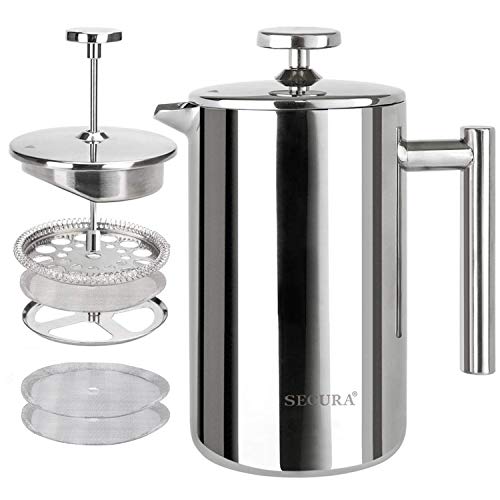
This is the choice that shapes everything else. A glass press like the Bodum Brazil or the 1 litre Bodum Chambord is the heritage classic, it is cheaper, and the borosilicate glass beaker lets you watch the coffee bloom and plunge, which plunger purists love. The cost is that single-wall glass is fragile and loses heat quickly, so the brew cools while you drink it and a knock on a hard bench can crack the beaker. Double wall stainless steel goes the other way: the Easyworkz Nando, the Avanti Modena and the Secura are effectively unbreakable and their insulated twin walls keep coffee hot for thirty to sixty minutes, but they cost more and you cannot see inside. There is no single right answer - it is whether you value watching the brew and a lower price, or durability and a hot cup that stays hot.
Double-wall glass - heat retention without a metal body
There is a clever middle option that often gets overlooked. The Avanti Capri uses double wall borosilicate glass, which builds an insulating air gap into the beaker itself, so it holds heat far better than a plain single wall glass press while still letting you see the coffee, because the body is glass rather than steel. That is the appeal: you keep the visible brew a glass lover wants, but the cup stays warmer for longer. It does not match true double-wall stainless for keeping a pot hot across a full hour, and it is still glass so it needs more care than a steel press, but as a bridge between the fragile, fast-cooling single-wall classics and the can-not-see-inside stainless presses, double-wall glass is a genuinely smart compromise worth knowing about.
Filtration - mesh, multi-screen and the sediment trade-off
Every French press lets a little fine sediment through into the cup - that is the inherent trade-off against paper or a double-filter system, and it is part of the full-bodied character a plunger gives you. How much sediment depends on the filter. A simple stainless mesh, like the Bodum presses use, gives the classic plunger cup with a touch of silt at the bottom. Multi-screen systems catch more: the Easyworkz Nando uses a 4-level filtration stack and the Secura a triple-screen filter, both of which pull noticeably more fines out for a cleaner cup. If a little grit at the bottom of the mug bothers you, lean toward a multi-screen stainless press; if you do not mind it - or you want the fullest body - a classic single mesh is fine. Either way, a coarse, even grind matters more than the filter for keeping sediment down.
Size - one big mug or a household pot
Match the size to how many cups you brew at once, because it changes the press you want more than almost anything else. A 350ml press like the Bodum Brazil or the Easyworkz Nando is essentially one big mug, ideal for a single drinker who brews fresh each time. A 500ml Secura or 600ml Avanti Capri stretches to a couple of cups, and the 800ml Avanti Modena and 1-litre Bodum Chambord are proper household pots that brew several cups in a single plunge - the right call for a couple, a family or guests. Bear in mind a press brews best when reasonably full, so a giant plunger making one small cup is not ideal; pick the size that matches your usual pour rather than the biggest one available.
How to brew with a French press
The method is simple and the same across every press here. Use a coarse grind - finer than that and too much sediment slips through the mesh and the plunge gets gritty. Add the grounds, pour in hot water just off the boil, give it a gentle stir, and let it steep for about four minutes. Then plunge slowly and steadily; forcing it fast pushes fines through and can make the cup bitter. Pour it out promptly rather than leaving the coffee sitting on the grounds, which keeps over-extraction and bitterness down. The whole appeal is that there is nothing to it - no paper filters to buy, no pods, just coffee and water - and once you have the grind and the four-minute steep dialled in, every press in this guide rewards you with the same rich, full-bodied cup.
Every press needs hot water, so if you are also choosing the kettle, our kettle guide compares the models we picked.
A note on Espro, Frieling and what is actually on Amazon AU
If you have read overseas French-press guides you will see brands like Espro - known for its double-paper-filter system that all but eliminates sediment - and Frieling, a premium all-stainless maker, named as top picks. The honest situation for Australian buyers is that both are barely available on Amazon AU, so we have not built this guide around presses you cannot reliably buy here. What is genuinely well stocked is the Bodum range, which dominates the glass classics, alongside Australian brand Avanti and the strong-value stainless presses from Easyworkz and Secura. If you specifically want an Espro-style double-filter for the absolute cleanest cup, you may need to look beyond Amazon AU to a specialist coffee retailer - but for the vast majority of buyers, the six presses here cover every sensible combination of material, size and budget.
Our verdict
For most people the Bodum Chambord is the smart buy, it is THE iconic 1950s French press, a 1 litre glass and chrome design that brews a great cup, looks the part on any bench and is backed by more than 21,000 ratings, which is why it is our pick. If you only want to spend a little, the Bodum Brazil is the same classic brewing on a budget in heat resistant borosilicate glass. Keep smashing glass plungers? The Easyworkz Nando is unbreakable double wall stainless with 4 level filtration. Want to watch the brew but keep it hotter? The Australian brand Avanti Capri is double wall glass. For a hot household pour the Avanti Modena is twin wall stainless at 800ml, and the premium pick is the Secura, the most reviewed and highest rated press in Australia, unbreakable double wall stainless that keeps coffee hot the longest and filters the cleanest.
Frequently Asked Questions
Is a French press the same as a coffee plunger?
Yes - they are two names for the same thing. French press is the international term and coffee plunger is what many Australians call it, but both describe the same brewer: a beaker you add coarse grounds and hot water to, then push a mesh plunger down through after a few minutes to separate the coffee from the grounds. Every product in this guide, from the glass Bodum Brazil to the stainless Secura, is a French press and a plunger, the words are interchangeable.
Glass or stainless steel - which French press should I get?
It comes down to what you value. Glass presses like the Bodum Brazil and Bodum Chambord are cheaper and let you watch the brew, but they are fragile and lose heat fast. Double wall stainless presses like the Easyworkz Nando, Avanti Modena and Secura are effectively unbreakable and keep coffee hot for thirty to sixty minutes, but cost more and hide the brew behind a metal body. If you keep breaking glass or want a hot cup that stays hot, go stainless; if you want a lower price and to see the coffee, go glass.
How do I brew coffee in a French press?
Use a coarse grind, add the grounds, pour in hot water just off the boil, give it a gentle stir and let it steep for about four minutes. Then plunge slowly and steadily - forcing it fast pushes fine particles through and can make the cup bitter - and pour it out promptly rather than leaving the coffee on the grounds. A coarse, even grind and the four-minute steep are the two things that matter most. The method is identical across every press here, from the 350ml Bodum Brazil to the 1 litre Bodum Chambord.
Why is there sediment in the bottom of my cup?
A little fine sediment is normal with any French press - it is the inherent trade-off against paper or double-filter systems, and part of the full-bodied character a plunger gives you. You can reduce it two ways: use a coarser, more even grind so fewer fines slip through the mesh, and choose a multi-screen filter. The Easyworkz Nando uses a 4 level filtration stack and the Secura a triple screen filter, both of which pull noticeably more fines out than a single mesh for a cleaner cup.
What size French press should I buy?
Match it to how many cups you brew at once. A 350ml press like the Bodum Brazil or Easyworkz Nando is one big mug, ideal for a single drinker. A 500ml Secura or 600ml Avanti Capri makes a couple of cups, and the 800ml Avanti Modena and 1 litre Bodum Chambord are household pots that brew several cups in one plunge. A press brews best when reasonably full, so pick the size that matches your usual pour rather than the biggest one available.
Does a double-wall press really keep coffee hotter?
Yes, noticeably. A double-wall body has an insulating air gap between two layers, which slows heat loss far more than a single-wall press. Double wall stainless presses like the Secura, Easyworkz Nando and Avanti Modena keep coffee hot for roughly thirty to sixty minutes. Double wall glass, like the Avanti Capri, holds heat better than plain single wall glass while still letting you see the brew, though it does not quite match stainless over a full hour. A single wall glass press like the Bodum Brazil cools the fastest.
What about Espro or Frieling - are they on Amazon AU?
Both are barely available on Amazon AU, which is why this guide is not built around them. Espro is known for its double-paper-filter system that all but eliminates sediment, and Frieling is a premium all-stainless maker, but neither is reliably stocked here. What is well stocked is the Bodum range for the glass classics, plus Australian brand Avanti and the strong-value stainless presses from Easyworkz and Secura. If you specifically want an Espro-style double filter for the cleanest possible cup, you may need a specialist coffee retailer beyond Amazon AU - but the six presses here cover every sensible combination of material, size and budget.
Found this helpful?
Check out more guides for new homeowners.