The Best Hand Grip Strengtheners in Australia (2026)
By Anish Puri·10 June 2026·Last updated 22 October 2026·11 min read
The best hand grip strengthener in Australia for most people is the PROIRON Adjustable Hand Grips 2 Pack, rated 4.5 from 323 ratings on Amazon AU. Its listing describes an adjustable gripper sold as a pack of two, so both hands can train at the same time. This guide also covers light graduated sets and finger exercisers.
Prices checked 26 October 2026 on Amazon AU and subject to change.
The best hand grip strengthener in Australia for most people is the PROIRON Adjustable Hand Grips 2 Pack, rated 4.5 from 323 ratings on Amazon AU. Its listing describes an adjustable gripper sold as a pack of two, so both hands can train at the same time. Light graduated sets and finger exercisers suit other goals.
How to choose a hand grip strengthener in Australia
A hand grip strengthener does a few very different jobs, so the right one depends on your goal. Some tools work the hand against one resistance, some are light sets for a gentle start, and some train each finger on its own for musicians. An adjustable gripper, like the PROIRON, lets you change the resistance to suit your level. A graduated set, like the DICYWUDI, gives you three fixed levels to step through. A finger exerciser, like the D'Addario Varigrip, sets the tension for each finger. After settling the type, it comes down to your goal and the resistance you actually need, and printed numbers on a gripper are a rough guide. This guide covers six listings from Amazon AU.
How do the hand grip strengtheners compare?
The table sets each hand grip strengthener side by side by type, what its listing says and its Amazon AU rating. Adjustable grippers change resistance, graduated sets step up through fixed levels, and finger exercisers work one finger at a time.
The Prohands listing could not be bought on 22 October 2026, and for the IronMind we could not confirm an Australian seller on that date; neither shows a rating here. The Spardar listing is currently unavailable but still shows its rating of 4.4 from 149 ratings.
Model
Type
What its listing says
Rating on Amazon AU
PROIRON Adjustable Hand Grips 2 Pack
Adjustable gripper
Easy to adjust the resistance to suit your level; 2 packs
4.5 (323)
DICYWUDI Finger Strength Trainer 3 Pack
Graduated set
3 lb, 7 lb and 11 lb grippers
4.4 (827)
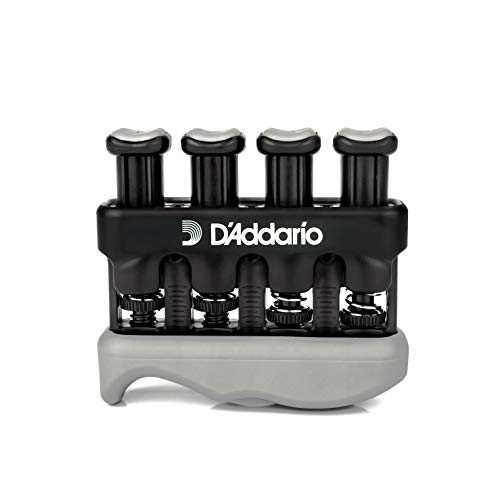
D'Addario Varigrip Hand Exerciser
Finger exerciser
Tension adjusted for each finger, for string musicians
4.6 (13,262)
Prohands Gripmaster Hand Exerciser
Finger exerciser
Title describes a spring loaded finger piston system
Not shown. Could not be bought on 22 October 2026
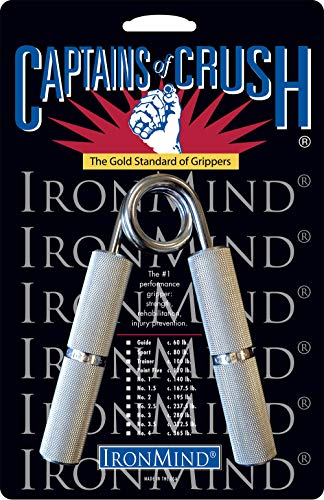
IronMind Captains of Crush Gripper
Hand gripper
Title names it a Captains of Crush hand gripper
Not shown. Could not confirm an Australian seller on 22 October 2026
Title reads 2Pcs Electronic Counting Grip Strengthener
4.4 (149)
Best overall: PROIRON Adjustable Hand Grips 2 Pack
The PROIRON is an adjustable hand strengthener sold as a pack of two. Amazon AU shows it shipped by Amazon, rated 4.5 from 323 ratings.
Top pick
PROIRON
PROIRON Adjustable Hand Grips 2 Pack
4.5(323)
This is the one we would buy first for general grip work. The listing describes an adjustable hand strengthener whose resistance you set to your level, sold as a pack of two so both hands can train at the same time, with soft anti slip rubber grips and a stainless steel spring. The listing gives its size as just 15cm and says it can be used at home or in the office with 5 to 10 minutes per day. The listing gives no resistance range, and one reviewer in Australia calls the printed scale of very dubious accuracy, so treat the setting as a guide to your own progress. Amazon AU shows 4.5 from 323 ratings, shipped by Amazon.
$17.99
Amazon.com.au price as of 05:00 pm AEDT, subject to change
As an Amazon Associate, NestPath earns from qualifying purchases.
The listing says it is easy to adjust the resistance to suit your level, to take it slow and then go hard on yourself, and that the gripper is suitable for everyone, including athletes, fitness coaches, musicians and people who want to exercise their hand, wrist and fingers. It lists soft anti slip rubber grips and a stainless steel spring, and gives the size as just 15cm, to use at home or in the office in 5 to 10 minutes per day. With two in the pack, you can train both hands at the same time.
The listing gives no resistance range or number of settings, so we do not state one. One reviewer in Australia on the listing calls the printed scale of very dubious accuracy, so treat the setting as a guide to your own progress rather than a calibrated weight.
The product information table names the brand as PROIRON and the manufacturer as Shanxi Regent Works Inc. The bullets say to take it slow, so set it to a level you can close with control and raise it only when reps feel easy. They also say the customer service team will answer questions in 24 hours.
What is a hand grip strengthener?
A hand grip strengthener is a handheld tool you squeeze against spring resistance. The PROIRON listing says it delivers effective force to your wrist, finger and forearm muscles through a rust resistant spring. Some tools have one fixed strength, some let you adjust the resistance, and finger exercisers work one finger at a time.
Each listing here says what its tool was made for. The PROIRON lists adjustable resistance, the DICYWUDI lists three levels, and the D'Addario lists tension for each finger, so the type you pick decides the movement you train.
Hand grippers are among the simplest kit to own. The PROIRON lists a size of just 15cm, the D'Addario is described as the ultimate portable workout, and the DICYWUDI is described as easy to put in a suitcase or handbag, so all three can travel with you.
Are adjustable or fixed hand grippers better?
It depends on your goal. An adjustable gripper, like the PROIRON, lets you change the resistance to suit your level and keep going as you improve. A fixed gripper stays at one strength, like each DICYWUDI gripper at 3 lb, 7 lb and 11 lb, so you move to another gripper to go heavier.
The PROIRON listing calls the gripper suitable for everyone, which is the maker's claim, so set it to a level you can close with control and move up only as reps get easy. A set with fixed levels, like the DICYWUDI, gives you three steps in one box.
DICYWUDI Finger Strength Trainer 3 Pack for a graduated start
The DICYWUDI is a graduated set of three grippers at 3 lb, 7 lb and 11 lb, so one person can step up through the levels. The listing says the three different weights represent three distinct training levels, allowing you to gradually increase the strength of your fingers, wrists and arms. Amazon AU shows 4.4 from 827 ratings.
The listing says it suits strength training, rehabilitation, sports and stress relief, and that musicians, office workers and older people can benefit from hand grippers. Those are the maker's words, not our medical claim. The handle is made of durable plastic material and high strength springs, and the set steps up in 4 pound increments. This is light resistance, so if you want heavy squeeze strength, an adjustable gripper may be a better fit.
The listing calls the set particularly lightweight and easy to carry, small enough for a suitcase or handbag. It names weightlifters, rock climbing, martial arts, tennis, golf, wrestling and baseball as activities where grip strength is crucial for performance, and it calls the set a great gift for people who enjoy training. Choose it when a light graduated start suits you better than one adjustable gripper.
Also great
DICYWUDI
DICYWUDI Finger Strength Trainer 3 Pack
4.4(827)
A graduated set of three grippers at 3 lb, 7 lb and 11 lb, so one person can step up through the levels. The listing says it suits strength training, rehabilitation, sports and stress relief, and that musicians, office workers and older people can benefit from hand grippers. The handle is made of durable plastic material and high strength springs, and the set steps up in 4 pound increments. It is light resistance, so if you want heavy squeeze strength an adjustable gripper may be a better fit. Amazon AU shows 4.4 from 827 ratings.
$11.59
Amazon.com.au price as of 11:00 am AEDT, subject to change
Available to order at Amazon AU, ships after a lead time, last verified on 26 October
As an Amazon Associate, NestPath earns from qualifying purchases.
D'Addario Varigrip Hand Exerciser for string musicians
The Varigrip is a finger exerciser for string musicians, not a squeeze grip strengthener. The listing says it lets you adjust and customize the tension for each finger so you can strengthen individual fingers and prevent favoring certain fingers. Amazon AU shows 4.6 from 13,262 ratings, with the seller shown as Amazon AU.
The listing says removing the reversible molded grip uncovers a simulated string that helps develop and maintain finger calluses for string musicians, and the product information gives the material as silicone. It works fingers one at a time, which is a different job from closing a gripper, so it does not replace a squeeze gripper if overall grip strength is your goal.
The product information table gives the item weight as 73 grams and the dimensions as 6 by 7 centimetres, the manufacturer as Planet Waves and the model number as PW-VG-01. The bullets note that D'Addario Accessories was formerly Planet Waves. The listing describes the Varigrip as the ultimate portable workout for the office, home or the train, to keep up finger, hand and forearm strength and coordination.
Also great
D'Addario
D'Addario Varigrip Hand Exerciser
4.6(13,262)
A finger exerciser for string musicians, not a squeeze grip strengthener. The listing says it lets you adjust and customize the tension for each finger so you can strengthen individual fingers and prevent favoring certain fingers, and that removing the reversible molded grip uncovers a simulated string that helps develop and maintain finger calluses for string musicians. The product information gives the material as silicone. It works fingers one at a time, which is a different job from closing a gripper. Amazon AU shows 4.6 from 13,262 ratings, with the seller shown as Amazon AU.
$31.00
Amazon.com.au price as of 05:00 pm AEDT, subject to change
As an Amazon Associate, NestPath earns from qualifying purchases.
Rehab or strength: match the tool to your goal
Match the tool to why you are training. Some listings on this page describe rehabilitation use in the maker's own words, and the DICYWUDI lists rehabilitation among its uses. We make no medical claim. After a hand or wrist injury, check with a doctor or physio before you start, and begin with the lightest resistance you can close with control. If the goal is strength, grip work pairs naturally with the hang time of a pull up bar and the swings and carries of a kettlebell.
The listings use different words for who they suit. The PROIRON names athletes, sports, fitness coaches, fitness, musicians and people who want to exercise their hand, wrist and fingers. The DICYWUDI names strength training, rehabilitation, sports and stress relief, and lists office workers and older people among those who can benefit. The D'Addario says it was designed with the musician in mind. Treat those as the makers' descriptions, not as advice for your own hand.
What is the difference between a finger exerciser and a hand gripper?
A hand gripper is squeezed closed with the whole hand against a spring. A finger exerciser works each finger on its own, and the D'Addario Varigrip lists adjustable tension for each finger. They do different jobs, so choose by the movement you want to train and treat them as two separate tools.
Neither replaces the other. If you want both a stronger squeeze and finger independence, they are two separate tools, and the PROIRON and the D'Addario Varigrip are one example of each on this page.
Prohands Gripmaster Hand Exerciser
Could not be bought on 22 October 2026: this Amazon AU link opened a different Prohands listing from the one we reviewed, so we cannot confirm its rating, count or tension level. The title we reviewed describes a spring loaded finger piston system to isolate and exercise each finger. We do not recommend this card and show no figures for it.
Prohands
Prohands Gripmaster Hand Exerciser
Could not be bought on 22 October 2026: this Amazon AU link opened a different Prohands listing from the one we reviewed, so we cannot confirm its rating, count or tension level. The title we reviewed describes a spring loaded finger piston system to isolate and exercise each finger.
$47.53
Amazon.com.au price as of 05:01 am AEDT, subject to change
As an Amazon Associate, NestPath earns from qualifying purchases.
IronMind Captains of Crush Gripper
We could not confirm an Australian seller on 22 October 2026: this Amazon AU link opened a different IronMind listing from the one we reviewed, so we cannot confirm its strength level, rating or count. The title we reviewed names it an IronMind Captains of Crush hand gripper. We do not recommend this card and show no figures for it.
IronMind
IronMind Captains of Crush Gripper
4.7(1,084)
We could not confirm an Australian seller on 22 October 2026: this Amazon AU link opened a different IronMind listing from the one we reviewed, so we cannot confirm its strength level, rating or count. The title we reviewed names it an IronMind Captains of Crush hand gripper.
$64.00
Amazon.com.au price as of 05:00 pm AEDT, subject to change
As an Amazon Associate, NestPath earns from qualifying purchases.
Do the printed resistance numbers on hand grippers mean much?
Treat printed numbers as a rough guide. One reviewer in Australia on the PROIRON listing calls its printed scale of very dubious accuracy, and the listing itself gives no resistance range. Judge a gripper by whether you can finish controlled reps with good form and keep progressing from one session to the next.
This matters most when you compare grippers by the figure on the label. A set with fixed levels, like the DICYWUDI at 3 lb, 7 lb and 11 lb, tells you the step between grippers, which the listing gives as 4 pounds. An adjustable gripper tells you only that the resistance can be changed. Neither gives you a number to compare with another brand, so use the same gripper through a block of training and note how many controlled reps you can finish.
If grip is what fails first on heavy pulls in the gym, a pair of lifting straps removes the limit on the day while a gripper fixes it over months. Rounds on a boxing bag are the other honest test, because a tired grip shows up in the last minute long before it shows up in a number. Our hand gripper guide covers a different set of grippers, including a metal adjustable unit.
Could not be bought on 22 October 2026: Amazon AU showed this listing as Currently unavailable, with no word on when or if it will be back in stock. The listing title reads 2Pcs Electronic Counting Grip Strengthener. We do not recommend this card.
Could not be bought on 22 October 2026: Amazon AU showed this listing as Currently unavailable, with no word on when or if it will be back in stock. The listing title reads 2Pcs Electronic Counting Grip Strengthener.
As an Amazon Associate, NestPath earns from qualifying purchases.
What should you check before buying a hand grip strengthener?
Check the type first, then the resistance information, the pack count and the build. The listings here show the differences: the PROIRON is adjustable and sold as a pack of two, the DICYWUDI gives three fixed levels, and the D'Addario sets tension per finger. Choose by the movement you want to train, not by the biggest number.
Resistance information varies by listing. The DICYWUDI gives 3 lb, 7 lb and 11 lb, the D'Addario lets you set the tension for each finger, and the PROIRON says you can adjust the resistance to your level without giving a range, so we do not state one. Treat any printed number as a rough guide.
Build and size differ too. The PROIRON lists a stainless steel spring with soft anti slip rubber grips and a size of just 15cm. The DICYWUDI lists a handle of durable plastic material with high strength springs. The D'Addario lists silicone, 73 grams and 6 by 7 centimetres. Pack count differs as well: two PROIRON grippers, three DICYWUDI grippers and one Varigrip.
Last, read what each listing says the tool is for. The PROIRON names athletes, sports, fitness coaches and musicians, the DICYWUDI names strength training, rehabilitation, sports and stress relief, and the D'Addario is designed with the musician in mind. Those are the makers' words, and a squeeze gripper and a finger exerciser do different jobs.
Matching a gripper to your goal
Each listing names its own uses, so match the tool to the job rather than to the biggest number. What follows are the makers' descriptions, not advice for your own hand.
For general squeeze work at home or in the office, the PROIRON listing says you can adjust the resistance to suit your level and train with just 5 to 10 minutes per day. It is sold as 2 packs, so you could train your two hands at the same time.
For a light, stepped start, the DICYWUDI listing gives a 3 pack at 3 Lbs, 7 Lbs and 11 Lbs, in 4 pound increments, so you gradually increase resistance. It names weightlifters, rock climbing, martial arts, tennis, golf, wrestling and baseball as activities where grip strength is crucial for performance.
For string players, the D'Addario Varigrip listing says you can adjust and customize the tension for each finger, and that removing the reversible molded grip uncovers a simulated string that helps develop and maintain finger calluses. The DICYWUDI listing also names guitarists, pianists and drummers among those who can benefit from hand grippers.
For travel, the PROIRON size is just 15cm, the DICYWUDI can go in a suitcase or handbag, and the Varigrip is described as a portable workout for the office, at home or on the train.
A buyer checklist for any hand gripper
Type: decide whether you want adjustable resistance, fixed levels or tension set for each finger.
Resistance information: check whether the listing gives numbers, as the DICYWUDI does with 3 Lbs, 7 Lbs and 11 Lbs, or only says the resistance is adjustable, as the PROIRON does.
Pack count: the PROIRON is sold as 2 packs, the DICYWUDI as a 3 pack and the Varigrip as a single exerciser.
Build: look for the spring and grip materials named in the listing, such as the PROIRON stainless steel spring with soft anti slip rubber grips, or the DICYWUDI handle of durable plastic material with high strength springs.
Returns: the PROIRON, DICYWUDI and Varigrip listings each show change of mind returns within 30 days of receipt.
Your own health: if you have had a hand or wrist injury, check with a doctor or physio before you start, and begin with the lightest resistance.
How we checked these hand grip strengtheners
NestPath does not test grippers in a lab. For each product we read the Amazon AU listing, including its title, bullet points, product information table and description. Specs come from the maker's bullet points and the product information on each listing. Ratings and counts are the figures Amazon AU showed for each listing. Where a link opened a different listing, we say so and show no figures from it.
Last checked: 22 October 2026.
Our verdict
For most people the PROIRON Adjustable Hand Grips 2 Pack is the smart buy: an adjustable gripper sold as a pack of two, rated 4.5 from 323 ratings on Amazon AU, so both hands can train. If you want a graduated start, the DICYWUDI Finger Strength Trainer 3 Pack steps through 3 lb, 7 lb and 11 lb. For string musicians, the D'Addario Varigrip lists tension you set for each finger. After a hand or wrist injury, check with a doctor or physio before you start.
Frequently Asked Questions
Which is the best hand gripper?
For most people in Australia, the PROIRON Adjustable Hand Grips 2 Pack, rated 4.5 from 323 ratings on Amazon AU. Its listing describes adjustable resistance, soft anti slip rubber grips and two grippers in the pack. The best gripper depends on your goal; string musicians have the D'Addario Varigrip.
What are the different types of hand grippers?
This guide covers three types you can buy. Adjustable grippers, like the PROIRON, let you change the resistance. Graduated sets, like the DICYWUDI 3 Pack at 3 lb, 7 lb and 11 lb, give you three fixed levels to step through. Finger exercisers, like the D'Addario Varigrip, set the tension for each finger separately.
What muscles do hand grips work?
They work the muscles you squeeze with. The PROIRON listing says it delivers effective force to your wrist, finger and forearm muscles, and the D'Addario listing names fingers, hands and forearms. The DICYWUDI listing names fingers, wrists and arms. Which muscles you feel most depends on whether you use a gripper or a finger exerciser.
Can hand grips help with carpal tunnel?
We cannot say they will, and this guide makes no medical claims. Some listings describe rehabilitation use in the maker's own words, which is not our claim. After a hand or wrist injury, or with carpal tunnel symptoms, check with a doctor or physio before you start, and begin with the lightest resistance.
What are the downsides of using a hand grip strengthener?
A gripper trains one movement, so it does not replace the rest of your training. A finger exerciser works one finger at a time, so it is not a substitute for closing a gripper. One reviewer in Australia calls the PROIRON printed scale of very dubious accuracy, so do not lean on printed numbers.
What is the best way to use a grip trainer?
Start at a resistance you can close with control. The PROIRON listing says to adjust the resistance to suit your level and take it slow, and mentions sessions of 5 to 10 minutes per day at home or in the office. Raise the setting only when reps feel easy, and stop if anything hurts.
Are grip strength trainers worth it?
They are worth it when the tool matches your goal. A squeeze gripper suits general grip work, a graduated set suits a light start, and a finger exerciser suits musicians. We make no health claim, so ask a doctor or physio if you are unsure.
DETAILED REVIEWS
Top pick
PROIRON
PROIRON Adjustable Hand Grips 2 Pack
4.5(323)
This is the one we would buy first for general grip work. The listing describes an adjustable hand strengthener whose resistance you set to your level, sold as a pack of two so both hands can train at the same time, with soft anti slip rubber grips and a stainless steel spring. The listing gives its size as just 15cm and says it can be used at home or in the office with 5 to 10 minutes per day. The listing gives no resistance range, and one reviewer in Australia calls the printed scale of very dubious accuracy, so treat the setting as a guide to your own progress. Amazon AU shows 4.5 from 323 ratings, shipped by Amazon.
$17.99
Amazon.com.au price as of 05:00 pm AEDT, subject to change
As an Amazon Associate, NestPath earns from qualifying purchases.
Also great
DICYWUDI
DICYWUDI Finger Strength Trainer 3 Pack
4.4(827)
A graduated set of three grippers at 3 lb, 7 lb and 11 lb, so one person can step up through the levels. The listing says it suits strength training, rehabilitation, sports and stress relief, and that musicians, office workers and older people can benefit from hand grippers. The handle is made of durable plastic material and high strength springs, and the set steps up in 4 pound increments. It is light resistance, so if you want heavy squeeze strength an adjustable gripper may be a better fit. Amazon AU shows 4.4 from 827 ratings.
$11.59
Amazon.com.au price as of 11:00 am AEDT, subject to change
Available to order at Amazon AU, ships after a lead time, last verified on 26 October
As an Amazon Associate, NestPath earns from qualifying purchases.
Also great
D'Addario
D'Addario Varigrip Hand Exerciser
4.6(13,262)
A finger exerciser for string musicians, not a squeeze grip strengthener. The listing says it lets you adjust and customize the tension for each finger so you can strengthen individual fingers and prevent favoring certain fingers, and that removing the reversible molded grip uncovers a simulated string that helps develop and maintain finger calluses for string musicians. The product information gives the material as silicone. It works fingers one at a time, which is a different job from closing a gripper. Amazon AU shows 4.6 from 13,262 ratings, with the seller shown as Amazon AU.
$31.00
Amazon.com.au price as of 05:00 pm AEDT, subject to change
As an Amazon Associate, NestPath earns from qualifying purchases.
Prohands
Prohands Gripmaster Hand Exerciser
Could not be bought on 22 October 2026: this Amazon AU link opened a different Prohands listing from the one we reviewed, so we cannot confirm its rating, count or tension level. The title we reviewed describes a spring loaded finger piston system to isolate and exercise each finger.
$47.53
Amazon.com.au price as of 05:01 am AEDT, subject to change
As an Amazon Associate, NestPath earns from qualifying purchases.
IronMind
IronMind Captains of Crush Gripper
4.7(1,084)
We could not confirm an Australian seller on 22 October 2026: this Amazon AU link opened a different IronMind listing from the one we reviewed, so we cannot confirm its strength level, rating or count. The title we reviewed names it an IronMind Captains of Crush hand gripper.
$64.00
Amazon.com.au price as of 05:00 pm AEDT, subject to change
Could not be bought on 22 October 2026: Amazon AU showed this listing as Currently unavailable, with no word on when or if it will be back in stock. The listing title reads 2Pcs Electronic Counting Grip Strengthener.
Affiliate Disclosure: As an Amazon Associate, NestPath earns from qualifying purchases. This means if you click a product link and buy something, we may receive a small commission at no extra cost to you. We only recommend products we genuinely believe will help new homeowners. This does not influence our recommendations.
CERTAIN CONTENT THAT APPEARS ON THIS SITE COMES FROM AMAZON. THIS CONTENT IS PROVIDED ‘AS IS’ AND IS SUBJECT TO CHANGE OR REMOVAL AT ANY TIME.