The best kettlebell in Australia for most people is the Amazon Basics Cast Iron Kettlebell, which shows 4.8 stars from 26,498 ratings on Amazon AU and is sold by Amazon AU. The PROIRON PVC Soft Kettlebell is the soft shell option for learning the swing indoors. The other four bells below, including the one adjustable bell, are not recommended here, and each card says why. If you would rather add load to your own body than swing a bell, compare fixed and adjustable weighted vests.
Fixed kettlebells or an adjustable one? That is the real question
Choose a fixed kettlebell if you want one weight you will swing for years, and an adjustable one only if you want several weights in a single unit. A fixed bell has one weight that does not change, and you buy the weight you need. An adjustable bell packs several weights into one bell.
Before you compare a single bell, answer this: do you want one weight you will swing for years, or several weights in one unit? It is the question that splits this whole category in two. An adjustable kettlebell is one unit with a changeable weight, and the same choice between fixed and adjustable applies to the sets in our guide to the best dumbbells in Australia. Get that one decision right and the rest is detail.
The six bells below run from the PROIRON soft bell up to the Bells of Steel adjustable, and they map onto that split: the first five are fixed bells in different coatings and the last is the one adjustable unit. Only the Amazon Basics and the PROIRON are recommended, because the other four have cards that explain why they are not. Paired with a set of resistance bands, one bell covers most of a small home gym. Coating, handle width and grip matter more than the brand on the side, and the smartest move is to buy the weight you will actually swing, not the heaviest one you can lift once.
How do the six kettlebells compare at a glance?
The Amazon Basics Cast Iron Kettlebell is the best overall pick at 4.8 stars from 26,498 ratings, and the PROIRON PVC Soft Kettlebell is the soft shell option at 4.5 stars from 1,448 ratings. The other four bells are not recommended here, so the table shows no rating for them.
| Pick | Best for | Coating and handle | Seller | Rating |
|---|
| Amazon Basics Cast Iron Kettlebell | Best overall | Cast iron with black enamel finish, textured wide handle | Amazon AU | 4.8 from 26,498 |
| PROIRON PVC Soft Kettlebell | Soft shell for learning the swing indoors | Soft PVC shell, hard handle, iron beads inside | Ships from Amazon, third party seller | 4.5 from 1,448 |
| Lifespan Cortex Standard Kettlebell | Not recommended, see its card | Standard kettlebell | Link opened a different listing | None shown |
| Sunny Health Vinyl Kettlebell | Not recommended, see its card | Vinyl coated kettlebell | Link opened a different listing | None shown |
| Yes4All Powder Coated Kettlebell | Not recommended, see its card | Powder coated cast iron per our records title | Link opened a different listing | None shown |
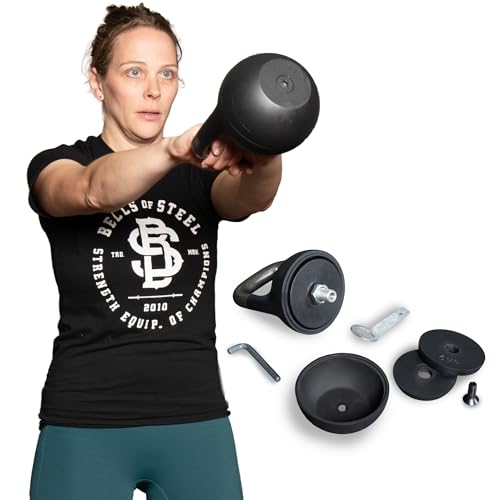
| Bells of Steel Adjustable Kettlebell | Not recommended, see its card | Adjustable kettlebell, details not confirmed | Link opened a different listing | None shown |
Soft shell kettlebell: PROIRON PVC Soft Kettlebell
If you want to start swinging with a forgiving bell, the PROIRON is the entry point. Its listing says the PVC Soft Kettlebells have a soft shell that prevents you from bruising yourself and protects the floor, which takes some of the fear out of learning the movement in a small room. It shows 4.5 stars from 1,448 ratings on Amazon AU, ships from Amazon and is sold by a third party seller.
The listing describes one piece molding with a hard handle and a soft body base, a frosted textured PVC handle with a non slip grip, and high quality iron beads inside that roll smoothly. It also lists a 1 year warranty. The listing title offers 2KG, 4KG, 6KG, 8KG and 10KG, so a strong lifter will eventually outgrow it and want a heavier, harder bell.
The listing title describes it as a kettlebell for weightlifting, conditioning, strength and core training. The listing also calls the one piece shell strong anti fall and durable, and the buy box lists returns as eligible for change of mind returns within 30 days of receipt. Its warranty bullet asks you to contact the seller with any questions or concerns.
Lifespan Cortex Standard Kettlebell: could not be bought on 20 October 2026
Could not be bought on 20 October 2026: the Amazon AU page for this listing opened a different listing, so we show no rating for it and do not recommend it. Our records list this card as the Lifespan Fitness Standard Kettlebell from the Cortex brand, and we carry that name forward and nothing else. Its card on this page carries no rating, count, weight or construction detail.
Because the link opened a different listing, we show no weight, handle, base or construction detail for this bell, and nothing from the product it opened is repeated here. Our records give the brand as Cortex, and the card on this page carries just that name and the words standard kettlebell. If you want a fixed bell from this page, the Amazon Basics and the PROIRON are the two to look at: the Amazon Basics title gives 15lbs / 6.8 kgs, and the PROIRON title offers 2KG 4KG 6KG 8KG 10KG. Open the live Amazon AU page and read the title and bullet points in full before you rely on any detail.
Sunny Health Vinyl Kettlebell: could not be bought on 20 October 2026
Could not be bought on 20 October 2026: the Amazon AU feed showed this bell out of stock, and the page for this listing opened a different listing, so we show no rating for it and do not recommend it. Our records list it as a Vinyl Coated Kettle Bell from the Sunny Health brand, and we carry that name forward and nothing else. Its card on this page carries no rating, count, weight or construction detail.
Because the link opens another product, we show no weight range, finish, base or grip claim for this bell, and nothing from the product it opens is repeated here. If the bell comes back in stock, check that the title, weight and seller on the live Amazon AU page match what you want before you rely on any detail. In the meantime, the Amazon Basics and the PROIRON are the two bells on this page with a live listing that matches its card, so they are the ones to read.
Best overall: Amazon Basics Cast Iron Kettlebell
The Amazon Basics bell is the best overall pick for most people: a plain fixed cast iron bell that shows 4.8 stars from 26,498 ratings on Amazon AU, where it is sold by Amazon AU. The listing title gives the weight as 15lbs / 6.8 kgs.
The listing describes a kettlebell made of solid cast iron, a black enamel finish for increased durability and corrosion protection, and a textured wide handle for a comfortable, secure grip that you can hold with one hand or two. It lists product dimensions of 17.78 x 10.16 x 19.05 centimeter (LxWxH). There is nothing clever here, and that is the appeal of a fixed bell. This listing is for the 6.8 kg bell, so look for a different listing if you want a heavier weight. The first bullet says the kettlebell supports a wide range of resistance training exercises, and the buy box lists returns as eligible for change of mind returns within 30 days of receipt.
The Amazon Basics title lists a single weight, 15lbs / 6.8 kgs, so there is no weight to choose between on this card. The byline reads Visit the Amazon Basics Store, and the buy box shows Amazon AU as shipper and seller with returns eligible for change of mind returns within 30 days of receipt.
Yes4All Powder Coated Kettlebell: could not be bought on 20 October 2026
Could not be bought on 20 October 2026: the Amazon AU page for this listing opened a different listing, so we show no rating for it and do not recommend it. Our records list it as a Powder Coated Cast Iron Competition Kettlebell from the Yes4All brand, and we carry that name forward and nothing else. Its card on this page carries no rating, count, weight or construction detail.
Because the link now opens another product, we show no weight, finish, handle or base detail for this bell, and nothing from the product it opens is repeated here. Confirm the weight and the finish on the live listing before you rely on any detail, and check that the title and seller match what you want. For a fixed cast iron bell that is on sale today, the Amazon Basics card on this page is the one to read, and the PROIRON card covers a soft shell alternative.
Bells of Steel Adjustable Kettlebell: could not be bought on 20 October 2026
Could not be bought on 20 October 2026: the Amazon AU page for this listing opened a different listing, so we show no rating for it and do not recommend it. It is the one adjustable bell in this guide, and our records list it as an Adjustable Kettlebell from the Bells of Steel brand. Its card on this page carries no rating, count, weight, price or handle detail.
We show no rating or price for it because the link does not open the bell we described, and nothing from the product it opens is repeated here, including any change time, weight range or accessory list. Adjustable and fixed bells answer different needs, as the first section explains, so the choice between them is yours to make from a live listing. If you want one weight to swing, the Amazon Basics and the PROIRON are the fixed bells on this page, and neither is an adjustable unit, so their cards do not cover how a weight is changed.
How to choose the weight you will actually swing
Choose a weight you can move with good form for a full set. The Amazon Basics title gives 15lbs / 6.8 kgs and the PROIRON title offers 2KG 4KG 6KG 8KG 10KG, which are the weights on sale, not advice on what suits you. After an injury, ask a qualified health professional or coach.
A kettlebell you can only lift a handful of times is not training, it is a doorstop, and you cannot groove a clean swing or get up with a weight that bullies you. The aim is a weight you can move with good form for a full set, then progress as you get stronger, which is the case for buying a slightly heavier fixed bell down the track.
One bell is enough to start. A single bell can be used for swings, goblet squats, cleans and carries, and which weight suits you is a question for you and a coach or health professional, because a listing cannot judge it. The PROIRON title lists five weights, 2KG 4KG 6KG 8KG 10KG, while the Amazon Basics listing is the one 6.8 kg bell. A second bell usually arrives when lower body moves feel light while overhead moves still do not, because the legs can handle more load than the shoulders.
Coating is the other practical decision, and it comes down to where you train. The PROIRON listing says its soft shell prevents bruising and protects the floor, which suits a bedroom or a carpeted lounge. A bare cast iron bell like the Amazon Basics has a black enamel finish for increased durability and corrosion protection, but nothing in its listing says it protects a floor, so it is happier on a mat or in a garage gym. Match the coating to your space and you will not resent the bell every time you set it down, and if you plan to drop a bare iron bell at all, a square of gym flooring protects the floorboards under it.
What actually matters on a kettlebell
A few small details separate a good bell from an annoying one. Handle width and diameter matter most: a handle that is too narrow cramps a two hand grip, and one that is too thick tires your forearms early, and if your forearms are what fail before your legs on a long set of swings, a grip trainer is a simple way to train that on its own. The Amazon Basics listing describes a textured wide handle for a comfortable, secure grip that you can hold with one hand or two. Grip texture is next: the PROIRON listing describes a frosted textured PVC handle that is non slip.
A flat, wide base is the quietly useful feature, because it lets the bell stand upright for storage and stay put for floor moves like renegade rows and push up holds. Neither the PROIRON listing nor the Amazon Basics listing mentions a flat base, so do not assume one, and check for one on any bell you are considering. Beyond that, put your effort into the right weight and a coating that suits your floor rather than into a logo.
A kettlebell and a set of dumbbells are different tools rather than rivals. A kettlebell shines for ballistic, full body moves such as swings, cleans, snatches and get ups, where the offset handle lets the weight swing through your hands and trains power, grip and conditioning at once. Dumbbells suit isolated, controlled lifts like curls and bench presses, so if your goal is bodybuilding style isolation work you will want dumbbells too.
A competition kettlebell is built to one shell size and one handle diameter at every weight, so the bell feels the same in your hands as you get stronger. That consistency is why lifters training a specific technique pay for one. Neither the Amazon Basics listing nor the PROIRON listing calls its bell a competition bell, so this page does not rank them on that basis. For general home conditioning a standard cast iron bell such as the Amazon Basics is the sensible choice.
How we checked these kettlebells
We read the Amazon AU listing for each bell, including its title, bullet points, product information and the seller shown on the buy box, and we use the makers' own words from those listings. Specs come from the maker's bullet points and the product information on each listing. Where an Amazon AU link opened a different product, we show no rating, specification or performance claim from that product. Ratings and review counts on this page are the figures shown on each listing, the four cards that could not be bought show none, and this page shows no prices, so open each card to see its live listing. For each bell we noted the title, the bullet points, the shipper and seller, the returns line, and the rating and count shown, and we write only what the listing states. Where a listing does not state a fact we say nothing about it rather than guess.
Last checked: 20 October 2026
Frequently Asked Questions
What is the best kettlebell available on Amazon?
The best kettlebell available on Amazon AU in this guide is the Amazon Basics Cast Iron Kettlebell, which shows 4.8 stars from 26,498 ratings and is sold by Amazon AU. Its listing describes solid cast iron, a black enamel finish and a textured wide handle you can hold with one hand or two.
The PROIRON PVC Soft Kettlebell is the alternative if you want a soft shell, at 4.5 stars from 1,448 ratings, shipped by Amazon and sold by a third party seller. The Amazon Basics listing is for the 6.8 kg weight, so check the weight before you add it to your basket.
What's the best kettlebell weight to start with?
Start with a weight you can move with good form for a full set. The listings here offer the Amazon Basics at 15lbs / 6.8 kgs and the PROIRON from 2KG to 10KG, but a listing cannot say what suits you. After an injury, ask a qualified health professional or coach before you choose a weight.
Pick a weight you can control, progress once that feels easy, and buy a heavier bell when you genuinely outgrow it. The PROIRON listing title offers 2KG, 4KG, 6KG, 8KG and 10KG, and the Amazon Basics listing is the 6.8 kg bell.
Why are kettlebells so expensive?
A kettlebell can cost more than its size suggests because it is a lot of solid metal with a finish on top. The Amazon Basics listing describes a bell made of solid cast iron with a black enamel finish, and an adjustable bell packs several weights into one unit. This page shows no prices, so check each listing.
Decide the weight and the coating you need first, then compare the listings that offer them.
What is the best home gym equipment in Australia?
The best home gym equipment depends on your goal, but for conditioning and full body work in a small space a single kettlebell is a compact place to start, since swings, goblet squats, cleans and presses all work from one weight. Add dumbbells or resistance bands as your training grows.
For a fuller setup see our guides to the best dumbbells in Australia, resistance bands and gym flooring.