How to choose an IPL hair removal device in Australia
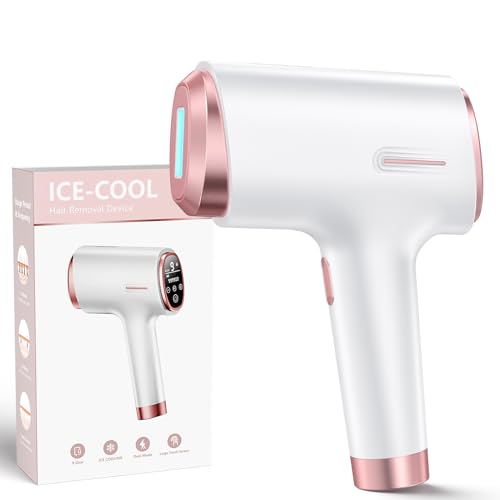
Our pick for the best IPL hair removal device in Australia is the LYSMOSKI IPL Hair Removal Device (model TM002), rated 4.0 stars from 646 ratings on Amazon Australia. It is an ice cooling, plug in handset that ships from Amazon with no import notice. IPL works best on dark hair with light to medium skin.
We picked it because it ships from Amazon, while the two highest rated listings, the Finequin 45F at 4.3 stars and the Philips Lumea Advanced at 4.2 stars, were both Global Store imports on 16 October 2026. Its own 4.0 rating is lower than theirs, and the listing does not mention a skin tone sensor, so match it carefully to your skin tone and hair colour.
What IPL is: intense pulsed light is a handset that flashes broad spectrum light, which the pigment in your hair absorbs and turns to heat in the follicle. Permanent hair reduction is not instant removal: over a course, less hair grows back and it returns finer, and you usually need occasional top up sessions. Many devices sold as laser hair removal are IPL, and the LYSMOSKI listing title says Laser Hair Removal, IPL Hair Removal.
Choosing comes down to four things: how the device manages comfort with ice cooling, whether it runs plug in or on a battery, the attachments it ships with for face, body and bikini, and whether IPL suits your skin tone and hair colour at all, because it does not work for everyone. Two listings give their own schedule: the Philips Lumea Advanced listing says to treat every two weeks for the first six weeks and then monthly, and the Braun Silk-Expert Mini listing says one session a week for 12 weeks. This guide covers six devices, and the Philips Lumea Series 9900 could not be bought on 16 October 2026.
Here is how the six devices line up on cooling, attachments and power before the detail.
| Device | Best for | Key spec | Power | Amazon AU rating |
|---|
| LYSMOSKI IPL Hair Removal Device | Our pick, best overall | Ice cooling system, five power levels | Plug in | 4.0 (646 ratings) |
| Finequin Air 15 | Fast full body sessions | Auto glide mode, three modes | Plug in | 4.1 (172 ratings) |
| Finequin 45F | Runner up, Global Store import, 16 October 2026 | 45 degree Fahrenheit cooling contact, razor and glasses in the title | Not stated | 4.3 (361 ratings) |
| Philips Lumea Advanced BRI921/00 | Body and face attachments, Global Store import, 16 October 2026 | Five intensity levels, coaching app, corrector trimmer | Battery listed | 4.2 (3,776 ratings) |
| Braun Silk-Expert Mini IPL1111 | A compact device titled corded, Global Store import, 16 October 2026 | Skin tone sensor, pouch and Venus razor | Corded in the title | 4.1 (71 ratings) |
| Philips Lumea Series 9900 BRI951/00 | Could not be bought on 16 October 2026 | SenseIQ and SkinAI in the title, four attachments | Wired and wireless in the title | Not shown |
How we chose these IPL devices
We chose these devices by reading the Amazon Australia listing for each one, including the rating, review count, seller and any Global Store notice, and by checking the maker's bullets and product information table on the same listing, so every claim here can be traced back to a listing.
Last checked: 16 October 2026, Amazon Australia listings.
How IPL works, and what it can realistically do
IPL works by targeting the melanin, the pigment, in your hair. The light pulse passes over the skin, is absorbed by the darker pigment in the hair shaft, and turns to heat that travels down to the follicle and damages it, which slows and thins regrowth. Because it acts on hair that is actively growing, you cannot do it in one go: hair grows in cycles, so you treat repeatedly over a course to catch each follicle in the right phase. Follow your maker's schedule, then add top up sessions every so often to keep on top of regrowth. You shave the area before each flash, so a decent safety razor or an electric shaver is part of the kit rather than an extra. If you want to keep a beard line rather than remove hair, our beard trimmer picks for every beard length cover the tool for that. Set your expectations accordingly: IPL gives a real, lasting reduction in how much hair grows back and how coarse it is, not a one and done permanent strip. The LYSMOSKI, Finequin Air 15 and Finequin 45F listings all describe ice cooling, so repeated sessions do not become a chore.
Corded or cordless, and attachments
Two practical features shape day to day use: power and attachments. The LYSMOSKI listing says it is a plug in device, not wireless, and the Finequin Air 15 listing says to keep it connected to power during treatment. The Braun Silk-Expert Mini is titled corded, and the Philips Lumea Advanced listing mentions an AAA battery. The LYSMOSKI, Finequin Air 15 and Finequin 45F listings do not state a plug type or voltage, so check the plug before you buy. Attachments are the other thing to weigh: a head shaped for a large flat area like a shin is wrong for the curve of an underarm or the delicacy of an upper lip. The Philips Lumea Advanced ships with body and face attachments plus a corrector trimmer, and the Finequin 45F listing describes standard and precision attachments for legs, arms, face, armpit, bikini, chest and back. For the face specifically, a dermaplane tool covers the fine vellus hair IPL will never target, and an LED face mask is the other at home light device people pair with a handset.
Best overall: LYSMOSKI IPL Hair Removal Device
The LYSMOSKI IPL Hair Removal Device (model TM002) is our pick at 4.0 stars from 646 ratings. The listing says it ships from Amazon and is sold by LACVY, and on 16 October 2026 it carried no Global Store import notice. It has an ice cooling system that the listing describes as painless, five power levels (new users start at level 1), an auto glide mode and a plug in design. The title names armpits, back, legs, arms, face and bikini line, the listing says head to toe takes 12 minutes, and it says the device is for women and men but not suitable for eyebrows or tattoos.
The listing does not mention a skin tone sensor, so match it carefully to your own skin tone and hair colour. It does not state a plug type or voltage, so check the plug before you buy. Its 4.0 rating is lower than the Finequin 45F at 4.3 and the Philips Lumea Advanced at 4.2, which were Global Store imports on 16 October 2026.
Finequin Air 15: an auto glide mode for fast full body sessions
One reason people give up on IPL is the time it takes to flash a whole leg one pulse at a time. The fix is a glide mode, where the device fires continuously as you move it so you can sweep large areas in one pass instead of pressing for every pulse. The Finequin Air 15 listing describes an auto glide mode with a fast flash and three modes, and says a full body treatment takes 15 to 30 minutes. The LYSMOSKI lists an auto glide mode too. The Air 15 listing also describes an ice cooling touch at 50 degrees Fahrenheit on the skin, and a skin sensor that only emits light when it detects skin; it does not describe skin tone sensing. It is a plug in device with 4.1 stars from 172 ratings, a smaller base than the Philips, so weigh that.
Because IPL is a course rather than a single treatment, comfort decides whether you finish it. The heat from the pulse is what people feel, and cooling is how these devices address it. The Finequin 45F title names a 45 degree Fahrenheit ice cooling contact, and the listing describes a virtually pain free session even in sensitive areas, naming the face, armpit and bikini line. That is the maker's claim, so expect a warm pulse rather than no sensation at all. The title also says it comes with a razor and glasses, and the listing describes a touchscreen and standard and precision attachments. It has 4.3 stars from 361 ratings. On 16 October 2026 this listing was sold and shipped by Amazon US through the Global Store, so check the plug and returns, because the listing does not state a plug type or voltage.
Philips Lumea Advanced BRI921/00: 4.2 stars from 3,776 ratings
With IPL you are putting light energy onto your own skin, so the device you trust matters more than with a typical gadget. The Philips Lumea Advanced listing shows 4.2 stars from 3,776 ratings. It gives five light intensity levels, a free Lumea Coaching app, body and face attachments and a corrector trimmer, and it says the product was developed with leading scientists and dermatologists and tested for over 3,000 women. Those are the maker's claims. The Advanced listing does not mention skin tone sensing, although the Philips Lumea IPL Hair Removal 9000 Series BRI957 listing describes a SmartSkin sensor that measures skin tone. On 16 October 2026 the Advanced listing was sold and shipped by Amazon Germany through the Global Store and was non returnable, which is why it is not our pick. Check the plug and returns before you buy.
Braun Silk-Expert Mini IPL1111: a compact device titled corded
The Braun Silk-Expert Mini IPL1111 title calls it a corded device and lists a pouch and a Venus razor, and the listing says the razor model may vary. It describes a skin tone sensor that reads your skin tone and adjusts each flash, says it is eye safe so no glasses are needed, and gives a schedule of one session a week for 12 weeks, with full body treatment in 13 minutes. Those are the maker's claims. It is a newer listing with 4.1 stars from 71 ratings, a smaller base than the Philips, so weigh that. The listing also lists a battery, so we rely only on the corded title for how it is powered. On 16 October 2026 this listing was sold and shipped by Amazon US through the Global Store, so check the plug and returns.
Philips Lumea Series 9900 BRI951/00: could not be bought on 16 October 2026
Could not be bought on 16 October 2026: Amazon showed the Philips Lumea Series 9900 as currently unavailable, and its listing opened a different Philips Lumea model. Its title names SenseIQ and SkinAI technology and four attachments for body, face, bikini and armpits, with wired and wireless use. We keep the card so you can see the model, but we are not recommending it while it cannot be bought.
Will IPL work on your skin and hair?
Check this before you buy anything, because IPL does not work for everyone and no device can change that. IPL targets the pigment, the melanin, in your hair, which means it works best on dark hair with light to medium skin.
That is the combination where there is plenty of pigment in the hair for the light to find and not too much in the skin to get in the way. It does not work well on light, grey, red or white hair, because there is little or no pigment in those hairs for the light to target. Just as importantly, IPL is generally not recommended for very dark skin tones, because the light can target the pigment in the skin itself rather than the hair and risk burns, which is why some devices with skin tone sensors will not fire on the darkest tones as a safety measure. Philips states that its Lumea model is intended for skin tones I to IV and naturally dark blonde, brown or black hair (Philips Australia Lumea 9000 Series page). Whichever device you choose, wear the protective glasses if yours comes with them, never use it near your eyes, and avoid flashing over tattoos and moles. Be honest with yourself about your skin tone and hair colour before you buy: it decides whether IPL will work for you, whatever features are on the box. If IPL is ruled out for you on either count, waxing is the alternative that still buys weeks between sessions, and our guide to at home wax warmers covers the pots and kits worth owning. For light, grey, red or white hair, which IPL cannot see at all, an epilator is the tool that still works.
Our verdict
The LYSMOSKI IPL Hair Removal Device is our pick: 4.0 stars from 646 ratings, an ice cooling system, five power levels and a plug in design, shipped by Amazon. If you want faster full body sessions, look at the Finequin Air 15 with its auto glide mode, at 4.1 stars from 172 ratings. The Finequin 45F has a 45 degree Fahrenheit ice cooling contact and 4.3 stars from 361 ratings, and the Philips Lumea Advanced has 4.2 stars from 3,776 ratings, but on 16 October 2026 both were Global Store imports, as was the Braun Silk-Expert Mini IPL1111 at 4.1 stars from 71 ratings. The Philips Lumea Series 9900 could not be bought on 16 October 2026. Whichever you pick, confirm IPL suits your skin tone and hair colour first.
Frequently asked questions
What is the best IPL machine or device for home use in Australia?
The LYSMOSKI IPL Hair Removal Device is our pick: an ice cooling, plug in handset shipped by Amazon, rated 4.0 stars from 646 ratings. IPL works best on dark hair with light to medium skin. On 16 October 2026 the Philips Lumea Advanced, Finequin 45F and Braun Silk-Expert Mini listings were Global Store imports, so check returns.
Which IPL brand is best?
Philips Lumea and Braun are two of the brands named in Google's AI Overview and ChatGPT for this search. Our pick is still the LYSMOSKI, because on 16 October 2026 the Philips Lumea Advanced and Braun Silk-Expert Mini listings were Global Store imports, and the Philips Lumea Series 9900 could not be bought.
What is IPL hair removal and how does it work?
IPL stands for intense pulsed light. The handset flashes broad spectrum light that the pigment in your hair absorbs, and the light turns to heat in the follicle, which slows regrowth. You treat in a course rather than once, and the maker's schedule decides how often, so follow the manual for your device.
Is IPL permanent hair removal?
Not in one go. At home IPL gives permanent hair reduction rather than instant permanent removal: over a course, less hair grows back and it returns finer. Even so, most people need occasional top up sessions because hair grows in cycles, and results vary between people.
Does IPL work on all skin tones and hair colours?
No. IPL targets the pigment in your hair, so it works best on dark hair with light to medium skin. It does not work well on light, grey, red or white hair, and it is generally not recommended for very dark skin tones. Philips states its Lumea model is intended for skin tones I to IV.
Are there IPL devices made for sensitive skin in Australia?
Look for ice cooling and a low starting level. The LYSMOSKI listing offers five power levels and says new users start at level 1, and the Finequin 45F listing describes a 45 degree Fahrenheit cooling contact for sensitive areas. Check the maker's skin tone chart first, and skip IPL if your skin tone is very dark.
Does at home IPL hurt?
Most at home devices aim to be nearly painless by cooling the skin as the light fires. The LYSMOSKI, Finequin Air 15 and Finequin 45F listings all describe ice cooling, and the 45F lists a 45 degree Fahrenheit contact. Expect a warm pulse rather than sharp pain, though sensitivity varies by person and body area.
Is IPL or laser better for hair removal?
Both use light on the pigment in the hair. A salon laser fires one wavelength and usually needs fewer sessions, while IPL uses broad spectrum light at lower intensity, which is why it is sold for home use and takes a longer course. Many devices sold as laser hair removal are IPL, including the LYSMOSKI.
How often can you use IPL at home, and how long does a course take?
Follow your maker's schedule. The Philips Lumea Advanced listing says to treat every two weeks for the first six weeks, then monthly. The Braun Silk-Expert Mini listing says one session a week for 12 weeks. The LYSMOSKI listing claims head to toe in 12 minutes, so plan on weeks of sessions, not one.
What is the difference between corded and cordless IPL devices?
A corded or plug in device runs while connected, with no battery to charge, while a cordless one moves freely. The LYSMOSKI and Finequin Air 15 listings both say plug in, and the Braun Silk-Expert Mini is titled corded. The Philips Lumea Advanced listing mentions an AAA battery, so read its power details.
Is IPL better than an epilator?
IPL treats the follicle with light over a course, so regrowth slows. An epilator pulls hairs out by the root, so it does not depend on hair colour and still works on light, grey, red or white hair that IPL cannot target. See our epilator guide for models.
What safety precautions should I take with at home IPL?
Wear protective glasses if the maker supplies them, never flash near your eyes, and avoid tattoos and moles. The Finequin Air 15 and 45F listings tell you to check the maker's skin chart first. IPL is generally not recommended for very dark skin tones, and tanned skin needs professional advice.
Can men use at home IPL, and can it be used on the face?
Yes, on the right skin and hair. The LYSMOSKI and Finequin Air 15 listings say they are for women and men, and the LYSMOSKI title names the face but its listing says it is not suitable for eyebrows. Check the maker's skin chart before treating your face.