Short answer: the Shark CryoGlow is the best LED face mask in Australia on Amazon AU, at 4.5 stars from 374 ratings, with 480 blue, red and infrared light sources and under eye cooling. The NVBOTY is the budget pick. None of these is a medical treatment.
How to choose an LED face mask in Australia
An LED face mask is a wearable panel of light emitting diodes that you wear on your face for a short session, with red, blue or near infrared light. Listings describe red light as aimed at wrinkles and fine lines, blue light at breakouts, and near infrared as the light paired with red. Choosing one comes down to five things. First, wavelength coverage: decide which lights you actually want before comparing anything else. Second, LED count, which drives how evenly the dose spreads across your face. Third, cordless versus corded, which decides whether a session pins you to the couch. Fourth, cleaning, because a mask sits directly on your skin after every use. And fifth, the review base, in a category full of lookalike masks with no track record. This guide covers six masks sold on Amazon AU, and it explains where the clinic style brands Omnilux and CurrentBody fit.
Best overall: Shark CryoGlow LED Face Mask (FW312PLANZ)
The Shark CryoGlow is our pick and the best LED face mask in Australia on Amazon AU: 4.5 stars from 374 ratings, the highest rating in this guide. Its listing describes integrated under eye cooling with 3 temperature controlled chill levels to relieve puffy eyes, plus 480 blue, red and infrared light sources and a daily 8 minute session. The listing names the model as FW312PLANZ and shows Amazon AU as the shipper and seller. It does not state the plug or voltage, or any wavelength in nanometres. The 12 week clinical study it cites is the maker's own claim, which we have not reviewed. If under eye cooling is not why you are buying, the NVBOTY covers the light alone.
How we chose and compared these LED face masks
We chose the six masks from Amazon AU listings and compared what each maker listing states for wavelengths, LED count, power output, seller and rating. We have not reviewed the clinical studies the listings cite. Regulator status sits on the Australian Register of Therapeutic Goods, and none of the six listings states an entry.
| Mask | Best for | Rating | LEDs published | Near infrared listed | Seller |
|---|
| Shark CryoGlow (FW312PLANZ) | Under eye cooling plus red, blue and infrared light | 4.5 stars (374 ratings) | 480 | Yes | Amazon AU |
| Aphrona MOONLIGHT PRO | Red and blue light with 450 LED chips | 4.4 stars (511 ratings) | 450 | No | Amazon US through the Global Store, a US import (16 October 2026) |
| NVBOTY LED Face Mask | Budget pick with four modes and a remote | 4.3 stars (615 ratings) | 400 | Yes | lolipopop, ships from Amazon |
| STYLPRO Wavelength | A stated power output with three light colours | 4.2 stars (182 ratings) | No LED count in the listing | Yes | STYLPRO, ships from Amazon |
| RENPHO LED mask | A remote and a 10 to 30 minute timer | 4.3 stars (13 ratings) | 324 | Yes | Renpho Wellness AU, ships from Amazon |
| Nanoleaf LED mask | Cordless, with no app or wall plug | 4.3 stars (332 ratings) | 432 | Yes | Nanoleaf Official, ships from Amazon |
Last checked: 16 October 2026
Which LED face mask for which concern
Pick by your main concern, then check the listing. These rows describe what the listings say, not medical claims, and results are gradual and vary.
| Concern | Masks to look at | What the listings say |
|---|
| Fine lines and firmness | Shark CryoGlow, STYLPRO Wavelength, Nanoleaf | The Shark pairs infrared LED with under eye cooling to target fine lines, the STYLPRO lists red 633nm, and the Nanoleaf lists red and near infrared light for the appearance of fine lines |
| Breakouts | STYLPRO Wavelength, NVBOTY, RENPHO, Shark CryoGlow | The STYLPRO lists blue 415nm and a mode for controlling blemishes, the NVBOTY has a 460nm blue mode, the RENPHO lists 415nm blue, and the Shark lists blue and red LEDs for acne and skin clarity |
| Puffy under eyes | Shark CryoGlow | Integrated under eye cooling with 3 chill levels; the other five listings do not mention cooling |
| Cordless use | Nanoleaf | Built in rechargeable battery, with no app or wall plug required |
| Tightest budget | NVBOTY | 400 LEDs, four modes and the most ratings here at 615 |
Omnilux and CurrentBody: where they fit
Omnilux Contour Face and CurrentBody are the clinic style names the AI answers lead with. ChatGPT and Perplexity name the Omnilux Contour Face first for red 633nm and near infrared 830nm light, and Google lists CurrentBody Series 3 with 6 wavelengths. Both sell through their own Australian sites, omniluxled.com.au and currentbody.com.au. We rank only the masks whose Amazon AU listings we could check, so buy those two direct from the brand and check the warranty on the Australian site before paying.
Red, blue and infrared: what each wavelength does
Listings describe red light, about 630 to 633nm, as aimed at wrinkles and fine lines, and blue light at 415nm as aimed at breakouts. Near infrared is the light the listings pair with red: the STYLPRO lists 830nm, and the NVBOTY and RENPHO list 850nm. The Shark and Nanoleaf listings say infrared but give no nanometre figure. Irradiance is how much light power reaches the skin, written in mW/cm2. The STYLPRO lists 62 to 129 mW/cm2 and the RENPHO lists 6 to 12 mW/cm2, and the other four listings do not state it in their title or bullets. Results are gradual and vary, and no wavelength treats an underlying skin condition, so ask a GP or dermatologist about ongoing acne, rosacea or pigmentation.
STYLPRO Wavelength: red, blue and near infrared with a stated power output
The STYLPRO Wavelength lists red 633nm, blue 415nm and near infrared 830nm across 4 modes, with sessions of 10 minutes and a stated power output of 62 to 129 mW/cm2. It is 4.2 stars from 182 ratings, sold by STYLPRO and shipped by Amazon. The listing says it was designed in the UK, and it does not state an LED count.
LED count: more diodes, more even coverage
LED count is the spec the listings shout loudest about, and it does matter, up to a point. More diodes spread the light more evenly across the contours of your face, with fewer weak spots around the nose, chin and hairline. On the counts the makers publish, the Shark leads this guide at 480, the Aphrona follows at 450, the Nanoleaf at 432, the NVBOTY at 400 and the RENPHO at 324; StylPro does not publish a figure at all. But count is not a quality score on its own. A higher count does not tell you how much light reaches the skin, and only two listings state a power output you can compare: the STYLPRO at 62 to 129 mW/cm2 and the RENPHO at 6 to 12 mW/cm2. Use it as a tiebreaker, not the headline spec: wavelength coverage and fit come first.
Aphrona MOONLIGHT PRO: the runner up, a US import
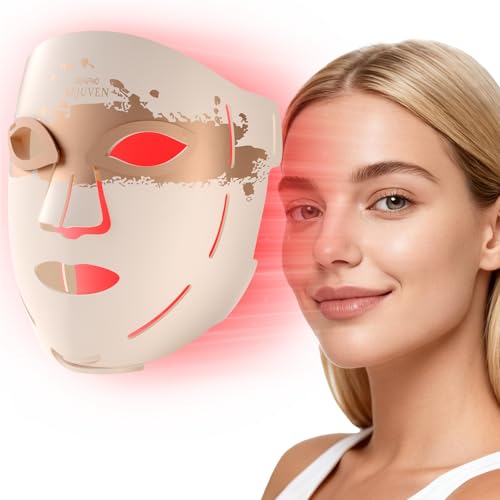
The Aphrona MOONLIGHT PRO is the second highest rated mask here at 4.4 stars from 511 ratings, with 450 LED chips, 630nm red, 415nm blue and sessions from 5 to 50 minutes. At the 16 October 2026 check this listing was sold and shipped by Amazon US through the Global Store, with the notice that US imports may differ from local products, and it says the item cannot be returned. The plug and voltage are not stated, and the listing does not list near infrared. Its FDA 510(k) clearance is the seller's claim and a US status.
Cordless or corded, fit and cleaning
A mask you wear for ten minutes a day needs to fit your routine, not just your face. Cordless masks like the Nanoleaf let you walk around the house mid-session, which makes daily consistency far easier to sustain. The RENPHO includes a remote, so you can switch between red, blue and infrared modes without lifting the mask off. Fit matters because gaps mean uneven light: flexible designs hug the contours of the face, while rigid shells rely on getting the strap tension right. The Aphrona listing does not state its plug or voltage, so check the details before you buy. And because a mask sits directly on your skin, wipe it down with a soft, slightly damp cloth after each session and never share it without cleaning it first.
RENPHO Red Light Therapy Mask: 324 LEDs and a remote
The RENPHO lists 324 LEDs with 630nm red, 415nm blue and 850nm near infrared, three modes, a remote and a 10 to 30 minute timer, with a low irradiance design of 6 to 12 mW/cm2. It is sold by Renpho Wellness AU and shipped by Amazon. Treat the rating with care: 4.3 stars from only 13 ratings. The listing says it is not recommended for darker skin tones or tanned skin.
A mask is one device in a routine rather than the whole routine. If you are also weighing a microcurrent facial device, the two do different jobs and light therapy is the passive one. Sheet and clay face masks are a different kind of skincare, and a gua sha tool is a manual option. Other skincare tools sit alongside light therapy, such as a jade roller or dermaplaning tool, but check the product guidance before combining them with a light session.
Honest expectations: what results actually look like
This is a category where marketing runs ahead of evidence, so set expectations before spending. Plan on weeks, not days: the NVBOTY listing says visible results need more than 4 weeks of continuous use, and the Nanoleaf listing suggests 3 to 5 sessions a week. Results vary by device, consistency and skin concern, and we make no medical claims for any pick. None of the six Amazon AU listings we checked states an ARTG entry. Take a photo in consistent light before you start so you can judge honestly later.
Nanoleaf Red Light Therapy LED Face Mask: the cordless option
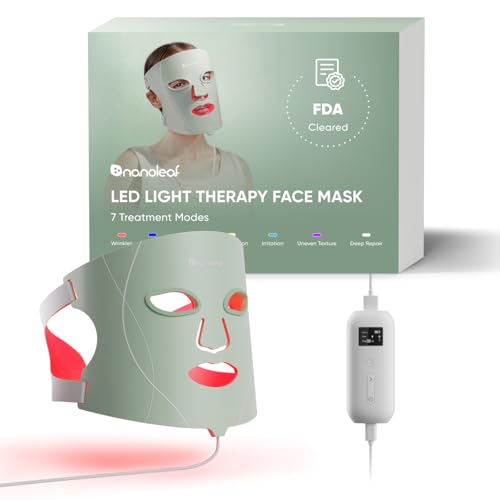
The Nanoleaf lists 432 LEDs, 7 light modes, adjustable intensity and a built in rechargeable battery, with no app or wall plug required. It uses red and near infrared light, and the listing does not give the wavelengths in nanometres. It is 4.3 stars from 332 ratings, sold by Nanoleaf Official and shipped by Amazon.
Safety: eyes, medication, and when to see a GP or dermatologist
Treat safety as a checklist. Protect your eyes: use the supplied eye shields or cutouts, keep your eyes closed during sessions and never stare into the LEDs. Do not use a mask over an active skin condition such as an infection, a rosacea flare, broken skin or anything undiagnosed without advice from a professional first, and see a GP or dermatologist for ongoing acne or rosacea. Some medications increase sensitivity to light, so check with your GP or pharmacist before starting if you take regular medication. The RENPHO listing says it is not recommended for darker skin tones or tanned skin. Begin with shorter sessions than the maximum and stop if redness or irritation persists.
NVBOTY LED Face Mask: the budget pick
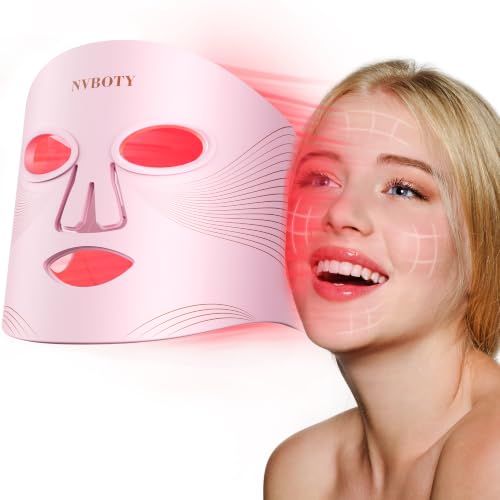
The NVBOTY lists 400 LEDs and four modes: 850nm infrared with 630nm red, 600nm orange, 460nm blue and a four colour cycle, on a rechargeable remote with a timer. It is 4.3 stars from 615 ratings, the most ratings of the six masks here. It is sold by lolipopop and shipped by Amazon. The listing does not mention under eye cooling or the plug and voltage.
Our verdict
Buy the Shark CryoGlow if under eye cooling matters: it is the best overall pick at 4.5 stars from 374 ratings, with 480 blue, red and infrared light sources and Amazon AU as the seller. On a tighter budget the NVBOTY lists 400 LEDs and four modes at 4.3 stars from 615 ratings. The Aphrona MOONLIGHT PRO is rated 4.4 stars from 511 ratings and was a US import through the Amazon US Global Store at the 16 October 2026 check. The STYLPRO Wavelength states its power output, the RENPHO adds a remote and the Nanoleaf is cordless. Five of the six listings mention infrared, and the Aphrona's bullets list only red and blue, though its title says 7 Color Treatment. If your heart is set on Omnilux or CurrentBody, buy direct from their own Australian sites.
Frequently Asked Questions
What is the best LED face mask in Australia?
The Shark CryoGlow is the best LED face mask in Australia on Amazon AU: 4.5 stars from 374 ratings, 480 blue, red and infrared light sources, and under eye cooling with 3 chill levels. Amazon AU is the seller. It is not a medical treatment, so see a GP for skin concerns.
What type of LED mask is best?
A flexible silicone mask that lists red light and near infrared is a sound starting point, with blue added if breakouts are your concern. Compare wavelengths, LED count, fit and cleaning, then check the review base. Our pick, the Shark CryoGlow, lists blue, red and infrared light and has 374 ratings.
What is the highest rated LED face mask?
The highest rated mask in this guide is the Shark CryoGlow at 4.5 stars from 374 ratings, and no other mask here is rated above 4.4. The NVBOTY has the most ratings at 615, at 4.3 stars. The RENPHO shows 4.3 stars from only 13 ratings, so treat that figure with care.
Which is better, the Omnilux or the Shark LED mask?
ChatGPT and Perplexity name the Omnilux Contour Face first, with red 633nm and near infrared 830nm light. The Shark CryoGlow adds blue light and under eye cooling. We rank the Shark because its Amazon AU listing could be checked, and Omnilux sells through its own Australian site, omniluxled.com.au.
Is there a good LED eye mask?
None of the six masks in this guide is a dedicated eye mask. The closest is the Shark CryoGlow, whose listing describes integrated under eye cooling with 3 temperature controlled chill levels to relieve puffy eyes, alongside its full face blue, red and infrared light.
Which LED colour is best for wrinkles?
For fine lines, the listings point to red light: the STYLPRO lists 633nm red for fine lines and wrinkles, the Nanoleaf lists red and near infrared light for the appearance of fine lines, and the Shark pairs infrared LED with under eye cooling to target fine lines. Results are gradual and vary, so allow weeks.
What are the downsides of using an LED face mask?
Two downsides to know about are slow results and skin tone limits. The NVBOTY listing says visible results need more than 4 weeks of continuous use, and the RENPHO listing says it is not recommended for darker skin tones or tanned skin. Protect your eyes, and see a GP first if you take medication that increases light sensitivity.
Do LED face masks actually work?
Results are gradual and vary by device, consistency and skin concern. The NVBOTY listing says visible results need more than 4 weeks of continuous use, and the Shark listing cites results from a 12 week clinical study, which we have not reviewed. None of these masks is a medical treatment, so ask a GP or dermatologist about skin concerns.
What is the difference between red, blue and infrared light in an LED mask?
Listings describe red light, about 630 to 633nm, as aimed at wrinkles and fine lines, blue light at 415nm as aimed at mild to moderate acne, and near infrared at 830 to 850nm, paired with red. Five of the six masks here list infrared; the Aphrona's bullets list only red and blue, though its title says 7 Color Treatment. Results are gradual and vary.
How long does an LED face mask take to show results?
The listings say to allow weeks, not days: the NVBOTY says visible results need more than 4 weeks of continuous use, and the Shark cites results in as little as 4 weeks from a 12 week clinical study. Take a photo in the same light before you start so you can judge for yourself.
Is the Shark CryoGlow worth it in Australia?
Yes if under eye cooling matters: the listing describes 3 chill levels to relieve puffy eyes, on top of 480 blue, red and infrared light sources, and Amazon AU sells it at 4.5 stars from 374 ratings. If cooling is not the point, the NVBOTY lists 400 LEDs and four modes and does not mention cooling.
Why are Omnilux and CurrentBody not in this guide?
We rank masks whose Amazon AU listings we could check. Omnilux and CurrentBody both sell through their own Australian sites, omniluxled.com.au and currentbody.com.au, so we point you there instead. Buy those two direct from the brand and check the warranty on the Australian site before paying.
Are LED face masks safe to use at home?
Treat safety as a checklist: protect your eyes, skip use over an active skin condition or broken skin, and check with a GP or pharmacist if you take medication that increases light sensitivity. Start with short sessions and stop if redness or irritation persists. The RENPHO listing says it is not recommended for darker or tanned skin.
Should I buy a corded or cordless LED face mask?
The RENPHO title says Cordless, and the Nanoleaf listing mentions a built in rechargeable battery and says no app or wall plug is required; the RENPHO also includes a remote for switching modes. The Aphrona was a US import at the 16 October 2026 check, and its listing does not state the plug or voltage.
Is an LED face mask TGA approved in Australia?
Check the register rather than assume. The Australian Register of Therapeutic Goods lists what can be supplied in Australia, and you can search it by product name on the TGA website. None of the six Amazon AU listings we checked states an ARTG entry, so ask the seller for the entry if it matters to you.
Is an LED face mask FDA approved?
FDA clearance is a United States status, not an Australian one. The Aphrona listing says it is FDA 510(k) cleared as a Class II medical device, which is the seller's claim for a US import sold by Amazon US through the Global Store at the 16 October 2026 check. The other five listings make no FDA clearance claim.
What is the best budget LED face mask in Australia?
The NVBOTY is our budget pick: 400 LEDs, four modes including 850nm infrared, and 4.3 stars from 615 ratings, the most ratings of the six masks here. Its listing does not mention under eye cooling. The seller is lolipopop, shipped by Amazon, so check the seller and returns details on the listing before you buy.
Do LED masks help with acne?
Blue light is the wavelength the listings aim at breakouts: the STYLPRO lists 415nm blue and a mode for controlling blemishes, and the Shark lists blue and red LEDs for acne and skin clarity. Results vary, so see a GP or dermatologist before treating active acne.