Bypass or anvil? That is the real question
Before you compare a single price, answer this: are you cutting living green wood or dead hard wood? It is the question that splits this whole category in two. A bypass lopper works like scissors - two blades pass each other to slice cleanly through live stems and green branches without bruising them, which is what you want for healthy growth you intend to keep alive. An anvil lopper instead crushes a single blade down onto a flat plate, and that crushing force is far better suited to dead, dry, woody branches that a bypass blade would struggle to slice. Get that one decision right and the rest is detail.
From there, two more features decide which pair suits your garden. Telescopic or extendable handles give you reach for high branches so you can prune from the ground instead of a ladder, and geared or compound power-lever action multiplies the force you put in so thick branches give way with far less effort. The six picks below run from the Spear and Jackson mini bypass up to the WOLF-Garten RS900T, and the most important step is simply matching the cutting diameter to the branches you actually have.
Spear and Jackson Razorsharp Mini Loppers
If you just want a tidy, clean cut on light growth without spending much, the Razorsharp Mini is the entry point. It is the cheapest pick here, and it covers the basics of a bypass lopper properly: S50C carbon steel blades that hold a sharp edge, a PTFE coating on the upper blade to keep rust at bay, and a passing blade bypass action that slices live stems cleanly rather than crushing them.
At 450mm on light tubular aluminium handles it is short and nimble, so it slips into tight spaces between shrubs and rose bushes where a full-size pair simply will not fit. The trade-off at this size is honest: short handles mean short reach and less leverage, so treat this as a compact bypass for light pruning rather than a tool for thick branches or high limbs.
Fiskars Loppers for Tree Trimming
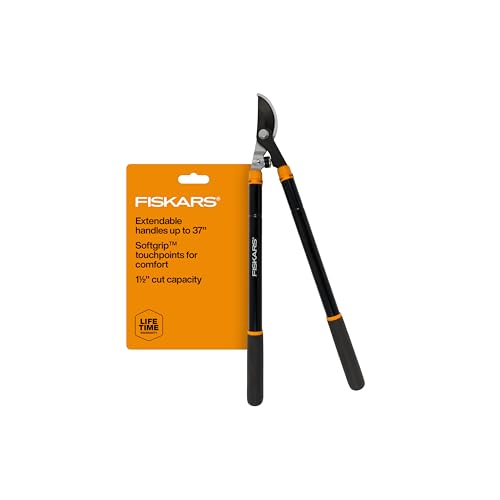
The Fiskars Loppers for Tree Trimming are the plain, sharp bypass all-rounder of this guide, with the reassurance of a big review base behind them. Fiskars is the recognised brand in this guide, and the bypass steel blade here is fully hardened with a non-stick coating that glides through live branches up to about 38mm, cuts down on gumming and resists rust.
The steel handles extend from roughly 62cm to 94cm, adding reach and leverage when a branch sits a little higher or thicker, and the rounded Softgrip handles keep things comfortable through a long session. The catch is the one that applies to any sharp bypass: it is built for live green wood, so for thick dead branches you will get on better with an anvil pair like the Spear and Jackson Advance further down this list.
Fiskars 9138 Power-Lever Bypass Lopper
The Fiskars 9138 is the upgrade to make when the standard pair starts to feel like hard work on thicker branches. Its headline feature is Power-Lever technology, a compound mechanism that multiplies your leverage up to two times compared with a traditional single-pivot lopper, so you can power through branches up to about 44mm diameter without straining your hands or shoulders.
It is still a clean-cutting bypass, so it suits live green wood, and the fully hardened, precision-ground steel blade stays sharp through heavy use. With more than 3,300 ratings at 4.7 stars it is one of the best-reviewed picks here. The honest limit is reach: the 28-inch handles are fixed and do not telescope, so for high branches you will want the extendable Corona or the WOLF-Garten instead.
Corona DualLINK Extendable Branch Cutter
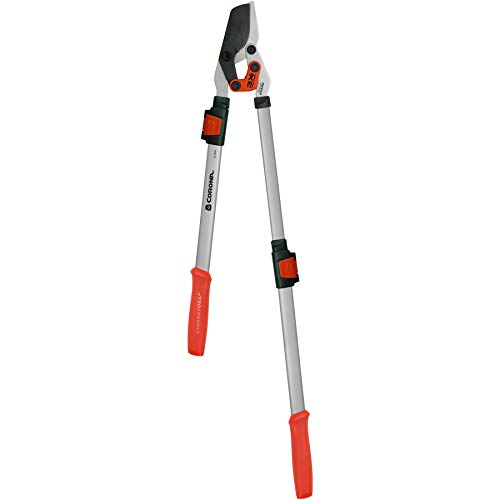
The Corona DualLINK is the pick when the branches you want are above your head. Its handles telescope from roughly 70cm out to 95cm, so you can reach high limbs and prune from the ground rather than balancing on a ladder - a genuine safety win as much as a convenience. It is a bypass cutter, so it slices live wood cleanly, and it handles limbs up to about 44mm.
The trapezoid steel handles are strong, and a shock-guard bumper plus a comfort gel grip soak up the jolt of each cut to keep fatigue down over a long pruning session. One honest caveat: any telescopic lopper is heavier to hold steady at full extension than a fixed pair, so extend it only as far as the branch actually needs.
Spear and Jackson Razorsharp Advance Loppers
The Razorsharp Advance is the heavy-duty pick for the jobs that defeat a bypass pair - thick, hard, dead wood. It uses an anvil design, where the blade crushes down onto a flat plate, which suits dead and woody branches far better than a slicing bypass blade ever will. On top of that, a ratchet action lets you cut through tough wood in a series of easy short steps rather than one exhausting squeeze.
The PTFE coated blade resists rust and cuts more smoothly, the telescopic aluminium handles add reach and leverage, and with more than 5,100 ratings it carries the largest review base in the whole guide. The honest caveat is built into the design: an anvil blade tends to crush live green stems rather than cut them cleanly, so keep this pair for dead and woody growth and reach for a bypass on soft new shoots.
WOLF-Garten RS900T Power Cut Telescopic Loppers
The WOLF-Garten RS900T is the do-everything pick and the one to buy if you want a single pair that copes with both reach and thick wood. It is German-made, the telescopic handles extend to 900mm for high branches, and a geared power-cut mechanism multiplies your force so it powers through branches up to about 50mm - the widest cut capacity in this guide.
The non-stick blades cut cleanly, the ergonomic handles stay comfortable, and a 10 year guarantee backs the build quality you would expect at this price. At 4.8 stars across more than 3,900 ratings it holds the highest rating here. The honest caveat is that all that capability comes at a cost in both senses: it is heavier and dearer than a basic pair, so if you only ever prune light growth the cheaper Spear and Jackson mini will serve you just as well.
How to match loppers to your branches
The single biggest mistake is buying for the branch you imagine rather than the ones in your garden. Start with the wood. If you are mostly tidying live shrubs, roses and green growth you want to keep healthy, a bypass lopper gives the clean cut that helps a plant heal. If you are clearing dead, dry, woody branches, an anvil lopper crushes through them with far less effort and far less risk of the blade jamming. Several gardens need both, which is why a clean-cutting bypass and a tougher anvil pair make a sensible two-tool kit.
Then match the cutting diameter to your branches. A mini bypass like the Spear and Jackson handles light stems, the Fiskars and Corona pairs cope with branches up to roughly 44mm, and the WOLF-Garten goes widest at about 50mm. Reach is the other deciding factor: if you have high limbs, telescopic handles on the Corona, the Spear and Jackson Advance or the WOLF-Garten let you prune from the ground rather than a ladder. Buy for the wood, the width and the height you actually deal with and you will not overspend.
What the key features actually mean
A few terms do most of the work when you compare loppers. Bypass versus anvil is the headline: bypass blades pass each other like scissors for a clean cut on live wood, while anvil blades crush onto a plate for dead hard wood. Cut capacity is the maximum branch diameter a pair can take - exceed it and you will struggle or damage the tool, so it is the number to match to your branches first.
Geared or compound power-lever action is the feature that saves your hands: instead of a single pivot, these designs multiply the force you apply, like the Fiskars 9138 that gives up to two times the cutting power and the WOLF-Garten geared mechanism for the thickest branches. Telescopic or extendable handles trade a little extra weight for reach, letting you prune high limbs safely from the ground. Read those few features together and any lopper spec sheet starts to make sense.
Frequently Asked Questions
Bypass or anvil loppers - which should I buy?
It depends on the wood you are cutting. Bypass loppers work like scissors, with two blades passing each other for a clean cut on live, green branches you want to keep healthy. Anvil loppers crush a single blade down onto a flat plate, which suits dead, dry, hard wood far better. If you mostly prune living shrubs and roses, choose a bypass pair; if you are clearing dead woody branches, choose an anvil pair. Many gardens benefit from owning one of each.
What size branch can loppers cut?
It varies by model, so match the cut capacity to your branches before anything else. Among the picks here the Fiskars Loppers for Tree Trimming handle branches up to about 38mm, the Fiskars 9138 and Corona DualLINK reach roughly 44mm, and the WOLF-Garten RS900T goes widest at about 50mm. Trying to force a branch thicker than the rated capacity will strain you and can damage the blade, so choose a pair with a little headroom above the branches you cut most often.
What are telescopic or extendable loppers for?
Telescopic handles extend to give you extra reach, so you can prune high branches from the ground instead of balancing on a ladder. The Corona DualLINK extends to roughly 95cm, the Spear and Jackson Advance telescopes too, and the WOLF-Garten RS900T reaches 900mm. They also add leverage, which helps on thicker wood. The trade-off is weight - a telescopic pair is heavier to hold steady at full extension than a fixed pair - so extend only as far as you need for the job.
What is power-lever or geared lopper action?
Power-lever and geared mechanisms are compound designs that multiply the force you put in, instead of relying on a single pivot. The Fiskars 9138 Power-Lever gives up to two times more cutting power than a traditional lopper, and the WOLF-Garten uses a geared power-cut action for the thickest branches. The benefit is that you get through thick wood with far less effort on your hands and shoulders, which matters on a long pruning session or if you have limited grip strength.
Are cheap loppers any good?
Yes, for what they are. A cheaper pair like the Spear and Jackson Razorsharp Mini does the core job well, sharp carbon steel blades, a rust resistant coating, a clean bypass cut and light handles that fit into tight spaces. They are genuinely good for light pruning of roses, shrubs and green growth. The honest limits are shorter reach, less leverage and a smaller cut capacity, so judge a cheap pair as a light-pruning tool rather than expecting it to power through thick or dead branches.
How do I keep loppers cutting cleanly?
Three habits keep loppers working well. Wipe the blades clean and dry after use so sap and moisture do not cause rust, which is easier on the PTFE and non-stick coated blades several of these picks use. Keep the cutting blade sharp - a sharpening stone or file along the bevel restores a clean edge and reduces the effort each cut takes. And avoid forcing branches thicker than the rated capacity, since that is what bends blades and loosens pivots. A little care keeps a good pair cutting cleanly for many seasons.
Do I need loppers if I already have secateurs and a saw?
Often yes, because loppers fill the gap in between. Secateurs handle thin stems up to about a centimetre, and a pruning saw is for thick limbs, but loppers are built for the middle ground - branches from roughly 20mm to 50mm - with long handles that give you the leverage and reach a pair of secateurs cannot. For most gardens with shrubs, hedges and small trees, that middle range comes up constantly, so a pair of loppers earns its place alongside secateurs and a saw rather than replacing either.