How to choose a medicine ball in Australia
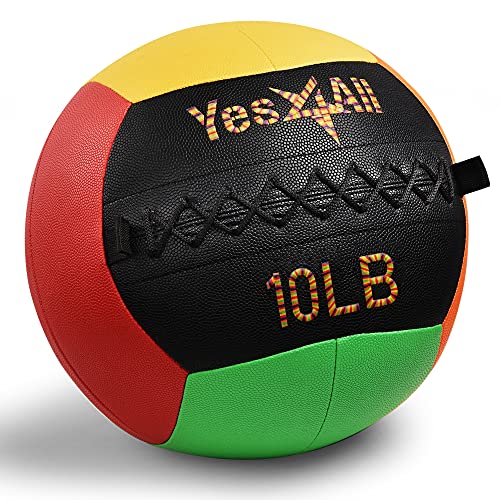
A medicine ball is one of the most versatile and affordable bits of home-gym kit, but the single most important decision is matching the ball to the exercise - because the three main types are not interchangeable and using the wrong one is genuinely a safety issue. A slam ball is no-bounce and made to be slammed straight into the ground for HIIT, power and conditioning - the Meteor, the PROIRON and the slam variant of the Fitvids sit here. A wall ball, like the Yes4All, is soft and large for throwing at a wall or squat-to-throw work, the staple of CrossFit, and it is not for ground slams. A classic medicine ball, like the Amazon Basics and the Champion Sports, bounces and is for chest passes, partner throws and general core work - do not slam it. Once you have settled the type, it comes down to weight, bounce and durability. This guide covers six balls, each suited to a different job.
Match the ball to the exercise
This is the whole game. A slam ball is built to be hammered into the ground over and over for HIIT, power and conditioning - it is dead-bounce, so it stays put when it lands. A wall ball is soft and large and is made for throwing at a wall or for squat-to-throw movements, which is why it is the CrossFit staple; it is not designed to be slammed onto a hard floor. A classic medicine ball bounces by design and is for chest passes, partner throws and general core and coordination work. If you buy a wall ball expecting to slam it, or a classic ball expecting it to stay put, you will be disappointed - so decide what you actually want to do first, then buy the ball built for it. The Amazon Basics and Champion are classics that bounce; the Meteor, PROIRON and Fitvids slam variant are no-bounce slam balls; the Yes4All is a wall ball.
No-bounce versus bounce is a safety issue
This is worth stating plainly because people get hurt getting it wrong. A classic medicine ball, such as the Amazon Basics or the Champion Sports Rhino Elite, bounces - that is what it is built to do. Slam one of those onto a hard floor and it rebounds straight back up, and plenty of people have copped a bouncing ball in the face doing exactly that. If your training involves slamming the ball into the ground, you must buy a no-bounce slam ball - the Meteor, the PROIRON or the slam variant of the Fitvids - which is engineered with a dead-bounce sand or iron-sand fill so it lands and stays. Keep the two jobs separate in your head: bounce for throws and passes, no-bounce for slams. Getting this one decision right is the difference between safe training and a ball in the teeth.
What weight should you get
Start lighter than your ego wants. For most beginners a slam or wall ball around 4 to 6kg and a classic medicine ball around 2 to 4kg is the right starting point - you can always go heavier as you get stronger, but starting too heavy wrecks your form and your motivation. The Meteor runs from 2kg to 20kg and the Yes4All wall ball from 3kg to 14kg, so there is room to grow into either. One thing to watch on Amazon listings: weight drives price. The cheap headline price you see is usually the lightest weight, and heavier weights cost more on the same listing - the Yes4All priced here is a heavier variant, which is part of why it is the dearest pick. So choose your weight first, then compare prices like for like, rather than being lured by a low number that turns out to be the 2kg.
Durability - shell and seam
Slam balls cop a beating by design, so build quality matters more here than on a ball you only throw to a partner. Cheap PVC sand-filled balls can split or leak at the seam over time - one Amazon Basics buyer reports a split after about two months of use - so it pays to look for a thick shell and check the seam construction. The Meteor advertises an ultra-thick sand-filled shell precisely because it is meant to be hammered into the ground; the PROIRON uses a one-piece iron-sand-and-resin core for the same reason; and the Yes4All wall ball uses a synthetic-leather shell with double-stitched seams. If you plan to slam hard and often, spend a little more on a thick-shelled, well-stitched ball rather than buying the cheapest sand-filled option and replacing it in a few months.
Brands you will not find on Amazon Australia
It is worth being upfront about the brands. Several Australian fitness names you might search for - Verpeak, Cyclone, Everlast, Decathlon - are not on Amazon Australia for medicine, slam or wall balls, so the picks here are import and Australian-seller brands instead. Meteor is an Australian seller, which is part of why it is our overall pick. Dual-grip medicine balls - the ones with two handles, made for Russian twists and rotational work - do exist, but at the time of writing they were all out of stock or on long lead times on Amazon Australia, so none made the list. One more thing to know when you compare: the review counts on these listings are pooled across all the weight options, so treat the big numbers as listing-wide rather than specific to one weight. None of that changes the core advice - pick the type that matches your training, then the weight.
Our verdict
For most home gyms the Meteor Classic Slam Ball is the smart buy, it is a no bounce slam ball with an ultra thick sand filled shell in weights from 2kg to 20kg, it ships from an Australian seller, and it is the right tool for the most common medicine ball training: slamming it into the ground for HIIT, power and conditioning. If you only want to spend a little, the Amazon Basics Weighted Medicine Ball is a classic ball with the deepest reviews here, but remember it bounces, it is for passes and throws, not slams. The Fitvids lets you choose style and weight, and the PROIRON is a solid no bounce alternative. For a premium classic the Champion Sports Rhino Elite is the highest rated ball here, and for CrossFit style wall work the Yes4All Soft Wall Ball is the large, soft pick, just not for ground slams.
Frequently Asked Questions
What is the difference between a slam ball, a wall ball and a medicine ball?
They are built for different jobs. A slam ball is no bounce and made to be hammered straight into the ground for HIIT, power and conditioning, the Meteor, the PROIRON and the slam variant of the Fitvids are slam balls. A wall ball, like the Yes4All, is soft and large for squat to throw and throwing at a wall, the CrossFit staple, and is not for ground slams. A classic medicine ball, like the Amazon Basics and the Champion Sports, bounces and is for chest passes, partner throws and general core work. Match the ball to the exercise before anything else.
Can you slam a medicine ball on the ground?
Only if it is a no-bounce slam ball. A classic medicine ball such as the Amazon Basics or the Champion Sports bounces by design, so if you slam it onto a hard floor it rebounds straight back up, people have copped one in the face doing exactly that. For slamming you need a dead bounce slam ball like the Meteor or the PROIRON, which has a sand or iron sand fill so it lands and stays put. Keep the two jobs separate: bounce for throws and passes, no-bounce for slams.
What weight medicine ball should a beginner get?
Start lighter than your ego wants. For most beginners a slam or wall ball around 4 to 6kg and a classic medicine ball around 2 to 4kg is the right starting point - you can always go heavier as you get stronger, but starting too heavy wrecks your form. The Meteor runs from 2kg to 20kg and the Yes4All from 3kg to 14kg, so there is room to grow. Remember weight drives price - the cheap headline price is usually the lightest weight - so choose your weight first, then compare like for like.
Are slam balls no-bounce?
Yes - that is the defining feature of a slam ball. They are engineered with a sand or iron-sand fill and a thick shell so that when you slam them into the ground they land dead and stay put rather than rebounding. The Meteor uses an ultra thick sand filled shell and the PROIRON a one piece iron sand and resin core, both built for repeated ground slams. This is the opposite of a classic medicine ball, which bounces by design. If a ball bounces, do not slam it - buy a proper no-bounce slam ball for that work.
Do medicine balls split or leak over time?
Cheap PVC sand filled balls can split or leak at the seam over time, especially slam balls that cop a beating, one Amazon Basics buyer reports a split after about two months. The fix is to look for a thick shell and solid seam construction. The Meteor advertises an ultra thick sand filled shell, the PROIRON uses a one piece iron sand and resin core, and the Yes4All wall ball has double stitched seams. If you slam hard and often, spend a little more on a thick-shelled, well-stitched ball rather than replacing a cheap one in a few months.
What is the best medicine ball for a home gym?
For most home gyms the Meteor Classic Slam Ball is the best all round pick, it is a no bounce slam ball with an ultra thick sand filled shell in weights from 2kg to 20kg, it ships from an Australian seller for faster delivery, and slamming it into the ground for HIIT, power and conditioning is the most common medicine ball training. If you want a classic ball that bounces for passes and throws, the Champion Sports Rhino Elite is the highest rated here, and the budget Amazon Basics has the deepest reviews. For CrossFit wall work, the Yes4All wall ball is the pick.
Are Verpeak or Everlast medicine balls on Amazon Australia?
No - several Australian fitness names you might search for, including Verpeak, Cyclone, Everlast and Decathlon, are not on Amazon Australia for medicine, slam or wall balls, so the picks here are import and Australian-seller brands instead. Meteor is an Australian seller, which is part of why it is our top pick. Dual-grip medicine balls with two handles for Russian twists exist but were all out of stock or on long lead times at the time of writing. One more thing - review counts are pooled across the weight options, so treat the big numbers as listing-wide.
Found this helpful?
Check out more guides for new homeowners.