Best paint rollers in Australia at a glance
Last updated 6 September 2026. The best paint roller for most Australian walls and ceilings is a microfibre cover with a 10mm to 12mm nap on a standard 230mm frame, and the ROLLINGDOG 6-Piece 18-Inch Kit at $66.99 is the fastest way to cover a whole room because it lays down twice the width in each pass. The Amazon Basics microfibre 6-pack at $19.90 is the value buy if you already own a frame, and the ROLLINGDOG 2-inch mini set at $17.49 is the cheapest and the one thing every first-home painter should own.
| Pick | Best for | Type | Width and nap | Price | Rating |
|---|
| ROLLINGDOG 6-Piece 18-Inch Paint Roller Kit | Whole walls and ceilings, fast | Kit, frame plus 2 sleeves and tray | 18 inch, about 450mm, half inch nap | $66.99 | 4.5 (1,682) |
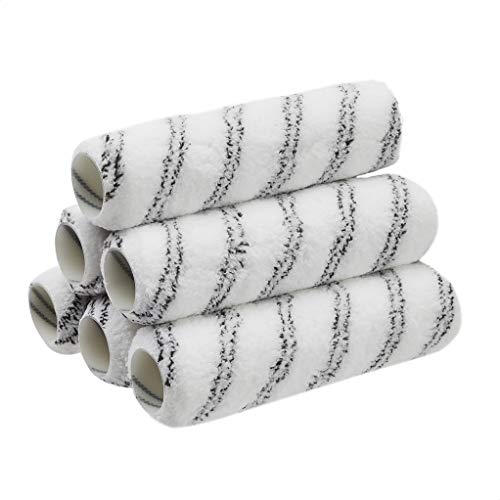
| Amazon Basics Microfibre Roller Covers (6-Pack) | Value, if you own a frame | Covers only | 230mm, half inch nap | $19.90 | 4.4 (3,142) |
| ROLLINGDOG 2-Inch Mini Paint Roller Set (6-Pack) | Trims, edges and tight spots | Mini set, 6 covers plus handle | 2 inch | $17.49 | 4.5 (194) |
| ROLLINGDOG 18-Inch Microfibre Covers (3-Pack) | The smoothest finish on plasterboard | Covers only | 18 inch, about 10mm nap | Check the live listing | 4.6 (477) |
| Bates 11-Piece Roller and Brush Set | Starting from nothing | Kit, brushes and rollers | 9 inch frame, half inch nap sleeves | Check the live listing | 4.6 (12,800 plus) |
| ROLLINGDOG 4-Inch Mini Roller Kit (9-Piece) | Doors, cabinets and joinery | Kit, 4 covers plus frame and tray | 4 inch, about 10mm nap | Check the live listing | 4.4 (84) |
| Harris Seriously Good Walls and Ceilings 9-Inch Set | A familiar standard-width set | Kit, frame plus 4 sleeves and tray | 230mm, medium pile | Check the live listing | 4.6 (7,200 plus) |
What nap length do you need for each surface?
| Surface | Nap length | Why |
|---|
| Doors, cabinets, skim-coated plaster | 4mm to 6mm | Short pile lays down the least texture, closest to a sprayed finish |
| Interior plasterboard walls and ceilings | 10mm to 12mm | The all-rounder: holds enough paint without printing texture |
| Render, brick and textured exterior walls | 15mm or more | The pile has to push paint down into the profile |
When in doubt on an interior wall, 10mm to 12mm microfibre is the safe choice.
Why does the paint roller matter more than the paint?
If your first coat looks streaky, patchy or covered in tiny fibres, the roller is almost always the reason, not the paint. A good roller holds more paint, releases it evenly and does not shed its fibres into your fresh wall. A bad one leaves tramlines, sheds lint that dries into the surface, and forces you back to the tray every few seconds. For a first-home buyer painting a whole room for the first time, the roller is the cheapest tool on the job and the one that decides whether the finish looks professional or rushed.
We spent time studying the Australian paint roller market the way a first home buyer should: real Amazon Australia listings, real star ratings, real review counts, and the nap length and material advice that paint brands like Taubmans, Dulux and Inspirations Paint publish. The result is a shortlist that covers every job in a typical home, from a 4-metre lounge wall to the fiddly architraves around a doorway. Every pick below was in stock on Amazon Australia with a genuine star rating and verified reviews at the time of writing.
Which paint roller is best for most Australian walls and ceilings?
For most people painting a whole room, the ROLLINGDOG 6-piece 18-inch kit is the best all-round buy. It is an 18-inch (about 450mm) wide roller, which is double the width of the standard 230mm roller most of us grew up using, so you cover a big wall or ceiling in roughly half the passes. The kit holds a 4.5-star rating across more than 1,600 reviews on Amazon Australia, and it ships as a complete set: an anti-rust steel frame, two polyester sleeves with a half-inch nap, a large paint tray and two disposable tray liners.
What makes the wide roller worth it is time and consistency. A wall painted in fewer, longer passes has fewer overlap marks, because every join between strokes is a place where the paint can dry at a slightly different rate and show a line. The half-inch (about 12mm) nap on the included sleeves is the sweet spot for previously painted plasterboard and lightly textured walls, holding plenty of paint without leaving heavy stipple. The frame takes a standard screw-fit extension pole, so you can reach a 2.7-metre ceiling without a ladder. Reviewers in Australia repeatedly say it saved them time compared with the rollers sold at the hardware chains, and several note it makes ceilings far less of a chore.
The trade-off with any 18-inch roller is weight and control. A wide sleeve loaded with paint is heavy, so it suits open walls and ceilings rather than narrow hallways or rooms full of windows. If your home is mostly small rooms, the standard 9-inch sets further down this guide may suit you better. But for a first-home buyer repainting a living area, a couple of bedrooms or a long hallway, this is the kit that gets the bulk of the work done fastest.
Flaws but not dealbreakers
At around $67 it is the most expensive of our three headline picks, and a wide roller has a learning curve: load it too heavily and it will drip. One Australian reviewer reported the seam on a tray liner coming apart, which is a liner issue rather than a roller issue and is easily solved by using the tray directly or reinforcing the liner. None of this changes the core value, which is fast, even coverage on the big surfaces that take the longest.
What is the best value paint roller cover in Australia?
If you already own a roller frame, or you just want a stack of reliable covers that will not shed, the Amazon Basics microfibre 6-pack is the value pick. You get six 230mm (about 9-inch) microfibre covers with a half-inch nap, and the listing carries a 4.4-star rating from more than 3,100 reviews, the third-highest review count of any pick in this guide. At under twenty dollars for six, the per-cover cost is a fraction of a single premium sleeve.
Microfibre is the material we steer most first-home buyers toward for interior walls. It holds a good volume of paint, releases it smoothly and, crucially, is shed-resistant, so you are not picking dried fibres out of your topcoat. The double-stripe covers here are designed for smooth and semi-smooth surfaces, which describes the plasterboard in almost every modern Australian home. They work with water-based and oil-based paints and stains, and they are washable, so a careful clean buys you a second or third use per cover. The manufacturer note to soak each cover for two minutes and spin out the water before the first use is worth following, as it removes any loose fibres before they reach your wall.
Having six covers changes how you paint. You can run a fresh sleeve for each colour or each coat, wrap a half-used cover in cling film during a lunch break rather than washing it, and simply bin a cover at the end of a job that is not worth saving. For the price, that flexibility is hard to beat, which is why this is the cover we would put in most starter kits.
Flaws but not dealbreakers
These are covers only, not a complete kit, so you need a compatible 230mm frame to use them. A small number of overseas reviews mention fibre loss on the very first cover, which is exactly what the recommended pre-soak is designed to prevent. And like all medium-nap covers, they are built for smooth to semi-smooth walls rather than heavy render or brick, where a longer nap works better.
What is the best cheap paint roller for trims, edges and small jobs?
The cheapest pick in this guide, and the one we think every first-home buyer should own, is the ROLLINGDOG 2-inch mini roller set. At well under twenty dollars it is a six-pack of slim mini roller covers on an ergonomic handle, rated 4.5 stars across nearly 200 reviews. It will not paint a whole wall, and it is not meant to. It is the tool that handles the parts a big roller cannot reach.
Mini rollers solve the problem that ruins most first paint jobs: the edges. Cutting in with a brush along skirting boards, around light switches, behind the toilet and into ceiling corners leaves brush texture that does not match the rolled wall. A 2-inch roller lays down the same stippled finish as your wall roller, so the transition between cut-in areas and the main field is invisible. The covers here use a 12mm nap woven from polyester and polyamide, which suits semi-smooth to semi-rough surfaces, and the handle takes a tapered extension pole for those high, awkward spots.
Because the set includes six covers, you are not stuck washing a single sleeve every time you switch colours or take a break. They are ideal for doors, window frames, behind radiators and the narrow strips above and below windows, and they double up nicely for touch-ups long after the main job is done. For the money, it is the highest-value tool here and the one most likely to lift your finish from amateur to tidy.
Flaws but not dealbreakers
This is a detail tool, not a wall roller, so do not expect to paint a room with it. The 2-inch width means a lot of passes on anything large, and the covers are thin enough that heavy textured surfaces will wear them faster. Used for what it is designed for, edges, trims and tight spots, it is excellent.
Which roller covers give the smoothest finish on plasterboard?
For the smoothest possible result on the smooth and semi-smooth plasterboard that lines most Australian homes, the ROLLINGDOG 18-inch microfibre covers are our pick on pure finish quality. This is a 3-pack of lint-free microfibre sleeves with a 3/8-inch (about 10mm) nap, and it holds the highest star rating in this entire guide at 4.6 stars, tied with two other picks, across 477 reviews. A shorter nap like this lays down less texture, which is exactly what you want when you are chasing a flat, even sheen.
These are covers designed to pair with ROLLINGDOG's 12-to-18-inch adjustable frame, so they suit someone who already owns or plans to buy that frame for big-wall work. The microfibre construction holds plenty of paint and releases it with minimal splatter, and the thermal-bonded fibres resist shedding even after repeated cleaning. The wider 10.7mm pin hole gives more control than a standard sleeve, which matters when you are guiding a heavy 18-inch roller across a ceiling. Reviewers consistently praise the lack of fibre loss and the clean finish, with several noting the covers wash out well enough to reuse across multiple rooms.
Choose these when finish is your priority and you are working on good-quality, smooth plasterboard or render. The shorter nap means slightly less paint held per pass than the half-inch covers, so you will reload a touch more often, but the pay-off is a flatter, more uniform surface with fewer roller marks. For a feature wall or a room where the light rakes across the surface and shows every flaw, that trade is worth making.
Flaws but not dealbreakers
These are covers only and they are sized for an 18-inch frame, so they are not a plug-in replacement for a standard 230mm setup. The 10mm nap is best on smooth surfaces; on heavy texture or masonry it will struggle to fill the profile, where a long-nap lambswool-style sleeve would do better. Within their lane, smooth interior walls and ceilings, the finish is hard to fault.
What is the best all-in-one paint roller kit for a first-time painter?
If you are starting from nothing and want a single box that covers brushing and rolling, the Bates 11-piece paint roller and brush set is the most complete option here. It is also the most reviewed product in this guide by a wide margin, holding a 4.6-star rating across more than 12,800 reviews, the largest review count of any pick on this page. For a first-home buyer who has never bought a paint tool before, that depth of feedback is reassuring.
The set bundles a 9-inch frame with two half inch nap 9-inch covers, a 4-inch frame with two 4-inch covers, a 2-inch angled cutting in brush, a high density foam brush and a tray. That is genuinely everything you need to paint a room: the 9-inch roller for the main walls, the 4-inch for tighter areas, the angled brush for cutting in along ceilings and skirting, and the foam brush for doors and trim. The half-inch nap covers suit standard interior plasterboard, and the whole kit is built to be washed and reused rather than thrown out after one job.
What makes this a strong first kit is that it removes decisions. Instead of working out which frame, which nap and which brush to buy separately, you get a coordinated set that handles a typical bedroom or living room out of the box. Reviewers repeatedly describe it as good value for the contents and praise the small angled brush for cutting in, which is the single hardest part of a tidy paint job. If you would rather buy once and have the lot, this is the kit to reach for.
Flaws but not dealbreakers
A bundle is always a compromise: the foam brush and the tray are functional rather than premium, and serious renovators may eventually upgrade individual pieces. The 9-inch covers are a standard width, so you do not get the speed advantage of the wide 18-inch rollers higher up this list. But as a complete, well-reviewed starting point for a first room, it is excellent value.
Which mini roller kit is best for doors, cabinets and furniture?
For doors, kitchen cabinets, built-in joinery and furniture, the ROLLINGDOG 4-inch mini roller kit is our pick. It is a 9-piece set built around a 4-inch microfibre roller with a 3/8-inch nap, rated 4.4 stars across 84 reviews, and it includes four covers, a frame, a tray and disposable liners. The 4-inch width is the size that hits the gap between a 2-inch trim roller and a full 9-inch wall roller, which is exactly what cabinet doors and flush internal doors call for.
The short 3/8-inch microfibre nap is the key here. On a cabinet door or a piece of furniture, you want as little texture as possible so the paint reads as a smooth, sprayed-looking finish rather than an obviously rolled one. The microfibre covers lay down a fine, even coat, and the X-frame cage with a rubber-gripped handle gives you the control to keep that coat consistent across a panel. The handle threads onto an extension pole, which helps when you are painting the top rail of a tall door or working along a run of overhead cupboards.
Including four covers and several tray liners makes colour changes and clean-up painless, which matters on cabinet jobs where you often switch between primer, colour and a second coat. Australian and overseas reviewers single it out as a genuinely good small roller, with one calling it the best mini roller they have used. For a kitchen refresh, a wardrobe makeover or repainting internal doors, this is the kit that gives a clean, low-texture result.
Flaws but not dealbreakers
This has the lowest review count of our picks at 84, simply because it is a newer listing, though the rating is strong. The microfibre tip needs a quick rinse and a wipe before its first use to lift any loose fibre. And as a 4-inch tool it is built for cabinets, doors and furniture rather than walls, so it is a complement to a wall roller, not a replacement.
What is the most popular wall and ceiling roller set in Australia?
The Harris Seriously Good walls and ceilings 9-inch set is one of the most reviewed standard roller sets on Amazon Australia, with a 4.6-star rating across more than 7,200 reviews. It is a 9-inch (230mm) set built around the size most Australian homes are used to, and it bundles a frame, four medium-pile sleeves and a tray. If you want a familiar standard-width roller from a recognised brand rather than a wide 18-inch tool, this is the safe, proven choice.
The four included sleeves are the standout feature. Having four medium-pile covers means you can keep one running while the others soak, switch instantly between colours, or simply work through a multi-room job without stopping to clean. Medium pile is a versatile nap that handles previously painted walls and lightly uneven surfaces well, giving a smooth finish with reduced splatter. The frame and tray have a soft, comfortable grip, and the set takes a Harris extension pole for ceilings and high walls. It is designed for water-based emulsion paints, which covers almost all interior wall work.
We have placed this as the competition rather than a headline pick because, for a first-home buyer painting big open rooms, the wide 18-inch ROLLINGDOG kit simply covers ground faster. But if your home is full of smaller rooms, windows and hallways where a wide roller is awkward, a four-sleeve standard set like this is arguably the more practical buy, and its enormous review base shows how many Australians rate it.
Flaws but not dealbreakers
At 9 inches it does not give the speed advantage of a wide roller on large walls and ceilings. It is also optimised for water-based emulsion, so for oil-based work you would want to check sleeve compatibility. For standard interior repainting in normal-sized rooms, it is a dependable, hugely popular choice.
How we evaluated these paint rollers
NestPath researches and studies products for Australian first-home buyers; we do not run a physical paint-testing lab. Here is how this shortlist was built.
- Real Amazon Australia data. Every pick was checked on Amazon Australia for live availability, a genuine star rating and a verified review count at the time of writing. We did not include any product we could not confirm was in stock with real ratings.
- A minimum review threshold. We required each product to carry real customer reviews, and we favoured listings with hundreds or thousands of ratings so the score reflects broad experience rather than a handful of opinions.
- Coverage of every job. We deliberately chose across categories, wide rollers for speed, microfibre covers for finish, mini rollers for edges and 4-inch kits for cabinets, so the guide answers a real painting project rather than just listing similar products.
- Nap and material guidance. We cross-checked nap-length and material advice against what Australian paint brands publish, so the recommendations match the surfaces in a typical Australian home.
- Honest trade-offs. Every pick includes a flaws section, because a roller that suits a big open lounge is not the right tool for a hallway full of doors, and we would rather you bought the right one.
What should you look for in a paint roller?
Three things decide whether a roller suits your job: nap length, material and width. Get these right and the rest is technique.
What nap length do I need?
Nap is the thickness of the fabric pile, and it should match how rough your surface is. A short nap of around 4mm to 6mm gives the smoothest finish and suits very smooth surfaces like doors, cabinets and skim-coated plaster. A medium nap of about 10mm to 12mm is the all-rounder for interior plasterboard walls and ceilings, holding enough paint without heavy texture. A long nap of 15mm or more is for rough surfaces like brick, render and textured exterior walls, where the pile needs to push paint into the profile. When in doubt on interior walls, a 10mm to 12mm nap is the safe choice.
Which roller material is best?
Microfibre is the modern default for interior walls: it holds plenty of paint, releases it smoothly and resists shedding. Lambswool and lambskin hold the most paint and excel on rough or porous surfaces like render and concrete, which is why professional Australian painters reach for them on exteriors. Foam rollers give an ultra-smooth, almost sprayed finish on doors, cabinets and trim, but they are not suited to big wall areas. For most first-home buyers painting interior plasterboard, a microfibre cover is the right starting point.
What roller width suits my home?
Standard 230mm (9-inch) rollers are the familiar all-rounder and the easiest to control in smaller, busier rooms. Wide 350mm to 450mm rollers cover big walls and ceilings far faster but are heavier and awkward in tight spaces. Mini rollers from 2 to 4 inches handle edges, trims, doors and cabinets. Many people end up owning a standard or wide roller for the main field and a mini roller for the detail, which is why several of our picks are paired that way.
How do you clean a paint roller?
Good cover care is the difference between a sleeve that lasts one job and one that lasts several, and it is mostly about cleaning straight away. The short answer: rinse the cover the moment you finish, before the paint starts to dry. Water-based paint, which is almost everything used inside an Australian house, washes out under warm water alone. Oil-based enamel does not: that needs mineral turpentine in a container, followed by warm soapy water, and the turps has to go to a chemical waste drop-off rather than down the drain. A microfibre cloth is what gets the frame and the tray clean afterwards.
- Clean immediately. Paint that dries into the nap is very hard to remove, so wash water-based paint out under warm running water as soon as you stop, working the fibres with your fingers until the water runs clear.
- Use a roller scraper or spinner. Scrape excess paint back into the tin first to save paint, then spin or squeeze out the water so the cover dries without a stiff, matted pile.
- Take a break without washing. For short stops, wrap the loaded cover tightly in cling film or seal it in a plastic bag to stop it drying out, and it will be ready when you return.
- Pre-soak microfibre before first use. Soaking a new microfibre cover for a couple of minutes and spinning out the water removes loose fibres before they end up on your wall.
- Dry standing up. Stand the clean cover on its end so it keeps its round shape rather than developing a flat spot.
- Know when to bin it. Cheap multi-packs are designed to be disposable; if a cover is matted or shedding after a clean, replace it rather than fighting it.
What else will you want for your first paint job?
Before any of it, the old coating has to come off. A heat gun softens old paint and varnish so it lifts with a scraper, which is the step most first-time painters skip and then regret when the new coat shows every ridge underneath.
A roller is one tool in a kit. To paint a room properly the first time, these are the companions worth having on the bench.
How do these paint rollers compare with the rest?
Beyond our seven picks, a few other options come up constantly when Australians shop for rollers. The Hamilton For The Trade 4-inch set is a well-regarded mini kit with five sleeves and thousands of reviews; it is a strong alternative to our ROLLINGDOG 4-inch kit if you prefer a five-sleeve bundle. Hardware-chain house brands like Monarch and Uni-Pro are cheap and widely available, but their Amazon review scores are uneven, with some covers rating well below our picks. The Renovator-style direct feed rollers that pump paint through a hollow handle promise less reloading, but they add cleaning complexity that most first timers do not need.
For exteriors, render and brick, an Australian lambswool sleeve such as the iQuip Sir Jumbuck or a BAAZ lambswool roller is the traditional professional choice, holding far more paint than microfibre on rough surfaces. Those sit outside our interior-focused shortlist but are worth knowing about if your first project is a fence, a rendered wall or a deck. For the smooth interior plasterboard most first-home buyers are painting, the microfibre and standard sets above will serve you better and cost less.
How do you paint a ceiling with a roller?
Ceilings are the job people dread and the one where technique matters most, because gravity is working against you the whole time.
- Cut in first. Brush a band about 50mm wide around the whole perimeter and around any light fittings before you pick up the roller, so the roller never has to reach the edge.
- Use an extension pole. Screw the pole into the frame and paint from the floor rather than a ladder. It is faster, safer, and the extra reach gives you a more even pressure across the pass.
- Load the roller properly. Roll it in the tray until it is evenly coated, then roll off the excess on the ramp. An overloaded roller drips on a ceiling and leaves ridges.
- Work in sections of about a metre square, rolling a W or an M shape and then filling it in without lifting the roller. Do not try to cover the whole ceiling in one direction.
- Keep a wet edge. Always overlap into paint that is still wet, and work away from the window so you can see what you have done. A dried edge is what causes the lap marks people blame on the paint.
- Finish every section in the same direction, usually parallel to the main window, so the light does not pick up crossing roller marks.
Two coats is normal on a ceiling and the second goes on far faster than the first. If you are painting a whole house rather than one room, a paint sprayer covers large areas faster than any roller, at the cost of masking everything first.
How do you paint a wall with a roller?
Walls are more forgiving than ceilings but the order is the same. Cut in the edges, the corners and around the skirting and architraves with a brush first. Then load the roller, start about 150mm up from the skirting rather than at the very bottom, and roll a W about a metre wide, filling it in with vertical passes until the section is covered. Move along the wall, always overlapping into wet paint.
Finish each section with a light vertical pass from ceiling to floor without reloading the roller. That last unloaded pass is what evens out the texture and removes the roller lines, and skipping it is the single most common reason a first paint job looks patchy. Let the first coat dry fully, usually two to four hours for a water-based interior paint, before the second. Two thin coats always beat one thick one, which runs and takes far longer to cure.
Which paint roller brands are worth knowing in Australia?
The rollers in this guide are the ones with live Australian listings and real rating counts behind them, which is why ROLLINGDOG, Amazon Basics, Bates and Harris fill the list. Walk into an Australian paint shop and you meet a different set. Wooster is the professional frame brand most painters name first. Dulux and Haymes both sell their own covers through their stores and through Bunnings, and Haymes microfibre sleeves are among the cheapest genuine options anywhere. BAAZ makes Australian lambswool covers, which are what professionals reach for on render and large ceilings because lambswool holds more paint than any synthetic. Uni-Pro and Monarch fill the trade middle. We do not price or rank those, because each pick above has to clear a live Amazon Australia listing we can check, but if you are already at Bunnings, Inspirations Paint, Haymes or a Direct Paint counter, those are the names to ask for.
Frequently asked questions about paint rollers
What rollers do professional painters use?
Professional painters in Australia typically use microfibre or woven covers with a medium nap for interior walls, and lambswool or lambskin sleeves for rough exterior surfaces like render and brick. They favour shed-resistant covers that hold a lot of paint, and many use wide rollers on big jobs to save time. The ROLLINGDOG 18-inch kit and the microfibre covers in this guide reflect that professional approach.
What nap length gives the smoothest finish?
A short nap of about 4mm to 6mm gives the smoothest finish and is best for very smooth surfaces like doors, cabinets and skim-coated plaster. For standard interior plasterboard walls, a 10mm to 12mm medium nap is the usual choice because it balances a smooth finish with good paint pick-up. Foam rollers give the smoothest result of all on doors and trim but are not suited to large walls.
Are microfibre or lambswool rollers better?
For smooth interior plasterboard walls, microfibre is usually the better choice because it lays down a fine, even coat and resists shedding. Lambswool and lambskin hold more paint and perform better on rough or porous surfaces such as render, concrete and brick, which is why they are popular for exteriors. Most first-home buyers painting interior walls should start with a microfibre cover.
What size paint roller should I buy?
A standard 230mm (9-inch) roller is the easiest all-rounder for most rooms. If you are painting large open walls or ceilings, a wide 350mm to 450mm roller covers ground much faster. Add a 2-inch to 4-inch mini roller for edges, trims, doors and cabinets. Many people own one wall roller and one mini roller to handle a whole project.
How do I stop my roller leaving lines and marks?
Roller lines usually come from too little paint on the cover, pressing too hard, or not keeping a wet edge. Load the cover evenly, roll with light pressure in overlapping strokes, and finish each section with long, light passes in one direction before the paint starts to dry. Using a quality shed-resistant cover with the right nap for your surface, as recommended above, removes most of the problem.
Can I reuse a paint roller cover?
Yes, most quality microfibre and woven covers can be washed and reused several times if you clean them immediately after use. Rinse water-based paint out under warm water until it runs clear, spin or squeeze out the excess, and stand the cover on its end to dry so it keeps its shape. Very cheap disposable covers are designed to be binned after one or two jobs.
What brand of paint roller is the best?
For a frame, Wooster is the name most Australian painters give you, and for covers it depends on the surface: microfibre from Dulux, Haymes or Amazon Basics for interior plasterboard, and Australian lambswool from BAAZ for render and big ceilings. In this guide the highest rated picks are the ROLLINGDOG 18-inch microfibre covers, the Bates 11-piece set and the Harris Seriously Good set, all at 4.6 stars, with Bates carrying more than 12,800 ratings.
Can you leave a paint roller overnight without washing it?
Yes, for a short break or overnight, as long as you seal it. Wrap the loaded cover tightly in cling film or seal it inside a plastic bag so no air reaches the paint, and it will still be usable the next morning. This works for water-based paint and it is far kinder to the cover than washing it twice in a day. For anything longer than a night, or for oil-based enamel, wash it properly instead.
A paint job is rarely the only thing on a new homeowner's list. If you are kitting out a garage and tackling your first round of DIY, these NestPath guides pair naturally with this one.
About the author
Anish Puri founded NestPath in 2026 after going through the Australian first-home-buyer process himself. NestPath focuses on Australian first-home buyers because the existing review sites are American, generic, or both. Anish handles editorial selection across the homeowner hub. Reach out: hello@nestpath.com.au