How to choose ratchet straps in Australia
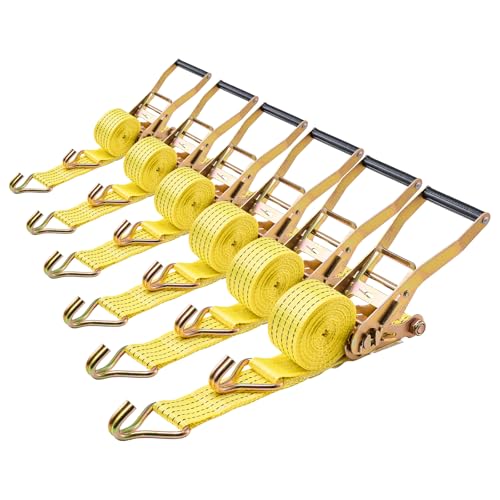
A tie-down strap does one critical job - it keeps a load on the ute, trailer or roof rack instead of on the road - but the right one depends entirely on what you are securing and how heavy it is. To use one: open the ratchet fully, feed the webbing up through the slot in the centre spool, pull the slack through by hand, then crank the handle until the strap is tight but the load is not deforming, and never exceed the working load limit, which is about one third of the break strength printed on the label. There are a few distinct types. Ratchet straps multiply tension through a buckle and hold the heaviest loads, which is why the HORUSDY, VEVOR, AUGO and Strapinno all use them. Cam-buckle straps like the Stanley and Nilight are quicker and gentler and physically cannot over-tighten. Retractable sets like the Strapinno stow their own webbing so it never tangles, and soft-loop sets like the Nilight are made to protect a motorcycle. After settling the type, it comes down to the working load limit, the webbing width, the hooks and the pack size. This guide covers six sets from around 34 to 110 dollars, each suited to a different kind of load.
Working load limit vs break strength - the one number that matters
This is the single most important thing to understand, and listings make it confusing on purpose. Break strength is the force at which a strap fails completely - it is the big, impressive number sellers put in the headline. Working load limit (WLL) is roughly one third of that, and it is the only figure you should ever secure a load to, because it builds in the safety margin you need for road shocks and dynamic forces. So the HORUSDY at about 998kg break has a WLL of about 332kg; the VEVOR at about 2268kg break has a WLL of about 758kg. Always read the WLL, stay under it, and ignore the break-strength headline for safety. The AUGO is a useful lesson here - its listing quotes an inconsistent break figure, which is exactly why you judge a strap by its WLL of about 227kg instead.
Webbing width - match the strap to the load
Width is the fastest way to tell a light strap from a serious one, and putting a light strap on a heavy load is how things go wrong. The 25mm webbing on the HORUSDY, Stanley, AUGO and Strapinno is for light-to-medium loads - furniture, kayaks, appliances and general hauling. The 38mm webbing on the Nilight steps up for a motorcycle, giving a bike the steady hold it needs. The 50mm webbing on the VEVOR is genuine heavy-duty, the right choice for trailers and machinery secured to chassis rails or D-rings, where a set of wheel chocks is the other half of the job. The rule is simple: never put a light 25mm strap on a heavy or critical load, and never assume a strap is strong because it looks chunky - check the width and the WLL together.
Ratchet vs cam buckle - power or gentleness
The buckle decides how the strap behaves, and the two types suit very different jobs. A ratchet multiplies your tension through a geared lever, so it holds the heaviest loads rock-solid - but that same mechanical advantage means it can over-tighten and crush soft or fragile cargo if you are not careful. A cam buckle, like the one on the Stanley and the Nilight, only holds the tension you pull by hand, so it is quicker to use, gentler on what you are tying down and physically cannot over-tension. For heavy gear that needs maximum hold, choose a ratchet; for lighter, delicate or easily crushed loads, a cam buckle is the safer, kinder choice.
Hooks and edge protection - where straps actually fail
Most strap failures do not happen because the webbing was too weak - they happen at a sharp edge or a hook that popped off. Wherever a strap crosses a sharp corner, the edge can saw through it under load, so use corner or edge protectors on anything with a hard lip. And favour hooks that cannot let go: the HORUSDY and AUGO use safety clips and safety-lock hooks, the Strapinno uses latching S-hooks, and the VEVOR uses J-hooks with security clips, all of which stay put over bumps far better than a bare open hook. Coated hooks, like the rubber-coated ones on the HORUSDY and Nilight and the vinyl-coated ones on the Stanley, also stop the metal marking a painted or polished surface.
Pack size and how many straps you need
Bikes are the other common load: a bike rack does the holding and a strap steadies the frame against the rack rather than the car.
Sets are not all the same size, so count what the job actually needs before you buy. The VEVOR is a 6-pack, which is generous and suits boxing in a big load with straps to spare. The HORUSDY, Stanley, AUGO and Strapinno are 4-packs, the standard for most ute and trailer jobs. The Nilight is a 2-pack, which matters because securing a motorcycle properly usually wants four anchor points - so most riders buy two Nilight sets. As a rule, a stable load wants a strap at each corner pulling in opposing directions, so four straps is the sensible baseline for general hauling and more for anything large or tall. A house move is the usual reason to buy a set in the first place, so it is worth reading the moving checklist and pairing the straps with a hand truck.
Retractable convenience - paying for tidiness, not capacity
Retractable straps solve a real annoyance: the tangled ball of webbing in the bottom of the ute. A stainless spring inside each Strapinno strap rolls the webbing back up automatically once the load is off, so the set stows neatly, never knots and is easy to use single-handed. That convenience is genuinely useful, but it is worth being clear about what you are buying. The Strapinno sits in the same light-to-medium 25mm class as the budget HORUSDY and carries a similar WLL of about 227kg - so the premium price pays for the retractor mechanism and the tidiness, not for any extra load capacity. If a clean, fuss-free kit is worth it to you, it earns its keep; if raw capacity is the priority, your money goes further elsewhere.
Standards and the Load Restraint Guide
Australian transport authorities point at the National Transport Commission Load Restraint Guide as the reference for securing a load, and the practical takeaway for a ute or a domestic trailer is the same as the advice above: rate the restraint for the job and work to the working load limit, never the break strength. Australian specialists such as Monkey Grip, Tiger Australia and Just Straps sell rated straps through Supercheap Auto, Bunnings and marine shops rather than Amazon Australia, so if you need a certified strap with paperwork behind it, that is where to look.
How do the six ratchet strap sets compare?
Read the working load limit column first. It is about a third of the break strength a seller puts in the headline, and it is the only figure to secure a load to.
| Pick | Best for | Webbing width | Working load limit | Price | Rating |
|---|
| HORUSDY 4-Pack Ratchet Straps | Best budget | 25mm | about 332kg | $34.99 | 4.6 |
| Stanley Enclosed Cam-Buckle Straps | Best for fragile loads | 25mm | Not listed | $45.30 | 4.3 |
| VEVOR Heavy-Duty 50mm Ratchet Straps | Best heavy-duty | 50mm | about 758kg | $55.99 | 4.5 |
| Nilight Motorcycle Cam-Buckle Straps | Best for motorcycles | 38mm | Not listed | $63.37 | 4.8 |
| AUGO 4-Pack Ratchet Straps with Kit | Our pick | 25mm | about 227kg | $92.11 | 4.7 |
| Strapinno Retractable Ratchet Straps | Best for convenience | 25mm | about 227kg | $110.00 | 4.6 |
Our verdict
For most people the AUGO 4-Pack with Kit at around 92 dollars is the smart buy - it has by far the deepest review base in the category at over 23,000 ratings, the most complete kit and a brand buyers trust, with a WLL of about 227kg per strap, which is why it is our pick. The cheapest way in is the HORUSDY 4-Pack at around 35 dollars, a strong light-to-medium all-rounder with a surprisingly high WLL of about 332kg per strap. For the heaviest loads the VEVOR Heavy-Duty 50mm 6-pack at around 56 dollars is the only true wide-webbing set here at about 758kg WLL per strap. For a motorcycle the Nilight Cam-Buckle 2-pack at around 63 dollars has integrated soft loops that protect the bike. For a tangle-free kit the Strapinno Retractable set at 110 dollars stows itself, and for fragile or light loads the Stanley Enclosed Cam-Buckle 4-pack at around 45 dollars cannot over-tighten and crush your cargo.
Frequently Asked Questions
What is the difference between working load limit and break strength on a ratchet strap?
Break strength is the force at which a strap fails completely - it is the big number sellers put in the headline. Working load limit (WLL) is roughly one third of that figure, and it is the only number you should ever secure a load to, because it builds in the safety margin needed for road shocks. So the HORUSDY (around 35 dollars) has about 998kg break but only about 332kg WLL, and the VEVOR (around 56 dollars) has about 2268kg break but about 758kg WLL. Always read the WLL, stay under it, and ignore the headline break figure for safety - the AUGO even quotes an inconsistent break number, which is exactly why you judge by WLL.
What size ratchet strap do I need for my load?
Match the webbing width to the weight. The 25mm straps on the HORUSDY (around 35 dollars), Stanley, AUGO and Strapinno are for light-to-medium loads like furniture, kayaks and appliances. The 38mm Nilight (around 63 dollars) suits a motorcycle, giving a bike a steadier hold. The 50mm VEVOR (around 56 dollars) is genuine heavy-duty for trailers and machinery on chassis rails or D-rings. Never put a light 25mm strap on a heavy or critical load, and always check the width and the working load limit together rather than guessing from how chunky a strap looks.
Are ratchet or cam-buckle straps better?
It depends on the load. A ratchet multiplies your tension through a geared lever, so it holds the heaviest loads rock-solid, but it can over-tighten and crush soft or fragile cargo. A cam buckle, like the Stanley (around 45 dollars) and Nilight (around 63 dollars), only holds the tension you pull by hand, so it is quicker, gentler and physically cannot over-tension. For heavy gear that needs maximum hold, choose a ratchet such as the HORUSDY or VEVOR; for lighter, delicate or easily crushed loads, a cam buckle is the safer and kinder choice.
How many ratchet straps do I need to secure a load?
As a baseline, use one strap at each corner of the load pulling in opposing directions, so four straps is the sensible minimum for general hauling and more for anything large or tall. That is why the HORUSDY, Stanley, AUGO and Strapinno all come as 4-packs. The VEVOR (around 56 dollars) is a 6-pack, which gives you straps to spare on a big load. The Nilight (around 63 dollars) is a 2-pack, and because securing a motorcycle properly usually wants four anchor points, most riders buy two Nilight sets to do the job right.
Are retractable ratchet straps worth it?
They are if you value a tidy, tangle-free kit. A stainless spring inside each Strapinno strap (around 110 dollars) rolls the webbing back up automatically once the load is off, so the set stows neatly, never knots and is easy to use single-handed. The honest catch is that it sits in the same light-to-medium 25mm class as the budget HORUSDY and carries a similar working load limit of about 227kg per strap - so you are paying for the retractor and the convenience, not for more load capacity. If raw capacity matters more than tidiness, your money goes further with a standard set.
How do you stop ratchet straps damaging your cargo?
Two things cause most damage. First, over-tightening: a ratchet can crush soft or fragile loads, so for delicate cargo use a cam buckle like the Stanley (around 45 dollars) that cannot over-tension, or stop ratcheting once the load is firmly held. Second, sharp edges: webbing fails where it crosses a hard corner, so use corner or edge protectors on anything with a hard lip. Coated hooks help too - the rubber-coated hooks on the HORUSDY and Nilight and the vinyl-coated hooks on the Stanley will not mark a painted or polished surface, and soft loops protect anchor points and bodywork.
Are Supercheap Auto or Bunnings ratchet straps on Amazon Australia?
Largely no. The Australian hardware names buyers know - Supercheap Auto (SCA), Gripwell, Boxer, Repco and Bunnings house-brand straps - are mostly not on Amazon Australia for ratchet straps, so you would buy those in-store instead. The picks in this guide are the sets that are well-stocked on Amazon Australia and win on price and review depth, like the AUGO (around 92 dollars) with its 23,000-plus ratings and the budget HORUSDY (around 35 dollars). One honest caveat: some listings pool reviews across lengths and colours, and the VEVOR review count is genuinely thin, so we chose it on its specifications rather than its review depth.
How do you use a ratchet strap?
Hook both ends to solid anchor points, not to trim or a bumper. Open the ratchet fully so the handle lies flat, feed the webbing up through the slot in the centre spool, then pull the slack through by hand until the strap is snug. Crank the handle until the load stops moving, without deforming it, and close the ratchet. Stay under the working load limit, which is about 332kg per strap on the HORUSDY.
How do you release or loosen a ratchet strap?
Squeeze the release catch on the handle and pull the handle open past its usual travel, until it lies flat against the frame. That lifts both pawls out of the gear teeth so the spool spins free and the webbing pulls straight out. If it will not open, take the tension off first by lifting the load or slackening the other straps. A cam buckle like the Stanley is simpler: press the lever and pull the webbing back through.
How do you thread a ratchet strap?
Open the ratchet flat, then feed the loose end of the webbing up through the slot in the centre spool from underneath, rather than around the outside of it. Take up the slack by hand before you start cranking. Two or three wraps on the spool is plenty; any more and the webbing jams against the frame and you will not be able to release it later.
How do you store and roll up ratchet straps?
Roll the webbing from the loose end towards the ratchet, then hold the roll with the hook or a velcro tie so it cannot unravel in the boot. Store them dry, because webbing that is put away damp will mildew and lose strength and the ratchet will seize. A retractable set like the Strapinno at $110.00 does the rolling for you, which is the only thing the extra money buys, since its working load limit is the same 227kg as the AUGO.
How do ratchet straps work?
A ratchet strap is a lever and a geared spool. Cranking the handle winds webbing onto the spool, and two spring-loaded pawls drop into the gear teeth so it can only turn one way. That gearing multiplies your pull, which is why a ratchet holds a heavier load than a cam buckle and also why it can crush fragile cargo. Releasing the catch lifts both pawls at once and the spool runs free.
What brand of ratchet straps is best in Australia?
On Amazon Australia the deepest review base belongs to AUGO, with more than 23,000 ratings behind our top pick at $92.11, and VEVOR is the one to buy for genuinely heavy loads with 50mm webbing and about 758kg working load limit. For a certified strap with paperwork, Australian specialists such as Monkey Grip, Tiger Australia and Just Straps sell through Supercheap Auto, Bunnings and marine shops instead.