Before you compare a single lumen figure, decide how the light needs to reach the work. There are three honest answers. A rechargeable portable light is the grab-and-go option - it lives in the boot or the drawer, sticks to metal with a magnet or hangs off a hook, and charges over USB, so it is ready whenever you need a hand free in the dark. A cordless tool-platform light is a skin: a bare light with no battery, built to run off the 18V or 20V packs you already own from a drill or driver, which keeps you on one charger. And a corded tripod site light is the heavyweight, trading portability for the sheer brightness to flood a whole room.
The six picks below run from the OTYTY COB light up to the 300W Yofuly tripod, and they map cleanly onto that split. The OTYTY, NEBO and WARSUN are rechargeable portables; the Stanley and DeWalt are platform skins for people already invested in those battery systems; and the Yofuly is the single tripod for whole-room lighting. Weigh lumens, mounting and the IP weather rating against how and where you will actually use it, and the choice gets simple.
How the six work lights compare at a glance
| Pick | Best for | Standout feature |
|---|
| OTYTY COB Rechargeable Work Light | Grab-and-go tasks | Rechargeable, magnet and hook mount |
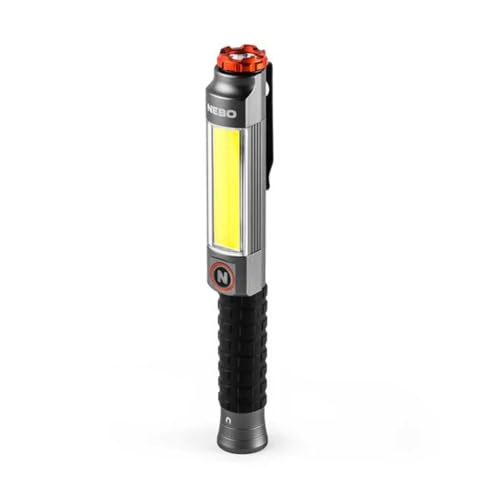
| NEBO Big Larry 3 Work Light and Torch | Floodlighting and torch tasks | 600 lumen flood, light and torch in one |
| Stanley FatMax V20 18V LED Work Light | Stanley 18V battery owners | Runs on the Stanley 18V battery platform |
| WARSUN Rechargeable Magnetic Work Light | Tasks needing rechargeable floodlighting | 1200 lumen rechargeable flood |
| DeWalt 20V MAX LED Work Light | DeWalt 20V battery owners | Runs on the DeWalt 20V platform, 1000 lumen |
| Yofuly 300W LED Work Light with Tripod | Stationary work near mains power | Requires mains power, tripod mounted |
OTYTY COB Rechargeable Work Light
If you just want a cheap, reliable light to keep handy, the OTYTY is the entry point. As a two pack it is the cheapest pick here, and it covers the basics of a portable work light properly: a bright COB panel with five modes, including a red warning light and strobe for roadside use, a built in magnet and a fold out hook, and USB recharging that gives 5 to 6 hours from the 2000mAh battery.
The magnet sticks it to a car body and the hook hangs it off a tent pole or shelf, so you can keep both hands on the job. Its IP44 rating shrugs off light rain. The trade-offs at this price are an honest modest battery and a basic IP44 seal, so treat it as a handy everyday light rather than an all-day jobsite tool.
NEBO Big Larry 3 Work Light and Torch
The Big Larry 3 is the rechargeable portable to pick if you want one tool that does several jobs. It packs a 600-lumen COB side flood for lighting a work surface, a 220-lumen top spot beam for throwing light down a corridor, and a dedicated red LED with high, low and strobe modes for night vision or flagging a hazard. It is the most highly rated light in this guide at 4.7 stars.
The body is aircraft-grade aluminium rated IPX4 for water and impact, it charges over USB-C, and it clings to metal with a strong magnetic base or clips to a pocket with the steel clip. The honest note is that NEBO is the recognised brand name here, so you pay a small premium over a generic COB light of similar output for the build and the warranty behind it.
Stanley FatMax V20 18V LED Work Light
The Stanley FatMax V20 is the pick if you already own Stanley 18V tools, because it is sold as a skin - a bare light with no battery or charger included. It shares the V20 packs you already carry for your drill or driver, so there is never a separate light to charge, and the pivoting head swings the beam towards whatever you are working on.
The rubberised handle is comfortable to hold through a longer job, and the lithium-ion V20 packs hold their charge between uses with no memory effect. Two honest caveats keep it in perspective: at 140 lumens it is the dimmest light in this guide, built for close-up tasks rather than flooding a room, and its review base is the smallest of the platform lights at 63 ratings.
WARSUN Rechargeable Magnetic Work Light
The WARSUN is our pick for most people, because it gives you a genuinely bright flood without locking you to any tool platform. Its 30W COB panel pushes up to 1200 lumens - far more than the budget OTYTY or the Stanley skin - and it runs off its own 3600mAh battery, which doubles as a power bank to top up a phone through its USB-out port.
The aluminium-alloy body is rated drop-resistant from about 1.5 metres, and the strong built-in magnet plus hook let you stick it to a car body or hang it from a rafter for hands-free work. With more than 5,000 ratings at 4.6 stars it is also one of the most-reviewed picks here, which is reassuring at this price. The honest caveat is that it ships as a three-pack of cordless lights, so plan where all three will live.
DeWalt 20V MAX LED Work Light
The DeWalt 20V MAX is the platform light to add if you are already on the DeWalt system, and the numbers back it up: at 4.8 stars across more than 13,100 ratings it is comfortably the highest-rated and most-reviewed pick in this guide. It is sold tool-only, so it shares the 20V packs from your drill or impact driver rather than needing its own charger.
Three LEDs give a high 1000-lumen and low 300-lumen setting, the head pivots 140 degrees to aim the beam across a surface, and the built-in telescoping, 360-degree rotating hook hangs it off 2-inch joists or pipework. The honest caveat is that the price assumes you already own DeWalt batteries - add a pack and charger and the real outlay climbs sharply, so it only makes sense if you are committed to the platform.
Yofuly 300W LED Work Light with Tripod
The Yofuly is the heavyweight in this guide and the pick when a single portable light will not do - when you need to light a whole garage, room or yard at once. It puts out 300W rated at 20000 lumens across three detachable heads, each of which rotates 360 degrees and can be pulled off to use as a handheld lamp, and the telescopic tripod lifts those lights from 97cm to 191cm so the spread reaches into corners.
The die-cast aluminium housing is IP66 weatherproof for outdoor jobs, and a 5-metre cable gives some reach from the power point. The honest caveats are the obvious ones for a site light: it runs on corded mains power, so you need a socket within reach and it is not the grab-and-go option, and the review base is smaller at 82 ratings.
How to match the light to how you will use it
The biggest mistake is buying for brightness alone and ignoring how the light has to reach the work. If you mostly want a light to keep in the car, the shed or the kitchen drawer for the odd dark job, a rechargeable portable like the OTYTY, NEBO or WARSUN is the smart buy - it charges over USB, sticks or hangs anywhere, and owes nothing to a tool system. If you already own a cordless drill, the calculus changes: a platform skin like the Stanley FatMax V20 or DeWalt 20V MAX shares the batteries you already charge, which is cheaper and tidier than yet another light to top up, provided you stay on that brand.
And if the job is lighting a whole space rather than a work surface - a garage, a renovation, a yard at night - a corded tripod like the Yofuly is the right call, because no pocket light will flood a room the way 300W on a stand can. Be honest about which of those three you actually need, because the brightest light is wasted if it cannot reach where you are working.
What lumens, mounting and IP ratings actually mean
Three things do most of the work when you compare these lights. Lumens measure brightness: the 140-lumen Stanley is for close-up tasks, the 600-lumen NEBO and 1000-lumen DeWalt light a work surface well, the 1200-lumen WARSUN floods a corner, and the 20000-lumen Yofuly lights a whole room. Mounting decides how the light reaches the job - a magnet sticks to metal, a hook hangs it off a rafter or tent pole, and a tripod stands it high and aims it wide. Most portables here give you a magnet and a hook; only the Yofuly brings a tripod.
The IP rating tells you how much weather the light shrugs off. The first digit is dust, the second is water: IP44 on the OTYTY handles splashes and light rain, IPX4 on the NEBO handles water but is not dust-rated, and IP66 on the Yofuly is fully dust-tight and resists strong jets, which is why it suits outdoor and muddy sites. Read lumens, mounting and IP rating together and any work-light spec sheet starts to make sense.
Frequently Asked Questions
Rechargeable, tool-platform or tripod work light - which should I buy?
It depends on how the light has to reach the work. A rechargeable portable like the OTYTY, NEBO or WARSUN is the grab-and-go option that charges over USB and sticks or hangs anywhere, ideal for the car, shed or occasional dark job. A tool-platform skin like the Stanley FatMax V20 or DeWalt 20V MAX runs off batteries you already own, which suits people already invested in that brand. A corded tripod like the Yofuly floods a whole room and is the pick for big spaces. Choose by where the light needs to go, not just by brightness.
What does it mean that a work light is sold as a skin or tool-only?
A skin, sometimes called tool-only, is a bare light sold with no battery and no charger. It is designed to run off the rechargeable packs from a tool platform you already own - the Stanley FatMax V20 light uses Stanley 18V packs, and the DeWalt 20V MAX light uses DeWalt 20V packs. The upside is you share one set of batteries and one charger across your drill, driver and light. The catch is that the listed price assumes you already own a battery; if you do not, you have to factor in a pack and charger, which adds real cost.
How many lumens do I need in a work light?
It depends on the task. For close-up jobs - wiring a powerpoint, peering under a sink - 140 to 600 lumens is plenty, which covers the Stanley and the NEBO here. For lighting a work surface or a small area, 1000 to 1200 lumens like the DeWalt or WARSUN is the sweet spot. To flood a whole room, garage or yard you want a site light measured in the thousands of lumens, like the 20000-lumen Yofuly tripod. More lumens are not always better - a very bright light in a small space just dazzles, so match the output to the size of the area.
What do the IP ratings on work lights mean?
An IP rating has two digits: the first is protection against dust and the second against water. IP44, on the OTYTY, handles splashes and light rain. IPX4, on the NEBO, resists water from any direction but carries an X because it is not formally dust-rated. IP66, on the Yofuly, is fully dust-tight and withstands strong water jets, which is why it suits outdoor and muddy job sites. As a rule, a higher second digit matters most if the light will see rain or hose-down, while a higher first digit matters on dusty sites.
Are magnetic work lights actually useful?
Yes, a magnetic base is one of the most useful features on a portable work light. A strong built-in magnet lets you stick the light to a car body, a steel beam, a tool chest or a fridge and free up both hands for the job - which is exactly what you want when you are working under a bonnet or in a tight cavity. The OTYTY, NEBO and WARSUN all have magnets, and most pair them with a fold-out hook so you can also hang the light off a rafter, pipe or tent pole where there is no metal to stick to.
Can one work light run off my existing drill batteries?
Yes, if you buy a light from the same platform as your tools. The Stanley FatMax V20 light runs off Stanley 18V packs and the DeWalt 20V MAX light runs off DeWalt 20V packs, both sold as tool-only skins so they share the batteries from your drill or driver. The important thing is that the platforms are not cross-compatible - a DeWalt battery will not fit a Stanley light and vice versa - so pick the light that matches the brand of tools you already own to get the benefit.
Do I need a corded or a rechargeable work light?
For most jobs a rechargeable light is more convenient, because it goes anywhere without a power point and the portables here run several hours on a charge. Choose corded only when you need sustained, very high brightness that a battery cannot deliver for long - lighting a whole room, a renovation or an outdoor area over a long session. That is the role of the corded Yofuly tripod, which trades portability for the constant 300W output a battery light cannot match. If you can reach a socket and need maximum light for hours, corded wins; otherwise a rechargeable is the easier choice.