Is an automatic soap dispenser actually worth it?
Yes, for most homes it is one of the cheapest upgrades you can make to a bathroom or kitchen. The simplehuman Rechargeable Sensor Soap Pump is the best soap dispenser in Australia at about $110, and the AIKE SensePro at about $46 does the same job in stainless steel with USB-C charging. A touch-free dispenser means you never put soapy or greasy hands on a pump again, which keeps the bottle clean and stops the cross-contamination that a shared manual pump spreads around the sink. It also doses a consistent amount every time, so kids stop emptying half a bottle in one wash and your soap lasts noticeably longer. The trade-off is that these are electronic devices that need charging or new batteries, and the cheaper ones can clog or fail earlier than a simple pump bottle.
If you are setting up a first home, an automatic dispenser sits in the same category as a good doormat or a nice set of towels: a small, visible quality-of-life touch that makes the space feel finished. We have spent time studying the listings, the verified Australian reviews and the spec sheets for the dispensers that are actually in stock on Amazon Australia right now, and the eight below are the ones worth your money in 2026. Prices and ratings are drawn from live Australian listings and move around, so treat them as a guide rather than a fixed quote.
The quick answer: our top automatic soap dispensers for 2026
If you only read one paragraph, here it is. The simplehuman Sensor Soap Pump is our top pick for build quality and design. The AIKE SensePro is the best value for most homes and the one we would buy first. The Xkey foaming dispenser is the budget choice at around $24. From there the picks split by job: the AIKE AK1333 is the most reviewed and a safe small-vanity choice, the AIKE AK1335 has the biggest rechargeable tank for kitchens, the Youker 6-level and Cheftick are the best foaming models, and the interhasa! is the wall-mounted, battery-powered pick for a laundry or busy family bathroom.
Guide last updated September 2026. Ratings and prices reflect live Amazon Australia listings and shift over time.
How do these eight dispensers compare at a glance?
Every pick below carries a real star rating with at least a handful of verified reviews, works touch-free, and is re-checked against Amazon Australia stock regularly. They differ mostly on three things: whether they dispense liquid soap or foam, how big the tank is, and whether they recharge by USB-C or run on batteries. The table below sets them side by side. Liquid models like the simplehuman and the AIKE pumps give you a normal pour of soap; foaming models like the Youker, Cheftick and Xkey turn diluted soap into lather and stretch a bottle much further. Bigger tanks mean fewer refills but a taller unit on the bench. Rechargeable units save you buying batteries; the one battery-powered pick here, the interhasa!, never needs a cable.
| Pick | Best for | Soap type | Tank | Power | Rating |
|---|
| simplehuman Rechargeable Sensor Soap Pump | Best overall | Liquid | 266mL | Rechargeable | 4.3 |
| AIKE SensePro | Best value | Liquid | 380mL | USB-C | 4.5 |
| Xkey Automatic Foaming Soap Dispenser | Best budget | Foaming | 420mL | USB-C | 4.3 |
| AIKE 9.5oz (AK1333) | Most reviewed | Liquid | 280mL | USB-C | 4.3 |
| AIKE 17oz (AK1335) | Best for the kitchen sink | Liquid | 510mL | USB-C | 4.3 |
| Youker 6-Level Foaming Dispenser | Best foaming with a display | Foaming | 380mL | USB-C | 4.4 |
| Cheftick Foaming Soap Dispenser | Highest rated | Foaming | 400mL | Rechargeable | 4.6 |
| interhasa! 600mL Soap Dispenser | Best wall-mounted | Liquid | 600mL | 4 x AA batteries | 4.2 |
How we evaluated these soap dispensers
NestPath is run by an Australian first-home buyer, and our job is to read the market so you do not have to. We research and study products rather than lab-test them, and here is what that involved for this guide.
- We pulled the live Amazon Australia catalogue for automatic and touchless soap dispensers and kept only models that were genuinely in stock with a verifiable star rating and review count.
- We cross-checked star ratings and review volumes from Australian shoppers, so the numbers you see reflect local buyers rather than overseas listings.
- We read through verified reviews looking for the recurring complaints that matter: clogging, sensor misfires, short battery life and units that died within a year.
- We compared the top-ranking Australian and international buying guides to make sure we covered every question a shopper asks, then added the gaps they missed, like foaming versus liquid and what soap to use.
- We checked specifications against each product listing so the capacities, materials and charging methods quoted here match what you actually receive.
- We weighted value heavily, because a $40 dispenser that lasts two years is a better buy for most homes than a $110 showpiece, even though the showpiece wins on looks.
We earn a commission if you buy through our links, at no extra cost to you. That never changes which products we pick or where they rank.
Best overall: simplehuman Rechargeable Sensor Soap Pump
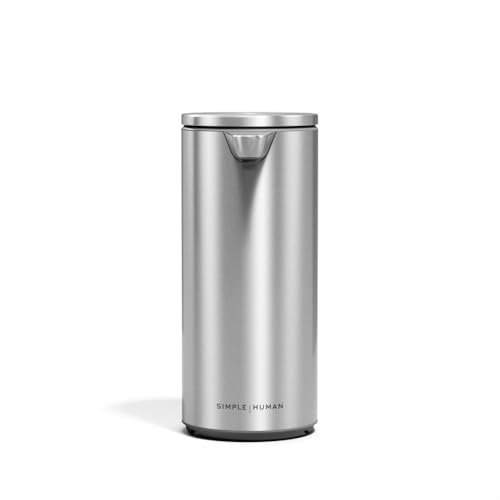
The simplehuman Sensor Soap Pump is the dispenser to buy if you want something that looks and feels like a finished piece of homewares rather than a gadget. The brushed stainless steel body is genuinely premium, the sensor is fast and clog-resistant, and the variable dispense feature lets each person choose their dose: hold your hand up close for a small dab, further away for more. It is the most expensive pick in this guide at around $110, and it earns a 4.3-star rating across more than 700 reviews.
The standout practical feature is the IP67 waterproof rating, which means you can rinse the whole unit under the tap to keep it clean without worrying about water getting into the electronics. That is rare at any price and almost unheard of among the cheaper plastic dispensers. simplehuman rates a single charge at around three months of normal use, and the on/off switch lets you disable the sensor while you wipe down the bench so it does not fire soap onto your cloth. The 266mL tank is on the smaller side, so a busy family kitchen will refill it more often than the bigger picks below.
This is the pick for a renovated bathroom or a design-conscious kitchen where the dispenser is on display. It is overkill for a kid's bathroom or a laundry, where a cheaper unit makes more sense. But if you are going to look at this thing every day for years, the simplehuman is the one that still feels good to use after the novelty wears off.
Flaws but not dealbreakers
The price is the obvious one: you are paying three to four times what the value picks cost. A handful of Australian reviewers report rust forming inside the base over a couple of years, and simplehuman does not ship replacement charging cables or parts within Australia, which is a real frustration if you misplace the magnetic charger. The tank is also smaller than most rivals here. None of this stops it being the nicest dispenser to own, but go in knowing you are paying for design and materials, not for a bigger tank.
Best value: AIKE SensePro Automatic Soap Dispenser
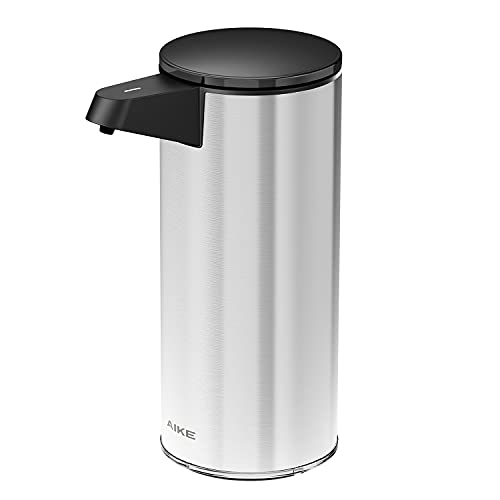
The AIKE SensePro is the dispenser we would tell most first-home buyers to put in their cart. It hits the rare combination of a strong 4.5-star rating, more than 1,300 reviews, Amazon's Choice status and a price around $46. You get a 380mL matte black stainless body that resists fingerprints, simple USB-C charging from any phone charger, and a touch-free sensor that responds in a fraction of a second.
What makes it the value winner is that nothing about it feels cheap for the money. The five dispense levels genuinely cover the range from a light hand wash up to a heavier dish-soap pour, so one unit works at either the bathroom basin or the kitchen sink. Reviewers repeatedly mention that the battery lasts well over a month between charges, and that the matte finish looks far dearer than it is. The transparent window lets you see when soap is running low, and the wide opening makes refills clean and quick.
It is a liquid-soap model, not a foaming one, so it pours rather than lathers. Use a thin, non-foaming liquid soap free of particles and avoid alcohol-based sanitiser, which can degrade the plastic internals over time. Set up that way, it is the most sensible all-rounder here, and the one most likely to still be working happily in a couple of years.
Flaws but not dealbreakers
Because it dispenses liquid, you cannot use foaming hand soap in it, and very thick soap can clog the nozzle until you dilute it. A full charge takes around seven hours, so charge it overnight rather than expecting a quick top-up. At 18cm tall it is a touch larger than a compact pump, which a few owners with tight vanities note. These are minor compromises for a dispenser that does almost everything well at a mid-range price.
Best budget pick: Xkey Automatic Foaming Soap Dispenser
At about $24 the Xkey is the cheapest dispenser in this guide and the lowest-risk way to find out whether touch-free soap suits your household. It is a foaming model with a 420mL tank, a 0.25-second sensor response and four adjustable dispense levels, and it can either sit on the bench or stick to the wall with the included adhesive.
Because it foams, a small amount of diluted soap produces a generous lather, so a bottle of hand wash lasts a long time. That makes it a smart pick for a powder room or a children's bathroom, where the foam is easy for small hands to use and you are not precious about the unit. It charges over USB-C and is rated IPX5 for water resistance, which is enough to cope with splashes near a sink. It holds a 4.3-star average, which is solid for a budget device.
You do have to manage expectations on build quality. This is a lightweight plastic unit, and a couple of Australian reviewers report units that stopped working within a few weeks. If yours arrives working and you treat it gently, it is excellent value; if you want something to last a decade, spend up to the AIKE or simplehuman. For a cheap, cheerful, genuinely useful foam dispenser, nothing else here undercuts it.
Flaws but not dealbreakers
Reliability is the gamble at this price: most owners are happy, but the failure rate is higher than the dearer picks. The adhesive wall mount does not always hold on textured tiles, and because it is a foaming dispenser you need to dilute regular liquid soap before it works properly. Read the instructions on the soap ratio before you fill it, and you will avoid the most common complaint.
Most reviewed: AIKE 9.5oz Automatic Soap Dispenser (AK1333)
The original AIKE sensor pump is the most reviewed dispenser in this entire guide, with more than 6,000 ratings behind its 4.3-star average. That depth of feedback is reassuring on its own: thousands of Australian and overseas buyers have used this exact unit and it keeps earning four and five stars. It is a 280mL brushed stainless pump that charges by USB-C and offers five dispense levels.
It is the compact sibling of our value pick. The smaller 280mL tank suits a tight bathroom vanity where the taller 380mL units feel bulky, and the brushed stainless finish is a classic look that goes with most tapware. Reviewers love that the battery lasts well over a month, often longer, and that it does not misfire when you reach past it to clean the bench. The most common note is that the printed manual is faint and the dispense-level setting takes a moment to learn, but once set it just works.
Choose this one over the SensePro if you specifically want the brushed silver look or a smaller footprint, and you are happy to save a few dollars. If you want matte black, a bigger tank or the slightly higher rating, the SensePro is the better buy. Either way you are getting AIKE's well-proven sensor pump.
Flaws but not dealbreakers
The 280mL tank is the smallest of the AIKE units here, so heavy households refill it more often. As with all liquid AIKE pumps, foaming soap and thick particle-laden soaps are off the menu, and a small number of buyers report a unit failing early. The faint manual is a genuine annoyance during setup. None of it undermines what is, on the weight of evidence, one of the most dependable dispensers you can buy.
Best for the kitchen sink: AIKE 17oz Automatic Soap Dispenser (AK1335)
If you want a dispenser that goes the longest between refills, the AIKE AK1335 has the largest rechargeable tank in this guide at 510mL. That extra capacity is exactly what a busy kitchen sink wants, where you are pumping soap through cooking and washing up all day. It holds a 4.3-star rating across more than 3,700 reviews, so it is also one of the most proven picks here.
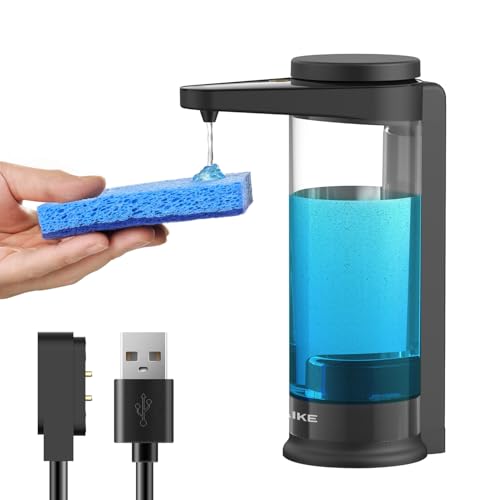
The tall design has a deliberately long, extended nozzle that keeps the spout away from grubby fingers, which cuts down on cross-contamination when the kids reach in. The transparent black body lets you monitor the soap level at a glance, and a child-lock function helps prevent accidental dispenses. Like the other AIKE pumps it charges over USB-C and runs for roughly a month per charge, with several long-term reviewers reporting many months and multiple tank refills before the first recharge.
This is a liquid dispenser built for dish soap and hand soap, not foam. It is taller and wider than the bathroom-sized units, so measure your splashback clearance before you commit. For a kitchen where you want to fill it and forget it, the big tank and long nozzle make it the most practical sink-side choice in the lineup.
Flaws but not dealbreakers
The size that makes it great for the kitchen makes it too big for a small vanity. A full charge takes around seven hours, and an occasional reviewer reports the sensor misfiring and dispensing on its own until cleaned, usually fixed by wiping the sensor dry. One reviewer also had a unit stop charging after about a year. For most owners, though, the long runtime and big tank are exactly what the kitchen ordered.
Best foaming dispenser with a display: Youker 6-Level Foaming Dispenser
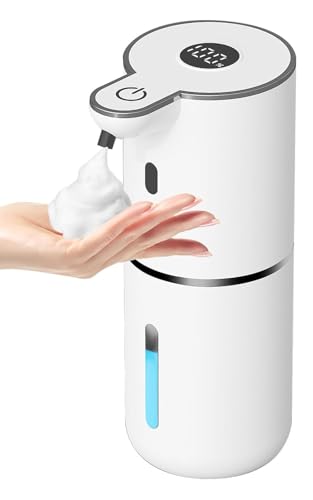
The Youker 6-level is the most feature-loaded foaming dispenser here, and the one to choose if you like a bit of information on the unit. It adds a digital display that shows both the current dispense level and the remaining battery, so you are never guessing when it needs a charge. It pairs that with six adjustable settings, a 380mL tank and a fast USB-C charge rated at about three hours.
Because it is a foaming model, you fill it with diluted soap and it produces a soft lather, which makes a little soap go a long way and is gentle for kids washing up. Reviewers single out the strong infrared sensor that triggers reliably without waving, and a handy cleaning mode you activate with three quick taps to clear the nozzle. The white body with its bright display has a clean, modern look that suits a contemporary bathroom or kitchen. It carries a 4.4-star average; the review count is still building, so it has fewer ratings than the long-established AIKE pumps.
Pick this over the Cheftick if you prefer a touch panel and a brighter display, and over the budget Xkey if you want more dispense levels and a better-built body. It mounts on the wall or sits on the bench, so it is flexible about where it lives.
Flaws but not dealbreakers
It is a newer listing, so it has fewer reviews than the AIKE veterans, which means less long-term reliability data. As with every foaming dispenser, regular liquid soap must be diluted before it lathers properly, and one early buyer received a faulty unit before the seller replaced it. The touch button can take a moment to learn. For a foaming dispenser with genuinely useful extras, it is hard to beat at the price.
Highest rated and best design: Cheftick Foaming Soap Dispenser
The Cheftick is the highest-rated dispenser in this guide at 4.6 stars, and the one to pick if you want a soft gold finish that stands out from the usual black and silver. It is a 400mL foaming model with an LED display, a memory function that remembers your usual setting, and nine dispense levels, which is the finest control of any pick here.
Its signature feature is a physical button instead of a touch panel. That sounds like a small thing, but it makes the unit far harder to trigger by accident with wet hands or a passing sleeve, which is a common gripe with touch-sensitive dispensers. It still dispenses touch-free via the sensor; the button is just for power and settings. A continuous foam mode, activated with three quick presses, is useful for washing oily hands or a quick face wash, and the IPX5 rating handles bathroom and kitchen moisture. Battery life is rated at up to two months per charge.
The review count is smaller than the AIKE pumps, so the 4.6-star figure rests on fewer ratings, but the design and the thoughtful button-plus-sensor approach make it a genuine standout. If you want the best-looking foaming dispenser and you like the gold, this is the one.
Flaws but not dealbreakers
The headline rating comes from a modest number of reviews, so it carries less long-term certainty than the thousands-strong AIKE listings. Nine dispense levels is more than most people will ever use, and the gold finish is a strong look that will not suit every bathroom. It is a foaming dispenser, so the usual dilution rules apply. For buyers who want design and fine control, none of that gets in the way.
Best wall-mounted pick: interhasa! 600mL Soap Dispenser
For a laundry, a garage or a high-traffic family bathroom, the interhasa! is the wall-mounted workhorse of this guide. It has the largest tank here at 600mL, a sensor that fires in about 0.2 seconds, and a locking design lifted straight from commercial washrooms, which is handy if you want to keep little hands or guests from tampering with it. It holds a 4.2-star rating across nearly 1,500 reviews.
The big difference from the other picks is power: the interhasa! runs on four AA batteries rather than a rechargeable cell. Some people genuinely prefer that, because there is no charging cable to remember and no built-in battery to wear out; you just swap in fresh AAs once or twice a year. It mounts to the wall to free up bench space and works with most liquid soaps, hand cleaners and gel sanitisers, though not foaming soap. The huge tank means you refill it far less often than the bench-top units.
This is the most utilitarian dispenser in the lineup, and it is meant to be. It is not a design piece for a feature bathroom; it is the reliable, lockable, big-capacity option for the rooms where function beats form. If you want soap mounted on a wall and out of the way, it is the clear choice.
Flaws but not dealbreakers
The dose per activation is small, so you may wave your hand twice for a full hand wash, and a few reviewers note exactly that. It needs wall mounting to get the best from it, and batteries are an ongoing cost the rechargeable picks avoid. As with the others, it does not take foaming soap. For a commercial-style wall unit at a home price, those are fair trade-offs.
Where Bunnings, Kmart and Myer fit
Most Australians see soap dispensers at Bunnings, Kmart, Myer, House and Pillow Talk, and those shelves are mostly manual pump bottles chosen to match a bathroom rather than sensor units. If you want a matching ceramic or resin pump for a vanity set, that is the right place to buy one, and it is usually where a matching toothbrush holder and toilet brush come from too. What those shops rarely carry is the touch-free category, which is why every pick above is an Amazon Australia listing with a live rating behind it.
What should you look for in an automatic soap dispenser?
Start with the soap type, because it decides everything else. A liquid dispenser pours normal soap and suits people who already buy liquid hand or dish soap. A foaming dispenser turns diluted soap into lather, which stretches a bottle much further and is gentler for kids, but you must dilute regular soap before it works. Neither is better overall; it is about what you already use.
Next, think about power. Most modern dispensers are USB-C rechargeable, which means no batteries to buy but a cable to plug in every month or two. Battery-powered units like the interhasa! never need charging but cost you AAs over time. Both are fine; pick the hassle you mind less.
Then capacity. A 250 to 300mL tank is plenty for a bathroom basin and keeps the unit compact. A 400 to 600mL tank means fewer refills, which is what you want at a busy kitchen sink, at the cost of a taller unit on the bench. Check the height against your splashback if space is tight.
Finally, look at adjustable dispense levels, a visible soap window so you know when to refill, and the water rating. An IPX5 rating handles splashes; the IP67 rating on the simplehuman lets you rinse the whole unit. The more dispense levels, the easier it is to dial in just enough soap and stop waste.
How do you keep an automatic soap dispenser working?
The single most common failure is a clogged nozzle, and it is almost always avoidable. Use a thin liquid soap free of grit and particles, and if you have a foaming model, dilute regular soap with water at roughly the ratio the manufacturer suggests, usually around one part soap to four to six parts water, before you fill the tank. Thick, undiluted soap is what dries in the tube and blocks the pump.
When you refill, do not fill the tank to the very top; leave a little air space to stop leaks, and pour slowly down the side to avoid bubbles. Most dispensers have a cleaning mode, often three quick presses of the button, that runs water through the nozzle to clear a partial blockage; many also ship with a small dredge bottle for flushing the tube. Run that if the motor pumps but no soap comes out.
Keep the charging port and sensor dry. Wipe the unit with a damp cloth rather than rinsing it, unless it has a high waterproof rating like IP67. Charge rechargeable units before the battery is fully flat to extend their life, and for battery models, swap in fresh AAs at the first sign of a weak dispense. Treated this way, a good dispenser easily lasts years rather than months.
What else will you want for the bathroom and kitchen?
A soap dispenser is one piece of a well-set-up sink area. A few inexpensive extras make the whole space work better and tend to get bought at the same time.
The competition: what we considered and left out
We looked well beyond the eight picks. Among the names that ranked nearby but did not make the cut, the KAWAICAT liquid dispenser is a tidy stainless unit with a 4.6-star average, but it had only a handful of reviews at the time of writing, which is too thin a record to recommend with confidence yet. We kept an eye on the popular Xiaomi and EKO models too: both are well regarded, but the EKO sits at a higher price than its features justify against our value pick, and stock and listings for these can be patchy.
Premium foaming options from simplehuman exist and are excellent, but at around $169 they are hard to justify over our liquid simplehuman pick unless you specifically want foam. Supermarket and big-box dispensers from Kmart, BIG W and Bunnings can be very cheap, but the very low-cost units tend to clog or fail fastest, which is why our budget slot went to the better-built Xkey instead. If a model you are eyeing is not here, the buying checklist above will tell you quickly whether it is worth a punt.
Frequently asked questions
Are touchless soap dispensers worth it?
Yes, for most homes. Because you never touch the pump with dirty hands, the dispenser stays clean and you cut down the cross-contamination a shared manual pump spreads. They also dose a consistent amount, which reduces soap waste, and they are genuinely easier for children and anyone with limited hand strength to use.
What are the disadvantages of an automatic soap dispenser?
They are electronic, so they need charging or new batteries, and the cheaper ones can clog or stop working sooner than a simple pump bottle. An over-sensitive sensor can occasionally release soap when you reach past it, and thick or particle-laden soap can block the nozzle if you do not dilute it.
What soap can I use in an automatic dispenser?
It depends on the type. A liquid dispenser takes thin, non-foaming liquid hand or dish soap free of grit; avoid alcohol sanitiser in plastic units, as it can degrade them over time. A foaming dispenser needs regular soap diluted with water, usually around one part soap to four to six parts water, or purpose-made foaming soap poured in directly.
Why has my soap dispenser stopped dispensing?
The usual cause is a clogged nozzle from soap drying in the tube. Run the cleaning mode if it has one, or flush the tube with the supplied dredge bottle, and set the dispenser to its highest level to push the blockage through. If the motor is silent, the battery is likely flat, so charge it or replace the batteries.
Do automatic soap dispensers use a lot of battery?
No. Most rechargeable models run for a month or more between charges under normal household use, and many owners report several months. Battery-powered units running on AA cells typically last around a year before you need to swap the batteries.
What is the best automatic soap dispenser in Australia?
For most people we recommend the AIKE SensePro: it is Amazon's Choice, holds a 4.5-star rating across more than 1,300 reviews, charges by USB-C and costs about $46. If you want the best build and design and do not mind paying more, the simplehuman Sensor Soap Pump is our top pick.
Which brand of soap dispenser is best?
On this list AIKE is the brand to beat for reliability, with three picks and more than 6,000 ratings behind the AK1333 alone. simplehuman is the premium name and the only pick here rated IP67, so the whole unit can be rinsed. Cheftick holds the highest score at 4.6 stars, but on far fewer reviews. If you want the safest buy, the AIKE SensePro at about $46 is it.
How do you clean a foaming soap dispenser?
Empty the tank, half fill it with warm water, then run the pump until the water comes through clear. Thick or particle-heavy soap is what clogs a foaming pump, so a flush every few refills is enough to keep it going. Wipe the sensor window dry as well, because a wet sensor is the usual reason a unit starts firing on its own.
How do you refill a foaming soap dispenser?
Use about one part liquid hand soap to four parts water, poured into the tank and swirled rather than shaken so it does not froth before it reaches the pump. Neat soap is too thick to foam and will block the nozzle. The foaming picks here, the Xkey at about $24, the Youker and the Cheftick, all work this way, which is why a bottle of hand wash lasts so much longer in them.
What is a good quality soap dispenser?
Three things separate a good one from a cheap one: a tank big enough that you are not refilling every week, a sensor that fires once cleanly rather than dribbling, and a seal that survives a wet bench. Capacity across these picks runs from 266mL on the simplehuman to 600mL on the interhasa!. Adjustable dispense levels and USB-C charging rather than a proprietary cable are the other two things worth paying for.
Once the sink is sorted, these guides help you finish the rest of the room with the same research-first approach.
About the author
Anish Puri founded NestPath in 2026 after going through the Australian first-home-buyer process himself. NestPath focuses on Australian first-home buyers because the existing review sites are American, generic, or both. Anish handles editorial selection across the homeowner hub. Reach out: hello@nestpath.com.au