Cordless or countertop? That is the real question
The best water flosser in Australia for most people is the Frohsun Retractable Water Dental Flosser, a cordless unit with a telescopic tank that collapses for travel, five pressure modes and a 24 month warranty. This guide compares cordless and countertop models so you can match one to your bathroom.
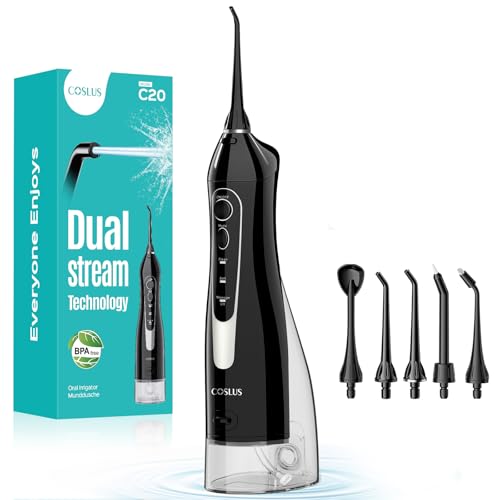
A water flosser is a small pump that shoots a thin, pulsing jet of water between your teeth and along the gum line, clearing what a brush leaves behind. If you have a power point and want a countertop unit, the Waterpik Ultra Professional has 10 adjustable pressure settings. For travel or a small bathroom, the Frohsun Retractable Water Dental Flosser is our pick, and the COSLUS C20 does the same job cordless with a 300ml tank.
If you are still choosing that brush, our Sonicare vs Oral-B brushing action and brush head comparison sets the two brands side by side.
Before you compare a single spec, answer this: do you want something portable, or something powerful? It is the question that splits this whole category in two. A cordless water flosser is a slim, rechargeable wand with the tank built into the handle: brilliant for travel, tight bathrooms and sharing between people, but the tank only holds 180 to 350ml on the cordless units listed here, so you may refill part way through. A countertop unit sits on the bench, plugs into the wall, and trades portability for a reservoir sized in seconds, 10 pressure settings and mains power for serious gum care. Get that one decision right and the rest is easy.
The picks below split cleanly into those two camps: most are cordless flossers for portability and everyday use, and the Waterpik Ultra Professional is the mains powered countertop machine for people who want a mains powered reservoir with 10 pressure settings. One more name that shows up in Australian search results is Piksters, whose HydroPik Ultra and HydroPik Mini are listed on the Priceline water flossers page, though neither is one of the carded picks here. Match the machine to how and where you will actually use it and you will not overspend.
How we chose these water flossers
Last checked: 14 October 2026, covering the stock, seller and rating of every listing on Amazon Australia.
We compared the water flossers listed on Amazon Australia against five things: tank size in millilitres, the number of pressure settings, the tips in the box, battery life between charges, and how deep the owner rating base runs. Anything without a real rating history was left out. Every specification on this page comes from two saved sources for each flosser: the Amazon AU listing and the maker specifications in the product information table that listing states, both saved on the Last checked date above. The usage advice cites the Waterpik professional FAQ at waterpik.com for tip replacement and brushing order. Prices and stock move, so check the live listing before you buy; the Last checked line at the start of this section gives the date of our check.
How the six water flossers compare
| Flosser | Type | Tank | Pressure settings | Tips | Battery |
|---|
| Waterpik Ultra Professional | Countertop | 90 second reservoir | 10 settings | 7 | Mains powered |
| COSLUS C20 | Cordless | 300ml | 3 modes | 5 | About 30 days |
| Vimmk | Cordless | 300ml | 5 modes, 30 to 110 psi | 8 | About 21 days |
| Xiaomi Water Flosser 2 | Cordless | 200ml | 3 modes | 2 | Up to 90 days |
| Nicwell | Cordless | 200ml | 4 modes, 11 intensity levels | 5 | About 30 days |
| Panasonic | Cordless | 200ml | 5 levels | 2 regular nozzles | Wireless charging |
The two columns that decide it are tank and pressure. A 300ml cordless tank runs about one full clean, a 200ml tank often needs a top-up mid floss, and the countertop Waterpik reservoir is sized in seconds rather than millilitres because it outlasts any single session. The number of pressure steps matters more than the top figure: 11 levels on the Nicwell or 10 on the Waterpik let sore gums start at the bottom and climb.
How the added picks compare
These cordless flossers join the six above. The table leaves out price and uses listing details only.
| Flosser | Type | Tank | Pressure settings | Tips | Battery |
|---|
| Frohsun Retractable Water Dental Flosser | Cordless, retractable | Telescopic tank, 200ml | 5 modes | 6 | Up to 25 days |
| COSLUS C50 | Cordless | 270ml | 4 modes, 5 intensities | 4 | Not stated |
| Waterpik Cordless Slide WF16 | Cordless | 200ml | 3 settings | 3 | Up to 4 weeks |
| usmile C10 | Cordless | 180ml | 4 modes | Not stated | Up to 95 days listed, Amazon US Global Store seller at the 14 October 2026 check |
| MySmile LP221 | Cordless | 350ml | 5 modes | 8 tips, 4 standard plus orthodontic, periodontal, plaque and tongue scraper | 15 to 20 days |
Best overall: Frohsun Retractable Water Dental Flosser Cordless Oral Irrigator
The Frohsun Retractable Water Dental Flosser is our best overall pick because it pairs the highest star rating in this guide with a design built for travel. Its listing shows 4.6 stars from 894 ratings, and the telescopic tank collapses to shrink the unit, with a storage bag in the box.
Does a water flosser actually work?
Yes, at the job it is designed for, which is flushing food and soft plaque out of the gaps between teeth and the pocket where the gum meets the tooth. It is not a replacement for brushing, and dental bodies generally describe it as an addition to interdental cleaning rather than a substitute for string floss, which physically scrapes the side of the tooth in a way a jet of water does not.
Where a water flosser is clearly the easier option is around braces, bridges, implants and crowns, where string floss is fiddly or impossible, and for anyone whose gums bleed and who therefore avoids flossing altogether. The practical test is simply whether you will use it. A machine you pick up twice a day beats a roll of floss in the drawer, and that is most of the argument. Pair it with a good electric toothbrush rather than instead of one.
How to use a water flosser
The first attempt usually ends with water down the front of your shirt. The routine that avoids that takes about a minute.
- Brush first or floss first, whichever you will keep doing. Waterpik's professional FAQ says a water flosser can be used either before or after brushing, and that the choice comes down to personal preference.
- Fill the tank with warm water. Cold water on a sensitive tooth is an unnecessary shock. Skip mouthwash unless the maker says the tank can take it.
- Start on the lowest setting. If you are new to it, stay on the gentlest mode for the first week or two before you climb.
- Lean over the sink and put the tip in your mouth before you press the button. This is the step everyone skips once.
- Close your lips just enough to let water fall out, not spray out. The water is meant to run straight back into the basin.
- Hold the tip at 90 degrees to the gum line and trace along it, pausing briefly in each gap between teeth.
- Work in one direction, back teeth first, outer surfaces then inner, and take about a minute in total.
- Empty the tank afterwards and leave it open to dry.
Some bleeding in the first week is common as gums that have not been cleaned between get used to it, and it usually settles. If it does not, that is a conversation for your dentist rather than a reason to turn the pressure up.
How to clean a water flosser
This is the part nobody writes about and the reason flossers get thrown out. A tank that is left full and shut sits warm and damp, which is exactly what mould wants.
Every day. Empty the tank and stand it open to air dry. Run the unit for a few seconds with the tank empty to clear the line.
Every week. Wash the tank in warm soapy water. The Panasonic tank is dishwasher safe, which keeps this job simple. Rinse the tips and let them dry standing up rather than lying in a drawer.
Every month, or more often on hard water. Descale it if the maker's manual allows. Fill the tank with a mix of about two parts warm water to one part white vinegar, run half of it through the tip into the sink, leave it to stand for 20 minutes, then run the rest through and flush twice with clean water. Scale from hard water can build up in the line over time, so descaling is the first thing to try if a unit feels weaker than it was.
Replace the tips every three to six months, or sooner if the jet starts to spray sideways.
Waterpik's professional FAQ gives the maker's schedule: replace the Precision tip and Tongue Cleaner tip every 6 months, and the Plaque Seeker, Orthodontic, Pik Pocket and Toothbrush tips every 3 months.
How to match the flosser to how you will use it
The single biggest mistake is buying for the routine you imagine rather than the one you will actually keep. If the honest answer is that you want something simple and portable, such as a quick floss in the shower or a wand that travels, a cordless unit is the smart buy, and a benchtop Waterpik would mostly take up bench space you do not want to give it. If you have stubborn gum issues, braces or dental work and you want a mains powered, adjustable clean at a fixed spot in the bathroom, the countertop Waterpik is the right call.
Space and power are the other deciding factors. Cordless flossers need nothing but a charge and tuck into a drawer, which is why they suit travellers, small bathrooms and shared sinks. A countertop unit needs a nearby power point and a patch of bench that stays clear. Be realistic about where it will live, because the best water flosser is the one you will actually pick up twice a day.
What about Philips Sonicare, Oral B, and buying in a shop?
Two brand names dominate the Australian conversation about water flossers and neither is a pick above, so it is worth explaining why.
Philips Sonicare makes the Power Flosser range, which has its own page on philips.com.au and appears as the Philips Sonicare Cordless Power Flosser in the Google Shopping results for this search. Oral B makes the AquaCare, and the Oral B AquaCare 6 Pro Expert Portable Irrigator Water Flosser appears in those results too. Neither is one of the Amazon Australia listings this guide compares, and we are not going to quote a price for a machine we cannot check a live listing for. If you already own a Sonicare or an Oral B brush and want one brand in the bathroom, they are a reasonable first look.
Where to buy. Every pick on this page has an Amazon Australia listing, and that is where we checked stock, seller and rating. Chemist Warehouse, Shaver Shop and Myer also appear as sellers in Google Shopping results for water flossers, so it is worth checking a second listing before you buy. Piksters, which appears on the Priceline water flossers page, is another name worth a look. Once the flossing routine is in place, a teeth whitening kit is the usual next purchase, and it works better on gums that are already healthy.
What the key specs actually mean
Three things do most of the work when you compare these machines. Tank size tells you how long you can floss before refilling. The cordless units listed here hold 180 to 350ml, which is one full clean for most people, while the countertop Waterpik holds a 90 second reservoir that comfortably outlasts any single session. Pressure settings and modes decide how gentle or firm the jet feels: a few modes are plenty for most mouths, but more levels, like the Nicwell with 11 and the Waterpik with 10, let sensitive gums start soft and build up slowly.
Tips and battery round it out. The number of nozzles matters in a shared household: the Vimmk includes eight, covering braces, gums and tongue, while some picks include only two. Battery life only applies to the cordless units, and among the listings that state a figure it ranges from 15 to 20 days on the MySmile LP221 to up to 95 days on the usmile C10, a Global Store listing from Amazon US at the 14 October 2026 check, with the Xiaomi rated up to 90 days. Read tank size, pressure range and tip count together and any flosser spec sheet starts to make sense.
Do the jet tips matter?
Dental266 says a water flosser is more manageable when there is a choice of jet tips, because they let the water spurt differently to meet your dental needs: some jets have brushes on the end that are handy for brushing around braces, and others direct a fine stream for precision. Check the box on the listing before you buy, since the picks here range from two nozzles on the Xiaomi to eight on the Vimmk.
How long will a water flosser last?
Dental266 asks how long a water flosser is likely to last and sends readers to productreview.com.au for hands on reviews of many types of flosser. It does not rank models for durability, so read the owner reviews and the rating count on the Amazon listing for the model you are considering.
Does a timer help?
The Australian dental clinic Dental266 advises choosing a flosser with a timer to spend the recommended 60 seconds water flossing, and says a pacer timer that alerts you at 15 or 30 seconds helps cover the whole mouth. Among the picks here, the MySmile LP221 shows working time on its display; for the others, check the listing before you buy.
Frequently Asked Questions
Cordless vs countertop water flosser: which should I buy?
It depends on whether you value portability or power. A cordless water flosser is a slim rechargeable wand with the tank in the handle, which is ideal for travel, tight bathrooms and sharing between people, though a tank of 180 to 350ml may need a refill part way through. A countertop unit plugs into the wall and trades portability for a reservoir sized in seconds, 10 pressure settings and mains power for serious gum care. If you want something simple and portable, buy a cordless unit; if you want mains power and adjustable control at a fixed spot, choose a countertop Waterpik.
Are cheap cordless water flossers any good?
Yes, for what they are. A cheap cordless flosser like the budget COSLUS C20 does the core job well: strong pulsing jets, a roomy 300ml tank, multiple modes and tips, an IPX7 waterproof body for the shower and about 30 days per charge. They are genuinely good for daily flossing and travel, and the best-sellers here have tens of thousands of owner ratings. The honest limits are smaller tanks than benchtop units, fewer pressure settings and, on some models, no charging adapter in the box, so judge a cheap cordless unit as an everyday tool rather than a clinical grade benchtop machine.
How much water pressure do you need?
For most people a few pressure settings are plenty, but more levels give you room to adapt. If your gums are sensitive or you are new to water flossing, start on the gentlest setting and build up over a week or two. That is where units with many steps shine, such as the Nicwell with 11 intensity levels or the Waterpik with 10 settings. Higher pressure clears stubborn debris around braces, crowns and implants, while a gentle setting is kinder on tender gums. The ability to dial pressure up and down matters more than chasing the single highest number.
What tank size do you need in a water flosser?
Tank size decides how long you can floss before a refill. The cordless units listed here hold 180 to 350ml, which is roughly one full clean for most people. A 300ml tank like the COSLUS or Vimmk gets you through without stopping, while a 200ml tank may need a top up if you take your time. A countertop unit like the Waterpik holds a 90 second reservoir, which comfortably outlasts a single session. If you find refilling annoying, choose a larger tank or a countertop reservoir.
Can a water flosser replace regular flossing?
A water flosser is an excellent complement to brushing and is often easier to stick with than string floss, especially around braces, implants, crowns and bridges where string struggles. It flushes food debris and plaque from between teeth and below the gumline using pulsing water. Many people find it more comfortable and more consistent than traditional floss, which means they actually do it daily. That said, your dentist may still recommend string floss for certain tight contacts, so treat a water flosser as a powerful addition to your routine rather than an automatic full replacement.
Is a water flosser good for braces and sensitive gums?
Yes, this is exactly where water flossers earn their keep. The pulsing water reaches around brackets, wires and dental work that string floss snags on, and several picks here include a dedicated orthodontic tip, including the Vimmk with eight nozzles. For sensitive gums, a unit with many pressure levels lets you start gentle and increase slowly as your gums get used to it, which is where the Nicwell and the Waterpik stand out. A gentle setting plus the right tip makes daily cleaning around braces far less of a chore.
Is Piksters worth considering?
Piksters is a name that shows up in Australian search results for water flossers: the Priceline water flossers page lists the Piksters HydroPik Ultra and HydroPik Mini. Neither is one of our carded picks, because the models above are the Amazon Australia listings we checked for stock, seller and rating. Check a current listing for tank size, battery life and nozzles before you buy.
Can you share a water flosser?
Yes, as long as everyone has their own tip. The tip is the only part that goes in the mouth, so a household unit with several colour-coded nozzles is designed for exactly this: the Vimmk ships with eight and the COSLUS and Nicwell with five. Do not share a tip, rinse and dry each one after use, and store them upright rather than lying in a drawer. Empty the tank between users on a cordless unit so nobody is flossing with yesterday's water.
Does a water flosser remove plaque?
It flushes away soft plaque and the food that feeds it, particularly in the gaps between teeth and just under the gum line where a brush does not reach. It does not remove hardened plaque, which is tartar, and nothing you can buy removes that: once it has set, it comes off with a scale and clean at the dentist. Treat a water flosser as a way to stop soft plaque becoming tartar in the first place.
Is Waterpik or Philips better?
Both brands appear in the Australian search results for this topic, and the Ultra Professional is our countertop pick above, with 10 adjustable pressure settings. Philips Sonicare Power Flosser units are worth comparing if you already own a Sonicare toothbrush and want one brand. We have not compared a Sonicare listing against the Waterpik here, so the deciding factors are the shop price on the day, the tips in the box and the warranty.
What kind of water flosser do dentists recommend?
None of the sources we checked names a single model that dentists recommend. Dental266, an Australian dental clinic, advises choosing a flosser with a range of jet tips and a timer, and notes that powerful settings could be painful if you have sensitive teeth, so adjustable pressure is worth looking for. The Waterpik Ultra Professional above has 10 adjustable pressure settings and seven tips, which fits that advice. A water flosser is an addition to brushing and interdental cleaning rather than a replacement for either, so if you have gum disease, implants or ongoing bleeding, ask your own dentist which setting and tip suit your mouth.
Where can you buy a water flosser in Australia?
Every pick in this guide has an Amazon Australia listing, which is where we checked stock, seller and rating. Chemist Warehouse, Shaver Shop and Myer also appear as sellers in Google Shopping results for water flossers, so check a second listing before you buy.
What is the best water flosser in Australia?
The Frohsun Retractable Water Dental Flosser is the best overall pick in this guide, with 4.6 stars from 894 ratings, five pressure modes and a 24 month warranty on its Amazon AU listing. For a countertop machine, the Waterpik Ultra Professional offers a 90 second reservoir and 10 pressure settings.
Can a water flosser replace brushing?
No. A water flosser cleans between teeth and along the gum line but does not take the place of brushing. Waterpik's own guidance cites the American Dental Association advice to brush your teeth at least twice per day, so use the flosser as well as your toothbrush, not instead of it.
How often should I use a Waterpik?
Use it at least once a day. Waterpik's guidance says you should use its water flosser at least once per day, and that you might want to use it more than once a day, for example when a dental professional recommends more frequent use for gum disease. Empty the tank after each use.
Should I brush before or after using a Waterpik?
Either order works. Waterpik's professional FAQ says a water flosser can be used either before or after brushing, and both promote good oral health. Flossing first might improve compliance, as it reduces the chance of forgetting, so choose whichever order you will keep doing.
What are the downsides of a water flosser?
The main downsides are mess, bench space and upkeep. Cordless tanks hold 180 to 350ml on the listings here, so you may refill mid session, countertop units need a power point, and the tank needs emptying and drying to keep mould away. Dental bodies generally describe it as an addition to brushing, not a replacement.
What does the Piksters HydroPik Ultra water flosser offer?
The Piksters HydroPik Ultra is listed on the Priceline water flossers page that appears in the search results for this topic. It is not one of the carded Amazon picks here, so check a current listing for tank size, battery life, nozzles and warranty before you buy.