The best weed killer for most Australian homes is Roundup Advance Concentrate 280ml: a systemic glyphosate concentrate that kills weeds to the root, is rainproof after 2 hours, and carries a label covering home gardens and waterways. For weeds inside a lawn, choose a selective lawn herbicide; under gravel or new beds, weed mat stops the next crop.
We went through every weed killer on Amazon Australia, checked ratings and review histories, and cross-referenced Australian lawn forums. The shortlist runs from a glyphosate free ready to use spray to a systemic concentrate whose label covers use around waterways. One honest note up front: the big name hose on selective lawn weeders (the bindii and buffalo products) are largely unavailable on Amazon AU, so most of this guide covers nonselective weed killers for paths, driveways, garden beds and fence lines, with two selective lawn products as the exceptions. We flag where that matters, and we include glyphosate-free options for readers who prefer one.
Which weed killer should you buy in Australia?
Short on time? The best weed killer in Australia depends on where the weeds are: Roundup Advance Concentrate 280ml for paths, driveways, beds and fence lines, Roundup for Lawns Concentrate 125ml for broadleaf weeds growing inside a lawn you want to keep, and, if you want an organic contact spray, the glyphosate free FireHawk Natural RTU 1L, although its card shows it as unavailable. For most new homeowners, the Roundup Advance Concentrate 280ml is the one to buy. It is a systemic glyphosate concentrate that kills weeds down to the root, its label covers use in home garden areas and around waterways, and it is rainproof after 2 hours. It holds a 4.7 star rating across 103 reviews. SureFire Glyphosate 360, which used to lead this guide, shows as unavailable as a 1 litre bottle on its card below.
If you want plenty of spray from one purchase, the Brunnings 100 g/L Glyphosate Concentrate twin pack makes up to 100 litres of ready to use spray from its two 1 litre bottles. And if you would rather skip glyphosate entirely, the FireHawk Natural Weed Killer RTU 1L is an Australian made nonanoic acid spray that starts wilting weeds within hours, suited to a fast first pass at the driveway if it returns.
How do the top weed killers compare?
Nine of the eleven weed killers on this page are non selective, meaning they kill whatever green thing they touch, lawn included, so they are for paths, pavers, beds and fence lines; Roundup for Lawns and SureFire Dicamba M are the selective exceptions, built to kill broadleaf weeds inside a lawn while sparing the grass. Beyond that, the real choice is concentrate versus ready-to-use trigger, and glyphosate (systemic, kills the roots, slower) versus glyphosate-free nonanoic acid (fast browning, contact action). Here is the field at a glance.
| Pick | Best for | Active and action | Selective | Form and coverage | Speed | Rating |
|---|
| Roundup Advance 280ml | Most gardens, and beds near waterways | Glyphosate, systemic | No | Concentrate, rainproof after 2 hours | Yellowing in 3 to 5 days, full kill in 1 to 2 weeks | 4.7 (103) |
| Yates Zero Ultra Tough RTU twin | Woody, hard-to-kill weeds | Glyphosate, systemic | No | Two 750ml trigger bottles, 1.5 litres, rainproof in 30 minutes | Results in about 3 to 4 days | 4.6 (27) |
| FireHawk Natural RTU 1L | Glyphosate free, when it returns | Nonanoic acid, contact | No | 1 litre ready to use | Wilting within hours | 4.0 (13) |
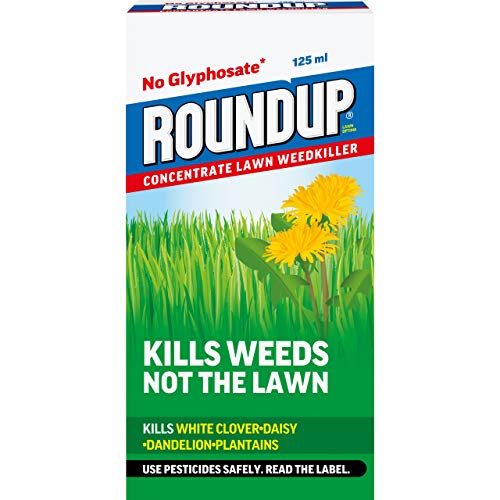
| Roundup for Lawns Concentrate 125ml | Broadleaf weeds inside a lawn | Glyphosate-free selective | Yes | 125ml concentrate, covers about 60 square metres | Check the label for the treated lawn | 4.2 (90) |
| SureFire Glyphosate 360 1L | Strongest concentrate, when it returns | Glyphosate 360 g/L, systemic | No | 1 litre concentrate | Yellowing in 3 to 5 days, full kill in 1 to 2 weeks | 4.6 (154) |
| Brunnings 100 g/L twin pack | Value per litre of spray | Glyphosate 100 g/L, systemic | No | Two 1 litre bottles, makes up to 100 litres of spray | Yellowing in 3 to 5 days, full kill in 1 to 2 weeks | 4.4 (173) |
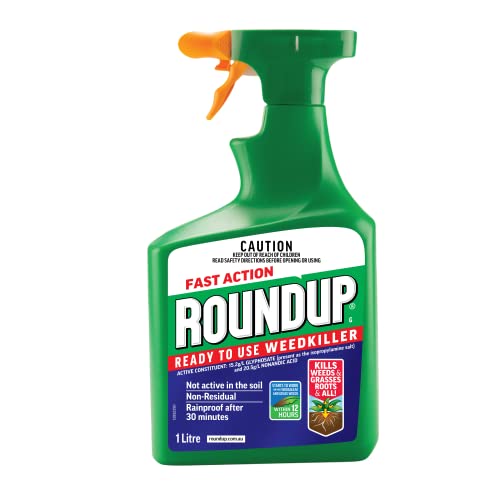
| Roundup Fast Action Spray 1L | Spot weeding without mixing | Not stated on the listing | No | 1 litre ready mixed, rainproof in 30 minutes | Works within 24 hours, per the listing | See card |
| SureFire Dicamba M 1L | Broadleaf weeds in turf that is not buffalo | Dicamba and MCPA, selective | Yes | 1 litre | Not stated on the listing | See card |
| SureFire Glyphosate 360 5L | Acreage and long fence lines | Glyphosate 360 g/L, systemic | No | 5 litre concentrate | Yellowing in 3 to 5 days, full kill in 1 to 2 weeks | See card |
| Brunnings 1 Hour Fast Action twin pack | Fast results on weeds and grasses | Not stated on the listing | No | Two 1 litre spray bottles, rainproof after 30 minutes | Rapid acting, per the listing | See card |
| Brunnings Ready to Use Weed Kill 1L | Spot weeding in the home garden | Not stated on the listing | No | 1 litre ready to use trigger, replant after 7 days | Not stated on the listing | See card |
Read the selective column first, because it is the one that decides whether you keep your lawn. Nine of the eleven kill any green thing they land on. Only Roundup for Lawns and SureFire Dicamba M can be sprayed through a lawn, and even then they target broadleaf weeds rather than invading grasses; SureFire Dicamba M contains dicamba, so keep it off buffalo. The product cards on this page carry the live Amazon Australia price, so use the cards for price and this table for the shape of the field.
How we evaluated
Last checked: 9 October 2026, covering the stock, seller and rating of every listing on Amazon Australia.
NestPath researches and aggregates rather than running spray trials in a paddock. For this guide we pulled every weed killer listed on Amazon Australia, filtered out anything out of scope (weed mats, flame weeders, hand tools and weed-and-feed fertiliser combos), and then applied three gates. First, availability: every pick had to be a listing that ships to Australian addresses, and a card we could not buy on the date above says so. Second, review depth: we required a genuine star rating built on real Australian purchase reviews, reading the critical reviews as carefully as the glowing ones. Third, price sanity: we dropped listings priced far above the same product elsewhere, which usually signals a reseller markup rather than a real price.
We then cross-checked the shortlist against what Australian turf and gardening communities actually recommend, so the picks reflect performance on Australian weeds like oxalis, wandering trad and onion weed, not American marketing copy. Where the community consensus favours a product that is not available on Amazon AU, we say so in the competition section rather than quietly substituting something weaker.
Alongside the Amazon Australia listings and their star ratings and review counts, the named sources behind this guide are the maker label claims printed on each listing, the APVMA, which registers Australian herbicides and approves their label directions, and the NSW Government's WeedWise guide for herbicide mixing rates.
Best overall: Roundup Advance Concentrate Weed Killer 280ml
Standard glyphosate labels tell you to keep the product away from ponds, drains and waterways, which is awkward advice if your block backs onto a creek or you have a frog pond. Roundup Advance is the version formulated for that situation: a 280 ml concentrate whose label covers use in home garden areas and around waterways, rated 4.7 stars across 103 reviews. That combination of a systemic glyphosate concentrate, a waterway tolerant label and a solid rating on a deep review base is why it is our best overall pick.
Selective chemistry is the whole point. A stray squirt of any glyphosate pick above leaves a dead brown patch in the middle of the grass, but a selective lawn herbicide targets the broadleaf weeds and leaves the surrounding turf standing, so you can treat weeds scattered right through the lawn instead of tiptoeing around them. The 125 ml concentrate is listed to cover about 60 square metres once diluted, enough for a typical suburban front and back lawn pass from one bottle.
It is also glyphosate free: the listing is explicit that the formula contains no glyphosate, which will matter to households avoiding it. Before you spray anything selective, work out what your lawn actually is, because the turf type decides what is safe: Buffalo, which in Australia usually means a soft-leaf variety like Sir Walter, is the sensitive one and is damaged by dicamba, so a product has to say buffalo safe on the pack. Kikuyu, Couch and Zoysia tolerate a wider range of broadleaf herbicides, and Couch in particular is the toughest of the common lawns here. If you cannot identify your grass, take a plug to a turf supplier before you buy: it is a five-minute conversation that saves a brown lawn. As with every herbicide here, the label directions are the approved conditions of use, so check them against your lawn type before spraying and mix at the stated rates rather than free-pouring.
Flaws but not dealbreakers
At 4.2 stars across 90 ratings it sits below the 4.6 and 4.7 scores of the guide's strongest performers, and 125 ml is the smallest bottle here, so large lawns may need more than one. It is also a specialist: it does nothing for the paths, pavers and fence lines the non-selective picks handle, so most households will still want one of the concentrates above alongside it. And selective products target broadleaf weeds rather than invading grasses, so it is not a fix for every lawn intruder.
Where to buy weed killer in Australia: Bunnings, Mitre 10 and the supermarkets
Every pick above is an Amazon Australia listing, because that is where we can check a live price, a rating and a review history in one place. It is not where most Australians actually buy weed killer, so here is the honest shop-by-shop version.
Bunnings is the default and carries the widest range: the full Roundup, Yates, Zero and Brunnings lines, the bulk glyphosate concentrates, the hose-on selective lawn products, and the organic sprays. It is also the only place most people will find the selective lawn herbicides that turf professionals recommend for bindii and clover, including the Bow and Arrow style broadleaf products that never appear reliably on Amazon AU. We are not quoting Bunnings shelf prices here, because we hold no live listing for them and the price moves; what we can tell you is what to compare, which is the active ingredient and its concentration in grams per litre, the area the pack treats, and whether the pack says selective or non-selective.
Mitre 10 and the independents carry a narrower range but usually stock the organic contact sprays, including OCP Slasher and the Richgro line, which are the two names Australian gardening groups mention most. Woolworths, Coles and the big supermarkets carry trigger bottles only, at the highest price per litre of finished spray of anywhere, which is fine for one weed by the letterbox and expensive for a driveway. Garden centres and turf suppliers are where to go for a selective product matched to your specific lawn, and they will identify the grass for you.
The rule that saves money everywhere: a concentrate costs far less per litre of finished spray than a trigger bottle. Buy the concentrate for the seasonal pass and keep one trigger bottle for the odd weed mid-week.
Does vinegar kill weeds, and is homemade weed killer worth it?
Vinegar does kill weeds, and it is worth understanding exactly what it kills before you mix a batch.
Acetic acid burns off the green top growth it touches. On a young annual weed in a paver joint on a hot day, that is enough and the weed does not come back. On anything with a taproot or a running rhizome, oxalis, dandelion, couch runners, onion weed, nutgrass, the top browns in a day and the plant reshoots from below within a fortnight. Kitchen vinegar is about 5 percent acetic acid, which is weak for the job; horticultural vinegar sold for weeding runs much stronger and is genuinely corrosive, so it wants gloves and eye protection exactly like a registered herbicide does.
The popular recipe of vinegar, salt and dishwashing liquid deserves a warning rather than a recipe. The detergent is a wetting agent and is harmless enough. The salt is the problem: it does not break down, it accumulates in the soil, and enough of it sterilises the ground for years, which is a disaster in a garden bed and slowly kills whatever you plant next. If you want bare ground for a season, use it on a gravel path and nowhere else.
If the reason you are reaching for vinegar is that you want to avoid glyphosate, the better answer is a registered organic contact spray built on nonanoic acid: FireHawk, covered above, is Australian made, and OCP Slasher and the Richgro organic sprays are the two other names you will see in Australian shops. They work on the same principle as vinegar, they are formulated to actually stick to a leaf, and the label tells you what they are approved for.
Pre-emergent: stopping the next crop before it germinates
Everything above kills weeds that are already up. A pre-emergent does the opposite job: applied to bare soil or an established lawn before the seeds germinate, it creates a barrier in the top layer of soil that stops new seedlings establishing. It does nothing at all to a weed you can already see.
The timing is the entire trick, and it is seasonal rather than reactive. Late summer to early autumn targets the winter weeds, and winter to early spring targets the summer ones, so in most of Australia that is two applications a year. Apply it, water it in, then leave the surface alone, because raking or digging breaks the barrier and the weeds come straight through the gap.
Pre-emergents are sold at Bunnings and turf suppliers rather than reliably on Amazon Australia, so there is no pick here, and they need to be matched to your lawn type the same way a selective herbicide does. On beds, paths and gravel there is a simpler answer that needs no chemistry at all: a layer of weed mat under the mulch or gravel does the same job physically and lasts years. And on a lawn, the cheapest pre-emergent of all is a thick lawn: a fed, mown, healthy sward crowds out most weed seedlings before they get light, which is what a decent lawn fertiliser programme and a sharp lawn mower buy you.
What should you look for in a weed killer?
Five things decide whether you buy the right bottle, and none of them are on the front label in big letters.
- Selective versus non-selective. Non selective products, which is nine of the eleven picks here, kill grass as happily as weeds; they are for paths, driveways, beds and fence lines. Killing bindii or clover inside a living lawn needs a selective herbicide matched to your grass type (and check your lawn is not buffalo before using anything with dicamba); Roundup for Lawns and SureFire Dicamba M are the selective options on this page, and SureFire Dicamba M contains dicamba. Hose on selective options are largely unavailable on Amazon AU, so for those, try a garden centre.
- Concentrate versus ready-to-use. Concentrates cost far less per litre of finished spray but need a sprayer and mixing. Ready to use triggers cost much more per litre but take zero effort. A sensible household ends up with one of each: a concentrate for the big seasonal pass, a trigger bottle for the odd weed that pops up mid-week.
- Systemic versus contact action. Glyphosate is systemic: slow, but it kills the root so the same weed does not return. Nonanoic acid products like FireHawk are contact: dramatic same-day browning, but perennials can reshoot. Match the chemistry to the weed, not to the marketing.
- Rainproof window. In winter especially, check how long the product needs on the leaf before rain. Yates Zero Ultra Tough claims 30 minutes, Roundup Advance 2 hours. Spraying an hour before a shower with a slow-absorbing product wastes the whole session.
- Residual versus non-residual. The glyphosate picks in this guide are nonresidual, meaning nothing stays active in the soil, so you can replant treated beds; check the label of any other pick, including Roundup for Lawns, for its own replanting guidance. Long-residual path products exist that keep bare ground bare for months, but they are unforgiving if you change your mind about that garden bed, and runoff near desirable plants is a real risk.
How do you use and store weed killer safely?
The label is the law here, literally: Australian herbicides are registered with the APVMA and the directions on the pack are the approved way to use them. The practical routine is simple. Wear gloves, long sleeves and eye protection when mixing concentrates, because the concentrate is the strong form of the product and mixing is when splashes happen. Spray on a still, dry morning; wind sends drift onto plants you like, and rain inside the product's rainproof window washes your work away. Keep pets and kids off treated areas until the spray has fully dried, per the label.
Mix only what you will use the same day, since diluted glyphosate degrades in the tank, and never store mixed spray in anything that looks like a drink bottle. Rinse your sprayer three times after herbicide use, and keep a dedicated herbicide-only sprayer if you also spray fertiliser or pest oil; glyphosate residue in a shared tank has killed a lot of much-loved tomatoes. Store bottles in original packaging, in a locked or high shed cupboard, away from heat and children. And time your sessions: weeds absorb systemic herbicides best when actively growing, so a mild sunny week beats a frosty one, and an early-spring follow-up catches survivors before they seed.
Mixing rates come from the label, so measure rather than free pour: for spot spraying cayenne snakeweed in home gardens, the NSW Government's WeedWise guide lists glyphosate 360 g/L products at 10 mL per 1 L of water. Use the rate printed on your own product, because concentrations and target weeds differ.
Always follow the manufacturer's manual and the requirements of your state or territory regulator.
You'll also want
A concentrate is only as good as the sprayer you put it in, and a couple of cheap accessories make the whole job faster and safer.
The competition
Plenty of products did not make the cut, and a few more deserve an honest word; the SureFire 5 litre and the Brunnings 1 Hour Fast Action twin pack also have their own cards on this page. The SureFire Glyphosate 360 5 Litre is the bulk version of the 360 g/L concentrate above; buy it for acreage, overkill for a suburban block. The Brunnings 1 Hour Fast Action twin pack is the fast acting version and reviews respectably at 4.2, but its standard 100 g/L sibling has the deeper review history. OCP Slasher, the organic nonanoic acid product most name-checked in Australian gardening groups, is listed on Amazon AU but with too few reviews to pass our gate; FireHawk covers the same chemistry with an Australian-made formulation.
Selective lawn care is still the thin end of the market, even with Roundup for Lawns and SureFire Dicamba M making the cut above. Bow and Arrow, the broadleaf herbicide that turf professionals recommend almost by reflex for bindii and clover in buffalo lawns, is not meaningfully available on Amazon AU, and the hose on selective products from the big brands were mostly out of stock on Amazon AU. The Yates Buffalo Pro hose-on had a live listing but a 3.9 rating, below every pick here. If your target is bindii in a buffalo lawn rather than the broadleaf weeds Roundup for Lawns covers, this is the rare case where we would point you at a garden centre or turf supplier rather than pad this guide with a second-rate substitute.
Frequently asked questions
Which weed killer is the most effective in Australia?
For general use, a systemic glyphosate concentrate like our top pick, Roundup Advance Concentrate 280ml (4.7 stars from 103 reviews), is the most effective all rounder: it kills weeds down to the root, it is rainproof after 2 hours, and its label covers home garden areas and around waterways. The most effective product for you, though, depends on the target: woody weeds respond best to a heavy-duty formulation like Yates Zero Ultra Tough, and if you want visible results within hours, a nonanoic acid spray like FireHawk browns weeds the same day.
What weed killer kills weeds permanently?
No home garden weed killer is truly permanent. Systemic glyphosate products, including the Roundup Advance concentrate, kill the treated plant permanently, roots and all, but they are non-residual: nothing stays active in the soil, so new weed seeds will still germinate. That is a feature, because you can replant treated areas. Expect a main seasonal pass plus quick follow-ups. Long-residual path herbicides exist but are unforgiving near plants you want to keep.
Is Yates or Roundup weed killer better?
They win different jobs. In our research, Roundup's strength is breadth: Roundup Advance is rated 4.7 stars with a waterway tolerant label, and Roundup for Lawns is a selective pick, killing broadleaf lawn weeds like dandelions, daisies and clover while sparing the grass. Yates Zero Ultra Tough, rated 4.6 stars, is the better buy for woody and hard to kill weeds like blackberry, oxalis and wandering trad, and it is rainproof in 30 minutes. Buy by target weed, not by brand loyalty.
Is glyphosate weed killer safe to use in a home garden?
Glyphosate products are registered for home garden use in Australia by the APVMA, the national regulator, and the label directions on each pack are the approved conditions of use. The sensible practice is unglamorous: wear gloves and eye protection, spray on still days, keep people and pets off treated areas until dry, and store products locked away in original packaging. Public debate about glyphosate exists, and we are not going to adjudicate it here; if you prefer to avoid it entirely, glyphosate free options built on nonanoic acid, like FireHawk, do a genuine job on annual weeds.
How long does weed killer take to work?
It depends entirely on the chemistry. Contact sprays based on nonanoic acid, like FireHawk, start visibly wilting weeds within hours. Systemic glyphosate products, including the Roundup Advance concentrate, typically show yellowing in three to five days and full kill in one to two weeks, and slower again in cold mid-winter weather when weeds are barely growing. If a glyphosate product looks like it has done nothing after four days, wait before respraying; reviewers who rated these products poorly usually just sprayed and judged too early.
Which weed killer is safe for dogs?
No weed killer is safe while it is wet. Whichever product you use, including the glyphosate free ones, keep pets and children off the treated area until the spray has completely dried, and that is the instruction that matters most: dogs pick it up on their paws and then lick them. Drying takes a couple of hours on a warm, still day and much longer in cold or damp weather, so spray in the morning and keep the dog inside or on the other side of the yard until the leaves are dry to touch. Follow the label rather than a rule of thumb, keep the dog away from the mixing as well as the spraying, because the concentrate is the strong form, and if a dog does get into a treated area while it is wet, wash the paws and call your vet rather than waiting to see what happens.
Does vinegar actually kill weeds?
It kills what it touches and not what is underneath. Acetic acid burns off green top growth, so a young annual weed in a paver joint on a hot day dies and stays dead, while anything with a taproot or a runner browns in a day and reshoots within a fortnight. Kitchen vinegar at about 5 percent acetic acid is weak for the job, and horticultural strength is corrosive enough to need gloves and eye protection. Leave the salt out of any homemade recipe, because salt does not break down and enough of it sterilises the soil for years.
What weed killer is safe on a buffalo lawn?
Only a selective product whose label says it is safe on buffalo. Buffalo, which in Australia usually means a soft-leaf variety like Sir Walter, is damaged by dicamba, which is in plenty of general broadleaf lawn herbicides, so the pack has to name buffalo rather than just say lawn. Kikuyu, Couch and Zoysia tolerate a wider range. Nothing nonselective goes anywhere near a lawn you want to keep, including nine of the eleven picks in this guide. SureFire Dicamba M, one of the two selective picks, contains dicamba, so keep it off buffalo. If you cannot identify your grass, take a plug to a turf supplier before you buy.
Does Bunnings sell weed killer, and is it cheaper than online?
Bunnings carries the widest range in Australia, including the full Roundup, Yates, Zero and Brunnings lines, the bulk concentrates, the hose-on selective lawn products and the organic sprays, and it is the realistic place to find the selective broadleaf herbicides that turf professionals recommend for bindii and clover, which never appear reliably on Amazon AU. Mitre 10 and the independents carry the organic contact sprays including OCP Slasher and the Richgro line. On price, the comparison worth making is not shop against shop but concentrate against trigger bottle: a concentrate works out far cheaper per litre of finished spray than a supermarket trigger bottle.
What is the best weed killer in Australia?
Roundup Advance Concentrate Weed Killer 280ml is our best overall weed killer in Australia. It is a systemic glyphosate concentrate that kills weeds roots and all, is rainproof after 2 hours, and its Amazon Australia listing says it suits garden and waterway use. For broadleaf weeds inside a lawn, choose a selective product such as Roundup for Lawns instead.
What is the best weed killer for my garden?
For garden beds, paths and fence lines, a non selective glyphosate concentrate such as Roundup Advance is the practical choice, because it kills the whole plant and is non residual, so you can replant treated beds. For weeds growing through the lawn, use a selective lawn product, and check that the label names your grass type first.
What are some natural weed killers available in Australia?
Registered organic sprays built on nonanoic acid are the natural weed killers you will find in Australian shops: FireHawk Natural Weed Killer is Australian made, and OCP Slasher and the Richgro organic sprays are the other common names. They burn off top growth within hours but do not kill deep roots, so perennials can reshoot. Kitchen vinegar is about 5 percent acetic acid and weak for the job.
What is the strongest weed killer I can get?
The strongest glyphosate concentrate on this page is SureFire Glyphosate 360, at 360 g/L, in 1 litre and 5 litre bottles, and the 1 litre card carries a dated stock warning. That is more than three times the 100 g/L in the Brunnings concentrate, so you need less product per litre of spray. Strength is not speed: glyphosate still takes one to two weeks for a full kill.
What do farmers use instead of Roundup?
The most direct swap is generic glyphosate: glyphosate is the active in Roundup's classic concentrates such as Roundup Advance, and SureFire Glyphosate 360 carries it at 360 g/L under another brand. For broadleaf weeds in pasture, selective mixes such as SureFire Dicamba M, whose listing names pastures and winter cereals, are the selective option.
How do you get rid of weeds so they never come back?
Combine a root killing spray with a barrier. Kill existing weeds with a systemic glyphosate product that takes the roots, then stop new seedlings with weed mat under mulch or gravel, or with a pre emergent applied twice a year on lawns. Non residual sprays leave nothing in the soil, so new seeds still germinate without that barrier.
Keep building your outdoor setup
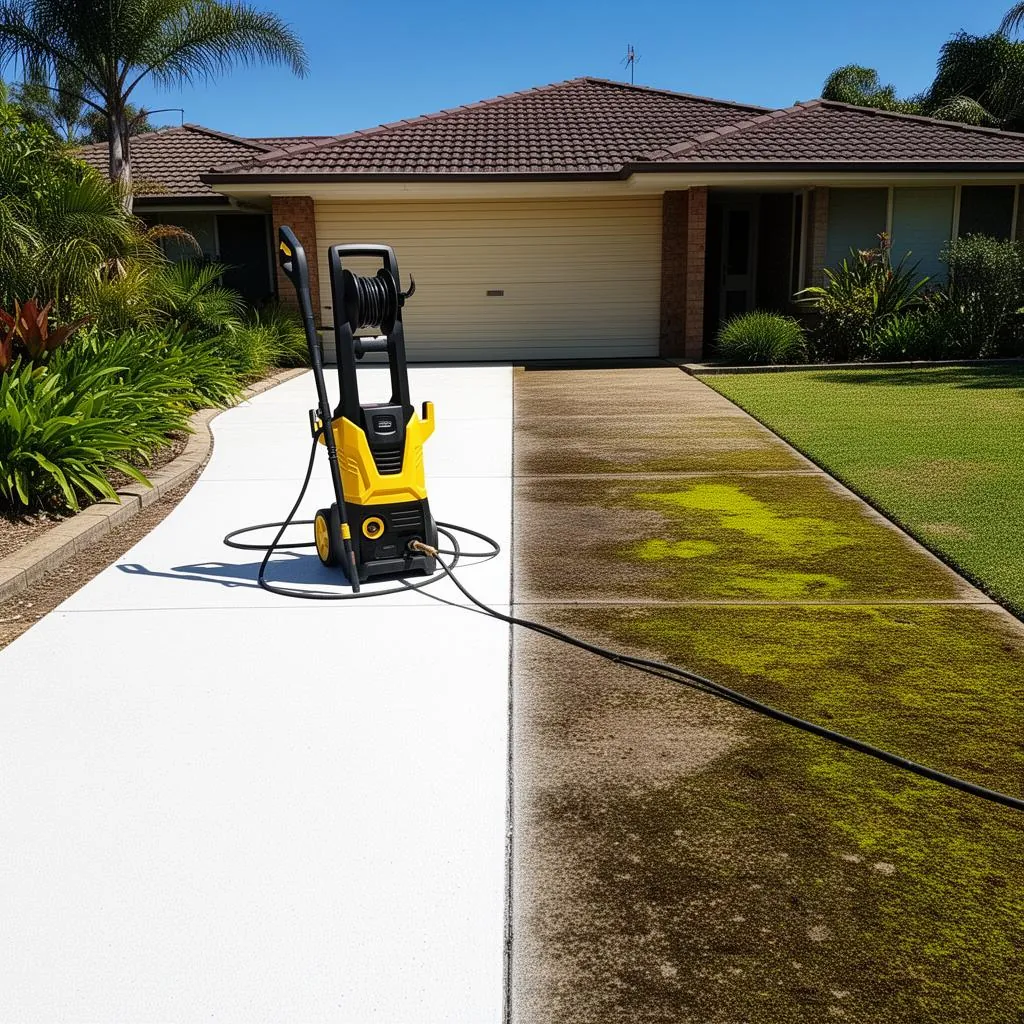
Winning the weed war is usually step one of a bigger project. These guides carry on: a good garden hose and hose nozzle for the watering that follows replanting, a lawn mower and whipper snipper to keep regrowth in check, a hedge trimmer for the green things you actually want to shape, proper work gloves, and garden edging to draw the clean line that makes a weeded bed look finished. Once the weeds are gone from the paths and driveway, a pressure washer lifts the dirt left on the paving.
About the author
Anish Puri founded NestPath in 2026 after going through the Australian first-home-buyer process himself. NestPath focuses on Australian first-home buyers because the existing review sites are American, generic, or both. Anish handles editorial selection across the homeowner hub. Reach out: hello@nestpath.com.au