Non-electric or electric? That is the real question
Before you compare a single spec, answer this: do you want the simplest possible routine, or do you want control? It is the question that splits this whole category in two. A non-electric, thermos-style maker like the EasiYo needs no power at all - you pour in boiling water, drop in the jar, wait 8 to 12 hours and that is genuinely it, which makes it almost impossible to get wrong. An electric maker adds a thermostat that holds the fermenting temperature for you, which is what you want for thick Greek yoghurt, dairy-free batches and long, slow specialty ferments. Get that one decision right and the rest is easy.
The six picks below map cleanly onto that split: the first two are non electric makers for the simplest, most foolproof routine, and the rest are electric makers and Greek strainers for people who want thick yoghurt, dairy free options and more control. The other things worth weighing as you read are dairy-free capability and batch size - one shared tub versus a set of individual jars - so match the maker to how you will actually use it and you will not overspend.
EasiYo Red Yoghurt Maker 1KG
If you just want to start making yoghurt without any fuss, the EasiYo is the entry point and the Australian classic. It is the cheapest pick here, and it does the non electric job perfectly: you mix a sachet with cool water in the jar, fill the surround with boiling water to the line, drop the jar in and leave it for 8 to 12 hours. There is no power, no timer and no thermostat to set, so there is almost nothing to get wrong.
With no moving parts or electronics it wipes clean in seconds and sits compactly on a shelf, and the yoghurt comes out with live cultures and no artificial stabilisers. The trade-offs at this price are honest ones: it makes plain set yoghurt rather than thick strained Greek, and the easiest, most reliable results come from EasiYo sachets, so it is the simplest path rather than the most flexible.
Country Trading Stainless Yoghurt Maker
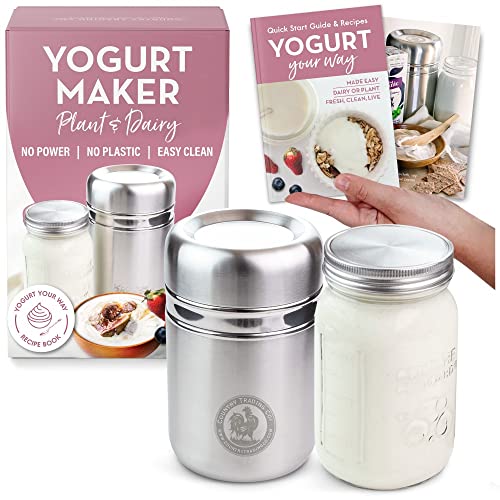
The Country Trading maker is the pick if you love the no-power simplicity of a thermos-style maker but want no plastic anywhere near your food. The surround is stainless steel and the jar is glass, so it follows the same pour-and-wait routine as the EasiYo while being more durable and the more eco-friendly choice for daily use.
Instead of a thin leaflet you get a 42-page recipe book that walks you through more than 12 yoghurts - Greek, coconut, almond, keto and plant-based - so it is genuinely set up for dairy-free experimenting rather than just plain dairy yoghurt. With more than a thousand ratings it is the most-reviewed maker in this guide. The honest caveat is that, like any non-electric maker, it relies on a warm spot and the right starter rather than a thermostat, so a very cold kitchen can need a little extra care.
Davis and Waddell Electric Yoghurt Maker
The Davis and Waddell is the easiest step from non-electric into electric, and it carries a homewares name plenty of Australians already recognise. Being electric means it holds the fermenting temperature for you rather than relying on a warm corner of the kitchen, which makes results more consistent from one batch to the next - especially in winter.
It is a 2-in-1 that doubles as a fermenter, with pre-sets for soft cheese and pickled or fermented vegetables, and it makes plain or flavoured yoghurt in about 10 hours. The kit includes both 1.6 and 1.8 litre tubs plus a strainer, so a single large tub of yoghurt is straightforward. The honest note is that it is a single-tub maker rather than individual jars, so the household shares one batch, and the bundled strainer thickens yoghurt but stops short of a dedicated Greek-style maker.
ANZKTOS Adjustable Temp Yoghurt Maker
The ANZKTOS is the pick for someone who likes to tinker, because the adjustable temperature lets you dial in the exact warmth a given culture prefers rather than accepting one fixed setting. Paired with a timer that runs up to 48 hours, it suits long, slow ferments for tangier or specialty yoghurts, and the precision probe holds the temperature closely for sensitive cultures.
The six glass jars portion the batch out to roughly a quart, enough for about a week and tidier than one shared tub. Two honest caveats temper the appeal: the review base is smaller at 78 ratings, so there is less long-term feedback than the cheaper makers carry, and stock can be low, so it is not always available the moment you want it.
Lacor 69246 Yoghurt Maker
The Lacor is the pick if you want an electric maker without paying for menus, probes and programs you will never use. It holds a steady warming temperature while your yoghurt sets, so you get more consistent results than relying on a warm corner of the kitchen, and at 4.6 stars it is the best-rated maker in this guide.
It is made in Spain from solid materials and built to handle regular use at home or in a busy kitchen, and its whole appeal is that proven, no-fuss simplicity rather than a long feature list. The honest trade-offs are worth knowing: there is no adjustable temperature dial or built-in strainer, so for thick Greek yoghurt you would strain it through a cloth yourself, and it is a straightforward maker rather than a programmable one you tinker with.
Euro Cuisine GY50 Greek Yogurt Maker
The Euro Cuisine GY50 is the standout in this guide and the recognised name when people talk about making Greek yoghurt at home. Rather than fermenting from scratch, it strains up to 2 quarts of yoghurt - homemade or store-bought - through a fine mesh that draws off the whey and leaves a thick, creamy Greek result, which also opens the door to dips, tzatziki and low-calorie dressings.
It is BPA-free, stacks neatly in the fridge and rinses clean in seconds, and with well over 5,700 ratings it has by far the largest happy review base here. The honest caveat is that it is a strainer rather than a high-capacity fermenter, so its working batch is smaller than one big single tub - you trade outright volume for the best-reviewed, most reliable Greek finish, which is exactly why it sits below two larger makers on price.
How to match the maker to how you will use it
The single biggest mistake is buying for the yoghurt routine you imagine rather than the one you will actually keep up. If the honest answer is that you just want fresh plain yoghurt with the least possible effort, a non electric thermos style maker is the smart buy, and a more expensive electric maker would mostly add steps you never use. If you specifically want thick Greek yoghurt, dairy-free batches or the ability to fine-tune cultures, an electric maker or a dedicated Greek-strainer earns its keep.
Batch format is the other deciding factor. A single-tub maker like the Davis and Waddell makes one large batch the household shares, which is efficient if everyone eats the same yoghurt. Individual jars, as on the ANZKTOS, let people flavour their own and grab one at a time, which suits varied households. Be realistic about how your family actually eats yoghurt, because the best maker is the one whose batches get finished rather than forgotten.
What the key features actually mean
A few details do most of the work when you compare these makers. Power type tells you the routine: non-electric makers are foolproof but rely on a warm spot, while electric makers hold the temperature for you and cope better with cold kitchens and fussy cultures. Temperature control and a timer, as on the ANZKTOS, are what let you chase tangier or thicker results rather than accepting one fixed outcome.
Greek capability is its own thing - a maker either strains the whey for you, like the Euro Cuisine, or it does not, and a bundled strainer like the Davis and Waddell sits in between. Dairy-free capability comes down to flexibility with the milk and starter rather than the hardware, which is why the recipe books on the non-electric makers matter. Read power type, temperature control, Greek straining and batch format together and any product page starts to make sense.
Frequently Asked Questions
Non-electric vs electric yoghurt maker - which should I buy?
It depends on whether you want simplicity or control. A non-electric, thermos-style maker like the EasiYo needs no power - you add boiling water, drop in the jar and wait 8 to 12 hours - which makes it almost impossible to get wrong and the cheapest way in. An electric maker holds the fermenting temperature with a thermostat, which is what you want for thick Greek yoghurt, dairy-free batches and long specialty ferments. If you just want easy plain yoghurt, buy non electric; if you want control, step up to electric.
How does a non-electric yoghurt maker work?
It works by trapping heat, not generating it. You mix your milk or sachet with the starter in the inner jar, fill the outer chamber with boiling water to the line, seal the jar inside and leave it for 8 to 12 hours. The hot water surround keeps the cultures warm enough to ferment, and by the time you come back you have set yoghurt. There is no power, no timer and no thermostat, which is exactly why makers like the EasiYo and the Country Trading stainless model are so hard to get wrong.
Can a yoghurt maker make thick Greek yoghurt?
Some can directly, others need a strainer. Greek yoghurt is simply regular yoghurt with the watery whey strained off, so any maker can get you part way and then you strain. The cleanest results come from makers built for it: the Euro Cuisine GY50 is a dedicated Greek-strainer that turns up to 2 quarts of yoghurt thick and creamy, and the Davis and Waddell bundles a strainer too. A plain non-electric maker makes lovely set yoghurt, but you would strain it through a cloth yourself for a Greek texture.
Can you make dairy-free yoghurt in these makers?
Yes, dairy-free comes down to the milk and starter rather than the machine. Most of these makers can ferment coconut, almond, soy or other plant milks as readily as dairy, provided you use a suitable starter culture. The Country Trading stainless maker leans into this with a recipe book covering coconut, almond and plant-based yoghurts, and the electric makers handle plant milks fine because they simply hold a steady temperature. The honest tip is that plant milks sometimes need a thickener or a specific vegan starter to set firmly, so follow a dairy-free recipe rather than your usual dairy method.
How long does homemade yoghurt take to make?
Usually somewhere between 8 and 12 hours, with longer for tangier or thicker results. Non-electric makers like the EasiYo are designed around an 8 to 12 hour rest, often done overnight. Electric makers give you more say: the Davis and Waddell makes a batch in about 10 hours, while the ANZKTOS lets you run its timer far longer for slower, tangier ferments. As a rule, longer fermentation means more tang and often a thicker set, so the exact time is partly a matter of taste you tune over a few batches.
One tub or individual jars - which is better?
It comes down to how your household eats yoghurt. A single-tub maker such as the Davis and Waddell makes one large batch everyone shares, which is efficient and means less to wash if the family all eats the same thing. Individual jars, as on the ANZKTOS, let each person flavour their own and grab a single serve, which suits households with different tastes and makes portioning easy. Neither is better outright - pick the format that matches whether your household wants one shared yoghurt or several personal ones.
Is a yoghurt maker worth it versus buying yoghurt?
For regular yoghurt eaters, usually yes. Making your own lets you control exactly what goes in - no added sugar, stabilisers or artificial flavours - and a batch of homemade yoghurt typically costs a fraction of the same volume of premium tub yoghurt, so an inexpensive maker pays for itself fairly quickly. You also keep the live cultures and can tailor thickness, tang and even the milk to suit dietary needs. The honest counterpoint is the time and routine: if you only eat yoghurt occasionally, buying it may be simpler than keeping a maker in regular use.