How to actually choose a Bluetooth speaker (without overpaying)
The best Bluetooth speaker in Australia for most people is the Soundcore Motion 300 at about $83, which gives real stereo from 30W with an IPX7 rating and up to 13 rated hours, while the JBL Go 4 Mini at about $35 is the cheapest genuinely waterproof pocket speaker and the Soundcore Boom 2 at about $176 is the one for parties at 80W. A great Bluetooth speaker is about matching the speaker to where you will use it, not chasing the biggest watt number on the box. A pocket speaker for the kitchen, a floating one for the pool and a subwoofer-equipped unit for a party are three different products, and the right pick depends entirely on which of those you are buying for. And if the night is really about singing rather than listening, that is a karaoke machine, which is a fourth product again.
Two myths cost Australians money. The first is that the word waterproof means the same thing on every box; it does not, and we will decode exactly what the ratings mean below. The second is that the battery hours printed on the label are what you will actually get; they are a best case measured at low volume. Sort those two out and you will buy the right speaker once.
Our six picks span 35 dollars to 283 dollars, from a genuinely waterproof pocket mini up to a strap-carried flagship. They were the top rated Bluetooth speakers we could verify in stock with an Australian price when this guide was researched, and every one of them is a decent Bluetooth speaker at its price rather than a cheap unit padded out with watts. Here is how to read the spec sheet so you do not get caught out.
| Pick | Best for | Key spec | Price band | Rating |
|---|
| JBL Go 4 Mini Bluetooth Speaker | Pocket and travel, best budget | 4.2W mono, IP67, up to 7 hours rated | from $35 | 4.7 |
| Soundcore Motion 300 Speaker | Best for most, everyday value | 30W true stereo, IPX7, up to 13 hours rated | from $83 | 4.6 |
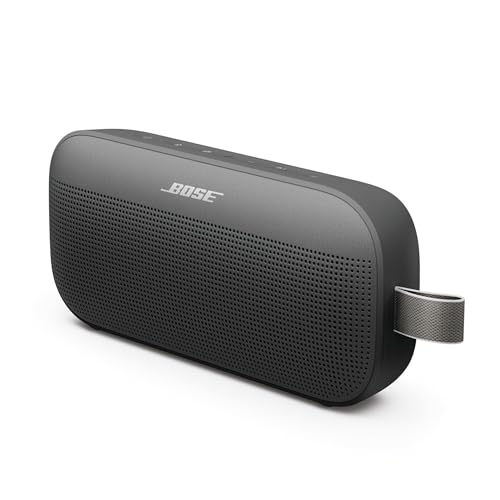
| Bose SoundLink Flex (2nd Gen) | Beach and pool, best waterproof | IP67 and it floats, bass to 40Hz, up to 12 hours rated | from $164 | 4.7 |
| Soundcore Boom 2 Party Speaker | Parties | 80W peak with a real subwoofer to 45Hz, up to 24 hours rated | from $176 | 4.7 |
| JBL Charge 6 Speaker + Power Bank | Best battery, charges your phone | IP68, up to 28 hours rated and about 14 hours loud | from $184 | 4.7 |
| JBL Xtreme 4 Portable Speaker | Best premium, big room-filling sound | True stereo, IP67, up to 24 hours plus 6 from the case | from $283 | 4.6 |
Waterproof ratings: what IPX4, IPX7 and IP67 actually mean
This is the single most misunderstood number on a speaker box, so here it is in plain terms. The code is IP followed by two characters. The first character is the dust rating, on a scale of 0 to 6, or the letter X if the speaker was never tested for dust. The second character is the water rating.
- IPX4 means splash-resistant only. It will survive rain or a splash by the sink, but you cannot dunk it. Many speakers sold as outdoor or party are only IPX4.
- IPX7 means submersible to 1 metre for 30 minutes. The X means it has no dust rating, so it is water-safe but not sand-safe.
- IP67 means dust-proof (the 6) and submersible (the 7). This is the one you want for the beach or a dusty campsite.
The practical upshot: for poolside or beach use you want a real dust rating, which means IP67 or IP68. An IPX7 speaker like the Soundcore Motion 300 is fine in the water but fine sand can work into its unsealed ports, so keep it off the beach. The genuinely rugged budget option is the JBL Go 4, which carries a full IP67 rating despite costing about 35 dollars.
If your main use is the pool or the beach, the standout is the Bose SoundLink Flex. It is rated IP67, and crucially it floats, so a knock into the pool means you fish it out rather than dive for it. Its PositionIQ feature even re-tunes the sound depending on whether it is lying flat, standing up or hanging from its loop.
The battery-hours trap
The battery figure on the box is almost always measured at around 50 percent volume. Play the speaker loud, the way you actually would at a barbecue, and you can easily get half the rated time. Treat the headline number as a ceiling, not a promise.
We saw this gap directly. JBL rates the Charge 6 at up to 28 hours, but a verified Australian reviewer measured around 14 hours at normal listening volume; the 28-hour figure relies on a bass-trimming power-saving mode most people never switch on. That is not JBL being uniquely dishonest, it is how the whole industry quotes battery life. It is still a strong all-day speaker, and it doubles as a power bank to charge your phone, but plan around the real number. For TV and movie audio specifically, our best soundbars in Australia guide covers the home-theatre options.
The takeaway when comparing two speakers: if one is rated 24 hours and another 13, the real-world gap will be roughly proportional, but both will fall short of the label when you crank them. Buy a margin of battery you will never quite use.
Bass, watts and the tiny-driver truth
Real bass needs a real driver moving real air. There is no software trick around the physics. A pocket mini with a single 45mm driver, like the JBL Go 4, physically cannot produce deep bass no matter what 360 sound or deep bass says on the box. It will sound clear and surprisingly loud for one person, but the low end simply is not there.
If you genuinely want bass you can feel, look for a dedicated subwoofer or a much larger driver. The Soundcore Boom 2 is the clearest example here: it pairs a 50W racetrack subwoofer with dual tweeters in a true 2.1 layout, reaching down to about 45Hz. That is the difference between a speaker that hints at bass and one that delivers it.
One more honesty note on watts. The 80W on the Boom 2 is a peak figure; continuous output sits closer to 60W. Watts are a rough guide to loudness potential, not a precise gospel, and they tell you nothing about sound quality. A well-tuned 30W speaker can easily sound better than a poorly tuned 50W one.
Mono vs stereo: why one speaker is not stereo
Stereo means the left and right channels stay separate, giving you a sense of width and placement. Most single portable speakers do not do this. The JBL Go 4, the JBL Charge 6 and the Bose SoundLink Flex are all mono: they mix the left and right channels down into one. That is fine for casual listening, but do not expect a stereo image from them.
There are only two ways to get true stereo. The first is to pair two speakers, set one as left and one as right. The second is a single speaker with two separated drivers and the smarts to drive them as a stereo pair, which is rare at this price. The Soundcore Motion 300 is the standout that pulls genuine 2.0 stereo from a single unit, which is a big part of why it is our pick for most people.
So if the box says stereo, check whether that means the single unit produces a stereo image, or merely that you can buy a second speaker to make a pair. Those are very different things.
The JBL tax: when a value brand matches the big name
JBL makes genuinely excellent speakers, and there is nothing wrong with buying one. But you often pay a brand premium for the logo. Value brands like Soundcore (made by Anker) and Tribit frequently match or beat JBL on watts, stereo capability and battery per dollar, and they come with thousands of genuine reviews.
The two clearest examples in this guide are both Soundcore. The Motion 300 delivers real stereo and hi-res audio for under 100 dollars, undercutting JBL units that are mono at the same price. The Boom 2 gives you a real subwoofer and a party light show for less than a comparable JBL PartyBox. The lesson is to buy the sound and the features, not just the badge on the grille.
None of this means JBL is overpriced across the board. The premium JBL Xtreme 4 earns its place when you want big room-filling stereo you can sling over a shoulder, and JBL has a long, proven track record with the Xtreme line. Just go in knowing what you are paying the brand premium for.
A note on star ratings and where to use each speaker
Two things to know before you trust a star rating. First, some very large review counts are pooled across global Amazon stores rather than Australia alone. The JBL Go 4 is a good example, with more than 22,000 ratings: those are real reviews, but they come from buyers worldwide, not just here. Second, newer models have thin review pools simply because they have not been out long. The JBL Xtreme 4 sits at around 120 ratings, so its score is real but based on far fewer voices than a long-established model.
Here is the quick guide to which of our six picks suits which use:
- Pocket and travel: JBL Go 4 - tiny, rugged and properly waterproof.
- Everyday value: Soundcore Motion 300 - real stereo and hi-res for under 100 dollars.
- Beach and pool: Bose SoundLink Flex - true IP67 and it floats.
- Parties: Soundcore Boom 2 - a real subwoofer, lights and a power bank.
- All-day and travel power: JBL Charge 6 - long life and a built-in power bank.
- Big premium sound: JBL Xtreme 4, room-filling stereo on a shoulder strap. A Bluetooth record player pairs straight to it if you want a turntable without a receiver.
Frequently Asked Questions
What does IPX7 or IP67 actually mean on a speaker?
The code is IP followed by two characters. The first is the dust rating from 0 to 6, or X if the speaker was never tested for dust. The second is the water rating. IPX7 means submersible to 1 metre but with no dust protection, so it is water-safe but not sand-safe. IP67 means both dust-proof and submersible, which is what you want for the beach or a dusty campsite.
How long do Bluetooth speakers really last on a charge?
The rated hours are measured at roughly 50 percent volume. Play a speaker loud and you can get about half the quoted time. We saw a speaker rated at 28 hours measure around 14 at normal volume in a verified Australian test. Treat the label number as a best case and buy more battery than you think you need.
Can a small Bluetooth speaker have good bass?
Not really deep bass. Real low end needs a physically larger driver or a dedicated subwoofer moving air, and a pocket mini with a single small driver cannot do that no matter what the box claims. A tiny speaker can sound clear and loud for one person, but if you want bass you can feel, choose a larger unit with a subwoofer.
Is one Bluetooth speaker stereo?
Most single portable speakers are mono, meaning they blend the left and right channels into one. True stereo needs either two speakers paired as a left and right set, or a single speaker with two separated drivers built to act as a stereo pair, which is uncommon. Check whether stereo on the box means the single unit, or just that you can add a second speaker.
Are JBL speakers worth the extra money?
JBL makes excellent speakers, but you often pay a brand premium. Value brands such as Soundcore and Tribit regularly match or beat JBL on power, stereo and battery for the price, backed by thousands of genuine reviews. Buy based on the sound and the features you need rather than the logo, and pay the premium only where a specific JBL model clearly earns it.
What is the best waterproof speaker for the beach or pool?
For water you want a real IP67 or IP68 rating so it survives both dust and being submerged, and ideally one that floats so a drop into the pool is no drama. A floating unit with PositionIQ tuning is the standout because it re-tunes itself to how it is sitting and bobs on the surface rather than sinking. Avoid IPX7-only speakers at the beach, since they have no dust seal.
Can a Bluetooth speaker charge my phone?
Yes, but only ones with a built-in power bank and a charge-out USB-C port. Several speakers in this guide can top up a phone, which is genuinely useful for camping or a long day out. Check the spec for power bank or charge-out, because many speakers only charge in and cannot give power back to your phone.
Which Bluetooth speaker has the best sound quality?
Of our six picks the JBL Xtreme 4 at about $283 sounds best, because true stereo drivers and a cabinet that size move enough air for real weight, and it is the one that fills a room rather than a table. For a fraction of that, the Soundcore Motion 300 at about $83 gives you 30W of genuine stereo, which is the biggest jump in sound per dollar on this page. Sound quality tracks cabinet size and driver count far more closely than it tracks the watt figure on the box.
Which is the best Bluetooth speaker for home use?
For a kitchen, a study or a bedroom, the Soundcore Motion 300 at about $83 is the pick, because it does real stereo from one box and it is small enough to leave on a shelf. If you want one speaker that lives at home but comes to the backyard, the JBL Charge 6 at about $184 has the battery for it. For a lounge room, a portable speaker is the wrong product entirely, because a soundbar is what you want under a television.
What is the best Bluetooth speaker for a bedroom?
A bedroom wants clear sound at low volume rather than watts, so the Soundcore Motion 300 at about $83 or the JBL Go 4 Mini at about $35 are the two to look at. The Go 4 is small enough for a bedside table and charges over USB-C, and its 7 rated hours are plenty when it sits near a charger. Avoid a party speaker in a bedroom, because a subwoofer at low volume just sounds thick, and check the speaker does not run a bright status LED all night.
Is JBL or Bose better?
They win at different things. JBL has the wider range and the better battery figures, and it is the brand to buy for a party or all-day outdoor use, with the Charge 6 rated at 28 hours. Bose tunes for balance and gets more bass out of a small cabinet than the size suggests, which is why the SoundLink Flex is our waterproof pick at about $164. On price, JBL is usually cheaper at the same size in Australia. Buy Bose for how it sounds sitting still, JBL for how long it lasts moving around.
How do you connect a Bluetooth speaker?
Hold the Bluetooth button on the speaker until the light flashes quickly, which means it is discoverable. On your phone, open Bluetooth in settings, wait for the speaker name to appear in the available devices list, and tap it. The light goes solid once it is paired. After that the speaker reconnects to the last device automatically when you switch it on. If it will not appear, turn Bluetooth off and on, or hold the button for about 10 seconds to clear the stored pairings and start again.
How do you connect a Bluetooth speaker to a TV?
There are two ways. If the television has Bluetooth, put the speaker in pairing mode, then open the TV sound settings, choose Bluetooth or audio output device, and select the speaker. If it does not, a Bluetooth transmitter plugged into the optical or 3.5mm output does the same job for a small cost. Expect a lip-sync delay either way, because Bluetooth adds latency that the picture does not, so use the TV audio delay setting if it has one, or use a soundbar over HDMI for anything you watch often.