What are the best golf balls you can buy in Australia right now?
For most Australian club golfers, the best all-round golf ball in 2026 is the Callaway Supersoft: soft off the face, straight off the tee, and cheap enough that a lost ball in the dam does not ruin your round. If you play off a low handicap and want the ball the tour plays, the Titleist Pro V1 is still the benchmark for greenside spin and control. And if you are new to the game or simply lose a lot of balls, the TaylorMade Distance+ gives you a genuine brand-name ball for the least money of anything here.
The trick with golf balls is that the "best" one depends almost entirely on your swing speed, your budget, and how many you expect to lose. A $100 tour ball does nothing for a 24-handicapper who tops it into the trees. Below we sort seven balls that are in stock on Amazon Australia by the job they actually do, from premium urethane down to a bulk box that works out to a bit over a dollar a ball. Every price, rating and review count here was checked live before publishing, but golf ball prices move with the season, so treat the card figure as today's number rather than a promise.
The quick answer: our three headline golf balls
Short on time? These three cover the spread that most buyers land on. The Titleist Pro V1 is the premium tour ball for players who want maximum spin and control and do not flinch at the price. The Callaway Supersoft is the value all-rounder we would put in most bags, soft-feeling and forgiving without costing a fortune. The TaylorMade Distance+ is the budget pick and the cheapest ball in this guide, a two-piece distance ball that is ideal for beginners and social rounds. The other four picks below fill in the soft-feel, tour-value and bulk-buy gaps between them.
How do our seven golf balls compare at a glance?
Here is the full lineup side by side. "From" prices are the live Amazon Australia figure at the time of writing and shift with stock and season; per-dozen framing is noted where a pack is bigger than a standard dozen. Tap any name to open that ball on Amazon.
How we evaluated these golf balls
NestPath does not hit these balls on a launch monitor. We are a research desk, so our job is to read the listings, the specs and the review record so you do not have to. Here is what shaped the shortlist.
- We only include balls that are in stock on Amazon Australia, with a real star rating and a meaningful number of reviews behind it.
- We read the manufacturer's own spec for construction, cover and compression, and we quote performance claims the way the listing states them rather than inventing test numbers.
- We weigh price against pack size, so a 36-ball bulk box is judged on cost per ball, not just the sticker.
- We match each ball to a player type, because the right ball for a scratch golfer is the wrong ball for a weekend beginner.
Best premium golf ball: Titleist Pro V1
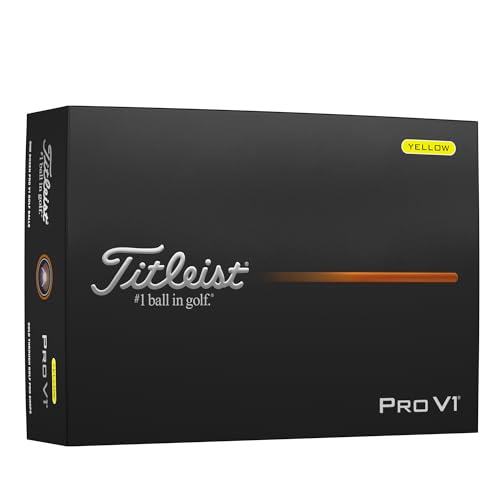
If you play enough golf to care about how the ball checks up on the green, the Titleist Pro V1 is the ball almost everyone else is measured against, and it is also the most expensive per-ball option of our three headline picks. Titleist describes it as a multi-layer ball with a soft cast urethane elastomer cover and a 388 tetrahedral dimple design, built for a penetrating, consistent flight with excellent greenside spin. The listing pitches it as the softer, lower-spinning, flatter-flying sibling to the Pro V1x, which in plain terms means it suits players who want to flight the ball down and control it into greens.
It carries a 4.8-star rating across more than 1,400 reviews, and it ties with the Callaway Supersoft and Titleist TruFeel as the highest-rated ball in this guide. Reviewers repeatedly single out the consistency shot to shot and the durability across multiple rounds, which is the argument for spending this much: a premium ball that scuffs quickly is no bargain. This is a ball for a mid-to-low handicapper with enough swing speed to compress it. If you are still spraying tee shots, save your money and come back to the Pro V1 when your misses tighten up.
Flaws but not dealbreakers
The obvious one is price. This is a serious outlay per dozen, and if you lose two or three balls a round the running cost adds up fast. It also rewards a faster, more consistent swing, so slower swingers may not feel the full benefit over a good soft-feel ball costing half as much.
Best value all-rounder: Callaway Supersoft
The Callaway Supersoft is the ball we would hand most Australian club golfers, and at $44.99 a dozen it sits right in the sweet spot between feel and cost. Callaway builds it around a HyperElastic SoftFast core designed for higher driver and iron speed with a soft feel on the green, wrapped in a hybrid cover that aims for distance without going firm. It is a low-compression, straight-flying ball, which is exactly what a mid-to-high handicapper wants: forgiveness on off-centre hits and a soft feel around the greens.
With a 4.8-star average from more than 4,000 reviews, it is one of the most trusted balls on Amazon Australia and ties for the highest rating here. Local reviewers call it an excellent everyday ball for practice rounds and social golf, and several point out that the bright colour options are genuinely easier to track in long grass, which matters more than it sounds when you are hunting for a ball on a windy Saturday. It is not a tour ball and does not pretend to be, but for the money it is hard to beat as a one-ball-does-most-things choice.
Flaws but not dealbreakers
Better players will find it spins less around the greens than a urethane tour ball, so you get less bite on short pitches. One overseas reviewer was also caught out by a listing that showed a 24-ball image on a 12-ball pack, so check the unit count on the variant you add to cart before you buy.
Best budget golf ball: TaylorMade Distance+
The TaylorMade Distance+ is the cheapest ball in this guide and the easiest one to recommend to a beginner who wants a real brand without the real price. TaylorMade builds it as a two-piece ball with a REACT Speed Core and a low 77 compression, plus a 342-dimple aerodynamic pattern designed to cut drag and promote fast ball speed off the tee. The pitch is simple: distance and a soft-ish feel for not much money.
It holds a 4.6-star rating across more than 4,700 reviews, which is the lowest star average of our three headline picks but still a strong record over a very large sample. Reviewers consistently describe it as a good ball at a good price and the only ball they bother buying. The new Plus alignment aid printed on the ball is a small but genuinely useful touch for lining up putts. For social rounds, learners and anyone who treats golf balls as a consumable, this is the value play.
Flaws but not dealbreakers
A low-compression distance ball like this feels firm to some players, and one long-standing review flatly calls it hard off the face. You also give up greenside spin compared with a soft-feel or urethane ball, so it is built for length off the tee rather than touch around the greens.
Best soft-feel ball from a trusted brand: Titleist TruFeel
If you like the idea of a soft ball but want a Titleist on it, the Titleist TruFeel is the answer at $49.99 a dozen. Titleist calls it the softest ball in its range, a two-piece design built around a TruTouch core for distance with a thinner 3.0 TruFlex cover for improved feel and greenside control, finished with a 376 tetrahedral dimple pattern for a low, penetrating flight. It is aimed squarely at players who prioritise soft feel and trust the brand but do not want to pay Pro V1 money.
It shares the top 4.8-star rating in this guide, sitting on more than 3,200 reviews, and it is the most-reviewed Titleist here, ahead of the Pro V1. Reviewers frame it as the smart pick for the casual golfer who wants a good brand without going overboard, and a couple note the packaging and alignment line make it feel more premium than the price suggests. If the Supersoft's feel appeals but you would rather have the Titleist name and a slightly firmer, more controlled flight, this is the swap.
Flaws but not dealbreakers
It is a two-piece ball, so like the Supersoft it cannot match a urethane tour ball for greenside spin. And it costs a few dollars more than the Callaway without a clear performance edge for higher handicappers, so the choice between them often comes down to brand preference and which colour is in stock.
Best ball for slower swing speeds: Srixon Soft Feel
The Srixon Soft Feel at $54.07 a dozen is built for exactly the player its name suggests: someone with a moderate or slower swing who wants distance without a rock-hard feel. Srixon uses a progressively compressed FastLayer core that transitions from a soft inner core to a firmer outer edge, paired with a 338-hole aerodynamic pattern the brand says stabilises trajectory in wind. The result the listing promises is a smooth feel on short shots and more ball speed on full swings.
It rates 4.7 stars across nearly 800 reviews. One standout review comes from a 75-year-old golfer with a club speed in the high 70s who shot 72 and switched to this ball full-time, which is about as on-the-nose an endorsement of a slower-swing ball as you will find. It is a genuine multi-layer ball at a mid-range price, which makes it a sensible step up from a pure two-piece distance ball for players who want a bit more feel and wind stability.
Flaws but not dealbreakers
It has the second-fewest reviews of the seven here, so the sample behind its rating is smaller than the Callaway or Wilson. Overseas buyers also flagged high shipping making it less of a bargain, so the value case rests on the local in-stock price rather than any imported listing.
Best tour feel for less: Vice Pro
Direct-to-consumer brand Vice has built a following by selling urethane tour balls cheaper than the majors, and the Vice Pro on Amazon Australia comes as a 24-ball double dozen for $104.22, which works out to around $52 a dozen. That headline number is the highest total price in this guide, but the per-dozen maths tells the real story: it undercuts the Pro V1 while offering a three-piece construction aimed at advanced golfers with medium swing speeds who want driver distance plus wedge spin.
It rates 4.7 stars, though on the fewest reviews of any ball here at just over 300, so the track record is thinner than the household names. The reviews that are there are telling: one calls it a great budget ball for anyone who likes the Pro V but does not want to drop $60 a dozen. If you are a better player who churns through tour balls and wants to lower your cost per round without dropping to a two-piece, buying in bulk like this is the move.
Flaws but not dealbreakers
The smaller review base means less consensus than you get with a Titleist or Callaway. One buyer also felt the price was still high given how quickly they lost them, which is the eternal problem with playing a premium ball: it only saves money if you can keep it on the short grass.
Best bulk buy for beginners: Wilson Profile Distance 36-pack
When you are losing five balls a round, cost per ball beats everything, and the Wilson Profile Distance 36-pack is built for that reality. At $44 for 36 balls it works out to a bit over a dollar a ball, easily the best value per ball of anything here. Wilson pitches it as a high-energy-core distance ball with low-compression soft feel and a spin-reducing dimple pattern designed to cut hooks and slices, shipped in a bulk box to keep the price down.
It carries a 4.7-star rating on more than 4,800 reviews, making it the most-reviewed ball in this entire guide. Australian beginners love it: one reviewer shot their best round in a decade after switching to a low-spin two-piece ball off the tee, and the recurring theme is that losing one of these into the water simply does not hurt. If you are new to golf, playing a lot, or stocking a family bag, a 36-ball box is the smart way to buy.
Flaws but not dealbreakers
This is a distance ball, so do not expect tour-level spin or feel on delicate shots around the green. And as one honest reviewer noted, a cheaper ball still gets lost in water and bushes just as easily; the point is only that it costs less when it does.
What should you look for in a golf ball?
The single biggest factor is your swing speed and handicap, because that determines how much of a premium ball's technology you can actually use. Here is how the specs that matter map to real buying decisions, and if you are shopping for a golfer as a gift rather than yourself, our gifts for men guide pairs a dozen balls with the rest of a kit nicely.
Construction. Two-piece balls (a large core and a durable cover) prioritise distance and durability and suit higher handicappers and beginners. Multi-layer and three-piece balls add a mantle layer and usually a urethane cover, which lets better players generate more greenside spin and control. More layers is not automatically better; it is only better if your swing can use the extra spin.
Compression. Lower-compression balls (think the Supersoft, TruFeel and Distance+) deform more easily and feel softer, which helps slower swing speeds get distance. Higher-compression tour balls reward faster swings with more control. If you are unsure, err soft: a low-compression ball is more forgiving of a slower or inconsistent swing.
Cover material. Ionomer or Surlyn covers are firmer, more durable and cheaper, and reduce sidespin, which helps straighten out slices. Cast urethane covers are softer and grippier for more spin around the greens, and cost more. The Pro V1 and Vice Pro use urethane; most of the value picks here use a firmer hybrid or ionomer cover.
Pack size and cost per ball. Always do the per-ball maths. A 36-ball Wilson box at $44 is dramatically cheaper per ball than a $50 dozen, and a 24-ball Vice pack undercuts a 12-ball Pro V1 on a per-dozen basis. If you lose a lot of balls, buying in bulk is the easiest way to cut your real cost of playing.
Golf balls are more durable than they used to be, but a bit of care still pays off. Clean the ball whenever the rules allow, on the tee and on the green, because dried mud and grass in the dimples genuinely affects flight and spin. A damp towel and a tee to pick out the dimples is all you need.
Check for scuffs and cuts after each hole, especially with a soft urethane ball like the Pro V1 or Vice Pro; a cart-path bounce can nick the cover, and a cut ball flies unpredictably, so retire it to the shag bag. Store your balls at normal room temperature. Leaving them baking in a hot car boot over an Australian summer, or freezing in a shed over winter, can subtly affect the core over time, though for the two-piece distance balls most of us play it is a minor concern.
One myth worth killing: soaking scuffed balls or freezing them does not restore performance. Once a cover is cut, it is done. And there is nothing wrong with playing quality lake or refurbished balls for practice, but grade them honestly and keep your fresh ones for rounds that count.
What else do you want in the bag?
A dozen balls is the start. These accessories round out a golfer's kit and all ship from Amazon Australia.
Which golf balls did not make the cut?
A few popular balls came close. The Srixon Q-Star Tour and Z-Star are excellent tour and tour-value balls that show up all over Australian pro shops, but at the time of writing the specific in-stock Amazon listings and review depth did not line up as cleanly as our picks. The TaylorMade TP5 and Callaway Chrome Tour are genuinely great premium balls, but the current 2026 Amazon Australia listings carry only a small handful of reviews each, so we would rather point you to the deeply-reviewed Pro V1 for now. Bridgestone's e6 and Tour B balls are also worth a look if you already know you like the brand. And the huge market in lake and refurbished balls is fine for practice, but grading is inconsistent, so we have kept this guide to new balls you can trust out of the box.
Golf ball questions Australian buyers ask
What is the best golf ball for a beginner or high handicapper?
For most beginners and high handicappers, a low-compression two-piece distance ball is the best choice, because it is forgiving, flies straight and costs little. The TaylorMade Distance+ and the Wilson Profile Distance 36-pack are both ideal starting points, and buying in bulk means a lost ball does not sting.
Is the Titleist Pro V1 worth the money?
The Pro V1 is worth it if you have enough swing speed and consistency to use its greenside spin and control, which generally means a mid-to-low handicap. If you are still losing several balls a round or spraying tee shots, a soft-feel ball at half the price will serve you better until your misses tighten up.
What golf ball is a good cheaper alternative to the Pro V1?
The Vice Pro is the closest value alternative here, a three-piece urethane ball sold as a 24-pack that works out to around $52 a dozen, undercutting the Pro V1 while still offering tour-style spin. Better players who go through a lot of balls often buy a ball like this in bulk to cut their cost per round.
Does a soft golf ball actually go further?
For slower swing speeds, a low-compression soft ball can help you carry the ball further because it compresses more easily off the face. For faster swingers the difference is smaller, and control matters more than raw feel, which is why tour players use firmer, higher-spinning balls.
How many golf balls should I buy at once?
If you are a beginner or play often, buy in bulk: a 24 or 36-ball box brings the cost per ball right down, which matters when you are still losing a few each round. Lower handicappers who keep the ball in play can buy by the dozen, since they lose fewer and value consistency of the exact model.
Bundle it with the rest of the kit
Sorting the ball is one piece of a golfer's setup. These NestPath guides cover the rest, whether you are kitting yourself out or shopping for someone else.
About the author
Anish Puri founded NestPath in 2026 after going through the Australian first-home-buyer process himself. NestPath focuses on Australian first-home buyers because the existing review sites are American, generic, or both. Anish handles editorial selection across the homeowner hub. Reach out: hello@nestpath.com.au