Are sheer curtains the easiest upgrade for a new home?
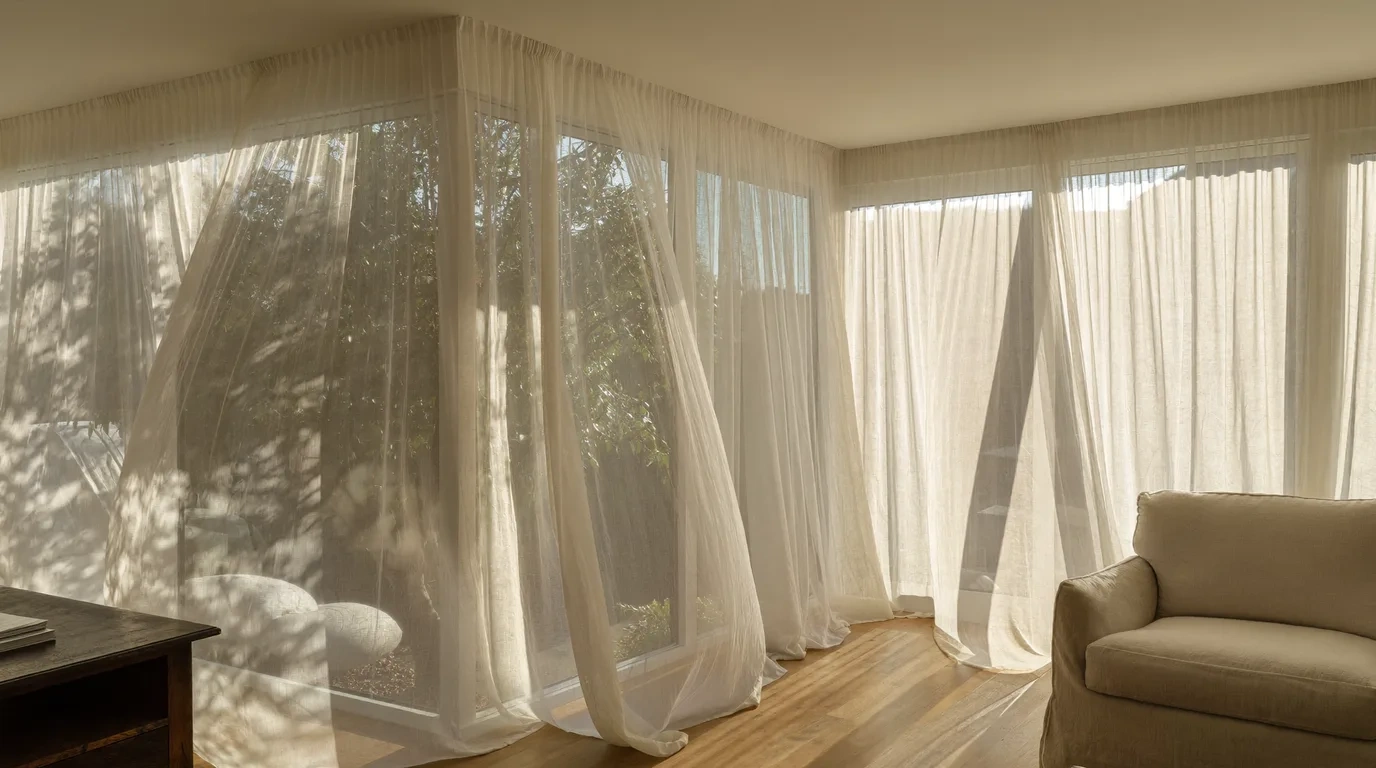
Yes. If you have just moved in and every window feels either blindingly bright or awkwardly exposed, a pair of sheer curtains is the fastest, cheapest fix in the house. Sheers are light-filtering voile or linen-look panels that soften the glare, blur the view from the street during the day, and make a bare rental lounge feel finished in about ten minutes of hanging. They are not the same as blockout curtains: sheers let light through by design, so they are about softness and daytime privacy, not darkening a room. For that job, pair them with our separate guide to the best blackout curtains in Australia and layer the two.
We researched the sheer and voile panels Australians actually buy on Amazon AU, cross-checked star ratings and review counts, and filtered for sane sizing in centimetres so you are not guessing at American inch measurements. Below are six light-filtering picks that suit real Australian windows, from a $13 renter special to a linen-look pair from a Melbourne brand. Every one is a genuine sheer, not a blockout in disguise.
What are the best sheer curtains in Australia right now?
If you want the short version: the Smarcute Linen-Blend Semi-Sheer Curtains are our top pick for a room that should look more expensive than it cost, because the open-weave linen texture reads as designer while the price stays modest. For the best all-round value that suits almost any lounge or bedroom, the CaaMoo Voile Sheer Curtains pair thousands of happy reviews with a clean 213cm drop. And if you just need something soft and private on a budget, the OWENIE Rod-Pocket Sheer Curtains are the cheapest of our six picks and still one of the highest rated.
All three are light-filtering, machine washable, and hang on a standard rod, so none of them need a professional install. The rest of this guide breaks down which one fits your window, your header style, and your budget, then covers layering, privacy at night, drops, and rental-friendly hanging so you order the right thing once.
How do these sheer curtains compare at a glance?
Here is the quick side-by-side. Click any name to open that exact pair on Amazon AU. Prices move daily, so treat the From column as a guide and check the live figure on the card.
How did we evaluate these sheer curtains?
NestPath does not run a curtain lab. We study the listings, the review record, and the specs the way a careful shopper would, then we only shortlist panels that hold up. Here is what mattered.
- Real ratings and volume: every pick is currently in stock on Amazon AU with a genuine star rating and enough reviews to trust, from 184 up to more than 16,000.
- Genuine light-filtering fabric: voile or linen-look sheers only, never a blockout or room-darkening panel mislabelled as sheer.
- Australian sizing: we favoured panels listed in centimetres with drops that match common Australian windows, and we flag the inch-based ones.
- Sane pricing: we dropped reseller listings priced far above the norm and kept panels that represent honest value for a set of two.
Which sheer curtains look the most expensive?
The Smarcute Linen-Blend Semi-Sheer Curtains are our top pick when you want a window that looks styled rather than merely covered. Smarcute is a Melbourne-based brand (Moorabbin, Victoria), and this pair uses an open-weave linen-blend fabric with a soft, slightly textured drape that reads far more expensive than the price suggests. At 4.7 stars it is tied for the highest rating of our six picks, though with 184 reviews it also has the fewest, so it is newer to the crowd than the voile veterans below.
Each pack is a pair, and each panel measures 132cm wide by 213cm long with an eyelet (grommet) header, so it threads straight onto a rod up to 3cm thick and falls in even, modern folds. The semi-sheer weave is the selling point: it is not see-through like a thin voile, so it blocks enough to give real daytime privacy while still glowing with diffused light. Australian reviewers repeatedly call it out for looking like a much pricier linen curtain, and several mention the taupe and natural tones adding warmth rather than the cold, fluorescent white that cheap sheers can have.
Because it is semi-sheer rather than barely-there voile, it is the pick that works hardest on a street-facing lounge or a bedroom where you want softness without feeling watched during the day. It comes in white plus several natural shades. If you are furnishing a first home and want one upgrade that makes the whole room look considered, this is it.
Flaws but not dealbreakers
It is the priciest pair here, and the eyelet spacing means you are committed to a rod rather than a track. A few reviewers note the panels benefit from a quick iron or steam straight out of the pack before the creases relax. It is also the least-reviewed of our six, so there is slightly less long-term feedback than the voile options.
What are the best value sheer curtains for most rooms?
The CaaMoo Voile Sheer Curtains are the pair we would put in most Australian lounges and bedrooms without a second thought. They sit at 4.6 stars across more than 2,400 reviews, which is a lot of settled opinion for under twenty dollars, and the classic 132cm by 213cm drop is the size that fits the most standard windows.
This is a proper voile: a soft, breathable 100% polyester weave with a double rod-pocket top and a weighted 5cm bottom band that helps the panel hang straight instead of billowing. The rod pocket slides onto poles up to about 4cm across, so it is genuinely a one-minute hang with no rings or hooks needed. Reviewers consistently describe it as light, airy, and elegant, with just enough body to blur the view in while letting the sun through, which is exactly the brief for a sheer.
It is sold as a pair in a single white, and the same range extends to other drops if your windows are shorter or taller. Because it is inexpensive per panel, it is also the easiest pick to double up on: sheers look fullest at one-and-a-half to two times the window width, and at this price you can buy two packs for a wide window without wincing. For a renter or a first-home buyer kitting out several rooms at once, it is the sensible default.
Flaws but not dealbreakers
The white is a bright, cool white rather than a warm cream, so if your walls lean warm, check the tone before you commit. As a lightweight voile it offers very little privacy after dark once your lights are on, and like most polyester sheers it wants a cool iron or a steam if you are fussy about creases.
What are the cheapest sheer curtains worth buying?
The OWENIE Rod-Pocket Sheer Curtains are the cheapest of our six picks and, remarkably, one of the highest rated, sitting at 4.7 stars across more than 13,500 reviews. If your only goal is soft light and a bit of daytime privacy for the least possible money, this is the pair to grab.
Each pack is two panels of high-twist knitted polyester voile with a 2-inch (about 5cm) rod pocket and a second sewn pocket at the base for a cleaner vertical hang. The fabric passes Oeko-Tex Standard 100 for skin-safe textiles, which is reassuring in a nursery or kids room, and it is light enough that packing creases fall out quickly once hung. The listing is in inches (42 inches wide by 84 inches long per panel, so about 107cm by 213cm), which is worth translating before you order so the drop matches your window.
Australian buyers use these everywhere from bedrooms to laundries, and the recurring theme is that they punch well above the price. A minority of reviews flag inconsistency between packs, so inspect on arrival, but at this cost keeping a spare set on hand is painless. For a share house, a first rental, or a window you just need covered nicely by the weekend, nothing here beats it on value.
Flaws but not dealbreakers
The inch-based sizing is the main trap, so measure and convert first. At just over a metre wide per panel they are narrower than some rivals, so a wide window may need two packs for a full gathered look. As with any thin voile, privacy drops away at night once interior lights are on.
Which sheers suit standard and shorter windows?
The MYSTIC-HOME Voile Sheer Curtains are the most-reviewed pick in this guide, with more than 16,000 ratings behind a steady 4.6-star average. The reason to choose them over the others is the drop: at 160cm long they are made for the shorter and mid-height windows that trip up buyers who only find 213cm-plus panels in stores.
This is a semi-crinkle 100% polyester voile with a rod-pocket top that fits poles up to about 4cm, sold as a pair 132cm wide per panel. The gentle crinkle texture is forgiving: it is marketed as wrinkle-free and hookless, and reviewers confirm the creases drop out as soon as the panels hang, which is a real bonus if you dislike ironing. Several Australian buyers specifically praise being able to find this length at all, since local stores skew long.
Use it on kitchen windows, above-bench cafe-style windows, laundry windows, or any sill-length opening where a full 213cm puddle would look wrong. It also comes in a wide spread of colours if white is not your look. Think of it as the specialist for windows that are not floor-to-ceiling, backed by the biggest review pile of anything here.
Flaws but not dealbreakers
At 160cm it is deliberately short, so it is the wrong pick for tall lounge windows where you want the fabric to reach the floor. The sizing is quoted in inches on the listing, and because polyester voile is so light, it offers minimal privacy after dark.
Which sheer curtains come in the most colours?
The Luxton Voile Sheer Curtains earn their place on two counts: Luxton is an established Australian home-textiles brand, and this voile comes in a proper spread of solid shades, including white, sand, light grey, and teal, so you can match a colour scheme instead of defaulting to white. It holds a 4.6-star rating across just over 200 reviews.
Each pack is a pair of soft polyester voile panels, 140cm wide by 213cm long, with a rod-pocket top that glides onto standard poles. At 140cm per panel it is slightly wider than several rivals, which helps a single pack cover a modest window with a nicely gathered finish rather than a flat, stretched look. Reviewers highlight neat hemming on all sides and colours that match the listing photos, which is not always a given with online sheers.
One long, genuinely useful Australian review lays out a renter trick for these: sit a second rod behind your existing mounted rod, add finials to stop it sliding, and you get a layered sheer without drilling a single new hole. That sums up why this pick suits first-home buyers and renters who want a coordinated, grown-up look without committing to permanent hardware.
Flaws but not dealbreakers
The rod pocket is sized for thinner poles, so measure your rod diameter before buying if you own a chunky decorative rod. Review volume is modest next to the voile heavyweights here, and as a true sheer it is a daytime-privacy fabric, not a night-time one.
Which sheers work for tall windows and a puddle look?
The Neween Woven Voile Sheer Curtains are the pick for high windows and for anyone who wants the fabric to break or puddle on the floor. At 240cm long they are the tallest drop in this guide, and the woven voile has a touch more structure than the featherweight options. They sit at 4.4 stars across just over 200 reviews, the lowest average of our six, though still solidly liked.
Each pack is a pair, 132cm wide per panel, with a 5cm rod pocket that fits poles up to about 4cm. Neween lists this exact style in several drops, but the 240cm version is the one to choose for tall lounge or stairwell windows, or when you deliberately want a few centimetres pooling on the floor for a soft, relaxed look. The brand explicitly markets the range as renter-friendly and easy to hang, and reviewers back the woven texture as elegant and good at softening glare while keeping daytime privacy.
It is also worth noting this listing is where you will find the widest set of coordinating options, since the same family includes eyelet and lace versions if you want to mix headers across rooms. For the specific job of dressing a tall window without paying for custom-made, it is the most practical choice here.
Flaws but not dealbreakers
It carries the lowest rating of our six picks, and a few reviewers note the grey and blue-grey shades read lighter or greyer than the photos, so order white if you want a safe result. As a single 132cm panel width it is not especially wide, so plan on two packs for a large window.
What should you look for in sheer curtains?
Once you know the difference between the header styles and the standard drops, buying sheers online stops being a gamble. Here is what actually matters.
Header style. Eyelet (grommet) headers have metal rings punched into the top and thread straight onto a rod in even, modern waves; they are the easiest to open and close and suit a contemporary look. Rod-pocket headers have a sewn channel you slide the rod through, giving a gathered, slightly more traditional finish that stays put but is fiddlier to draw. Pinch-pleat headers, which you mostly see on custom and made-to-measure sheers rather than ready-made packs, use sewn pleats and hooks for a tailored, structured heading, and are the header used with an S-fold or S-wave track for that high-end rippling look. All of our ready-made picks are eyelet or rod pocket, which is what suits a rod and a renter.
Drop and width. Common Australian ready-made drops are 213cm, 221cm, and 250cm, with shorter 160cm options for sill-length windows. Measure from where your rod sits to where you want the hem to land, then match the closest drop; do not assume in-store standards. For width, sheers look best at one-and-a-half to two times the window width so they gather rather than stretch flat, which usually means buying two panels, or two packs for a wide opening.
Voile versus linen-look. Lightweight voile (like the CaaMoo, OWENIE, MYSTIC-HOME, Luxton, and Neween picks) is the airy, glowing classic that maximises light. Linen-look and semi-sheer weaves (like the Smarcute) trade a little brightness for more texture, more body, and better daytime privacy, so they look more expensive and hide the view a touch more. Neither blocks light: if you need darkness, that is a job for a blockout layer.
Privacy, day versus night. This is the single most misunderstood thing about sheers. During the day they blur the view from outside beautifully. After dark, once your interior lights are on, that reverses and people can see in, so any room where night-time privacy matters needs a blockout or room-darkening layer behind the sheer. Semi-sheer fabrics help a little more than thin voiles, but none of them are a night-time privacy solution on their own.
How do you care for and hang sheer curtains?
Sheers are low-effort, but a few habits keep them looking crisp. Almost every pair here is machine washable on a cold, gentle cycle; wash on their own, skip the bleach unless the label allows non-chlorine bleach, and tumble dry on low or, better, hang them straight back up damp so the weight pulls the creases out. A cool iron or a handheld steamer takes care of any stubborn packing folds, and steaming while the panels hang is the easiest way to do it.
For hanging, match your rod diameter to the header before you buy: rod-pocket sheers usually fit poles up to about 4cm, and eyelet panels up to about 3cm. Renters who cannot drill have three good options: a tension rod inside a window recess, a wrap-around rod that clears an existing blockout, or a no-drill adhesive ceiling track for a clean S-fold-style look. Hang the rod wider and higher than the window itself so the stacked-back panels clear the glass and the window looks larger. If you are layering, the sheer goes on the rod closest to the window and the blockout sits in front on a second rod or a double bracket.
What else do you need with sheer curtains?
A pack of sheers is only half the job. These are the extras that make the difference between panels that hang well and panels that sag, gap, or leak light at the edges.
- An extendable curtain rod in a 90 to 270cm range covers most Australian windows and gives you a sturdy pole for eyelet or rod-pocket sheers.
- A no-drill tension rod is the renter's best friend inside a window recess, holding a sheer with zero holes and zero hardware.
- A wrap-around rod curves back to the wall so a blockout layer sits flush and stops light leaking down the sides when you double up.
- A no-drill adhesive ceiling track gives you that ceiling-mounted, floor-skimming look without a drill, which is ideal for a rented lounge.
- A flexible bendable curtain track follows a bay or curved window where a straight rod simply will not fit.
- A second adjustable rod lets you layer a blockout in front of your sheer on its own bracket for full night-time privacy.
What about the sheer curtains we did not pick?
A few popular options came close but did not make the final six. Custom and made-to-measure sheers from Australian specialists like The Curtain and Blind Co or iseekblinds give you exact sizing and an S-fold track look, and they are worth pricing if your budget stretches, but they cost several times more than a ready-made pack and take weeks to arrive rather than days. IKEA and Spotlight ready-mades are fine and cheap in store, but you are limited to a couple of drops and you cannot read thousands of reviews before you commit.
On Amazon itself, ombre and gradient voiles from brands like DWCN and XWZO look striking in photos, but the two-tone effect dates faster than a plain sheer and reviewers report the colours differing from the listing. Single-panel linen sheers priced near or above $90 exist too, but for most windows you want a pair, and paying single-panel prices rarely makes sense when the Smarcute pair covers the same look for less. None of these are bad; they are just beaten on value, sizing flexibility, or review depth by the six above.
Sheer curtains: your questions answered
What type of sheer curtains are best?
For most Australian homes, a rod-pocket or eyelet voile in a 213cm drop is the best all-round sheer, because it hangs on a standard rod, suits nearly any window, and needs no rings or hooks. Choose eyelet for a modern, easy-to-draw finish, rod pocket for a softer gathered look, and a semi-sheer linen-look weave if you want more texture and better daytime privacy. Pinch-pleat and S-fold sheers look the most tailored but generally mean going custom and made-to-measure.
Do sheer curtains give you privacy at night?
No. During the day sheers blur the view from outside while letting light in, but after dark, once your interior lights are on, the effect reverses and people can see in. Any room where night-time privacy matters, such as a street-facing bedroom or lounge, needs a blockout or room-darkening layer behind the sheer. Semi-sheer linen-look fabrics hide a little more than thin voiles, but no sheer is a night-time privacy solution on its own.
What drop do I need for Australian windows?
Measure from where your rod sits down to where you want the hem to land, then match the closest standard drop. Common Australian ready-made drops are 213cm, 221cm, and 250cm for floor-length windows, with shorter 160cm panels for sill-length or above-bench windows. If you want the fabric to break or puddle on the floor for a relaxed look, size up to a 240cm or 250cm drop rather than stopping exactly at the floor.
Can you layer sheers behind blockout curtains?
Yes, and it is the setup we recommend for most bedrooms and lounges. The sheer hangs on the rod closest to the window for soft daytime light and privacy, and a blockout panel sits in front on a second rod or a double bracket for darkness and night-time privacy. A wrap-around rod on the blockout layer helps stop light leaking down the sides. See our guide to the best blockout curtains for the darkening layer.
How do you hang sheers in a rental without drilling?
You have three no-drill options. A tension rod wedges inside a window recess and holds a lightweight sheer with no holes. A no-drill adhesive ceiling track sticks up for a clean, floor-skimming look. Or, if you already have a mounted rod, sit a second rod behind it, add finials so it cannot slide, and hang the sheer on that. All three come off cleanly when you move out.
Are sheer curtains still in style in 2026?
Yes. Sheers remain one of the most popular window treatments in Australian homes because they suit the light and the climate, softening harsh sun while keeping rooms bright and airy. The current look leans towards natural linen-look textures and floor-length or lightly puddling drops, often layered over a blockout, rather than the flat, bright-white nets of the past. A textured semi-sheer in white or a natural tone is a safe, current choice.
Keep styling your new place
Sheers are one layer of a room. If you are working through a fresh home, these guides pair naturally with this one.
About the author
Anish Puri founded NestPath in 2026 after going through the Australian first-home-buyer process himself. NestPath focuses on Australian first-home buyers because the existing review sites are American, generic, or both. Anish handles editorial selection across the homeowner hub. Reach out: hello@nestpath.com.au