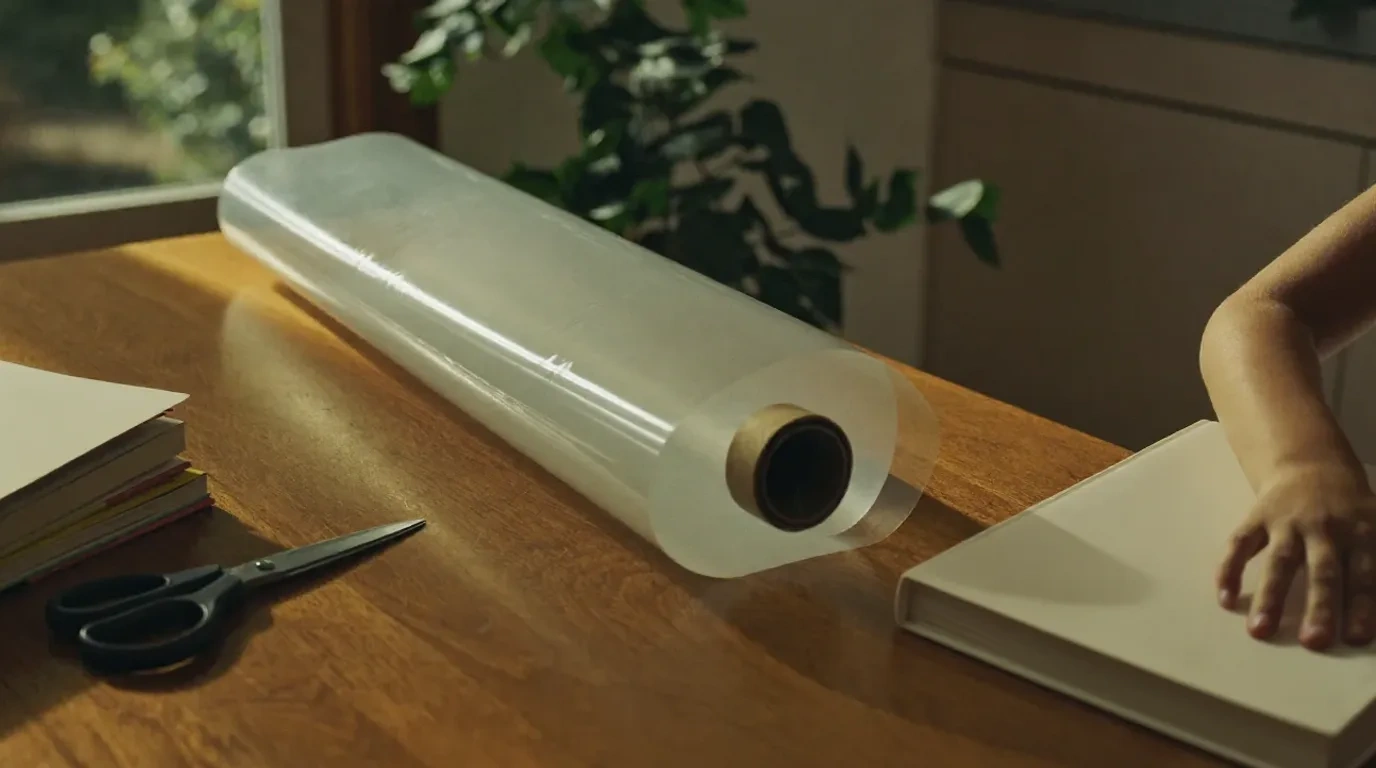
Covering school books is one of those jobs that lands in the last week of the summer holidays, usually at 9pm, usually with one roll of contact and eight exercise books. Get it right and the pile takes twenty minutes. Get it wrong and you are peeling bubbled plastic off a maths book while a seven year old watches.
Australian book lists are specific in a way most overseas guides ignore. Exercise books here run to the old 9 by 7 inch size or A4, and the roll width that wraps both without a fight is 450 mm. This guide compares six ways to get it done: self-adhesive contact rolls, ready-cut slip-on covers and a padded zip sleeve. Every price, star rating and review count below was pulled fresh before publishing.
What is the best book covering in Australia?
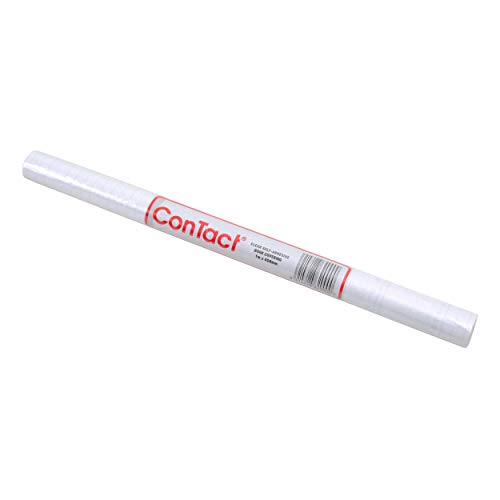
For most families the answer is a 450 mm self-adhesive roll, because it fits the two exercise book sizes Australian schools actually use. Our top pick is the Contact Book Covering Clear 5M X 450mm, made by ACCO Brands, which is the roll most Australian parents already recognise from the stationery aisle. Five metres at 450 mm covers roughly eight to ten standard exercise books, the clear gloss finish keeps printed covers readable, and the width means you are not joining two strips across the spine.
If your book list runs to three or four books rather than ten, the Olivo Clear Contact Paper Roll gives you a 44.5 cm wide peel-and-stick roll with a much larger pile of customer reviews behind it, and it doubles as desk and poster protection once the books are done.
Those two cover most households. The other picks handle the specific cases: a whole year in one hit, a tight budget, and borrowed library books.
How do the best book coverings compare?
Sizes are as listed by each brand. Width matters more than length here, and the two Contact rolls share the widest cut of our picks at 450 mm.
How did we choose these book coverings?
NestPath does not run a laboratory. We are an Australian aggregator: we read the listings, the specifications and the customer feedback, then sort out what is actually different between products that look identical in a thumbnail.
- Every pick is listed and buyable on Amazon Australia, with price, stock and brand checked against Amazon direct before publishing.
- Star ratings and review counts come from live Amazon Australia listing data, and every pick clears a minimum review threshold.
- Roll length, width, material and closure type are quoted only as the brand lists them. Where a brand does not state a micron thickness, we do not invent one.
- We screened out bookbinding cloth, craft vinyl and adjacent products that surface on the same search but will not cover an exercise book.
Best book covering overall: the roll Australian school books were built around
The Contact Book Covering Clear 5M X 450mm is the default answer for a reason that has nothing to do with marketing: 450 mm is the width that wraps an Australian exercise book in one pass. Cut a length two or three centimetres longer than the open book, peel the backing progressively rather than all at once, and the spine, both covers and the fold-in edges come from a single strip. Narrower general contact paper forces you to accept an exposed strip along the spine or join two pieces, which is where school books start to look like a craft project gone wrong.
Materially it is polypropylene with a clear gloss finish, made by ACCO Brands. Five metres covers eight to ten standard exercise books once you allow for trimming, which lines up with a typical primary school book list. The gloss finish is the practical part: printed covers, name labels and subject stickers all stay legible underneath, which matters when a kid is digging through a bag at 8:45am.
Where it earns its keep over cheaper imports is the first few seconds of repositioning and the way the adhesive behaves at the fold. Cheap film either grabs instantly, so a crooked start is permanent, or never grabs properly, so corners lift by week three. This one sits in the middle, which is what you want when you are covering the eighth book of the night.
Flaws but not dealbreakers
It carries the lowest star average of our five picks at 4.1, and the reviews that pull it down are almost all about bubbles. That is a technique problem more than a product problem, but this film is not the forgiving option. The listing states a 50 micron thickness, lighter than the 100 micron film library suppliers use, so treat it as everyday exercise book covering rather than library grade. And five metres runs out faster than parents expect on a high school list.
The Olivo Clear Contact Paper Roll is the pick for a household with three or four books to cover rather than ten. It is a 152.4 by 44.5 cm peel-and-stick roll in clear glossy vinyl and polypropylene, and at 44.5 cm it is within half a centimetre of the 450 mm school standard, which in practice means it wraps the same books the same way.
It has a deep review base for this category and the sentiment is consistent: it goes on cleanly, it stays clear rather than yellowing, and it does not smell of solvent. The other reason it suits Australian families is that the leftovers get used, protecting a homework desk or a scuffed bookshelf edge rather than going brittle in a drawer.
Application is standard peel-and-stick: lay the open book face down on the film, mark the cut two to three centimetres proud on all sides, then work from the spine outwards with a squeegee. Because the roll is slightly narrower than the Contact rolls, a thick A4 spine leaves a tight fold-in margin, so measure the first one properly rather than eyeballing it.
Flaws but not dealbreakers
The roll is short. At just over 1.5 metres it covers roughly three exercise books, four if you are efficient with offcuts, so a full primary book list needs two or three rolls. The listing quotes a 2.5 mil thickness, about 63 microns, and the film reads closer to light-duty craft vinyl than school-grade covering. The gloss finish also fingerprints more visibly than matt, though a wipe fixes that.
Best book covering for a whole year, or a whole family
The Contact Book Covering Clear 15M X 450mm is the same film as our top pick in a roll three times the length. Fifteen metres at 450 mm is enough to cover a full primary book list twice over, or to do two kids and still have film left for mid-year replacements when a book gets destroyed in February.
It is the longest roll of our picks by a wide margin, and the one to buy if experience tells you that you will be back at this job in April. The per-book cost is where the saving sits. Store it out of direct sun and off a hot garage shelf, where the adhesive goes tacky through the backing.
It also solves a January problem. Book lists land late, stationery aisles are stripped by the second week of the holidays, and the 450 mm rolls sell out first. One long roll bought in advance means you are not driving to three shops on a Sunday looking for the right width.
Flaws but not dealbreakers
It is the dearest of our picks, and with only three books to cover you are paying for film you will not use for a year. The review base is thin at 19 ratings, though it is the same film as the widely reviewed five metre roll. A 15 metre roll is also awkward: holding it flat while your other hand peels backing is a two person job until you find a system.
Best cheap roll for a Sunday night emergency
The BAZIC Products Clear Self-Adhesive Book Cover Roll is the one to grab when a book list turns up late and you need covering that works without spending much. One thing to plan for: the current Amazon Australia buy box ships from Amazon US, so allow an international delivery window rather than a next-day one. It is a 44.5 cm wide polypropylene roll, listed as BPA free, and the useful detail is on the backing paper: the liner is printed with measuring guidelines, so you can cut straight lines without hunting for a ruler.
That backing grid matters more than it sounds. Most bad covering jobs start with a bad cut, and a crooked first book sets the tone for the whole pile. Gridlines under the film mean you square the book against one line, cut along another, and the fold-in margins come out even on all four sides.
It is also the most-reviewed self-adhesive roll of our picks by some distance, with thousands of ratings behind it, and the feedback is what you would hope for at this price: it does the job, it is not premium film, and nobody feels ripped off.
Flaws but not dealbreakers
At 44.5 cm it is fractionally narrower than the 450 mm school standard. The roll is short at about 1.5 metres, so it is a two or three book roll rather than a book list roll. It is sold in imperial sizing, so the listing talks in inches while your book list talks in millimetres, and the adhesive grabs quickly, leaving very little repositioning window.
Best cover for library books, readers and borrowed paperbacks
The LParkin Just One More Chapter Book Sleeve is a different tool for a different problem. It is a padded polyester sleeve measuring 27.9 by 21.6 cm with a zip closure and a front pocket, designed to protect a book inside a bag rather than to be stuck onto it. For a school reader, a borrowed library book or a novel that has to survive a term next to a leaking water bottle, it is far more effective than any film.
It is the only pick here that closes with a zip, and that is the point. Film protects a cover from scuffing; a zipped sleeve protects the whole book from crushing, leaking drink bottles and general school bag chaos. The front pocket takes a library card, a reading log or a bookmark, so the loose bits of a home reading program stop disappearing.
It carries the highest star average of our five picks at 4.8, from more than fifteen hundred ratings, which is unusually strong for this category. The consistent theme is that the padding is genuine rather than token, and that the zip holds up, which is the part that fails first on cheap sleeves.
Flaws but not dealbreakers
It covers one book at a time, so it is not a book list solution. The listed dimensions suit a standard novel or reader rather than a large A4 workbook, so measure before buying for a textbook. Polyester needs an occasional wash, and a sleeve living in a school bag will need it. Treat it as a complement to a roll.
Which book covering should you buy?
Match your situation to a pick.
What should you look for in book covering?
Four things decide whether covering goes well: width, thickness, finish and format. Everything else is packaging.
Width is the one that ruins jobs. Australian exercise books are commonly the old 9 by 7 inch size or A4, and 450 mm is the roll width that wraps both in a single pass with room to fold in. Rolls sold as general contact paper are often 440 to 445 mm, which trims the fold-in margin slightly on a thick A4 workbook. If your book list is A4 heavy, buy the full 450 mm.
Thickness is quoted in microns, when it is quoted at all. School and library covering typically sits between 50 and 100 microns, with lighter film fine for exercise books. Thinner film bubbles more easily and tears at the corners; thicker film is stiffer and harder to fold around a spine. Some listings state no micron figure, including picks here, so treat an unstated thickness as light duty.
Clear gloss versus matt is a real choice. Gloss keeps a printed cover bright and name labels readable, which is why most school covering is clear gloss. Matt kills glare under fluorescent classroom lighting and hides fingerprints, which is why library suppliers prefer it. Patterned covering looks great for a fortnight and then makes it harder for a kid to spot the right book, so use one pattern per subject.
Format decides how long the job takes. Self-adhesive rolls are cheapest per book and give the neatest permanent result, but they punish a shaky hand. Non-adhesive film is forgiving and removable but needs taping. Slip-on covers are instant and reusable but only fit the size they are moulded for. Most Australian households end up with two of these: a roll for the exercise books and something reusable for the readers.
Buy covering when you buy the rest of the book list, not the week before school starts. The 450 mm rolls sell out first every January, and the substitutes left on the shelf are almost always narrower. If you are doing a full stationery run anyway, our guides to the best kids backpacks in Australia and the best pencil cases cover the two items replaced most often.
How do you keep covered books looking good all year?
Covering fails in three places: the corners, the spine and the fold-in edges. Handle those and a covered book survives to December.
Cut generously. Two to three centimetres proud of the open book on every side is the standard allowance. Anything less and the fold-in edge is too shallow to hold, so it lifts the first time the book is jammed into a bag. Trim the corners at 45 degrees before folding, rather than folding a square corner into the thick lump that catches on everything.
Work from the spine outwards. Line the closed spine up first, press the film along the spine line, then peel the backing progressively as you smooth across each cover. Peeling the whole backing off at once is the most common cause of a bubbled cover. If a bubble forms, a pin prick and a firm thumb usually flattens it.
For slip-on covers and sleeves, wipe with a damp cloth once a term and check the spine fold on adjustable covers, since that is where the plastic fatigues. Store them flat over the holidays, because reusable covers that spend summer folded in half crack along the crease.
Finally, label the covering, not the book. A name label stuck on top of clear film comes off cleanly when the covering is replaced, and the book underneath stays intact if it gets handed down. When the covered books come home for good they need somewhere to live, which is what our best kids bookshelves in Australia guide is for.
You will also want these
These turn a frustrating covering session into a quick one.
The competition
A few products come up constantly on this search and did not make the list.
The LParkin 45 cm by 10 m roll looked promising, with a genuine 450 mm width and a long run, but stock has been unreliable, and a covering roll you cannot count on in January is not much use.
Watch out for one genuine trap. Searching for book covering surfaces a lot of bookbinding cloth, sold in A4 to A8 sheets in linen, suede and velvet. That is craft material for making hardback covers from scratch; it will not protect an exercise book. The Contact Premium 100 micron roll in 450 mm is the film library suppliers use, but the listing has been sitting well above what it costs through Australian library suppliers. Buy that one locally.
Book covering questions, answered
How much book covering do you need per book?
Allow about 50 to 60 cm of a 450 mm roll for one standard exercise book, which means a five metre roll covers roughly eight to ten books. A4 workbooks and thick textbooks use more, closer to 70 cm each, so a high school book list will chew through a short roll faster than a primary one.
Is self-adhesive or slip-on book covering better?
Self-adhesive film gives the neatest permanent finish and costs less per book, but it is unforgiving of a shaky first attempt and it is a consumable you buy again every year. Slip-on covers take about thirty seconds per book, need no scissors and can be reused for several years, but they only fit the size they are moulded for.
What thickness of book covering should you buy?
School and library covering usually sits between 50 and 100 microns, with lighter film fine for exercise books and 100 micron reserved for library stock that gets handled constantly. Thinner film bubbles easily and splits at the corners, while thicker film is stiffer and harder to fold neatly around a spine.
How do you cover a school book without bubbles?
Lay the film sticky side up, line the closed spine of the book against it first, then peel the backing progressively as you smooth outwards from the spine with a felt squeegee or a credit card. The mistake almost everyone makes is peeling the entire backing off before positioning the book, which gives you one chance to land it straight.
Can you reuse book covering the next year?
Self-adhesive contact cannot be reused once it is stuck down, and pulling it off usually takes the printed cover with it. Slip-on covers and zip sleeves are the reusable options, and treated reasonably a set of slip-on covers will last three or four school years.
What else does a school kid need?
Book covering is one line on a book list that runs to two pages. These guides cover the rest of the back to school run.
About the author
Anish Puri founded NestPath in 2026 after going through the Australian first-home-buyer process himself. NestPath focuses on Australian first-home buyers because the existing review sites are American, generic, or both. Anish handles editorial selection across the homeowner hub. Reach out: hello@nestpath.com.au