Why is the library bag the school item everyone forgets until Sunday night?
Because it only matters one day a week, right up until the week it goes missing. Almost every Australian primary school runs a fixed library day, the class borrows two or three books, and those books have to travel home and back in something that is not a lunch box. Turn up without a bag and plenty of schools will not let a kid borrow.
The catch is the search results. Type library bag into Amazon Australia and much of what comes back is A4 zip document wallets and mesh pouches keyword-stuffed with the phrase. They are office stationery: no name window, no flap, and a footprint built for paper rather than picture books. This guide throws those out and only looks at bags built for a child carrying library books, which start from about $13.
What is the best library bag in Australia?
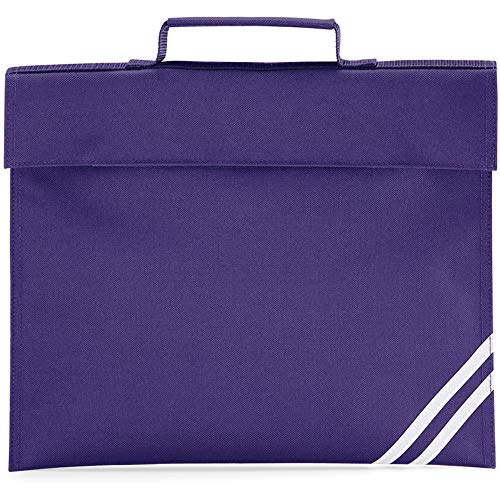
For most families the answer is the Quadra Classic Book Bag: a 5 litre, 37 by 30 cm flat book bag in 600 denier polyester with a concealed name card holder, reflective strips and a rip-strip closure. It carries the largest listed litre capacity of our picks and it is the most-reviewed pick here, which matters in a category where most listings have single-digit review counts.
If the walk or scoot to school happens in the dark half of the year, step across to the Quadra Enhanced-Vis Book Bag, which replaces the Classic's small reflective strips with a full panel plus fluorescent binding on the same rip-strip, name-card format and is listed as machine washable.
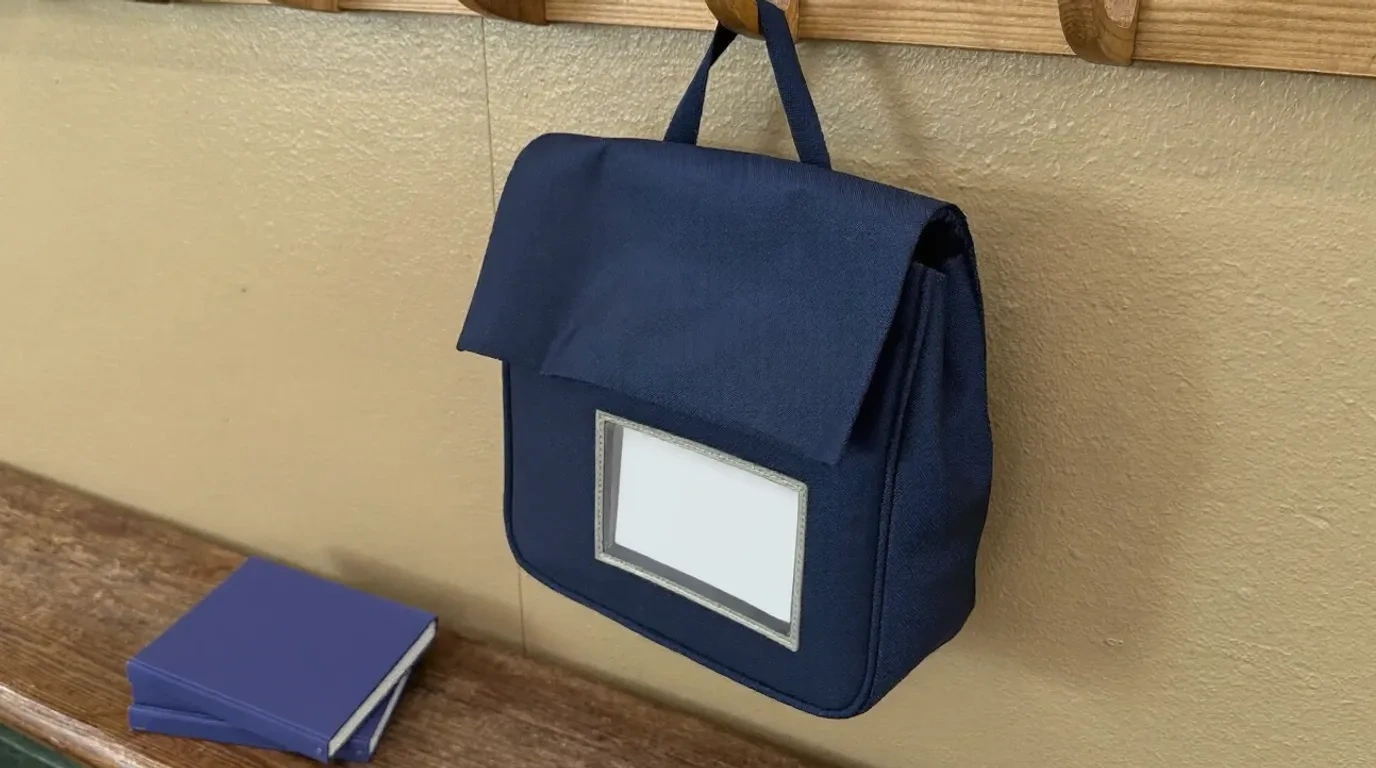
Spending as little as possible? The Celco Library Bag is the cheapest of our six picks, it is the format Australian schools have used for decades, and it has a clear front window for a written name card. It is machine washable and tumble dry safe, the spec that decides how long a library bag survives.
How do the library bags compare at a glance?
Sizes are the manufacturer listed figures; from prices are the buy-box prices at the time of writing.
How did NestPath choose these library bags?
- We screened the Amazon Australia pool for bags built to carry library books, then deleted every A4 zip wallet, mesh pouch and bulk 50-pack keyword-stuffed as a library bag.
- Every pick was checked live for stock, buy-box price and brand, and separately for star rating and review count, on the day this guide was written.
- Anything under three reviews was cut and our number one pick had to clear twenty-five, which removes most of the pretty Australian designs that are too new to judge.
- Specs come from the manufacturer listing only. Where a listing states no fabric, dimension or water rating, this guide does not invent one.
Which library bag suits the most kids at the most schools?
The Quadra Classic Book Bag is the safe default, and the one to buy if you never want to think about this again.
The format is the standard British-style primary school book bag that Australian schools quietly adopted years ago: a flat rectangle, 37 cm tall by 30 cm wide, one compartment, no gussets to collect crumbs. The listing puts capacity at 5 litres and weight at about 190 grams, so two hardback picture books slide in flat rather than wedging in at an angle.
Two details do the heavy lifting. The first is the concealed name card holder, a slot on the front that takes a written or printed card rather than a marker pen that fades after four washes. In a class of thirty identical bags, that is the difference between a bag that comes home and a bag that lives in lost property. The second is the rip-strip closure, hook and loop rather than a zip: a kindergarten kid can open it one-handed while holding a book, and there is no zip pull to snap off.
The shell is 600 denier polyester with a polyester lining, and the listing also notes reflective strips. Untreated cotton absorbs whatever leaks in the backpack; a polyester shell wipes out with a damp cloth and goes straight back into service, which is what you want on a Tuesday night when library day is Wednesday.
Flaws but not dealbreakers
The listing specifies hand wash only, which is annoying for a bag that will collect banana. If you want a machine-wash bag, the Enhanced-Vis and the Celco both list one. There is no shoulder strap, only a top handle, and the colours are plain: this is a functional object, not a fashion one, which some kids will have opinions about.
What if your child walks or scoots to school in the dark?
The Quadra Enhanced-Vis Book Bag is the same idea with the visibility turned up, and it is the pick if the school run happens before sunrise or after the light goes.
The listing describes an Enhanced-Vis reflective panel plus fluorescent binding around the edges, on a 38 by 28 cm bag rated at 4 litres in 600D polyester. The bag puts the reflective area on the flat face at hip height rather than on a strap. Anyone who has driven through an Australian school zone at seven in the morning in July will understand the appeal.
Everything else carries over from the Classic: rip-strip closure, name card holder, one main compartment. The listing counts two pockets rather than one, and specifies machine wash rather than hand wash, the practical upgrade for a lot of families. If your kid is hard on gear and you would rather run the bag through a cold cycle each term than spot clean it, buy this version.
The trade is capacity. At 4 litres it is a litre down on the Classic and slightly narrower at 28 cm across. A4 readers and slim chapter books drop in without bending; the wide-format hardback picture book, close to 30 cm across, is where the Classic wins. Early years borrower coming home with big format books every week? Size up. Past that stage? The visibility is worth more than the extra litre.
Flaws but not dealbreakers
The smaller footprint is the real compromise, so measure it against the books your child actually borrows. Reflective panels dull over years of abrasion, so treat the visibility as a bonus rather than a substitute for a hi-vis strip on the backpack itself. As with the Classic, there is no shoulder strap, and the colour range is narrower.
What is the best cheap library bag for a kid who loses everything?
Buy the Celco Library Bag. It is the cheapest of our six picks, it is the shape Australian schools have handed out for decades, and losing one does not ruin your week.
Celco is a stationery brand you will already have met if you have bought Australian school supplies, and this bag is built to the local school spec rather than adapted from a British one. It measures 370 by 290 mm, a generous flat footprint, and the listing describes heavy-duty polyester with a polyester lining. The closure is hook and loop, the same easy-for-small-hands arrangement as the Quadras.
The feature that earns it a place is the clear front insert pocket: a visible window on the face of the bag rather than a concealed slot, so a teacher can identify a bag across a classroom floor without picking it up. In a stack of thirty bags on library day that is the whole ballgame, and it lets a kid decorate their own card each year, which makes them care about the bag.
Care is the other reason to consider it: machine washable, tumble dry low, do not iron, do not dry clean. That is a proper wash cycle rather than a wipe-down, and it is the single most useful line on any library bag listing. Review volume is thin next to the Quadras, a fair caution, but the rating is the second-highest across our picks. Our kids lunch box guide covers the other half of that backpack.
Flaws but not dealbreakers
The review count is low, so you are buying on brand reputation and specification rather than a large body of feedback. Colours move around and individual shades drop out, so you may not get the one you want on the day. There is no reflective detail and no shoulder strap. It is also a plain, unbranded-looking bag, so if the point is to bribe a reluctant reader, look at the character bag below.
Which library bag works for a kid who wants a shoulder strap?
The Zeco Premium Book Bag is the pick if your child has decided that carrying a bag by the handle is beneath them.
Zeco is a UK school outfitter, and this is their book bag with an adjustable strap included, so it carries as a satchel across the body or as a tote by the top handle. That solves a common problem: a child already carrying a backpack, a lunch bag and a drink bottle has run out of hands, and a book bag that goes across the chest gets carried rather than dropped in the playground.
The published detail is lighter than the Quadras, and this guide will not fill the gaps: Zeco states the format, the strap and the satchel or tote carry, but no dimension table, fabric composition or care line. It fits best in upper primary, where a kid is carrying more, walking further, and far more likely to actually use a strap than a year one who will drag the bag along the ground regardless.
Flaws but not dealbreakers
The thin published specification is a real strike against it when the alternatives publish dimensions, capacity, fabric and care. It sits at the upper end of this page, with no listed reflective element and no stated care instruction. Straps also add a failure point a plain top handle does not have, and the stitching at the strap anchor is what gives out first.
Which library bag gets a reluctant borrower excited about library day?
The Peppa Pig Girls Primary School Reading Book Bag is a bribe with a handle, and for the four to six bracket it works.
This is a licensed character reading book bag in the classic primary school shape, listed at approximately 32 by 29 cm flat and just 130 grams. The detail that matters is inside: a name panel sewn into the bag, with an easy touch fasten tab as the closure, the same one-handed operation as a rip-strip. A single strong carry handle runs across the top, and the listing describes a Peppa Pig print with school themed logos.
Be honest about why you would buy this. A character bag does not carry books better than a plain one. What it does is give a kid who is lukewarm on the library a reason to remember the bag and to want to fill it, and for a prep or year one child who has just discovered that library day exists, that is worth more than a litre of capacity.
Practically, the flat 32 by 29 cm footprint takes standard picture books and readers comfortably, and at 130 grams it disappears inside a backpack when not in use. The lilac colourway is distinctive enough in a class stack that you may not need the name panel to find it, though fill it in anyway. The limitation is longevity of interest rather than of the bag: characters fall out of favour faster than polyester wears out, so treat this as a two-year purchase.
Flaws but not dealbreakers
The listing does not state a fabric composition, a capacity in litres or a care instruction, so you are buying the format and the print rather than a documented specification. Licensing carries a premium that has nothing to do with the bag. And a child who decides at seven that Peppa is for babies will refuse to carry it, which is a real risk you accept at purchase.
Which bag suits an older kid or a council library run?
The Jusitakeet Cool Kids Read Books Themed Tote Bag is the one to grab when the format needs to be a tote rather than a school book bag, and it is the highest-rated of our picks.
This is a canvas reusable tote with a reading-themed print, a different animal to the flat book bags above. There is no flap, no closure and no name window, which rules it out for a prep classroom where thirty identical bags need identifying. What it has instead is depth and open-top access, the right shape once a child is borrowing five or six chapter books at a time.
That makes it the natural pick for two situations: upper primary and early high school, where the borrowing allowance goes up and the books get thicker, and the local council library, where a Saturday morning run home with an armful of books is the actual job and nobody is checking for a name card.
Canvas is also the fabric most parents picture when they think library bag, and it has real advantages: it takes a machine wash, it takes a fabric marker for a name, and it holds its shape when stood on the floor. The trade against polyester is that untreated canvas absorbs water rather than shedding it, so it is a fair-weather bag unless you double-bag the books. The listing is light on published specification, so treat this as a canvas tote of standard proportions.
Flaws but not dealbreakers
No closure means rain gets in, and no name window makes it a poor fit for a shared classroom stack. The listing publishes very little on dimensions or fabric weight. Review volume is moderate rather than deep, so the perfect rating rests on a smaller sample than the numbers behind the Quadra bags, and the listing is new. And an open tote will let a paperback slide out if a kid runs.
Which library bag should you buy?
Match the situation on the left to the pick on the right and stop reading.
What should you look for in a library bag?
Five things decide whether a library bag lasts a term or six years, and price is not one of them.
Calico, canvas or polyester?
Untreated calico is the traditional Australian school library bag and the cheapest to produce, which is why fundraising and bulk school packs use it. It is light and takes a fabric marker beautifully, but it soaks up water, so a downpour on the walk home reaches the books. Canvas is the heavier cousin: better structure, still absorbent. Polyester, which the Quadra and Celco bags use, is the practical winner for a bag that lives next to a drink bottle. None of the picks here publish a formal water resistance rating, so this guide will not claim one.
Drawstring or handles?
Handles win for classroom use. A flat bag with a top handle and a flap hangs on a hook, stacks flat on a library floor and opens one-handed while a child holds a book. Drawstring bags free up both hands and suit kids carrying a lot at once, which is why they are the standard PE and swim format. If your school asks for a drawstring bag, follow the school.
Will it actually fit an A4 reader and a picture book?
This is where most bad purchases happen. A4 is 297 by 210 mm, so any bag with a flat internal width above about 250 mm swallows a reader easily. Picture books are the problem: oversized hardbacks run to 300 mm or more on the long edge and they will not bend. Measure against the largest listed dimension rather than a capacity figure, and note that only two of our picks state a capacity in litres at all.
How will you get a name on it and keep it there?
A permanent marker on fabric survives roughly one wash before it fades to grey. The bags worth buying solve this with a concealed card slot or a clear front window, both of which take a printed card you can replace each year. Failing that, iron-on or stick-on fabric name labels are the reliable answer, and they work on backpacks and uniforms too.
What actually breaks first?
Handles at the stitch line, hook and loop closures that clog with fluff, and printed graphics that abrade where the bag drags. Denier is a useful proxy for shell toughness: the Quadra bags publish 600D polyester, the same weight used in decent school backpacks. If you are replacing the main bag this year too, our kids backpack guide covers what to look for.
How do you keep a library bag going for more than one year?
Clean it on a schedule rather than when it is obviously disgusting, and fix small failures before they become big ones.
Empty it fully at the end of every term: old permission slips, a fossilised sultana and a leaked pen are what turn a usable bag into a bin item over the summer. For machine washable bags, a cold gentle cycle inside a laundry bag stops the hook and loop closure grabbing everything else in the drum. Air dry in the shade rather than direct Australian sun, which fades printed graphics fast. For hand wash bags, warm water, a drop of dish soap and a cloth handles almost everything.
Hook and loop closures fail because they clog, not because they wear out, so run a stiff brush through the hooked side each term and most of the grip comes back. Restitch a handle at the first loose thread, because a book bag handle fails at the anchor point. Swap the name card each school year, and store the bag on a hook by the front door, which removes the Sunday night hunt entirely.
What else will you want for library day?
The bag is one purchase. These are the ones that make it work.
What about the other library bags we looked at?
Most search results in this category do not deserve a place on the page, and a few near-misses deserve an explanation.
The Spencil library bags are the ones plenty of Australian parents will recognise, and the designs are the nicest in the category. They missed the picks because their Amazon Australia listings are new and carry only one or two reviews each, below the bar this guide sets. If you know the brand and want a specific print, buy with confidence; this page simply cannot verify them yet. The same applies to Alimasy, a well-regarded Australian kids brand with a wall of designs and no ratings at all on those listings.
The Celco Library Bag also comes in green and navy, but those are colour variants of the pick rather than different products, with a handful of reviews between them. The Quadra Junior Book Bag is a good bag from the same maker as our top two, but its review base is thin and a third bag from one brand adds nothing. The Oudain two-pack canvas book totes look tempting, but the listing files them under a women's department with adult styling and dimensions that do not match a kids library bag brief.
Then there is the bulk end: calico library bags in packs of fifty, priced for schools and P and C fundraisers, where the per-unit maths only works if you need fifty. And the biggest group of all, the A4 zip wallets, mesh pouches and expanding file folders that dominate this search term. Skip the entire class.
Library bag questions Australian parents ask
What are the best bags for library books?
The best bag for library books is a flat, wide, single-compartment book bag with a name card window and a hook and loop flap, made from polyester rather than untreated cotton. That shape keeps hardback picture books flat instead of bent, the flap keeps rain off the top edge, and the name window means the bag comes home.
Does Kmart have library bags?
Kmart, Big W and Target all stock cheap library bags in their back-to-school ranges, and those ranges land in store from around late December through January. The catch is that stock is seasonal and picked over fast, and you cannot compare ratings, dimensions or care instructions in an aisle.
What size should a kids library bag be?
Aim for a flat size of at least 300 by 250 mm, which comfortably takes an A4 reader at 297 by 210 mm with room to slide it in and out. If your child is in the early years and borrowing oversized hardback picture books, look for something closer to 370 mm on the long edge, because big format picture books will not bend to fit.
How do you put a name on a library bag so it survives the wash?
Use the bag's own name card slot or clear front window if it has one, because a printed card can be replaced every year and never touches the wash. If the bag has no name provision, iron-on or stick-on fabric name labels are far more durable than permanent marker, which typically fades to grey after a single wash cycle.
Is calico or waterproof fabric better for a library bag?
Polyester beats untreated calico for everyday school use because it can be wiped clean and it sheds a spilled drink bottle instead of soaking it up. Calico is lighter, cheaper and lovely to decorate, which is why schools use it for fundraising bags, but it absorbs water straight through to the books.
Which NestPath guides pair with this one?
Library day sits inside a much bigger back-to-school list. These guides cover the rest of it.
About the author
Anish Puri founded NestPath in 2026 after going through the Australian first-home-buyer process himself. NestPath focuses on Australian first-home buyers because the existing review sites are American, generic, or both. Anish handles editorial selection across the homeowner hub. Reach out: hello@nestpath.com.au