Rechargeable, solar or replaceable batteries? Start there
Before you compare lumens or runtime, decide how the lantern gets its power, because that single choice decides how much you can trust it when things go wrong. Rechargeable lanterns are convenient and many double as a phone power bank, but they only work if you remembered to charge them. Solar lanterns like the BioLite Luci top themselves up from the sun and never need batteries, which is brilliant for long hikes. The safest bet for long off-grid trips and blackouts, though, is a lantern that runs on replaceable AA or D batteries: when you cannot charge anything, you just swap in fresh cells and keep going. Get that decision right and brightness, runtime and water resistance fall into place after it.
The six picks below run from a collapsible SEAMAGIC up to a rugged Streamlight Siege, and they cover the full spread: simple AA lanterns, rechargeable lights with power banks, a packable solar option and rugged battery workhorses. As you read, weigh brightness in lumens against runtime, whether you want a power-bank function to top up a phone, the water-resistance rating for camping in the weather, and a collapsible or hanging design that packs small and frees your hands. Match those to how you will actually use it and you will not overspend.
SEAMAGIC LED Camping Lantern
If you want a dependable battery light for blackouts, the SEAMAGIC is a sensible place to start. It runs on 3 replaceable AA batteries rather than a built-in cell, which is the quiet advantage: when the power is out or you are days from a charger, you swap in fresh batteries and carry on. The COB LED throws a 360-degree, 250-lumen glow that is plenty to light a tent or a room.
The ABS body is collapsible, so it packs down small for a backpack or survival kit, and the handle lets you hang it to free your hands. The trade-offs at this price are honest ones: the AA batteries are not included, so add a pack to your order, and at 250 lumens it is a soft area light rather than a bright floodlight. It also has a smaller review base than the big sellers further down.
YFW USB Rechargeable Camping Lantern
The YFW is the pick if you want one light that also keeps your phone alive. Its built-in 5200mAh power bank means it doubles as an emergency charger, which earns its place on a multi-day trip or during a long outage. It is genuinely versatile beyond that, with four light modes including warm and natural tones, continuous dimming with a brightness memory, and an SOS red strobe for emergencies.
A strong built-in magnet and a hook let you stick it to a car panel or hang it from a tent or branch, and the IP66 rating shrugs off rain and dust. The honest trade-off is the one that applies to every rechargeable light: it only works if you charged it, so for genuinely off-grid trips keep a battery lantern as backup. At 184 grams it is also a touch heavier than the tiniest packable lights, though still easy to carry.
Blukar Rechargeable Camping Lantern 2-Pack
The Blukar is the value standout because you get two very bright lanterns, backed by the largest review base in this guide. Each light runs a 360 degree array up to 2000 lumens, so a single one can flood a campsite or a whole room, and the folding design switches between a tabletop lamp and a hanging tent pendant using the top hooks.
Seven modes cover everything from a low side light to full strobe and SOS, and the built-in 3600mAh battery gives 10-plus hours per charge. Buying a pair means a built-in backup, or one light for each tent. The honest caveats are that the battery is a built-in, non-removable pack, so when it is flat you must recharge rather than swap cells, and 10-plus hours is shorter than the battery lanterns here - so top both up before you head off.
BioLite Luci Outdoor 2.0 Solar Lantern
The BioLite Luci is the pick for hikers and anyone who wants a light that recharges itself. Its built-in solar panel tops it up from the sun, so it never needs batteries - a full solar charge takes about 7 hours, or 3 hours over USB-C - which makes it ideal for long trips far from any power. It packs flat to a 1.5 inch disc, inflates in seconds, weighs just 125 grams and clips to a pack by its top strap.
It is tougher than it looks: the IP67 rating means it survives being dunked in 1m of water, and the soft body is rated to take up to 150 lbs of pressure. The honest trade-off is brightness - at 75 lumens it is a gentle ambient and tent light rather than a campsite floodlight - so it is built for portability and self-sufficiency rather than raw output, which is exactly the point for backpacking.
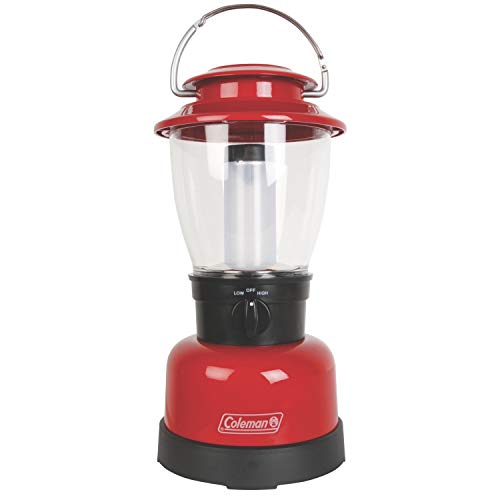
Coleman 400 Lumen LED Lantern
The Coleman is the classic camping lantern and a brilliant blackout light, because it pairs a long runtime with the reassurance of replaceable batteries. The 400 lumens on high reach out to about 12 metres, which lights a whole campsite, and on low it runs for a remarkable 70 hours on a set of 4 D batteries.
That means it keeps going through a long outage or a week of camping without a charger anywhere in sight. The IPX4 rating handles rain, the bail handle and carabiner make it easy to hang, and the LEDs never need replacing. The honest compromise is that it runs on bulky D cell batteries you buy separately rather than recharging, and it has no power bank function, so it is a pure light rather than a do everything device, which is exactly why it is so dependable.
Streamlight Siege AA Work Lantern
The Streamlight Siege AA suits anyone who values toughness over gadgetry. Streamlight is a work light name, and the Siege is the very compact, rugged lantern built to take a knock on a job site, in a tent or during an emergency. Crucially it runs on common AA batteries rather than a sealed rechargeable cell. It is the same logic as the SEAMAGIC, but in a far tougher body, so you swap in fresh AAs and it works anywhere.
A magnetic base sticks it to a car bonnet or a toolbox to light a task hands free, and its 4.8 star rating across well over 5,100 ratings backs up the build quality. The honest trade off is ruggedness rather than features: there is no power bank and no solar panel. It suits buyers who put reliability ahead of convenience.
How to choose a camping lantern
The single biggest decision is power source, and it should follow how you actually camp. If you do short trips near the car or mainly want a blackout backup, a battery lantern that runs on AA or D cells - the SEAMAGIC, Coleman or Streamlight - is the safe buy, because it works the instant you need it with no charging to remember. If you camp for a weekend with access to a power bank or a car charger, a rechargeable like the YFW or Blukar is convenient, and the YFW can charge your phone too. For long, off-grid hikes, a solar lantern like the Luci that refills from the sun makes the most sense. The same power-source question decides which tent fan you buy, and there the D-cell models are the ones that keep running with nothing to charge from.
After power source, weigh brightness against runtime and weight. A bright 2000-lumen Blukar lights a campsite but does not run as long as the dimmer, longer-lasting Coleman, and the featherweight 75-lumen Luci trades output for packability. Then check the water-resistance rating if you camp in real weather - IP66 or IP67 shrug off rain, IPX4 handles a shower - and look for a collapsible body and a hook or handle so it packs small and hangs hands-free. The best lantern is the one that matches your trips, not the one with the biggest number.
What the key specs mean
A handful of numbers do most of the work. Lumens measure brightness: 75 to 250 lumens is a soft ambient or tent light, while 400 to 2000 lumens floods a campsite or a room. Runtime tells you how long it lasts per set of batteries or per charge, and it usually trades off against brightness - a lantern runs far longer on low than on high, which is why the Coleman manages 70 hours on its low setting. A power-bank or mAh figure, like the YFW's 5200mAh, tells you it can also top up a phone, while a built-in battery capacity like Blukar's 3600mAh just feeds the light itself.
Water resistance is given as an IP rating: the first relevant digit covers dust and the second covers water, so IP67 means dust-tight and submersible to 1m, IP66 means strong jets are fine, and IPX4 means splashes and rain are fine but not immersion. Finally, weight and pack size matter for hikers - 125 grams that collapses to a disc is a different proposition to a D-cell lantern - and a magnet, hook or carabiner decides how easily you can hang it or stick it where you need light. Read power source, lumens, runtime, IP rating and weight together and any product page starts to make sense.
Frequently Asked Questions
How many lumens do I need for a campsite?
It depends on the area you want to light. For reading in a tent or a soft ambient glow, 75 to 250 lumens is plenty - the BioLite Luci at 75 lumens and the SEAMAGIC at 250 are pitched exactly there. To light a whole campsite, a picnic table or a room during a blackout, you want 400 lumens or more, which is where the Coleman at 400 and the ultra-bright Blukar at 2000 lumens come in. As a rule, a single high-output lantern plus a small tent light covers most camping setups better than one in-between brightness.
Rechargeable, battery or solar - which type should I buy?
It comes down to how and where you camp. Rechargeable lanterns like the YFW and Blukar are convenient and many double as a phone power bank, but they only work if you remembered to charge them. Solar lanterns like the Luci refill from the sun and never need batteries, which suits long off-grid hikes. A lantern that runs on replaceable AA or D batteries - the SEAMAGIC, Coleman or Streamlight - is the safest bet for long trips and emergencies, because when you cannot charge anything you just swap in fresh cells. For most people a battery lantern as a backup plus a rechargeable for convenience is the ideal pair.
Can a camping lantern charge my phone?
Some can, if they have a built-in power bank. The YFW in this guide has a 5200mAh power bank specifically so it can charge your phone or other USB devices on a trip, which makes it a genuine emergency charger as well as a light. Most plain lanterns cannot - the Coleman and the battery-powered SEAMAGIC and Streamlight are lights only, and a rechargeable like the Blukar uses its 3600mAh cell to feed the light rather than to charge other devices. If charging your phone matters, look specifically for a power-bank or mAh-output spec on the listing.
Are camping lanterns waterproof?
Most are water-resistant rather than fully waterproof, and the IP rating tells you how much. The BioLite Luci is the toughest here at IP67, meaning it is dust-tight and can be submerged in 1m of water, while the YFW is IP66, so strong jets of water and dust are no problem. The Coleman is IPX4, which handles rain and splashes but not immersion. For general camping, IPX4 is fine; if you expect heavy rain, river crossings or a chance of dropping it in water, choose a higher IP66 or IP67 rating.
How long do camping lanterns last on a charge or set of batteries?
It varies widely with brightness and power type. Rechargeable lights tend to run for a working evening - the Blukar lasts 10-plus hours on a charge - while the solar Luci stretches to 24 hours per charge. Battery lanterns usually go furthest: the Coleman manages 30 hours on high and a huge 70 hours on low from a set of 4 D batteries. As a rule, running on a lower brightness setting dramatically extends runtime, so if you need a light to last all night or through a long outage, turn it down and it will go much further.
Is a rechargeable or a battery lantern better for blackouts?
For blackouts and long emergencies, a battery lantern is the safer choice. A rechargeable lantern is only as ready as its last charge, and in an extended outage you may have no way to top it up. A lantern that takes replaceable AA or D batteries - the SEAMAGIC, Coleman or Streamlight here - keeps working as long as you have spare cells, which you can stockpile cheaply. The convenience pick is to own both: a rechargeable for everyday use and a battery lantern with a fresh set of cells set aside specifically as your blackout backup.
What features make a lantern good for camping versus home emergencies?
The needs overlap, but the priorities differ. For camping you want packability and versatility - a collapsible body, a hook or carabiner to hang it in a tent, decent water resistance and ideally a power bank, which is where the YFW, Blukar and Luci shine. For home emergencies you mostly want reliability and runtime: replaceable batteries you can stockpile, long low-mode runtime and a bright wide beam, which is the Coleman and Streamlight territory. A lantern like the SEAMAGIC that is collapsible and battery powered straddles both, which is why a simple AA lantern is a sensible thing to own even if you never camp.